
A moonlit river landscape with a village, a windmill and church beyond, with travellers on a path in the foreground — History & Facts
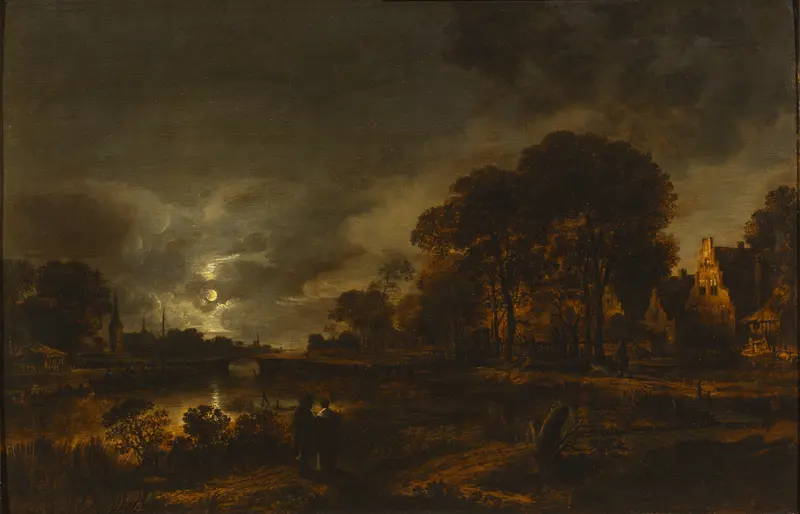
The first thing to catch the eye in A moonlit river landscape with a village, a windmill and church beyond, with travellers on a path in the foreground is the hush that settles over the scene. The moon, perfectly round and clear, hangs just above the horizon, its light cutting through the drifting clouds and catching on the river’s surface. The glow is not theatrical but measured, guiding the viewer’s gaze from the quiet houses at left, their windows lit with warm promise, across the open fields to the distant silhouettes of windmill and church.
Figures move along the path in the foreground, their journey small but persistent, dwarfed by the sweep of land and sky. Every detail—the glimmer of water, the careful placement of trees—serves to heighten the sense of a world paused between night and day. This painting, created in 1670 by Aert van der Neer, belongs to a Dutch tradition that prized landscapes not just for their beauty but for their ability to evoke the rhythms of daily life. In the Dutch Golden Age, such moonlit scenes were cherished by an urban clientele eager to bring the countryside’s calm into their homes.
Van der Neer’s choice of subject—a riverside village, its landmarks picked out by moonlight—reflects both the pride of a nation shaped by water and the technical fascination with light that defined the era. History has kept few traces of this specific work’s early journey, but its quiet drama invites us to linger and trace the moon’s path across the water, just as viewers might have done centuries ago.
More Artworks by Aert van der Neer

A Moonlit River Landscape With Figures Standing By A Gate, A Village Beyond
Aert van der Neer
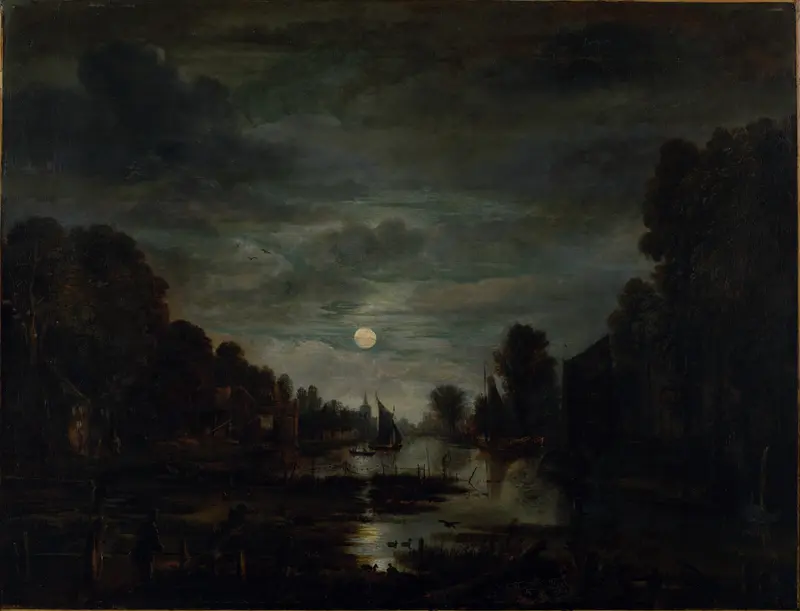
River Landscape in Moonlight
Aert van der Neer
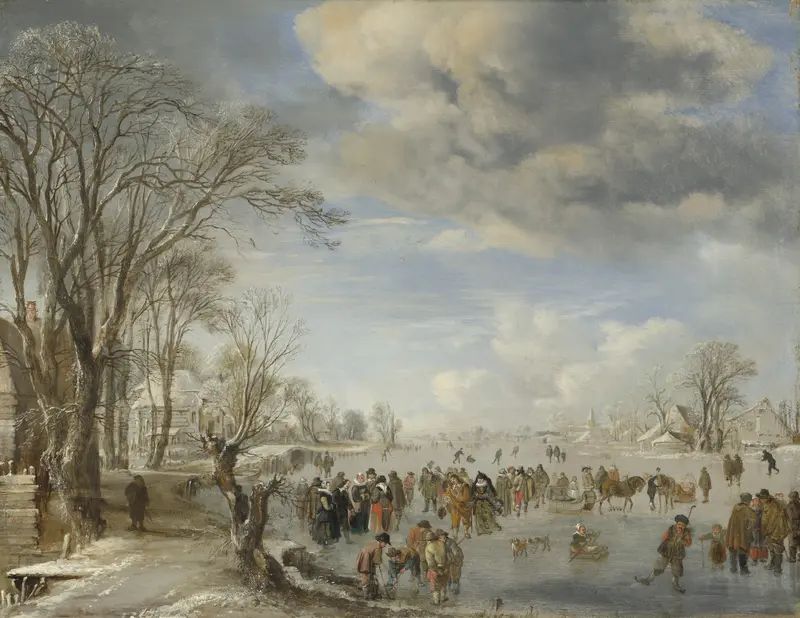
Winter in Holland – Skating Scene
Aert van der Neer

River Landscape
Aert van der Neer
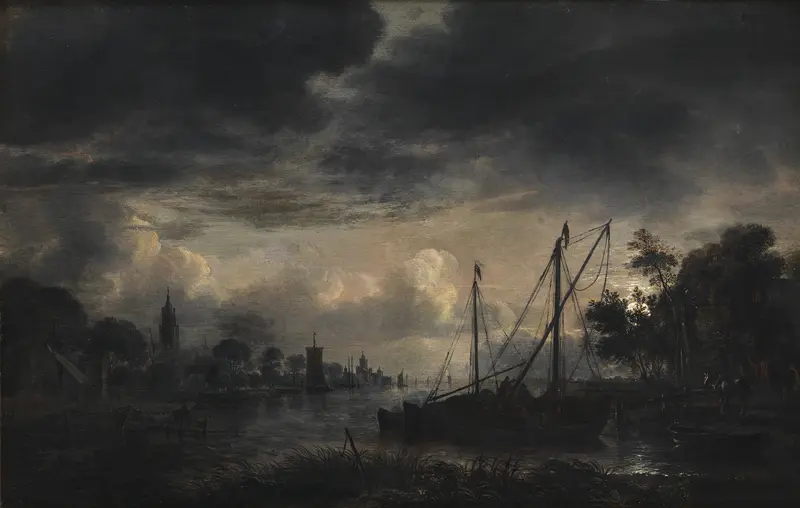
River Landscape in Moonlight
Aert van der Neer
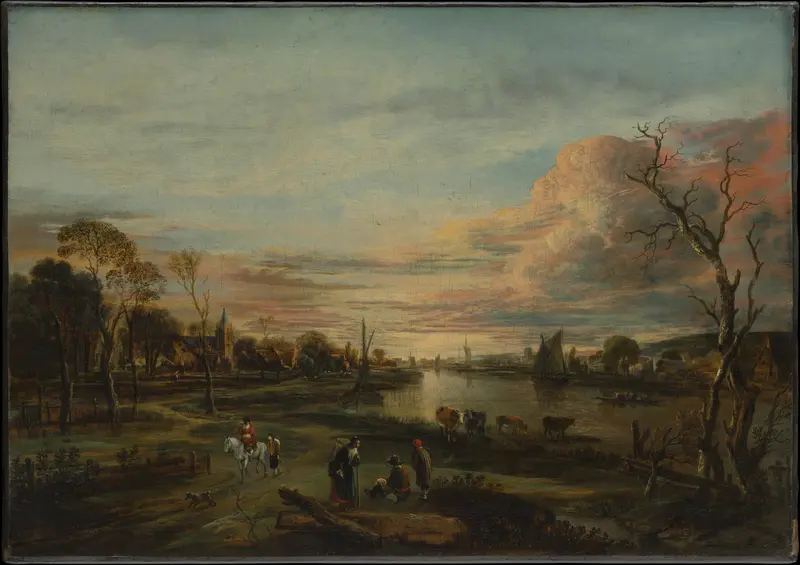
Landscape at Sunset
Aert van der Neer
Winter Landscape near a Town with Kolf Players and Horse-Drawn Sleighs
Aert van der Neer

Winter Landscape with Skaters on a Frozen River
Aert van der Neer
Moonlight at a Dutch River
Aert van der Neer
Moonlight Landscape
Aert van der Neer
More Landscape Art

The Starry Night
Vincent van Gogh

View of Delft
Johannes Vermeer

Water Lilies
Claude Monet

The Grand Canal, Venice, looking north-west from the Ca' Corner to the Ca' Contarini degli Scrigni, with the campanile of Santa Maria della Carità
Canaletto

Windsor Castle
Canaletto

The Grand Canal looking North-East from the Palazzo Dolfin-Manin to the Rialto Bridge
Canaletto