
A Mother with her Son and a Pony — History & Facts
The eye is drawn first to the poised woman at the threshold, her white headwrap and embroidered apron catching the light against the deep red of the stable wall. She stands with a quiet authority, one hand resting on her hip, the other gently holding a slender stick. Beside her, a boy in a green suit and tricorn hat steadies a small brown pony, his stance both proud and at ease.
The composition is anchored by their connection—a family moment, underscored by the boy’s hand on the pony’s bridle and the mother’s steady gaze. Behind them, a wooden fence and a steep earthen bank climb into greenery, while a tiny dog at their feet adds a note of alert curiosity. Every detail, from the careful folds of fabric to the rough boards of the stable, invites the viewer to linger and imagine the rhythms of daily life in this sunlit yard. Painted around 1775, this work by Agostino Brunias belongs to a world in flux, when Caribbean societies were shaped by colonial ambitions and complex social hierarchies.
Scenes like this—intimate, yet quietly formal—were often commissioned by colonial patrons eager to record the people and landscapes of their adopted homes. While little is documented about this particular painting’s journey or its original purpose, its survival in the collection now digitized by Google’s Cultural Institute speaks to the enduring fascination with these layered colonial histories. The image asks us to look closely, not only at the faces and gestures, but at the traces of a vanished world: the textures of dress, the architecture of the yard, and the subtle negotiations of status and kinship that play out in paint.
More Artworks by Agostino Brunias
Indigenous Kalinago of St. Vincent [Aboriginal Caraibs of St. Vincents]
Agostino Brunias
View on the River Roseau, Dominica
Agostino Brunias
Francophone Women of Color and a Young Attendant, Dominica [French Mulatresses of Dominica in their Proper Dress]
Agostino Brunias
View on the River Roseau, Dominica
Agostino Brunias
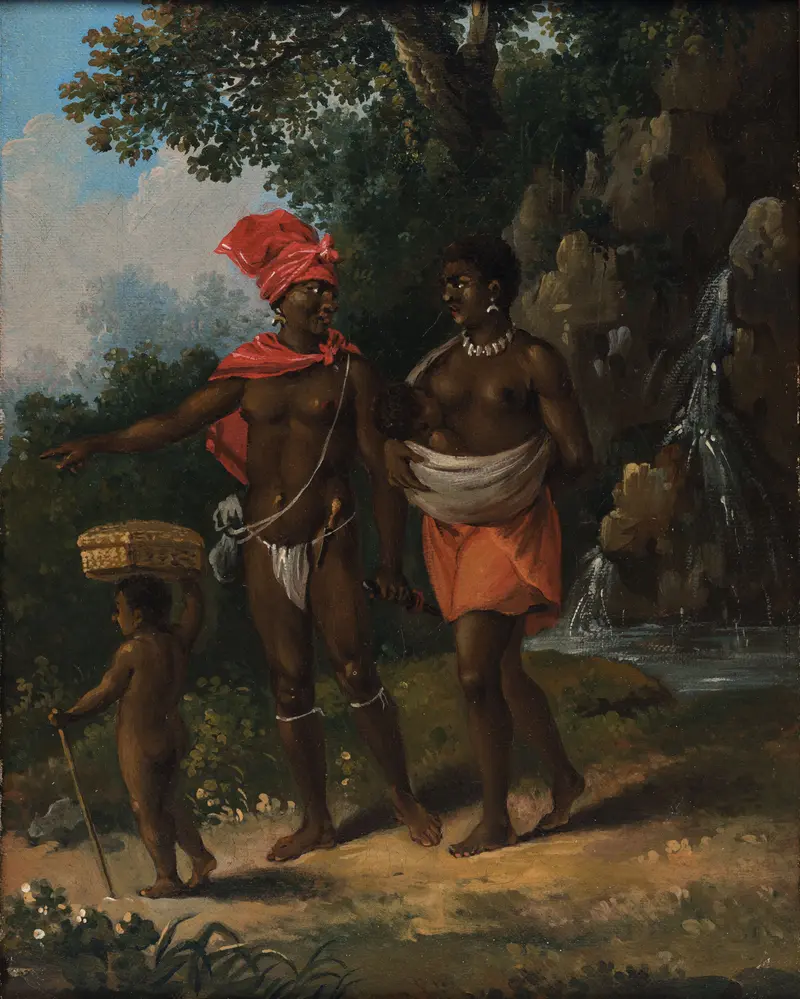
Garifuna Peoples of St. Vincent [Caraibs of St. Vincents]
Agostino Brunias
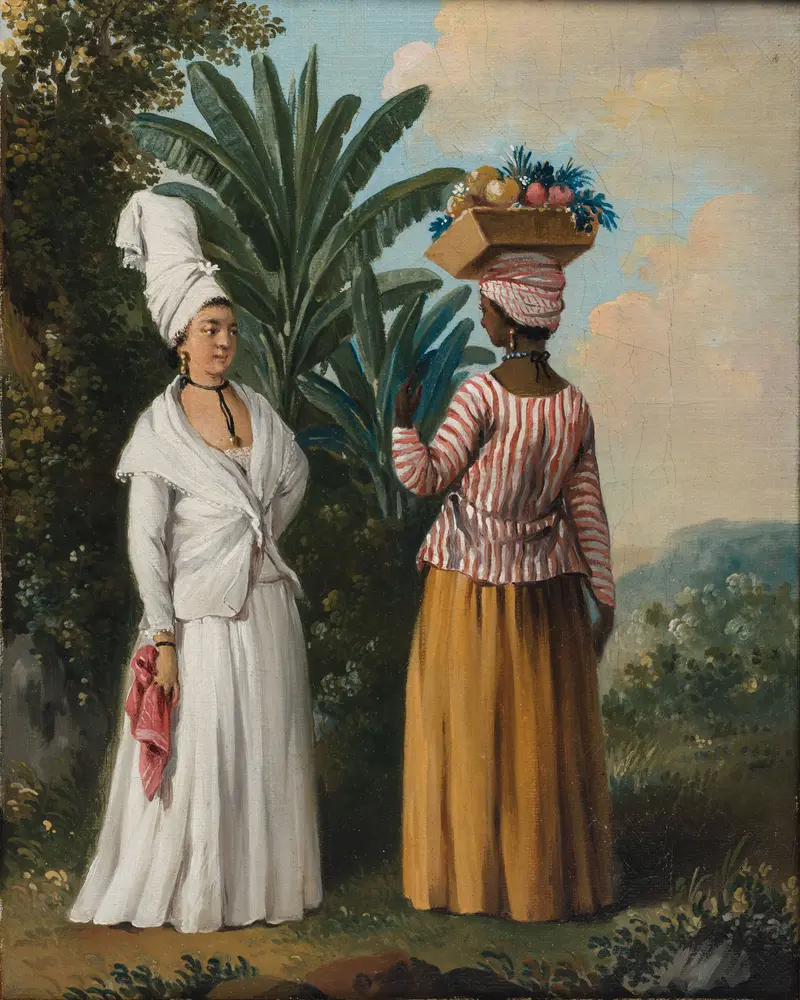
Two Women of Color, Dominica [French Mulatress of Dominica and a Negro Woman in their Proper Dress]
Agostino Brunias

Purchasing Fruit [A French Mulatress Purchasing Fruit from a Negro Wench]
Agostino Brunias

Women of Color Bathing and a Voyeur [Mulatresses and Negro Woman Bathing]
Agostino Brunias
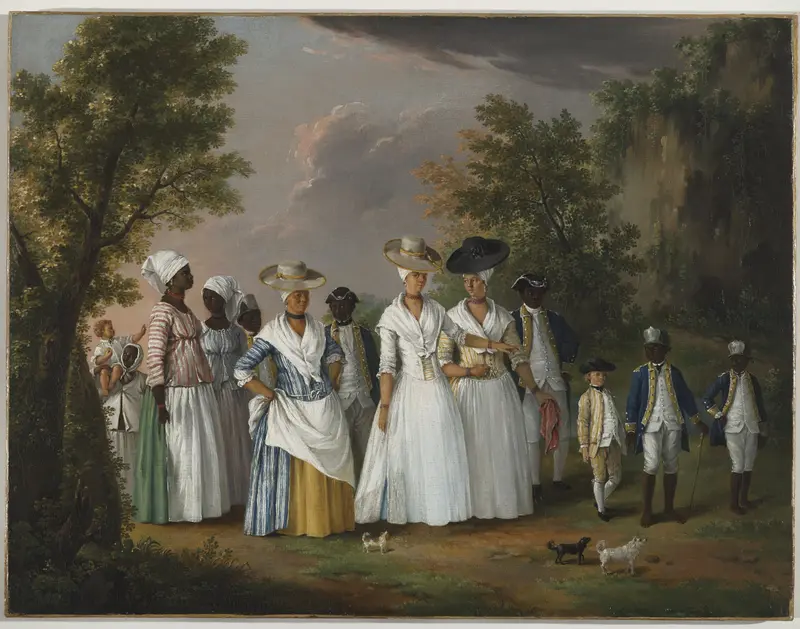
Free Women of Color with their Children and Servants in a Landscape
Agostino Brunias
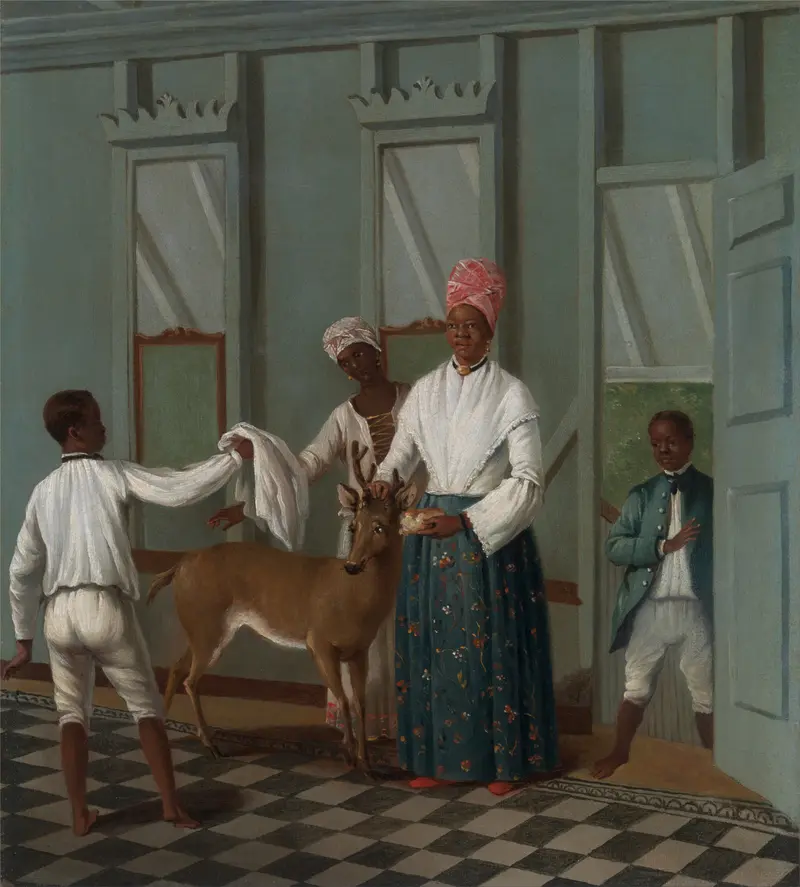
Servants Washing a Deer
Agostino Brunias
More Genre Scene Art

Banquet of the Officers of the St George Civic Guard
Frans Hals

Rembrandt and Saskia in the Scene of the Prodigal Son
Rembrandt van Rijn

Bal du moulin de la Galette
Pierre-Auguste Renoir

Quadrille at the Moulin Rouge
Henri de Toulouse-Lautrec

A Burial at Ornans
Gustave Courbet

When Will You Marry?
Paul Gauguin