A mountain landscape with a rushing torrent — History & Analysis
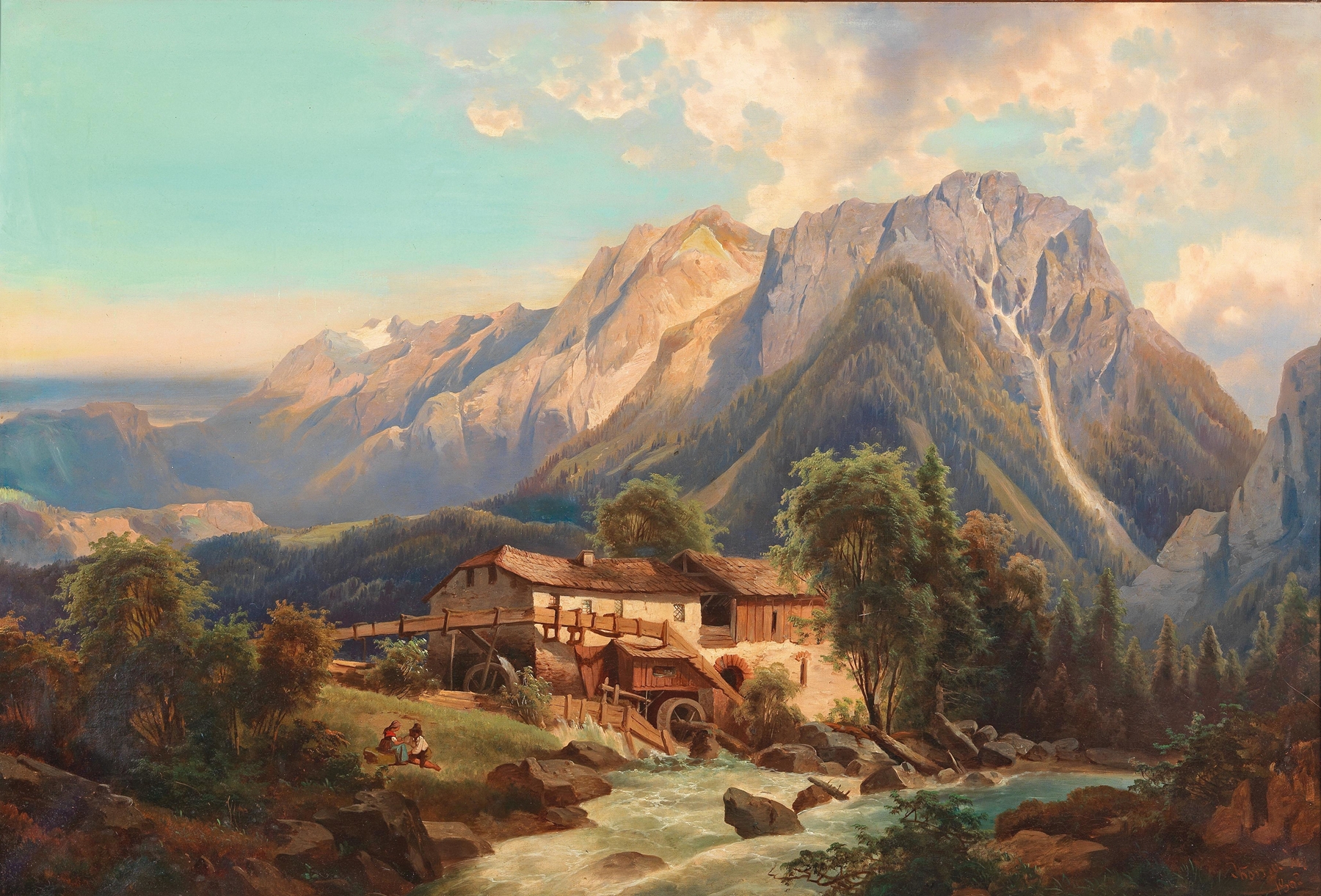
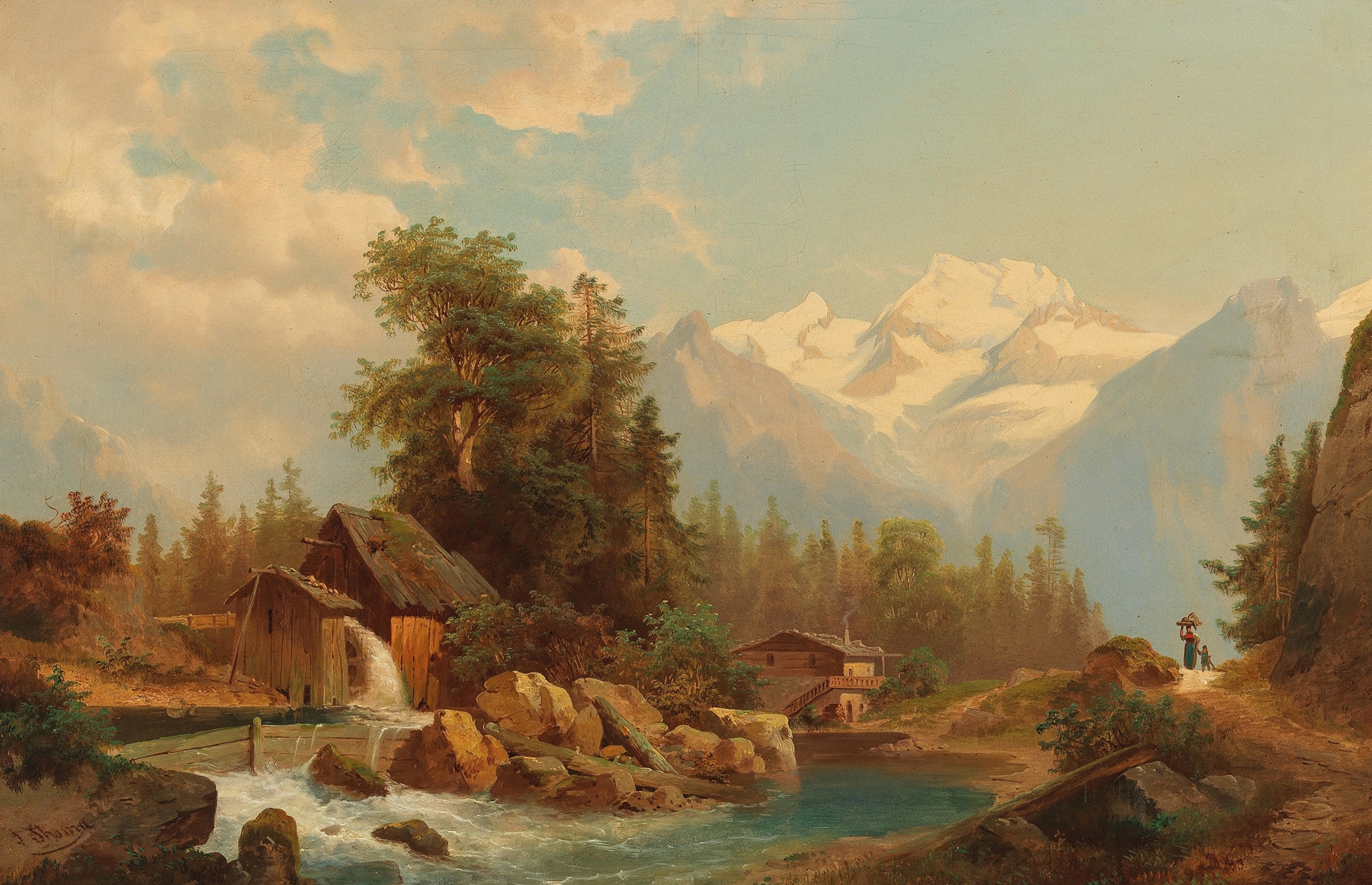
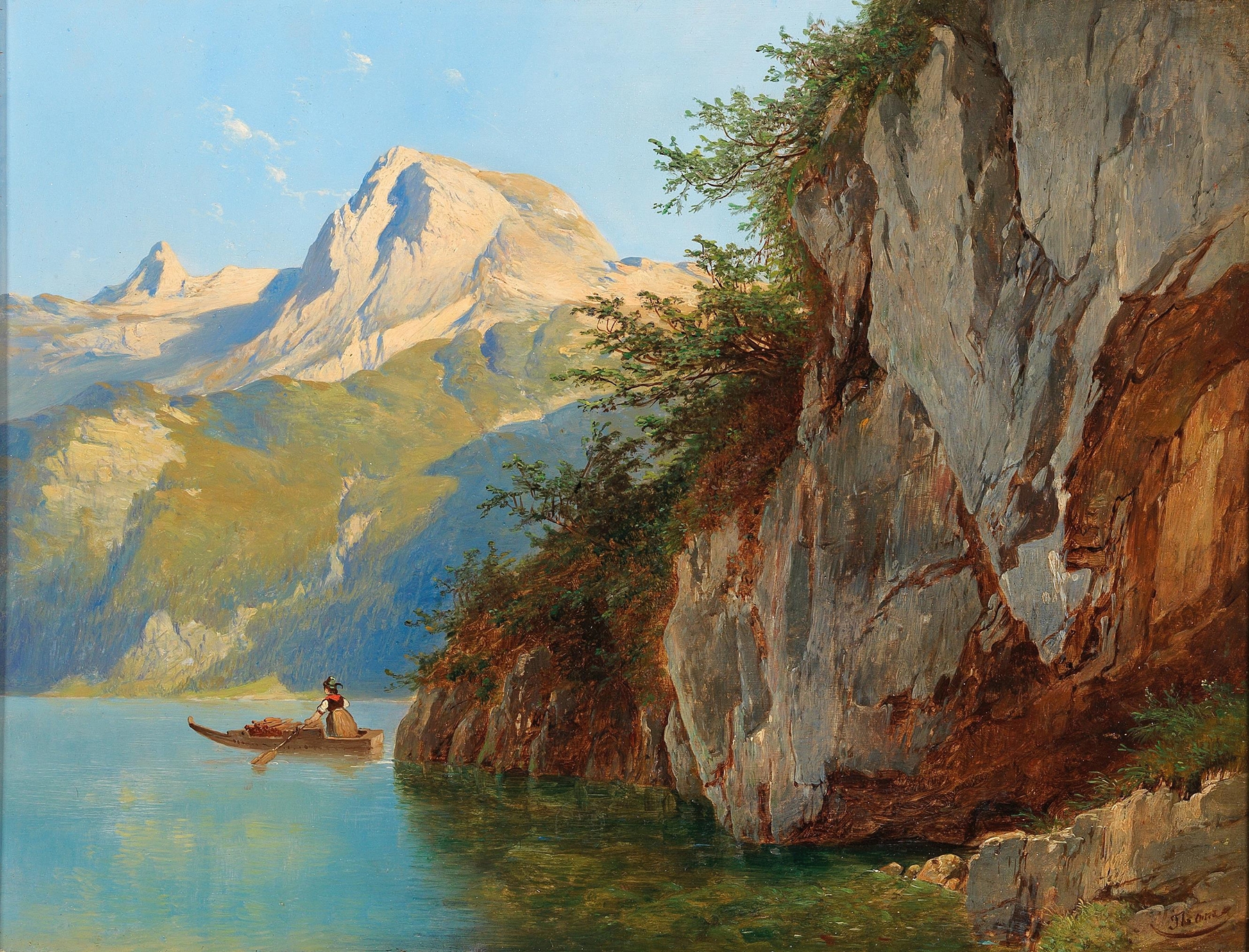
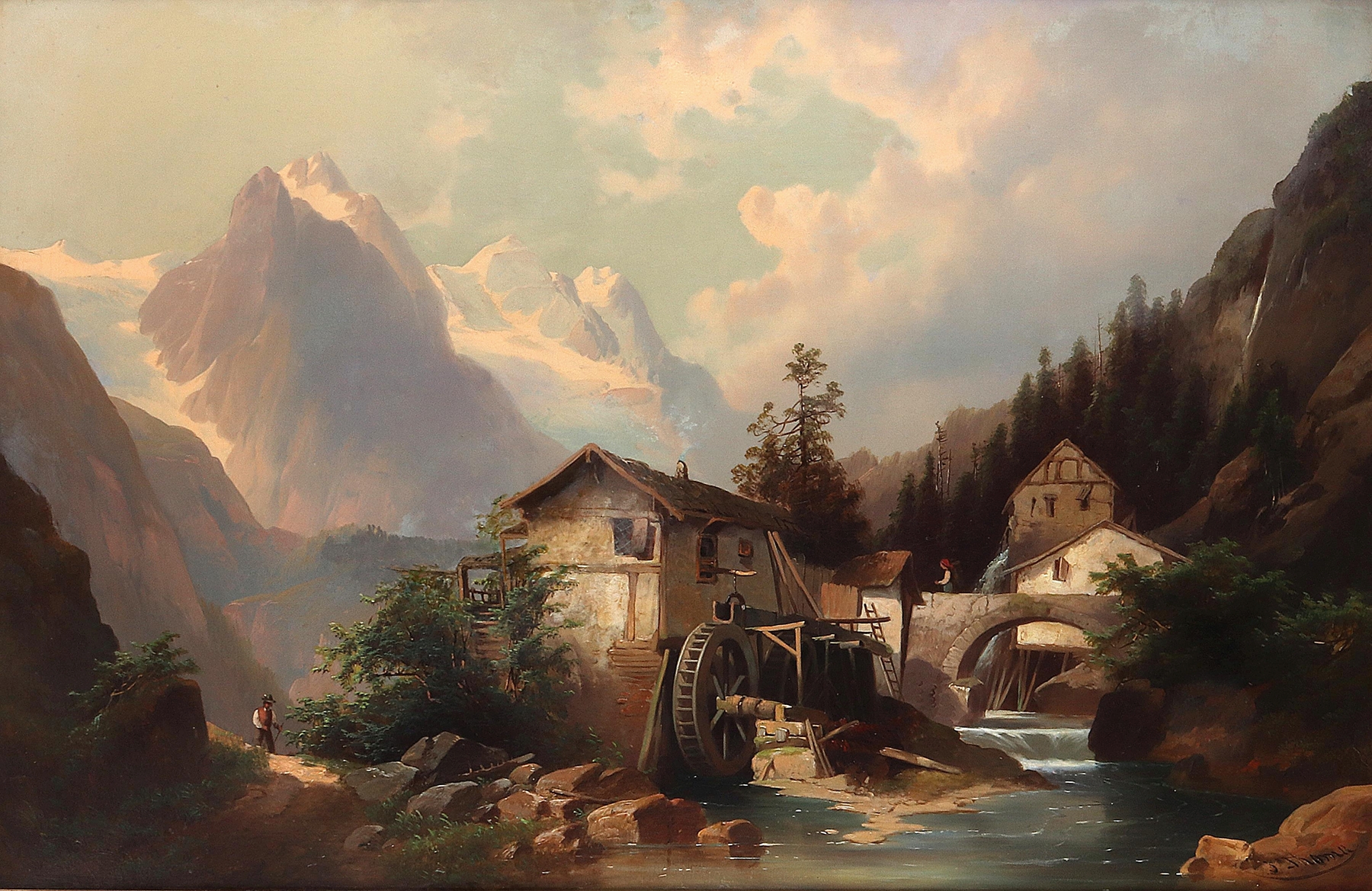
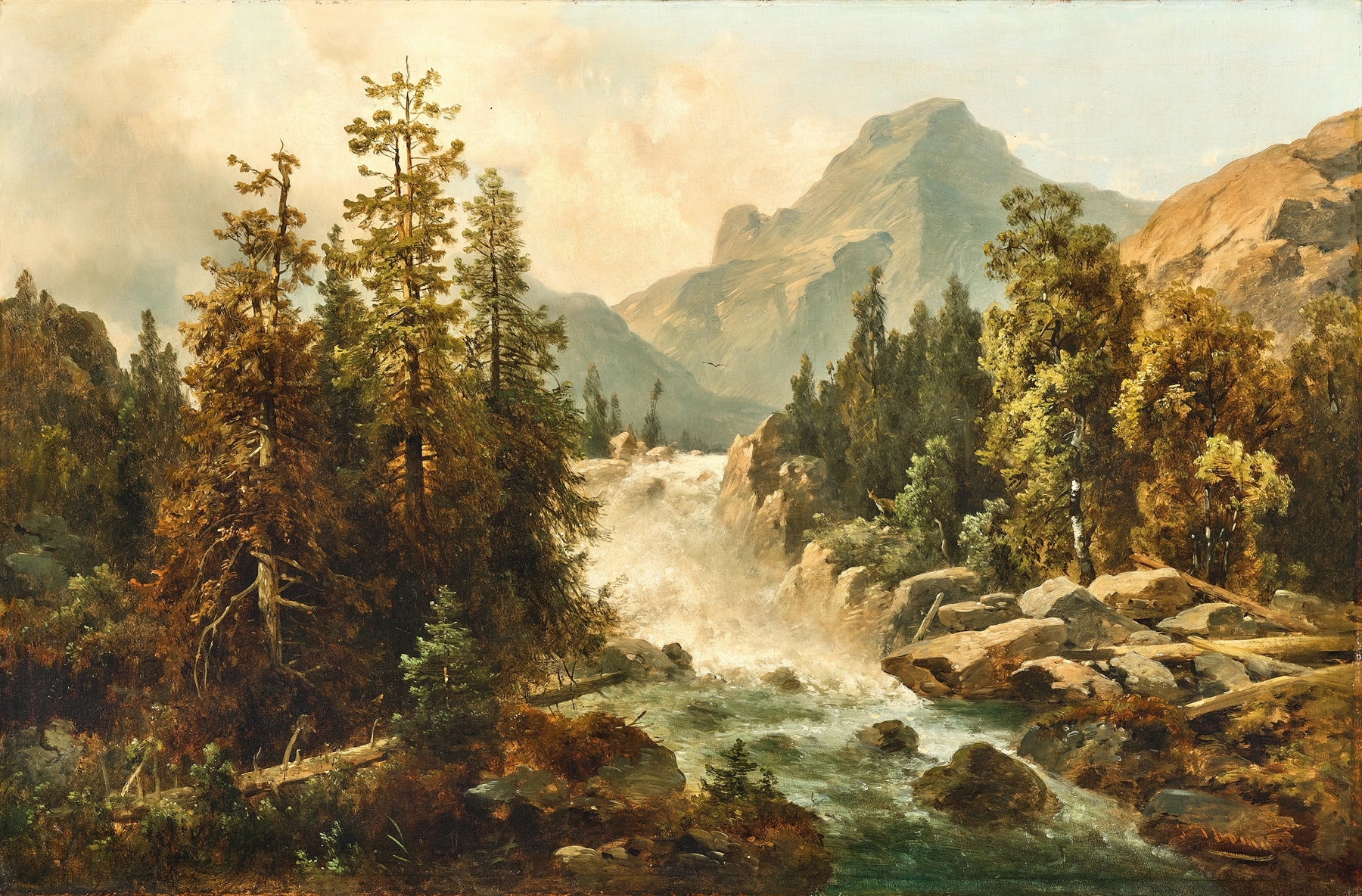
Can beauty exist without sorrow? In the rugged expanse of nature, where torrents cascade relentlessly down majestic peaks, grief intertwines with the grandeur of life. Focus on the turbulent water that captures your gaze first, a shimmering thread of white and blue that snakes through the verdant landscape. The artist's brushwork reveals dynamic movement, bringing to life the forceful descent of the torrent as it crashes over rocks, sending droplets scattering like diamonds.
Notice how the sharp contrasts of deep greens and vibrant blues create a sense of depth, inviting the viewer to lose themselves in the landscape’s embrace. Yet, hidden beneath this beauty lies an emotional undercurrent. The starkness of the mountain's jagged edges speaks to the harsh realities of existence, a reminder of fragility amidst the splendor. Each element—the rushing water, the towering peaks, and the gentle, yet foreboding clouds—whispers of an unresolved tension, as if nature itself mourns losses that are both profound and personal.
This complex interplay of serenity and turmoil mirrors the human experience, invoking reflections on grief and resilience. Josef Thoma painted this work during an era marked by a profound connection to nature and its emotional resonance, though the exact date remains elusive. As a prominent figure in the Austrian art scene, he sought to capture landscapes that resonated with viewers on a personal level. Amidst the changing tides of the late 19th to early 20th century, when artists began to explore the depths of emotion within their surroundings, Thoma's exploration of natural beauty intertwined with deeper themes was both poignant and transformative.