
A orillas del Río — History & Facts
In A orillas del Río, we are reminded that truth is often found in the quiet moments of nature, where stillness and time converge. Look to the foreground at the gentle bend of the river, where soft ripples reflect the muted hues of twilight. The palette, composed of greens and earthy browns, envelops the scene in a serene embrace. Notice how the trees arch gracefully, their limbs reaching towards the water, as if longing to touch the surface.
The light descends slowly, casting a golden glow that washes over the landscape, inviting the viewer to linger in this tranquil moment. Beneath the surface of this idyllic scene lies a delicate tension between time and permanence. The backdrop, heavy with foliage, suggests a timelessness, while the fleeting light hints at the transient nature of life. The river, both a literal and metaphorical passage, serves as a reminder of the relentless flow of time, making us ponder what remains after the day fades.
Each brushstroke captures an unspoken truth, urging reflection on what we hold dear in the face of inevitable change. Created in the 19th century, this piece emerged during a period of rapid industrialization and romanticism in art. Jules Dupré, an influential figure in the Barbizon School, painted this work while grappling with the tension between nature and modernity. His focus on the natural landscape was part of a broader movement seeking to return to the simplicity and beauty of rural life, amidst the encroaching shadows of urbanization.
More Artworks by Jules Dupré
Browse all →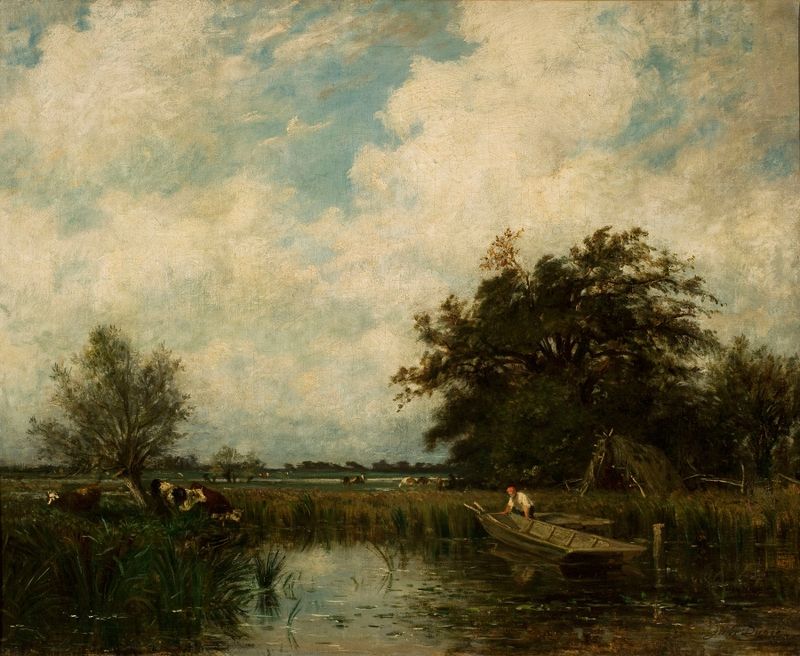
Landscape with a pond
Jules Dupré

The Cottage by the Roadside, Stormy Sky
Jules Dupré
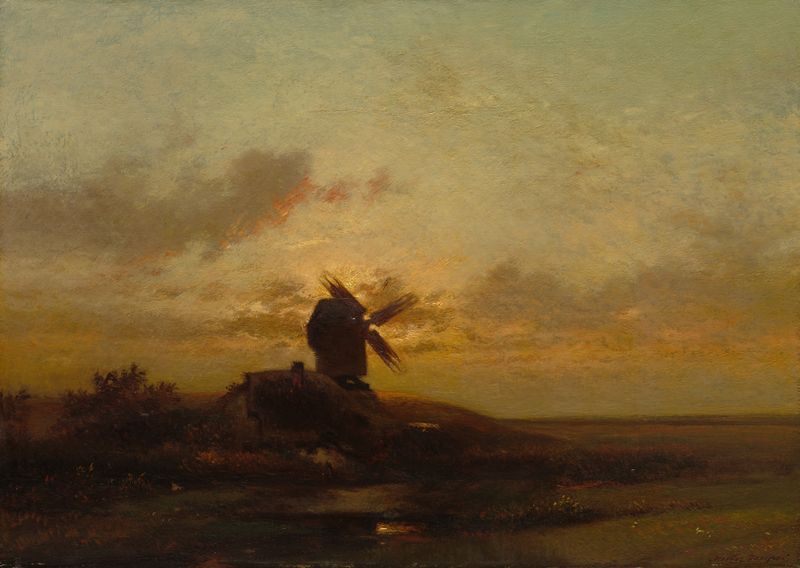
The Windmill
Jules Dupré

The Estuary Farm
Jules Dupré

Fontainebleau Oaks
Jules Dupré

Village Scene, Sunset
Jules Dupré

Barks Fleeing Before the Storm
Jules Dupré

Cows Crossing a Ford
Jules Dupré

The Old Oak
Jules Dupré

Weidelandschaft im Limousin
Jules Dupré





