
A Painter at his Paint Box — History & Facts
A young artist perches on a mossy rock, utterly absorbed in his sketchbook, as if the world beyond the forest’s hush has faded to silence. The painter’s pose is one of quiet concentration, his head bowed and shoulders hunched, drawing the viewer into the intimacy of his creative process. The forest around him is rendered in quick, lively strokes: trunks and branches frame his figure, while the stream at his feet glimmers with dabs of light.
The palette is earthy and subdued, setting a mood of solitude and gentle discovery. Every detail—the tilt of his cap, the careful grip on his brush—signals a moment of study, not performance, as if we are witnessing the birth of an idea. This kind of scene belongs to a moment in the late 1830s when artists across Europe, inspired by the ideals of Romanticism, sought the truth of nature by venturing outdoors with their paintboxes. Works like this, created presumably between 1837 and 1840, were often studies or personal records rather than grand commissions, reflecting a shift in artistic practice: the landscape became a studio, and the artist’s encounter with nature became its own worthy subject.
Today, A Painter at his Paint Box is preserved in the National Museum of Art, Architecture and Design, a quiet testament to a time when the act of seeing—and recording—nature firsthand was both a technical challenge and a declaration of artistic independence. Let your eye linger on the painter’s absorbed expression, and imagine the world he is capturing just beyond the edge of the frame.
More Artworks by Adolph Tidemand

Bridal Procession on the Hardangerfjord
Adolph Tidemand
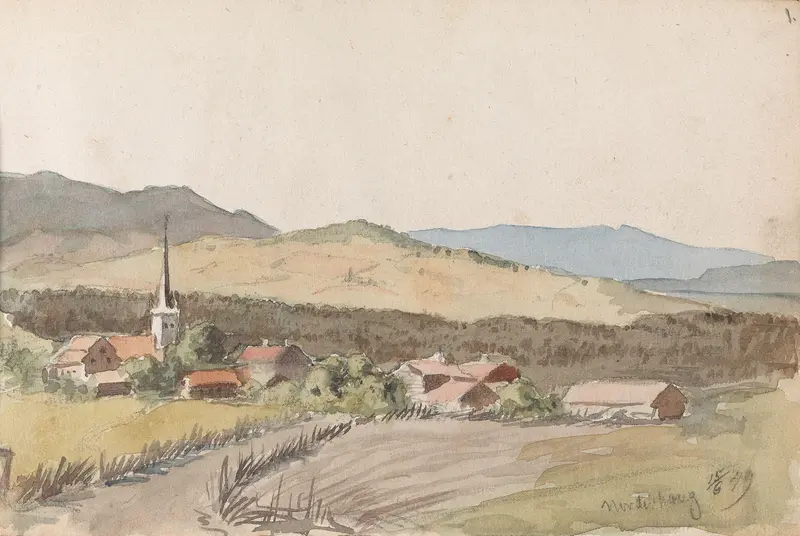
Fra Haugsbygd
Adolph Tidemand
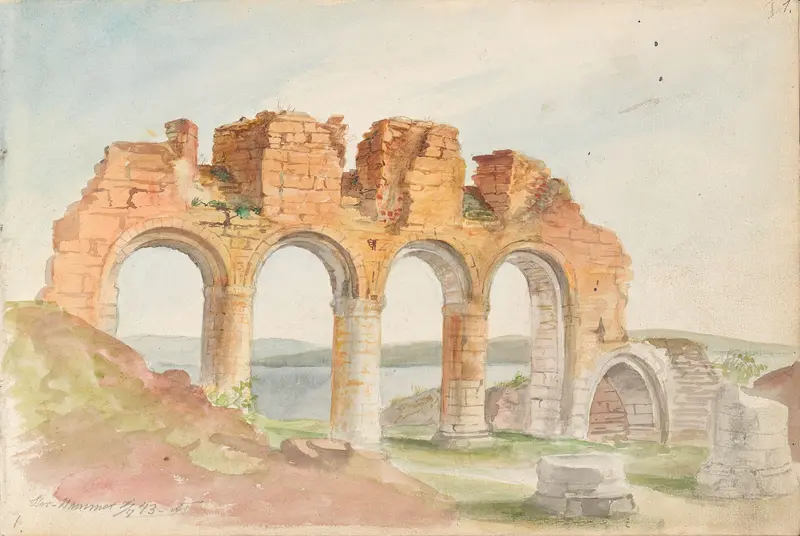
Domkirkeruinen, Hamar
Adolph Tidemand
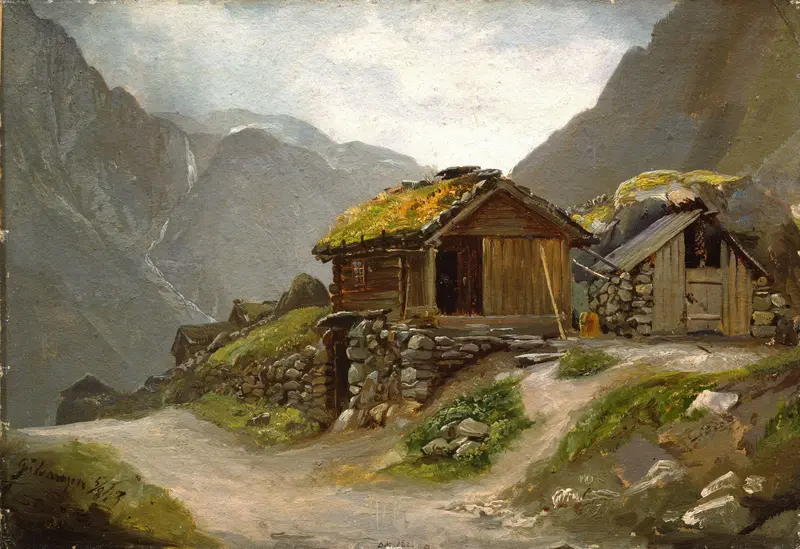
View from Gudvangen
Adolph Tidemand
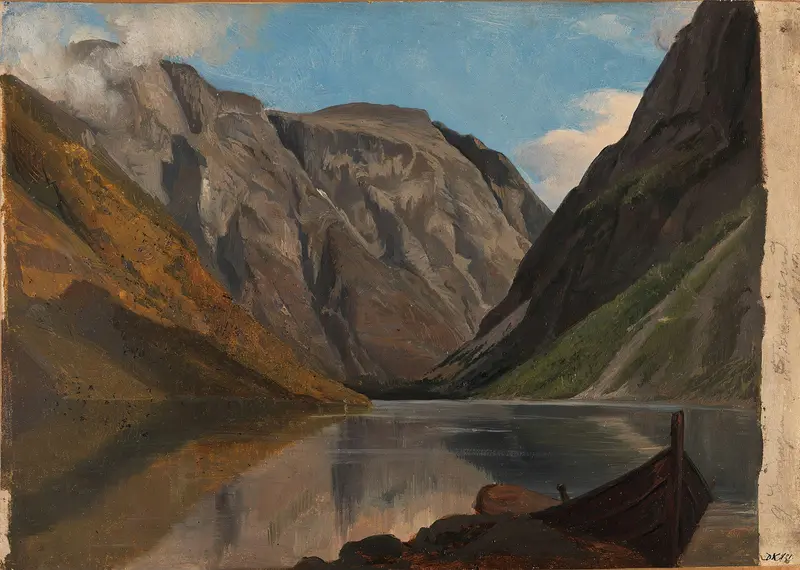
View of Gudvangen
Adolph Tidemand
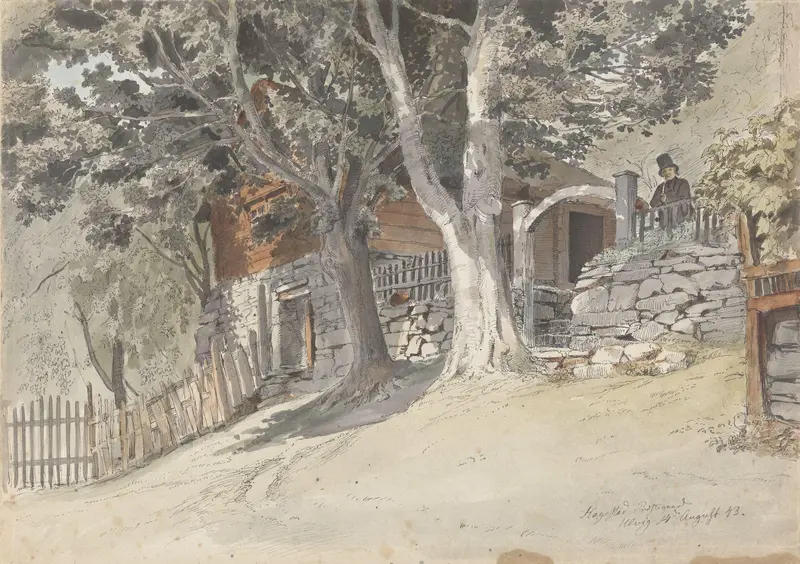
Hagestad prestegård, Ulvik i Hardanger
Adolph Tidemand
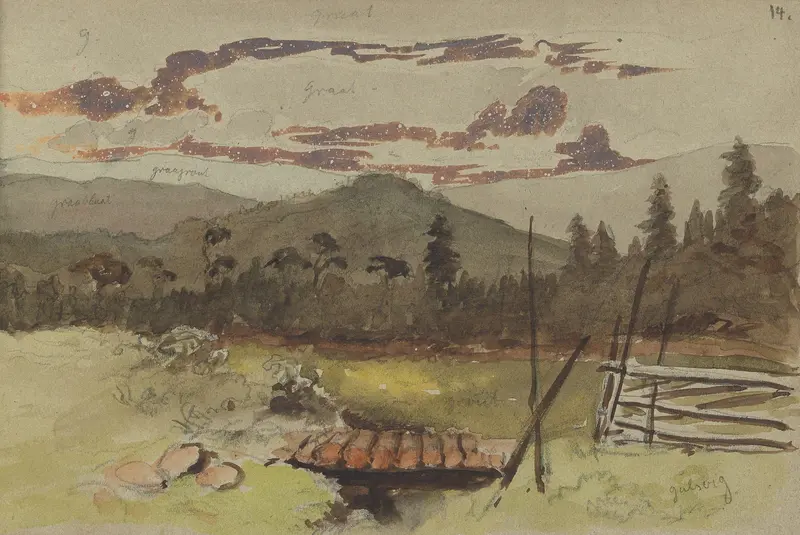
Fra Gulsvik
Adolph Tidemand
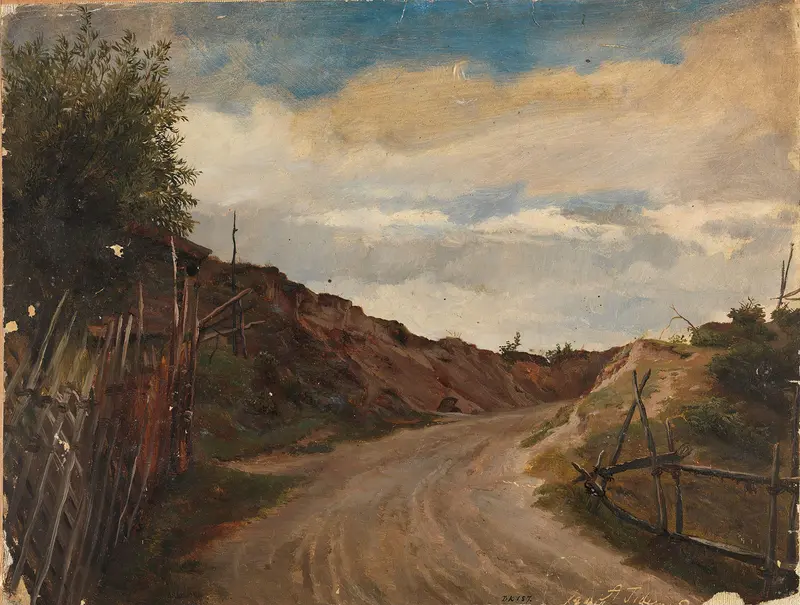
Country Road
Adolph Tidemand
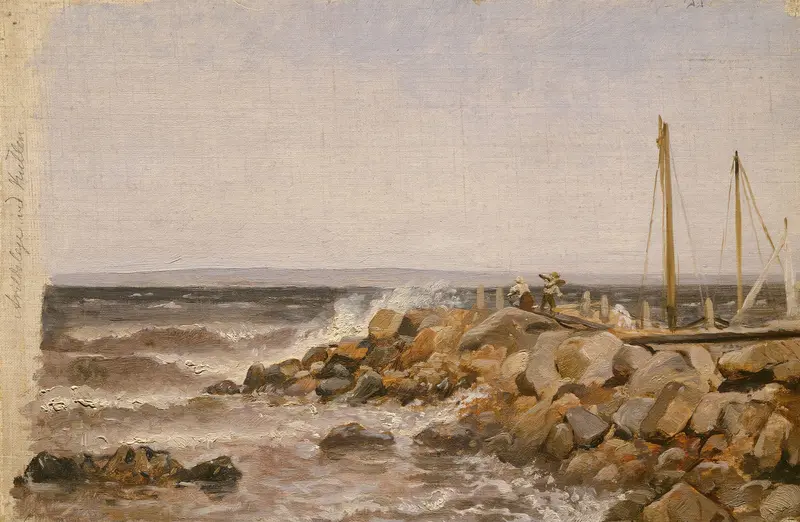
From Kullen in Sweden
Adolph Tidemand
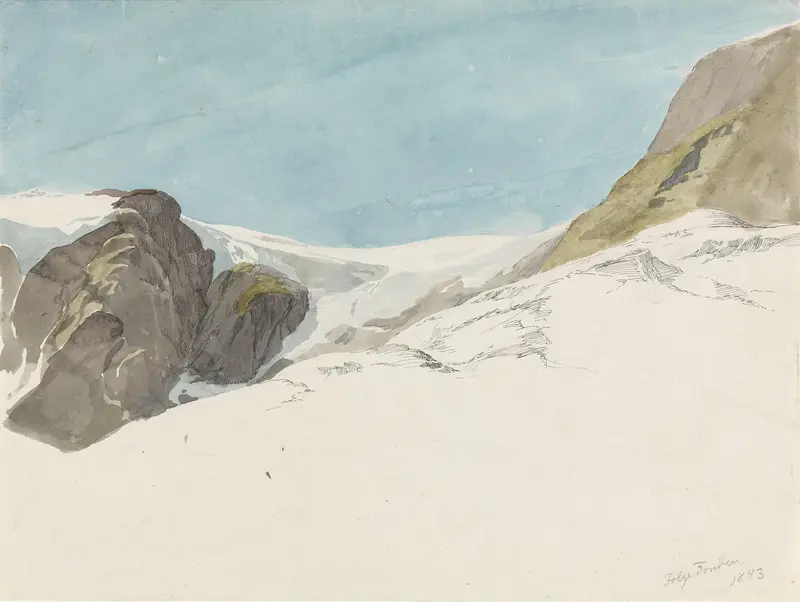
Untitled
Adolph Tidemand
More Genre Scene Art

Banquet of the Officers of the St George Civic Guard
Frans Hals

Rembrandt and Saskia in the Scene of the Prodigal Son
Rembrandt van Rijn

Bal du moulin de la Galette
Pierre-Auguste Renoir

Quadrille at the Moulin Rouge
Henri de Toulouse-Lautrec

A Burial at Ornans
Gustave Courbet

When Will You Marry?
Paul Gauguin