
A peacock, fruit, boiled lobster and a prey of birds — History & Facts
The first thing to strike the viewer here is the sheer abundance—nature’s bounty, gathered and arranged with theatrical care. A peacock sprawls across the foreground, its iridescent tail feathers fanned out in a silent boast, while beside it, a boiled lobster glows a vivid red against the dark table. The painter, Adriaen van Utrecht, guides the eye with a master’s control: the sharp glint on the lobster’s shell, the delicate bloom on the grapes, the soft down of the fallen birds.
Every texture is a challenge—fur, feather, shell, and fruit—each rendered with a precision that invites you to linger and look closer. The light, cool and directional, picks out the spectacle of the peacock’s plumage and the crisp edge of the linen, yet leaves the background in shadow, as if this feast exists in a world apart. This is a world shaped by the Dutch and Flemish love for the still life, painted by 1653, when such images were more than decoration—they were silent performances of wealth, trade, and fleeting pleasure. In the bustling cities of the seventeenth century, merchants and burghers commissioned these paintings to announce their prosperity and taste; a table laden with rare birds and imported fruit was as much a status symbol as the goods themselves.
The presence of the lobster, peacock, and exotic songbirds hints at far-flung connections and the reach of commerce, while the careful decay—a drooping head, a fallen feather—reminds viewers of the passage of time and the limits of abundance. History has kept few traces of this particular work, now known through the Dorotheum collection, but its message is as clear as ever: look, and consider what it means to possess, to enjoy, and to let go.
More Artworks by Adriaen van Utrecht
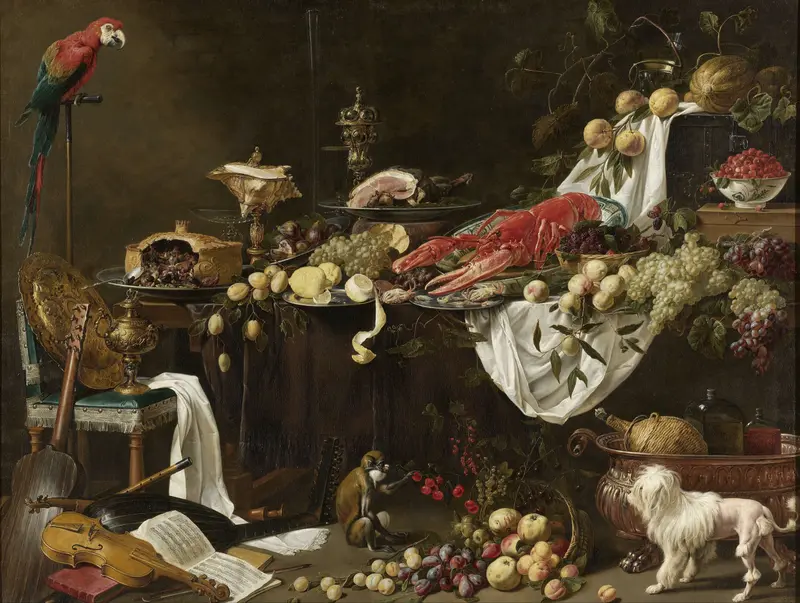
Banquet Still Life
Adriaen van Utrecht
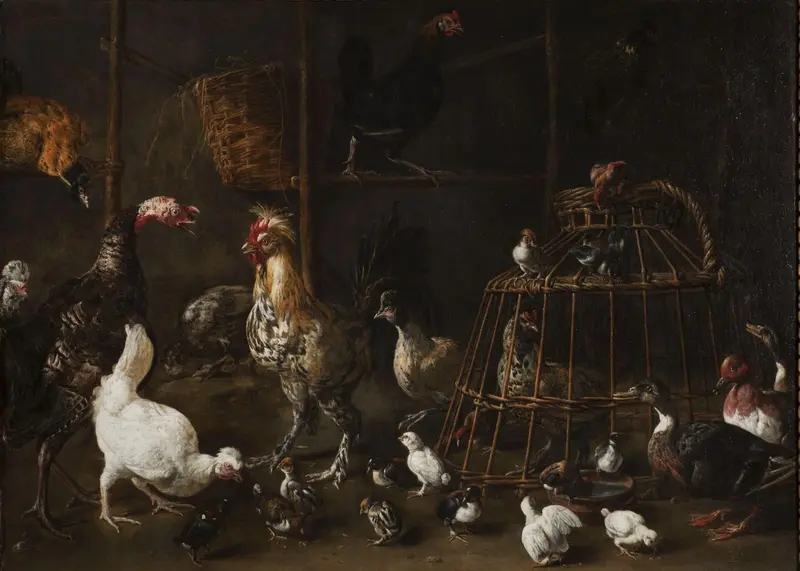
A barn interior with a turkey
Adriaen van Utrecht
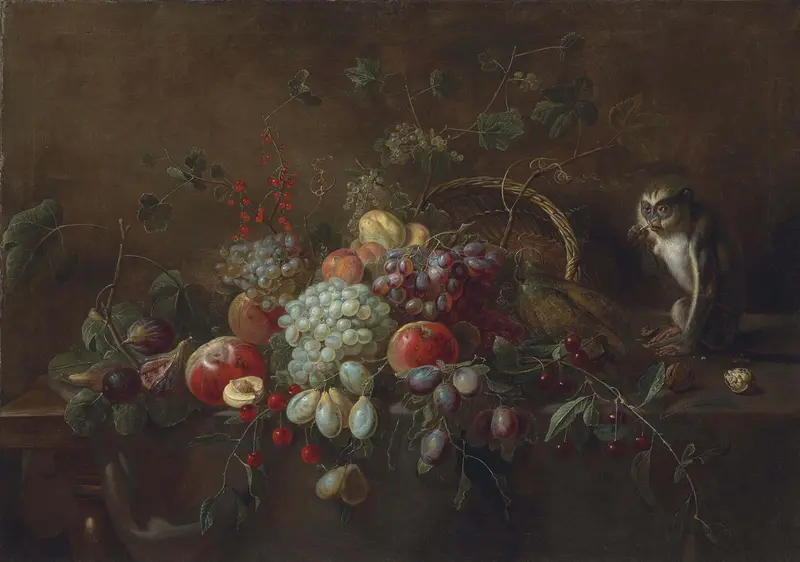
Grapes, apples, plums, figs and other fruit on a partly draped wooden table, a monkey eating walnuts by an upturned woven basket
Adriaen van Utrecht
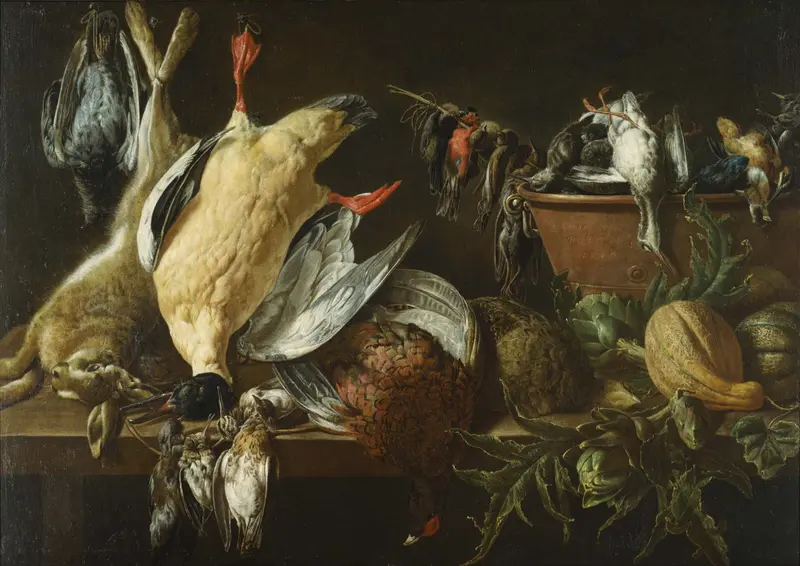
Still Life with Games and Vegetables
Adriaen van Utrecht
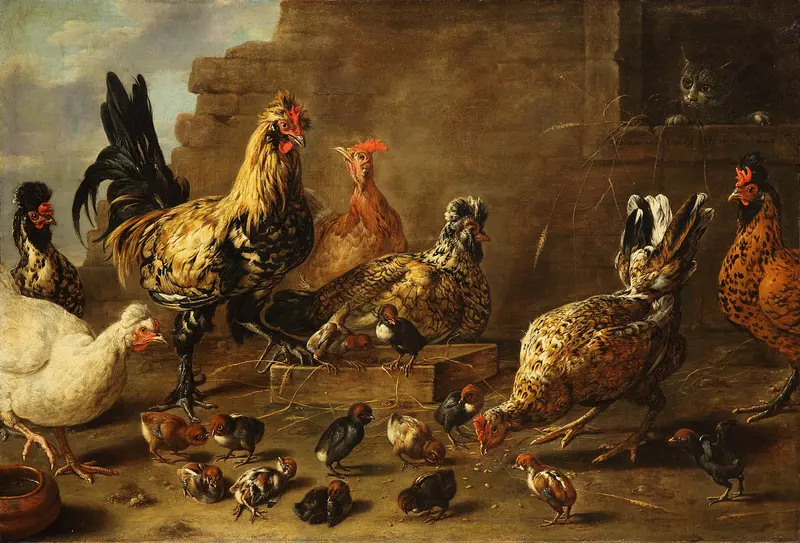
The chicken yard
Adriaen van Utrecht
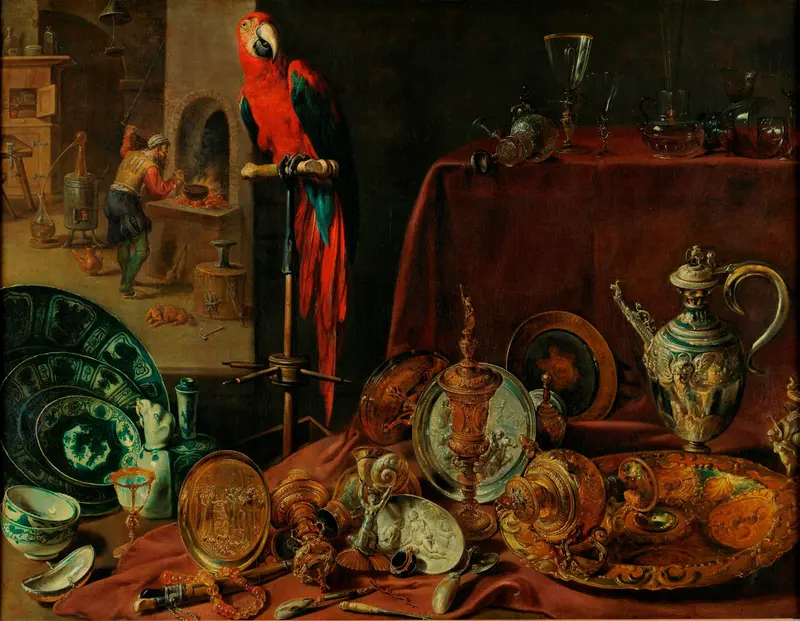
Still life with parrot, an allegory of fire
Adriaen van Utrecht
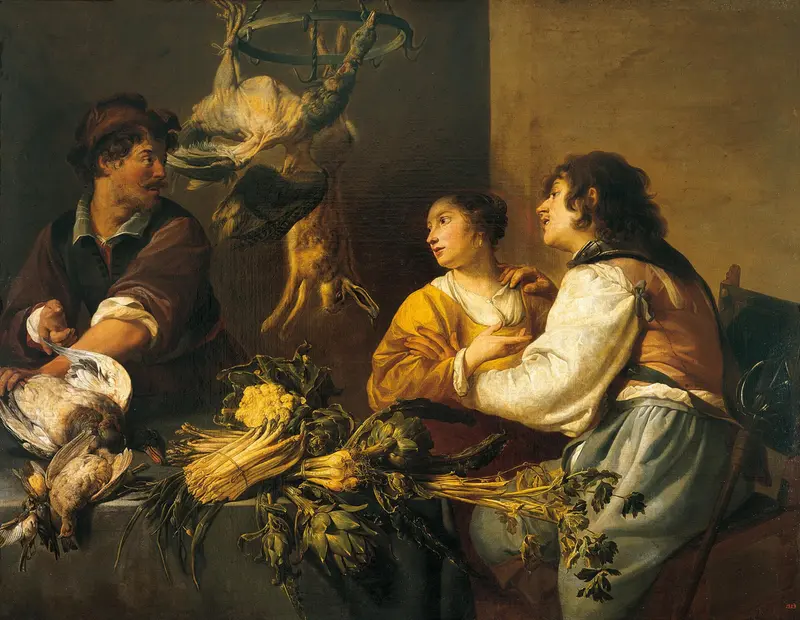
Kitchen
Adriaen van Utrecht
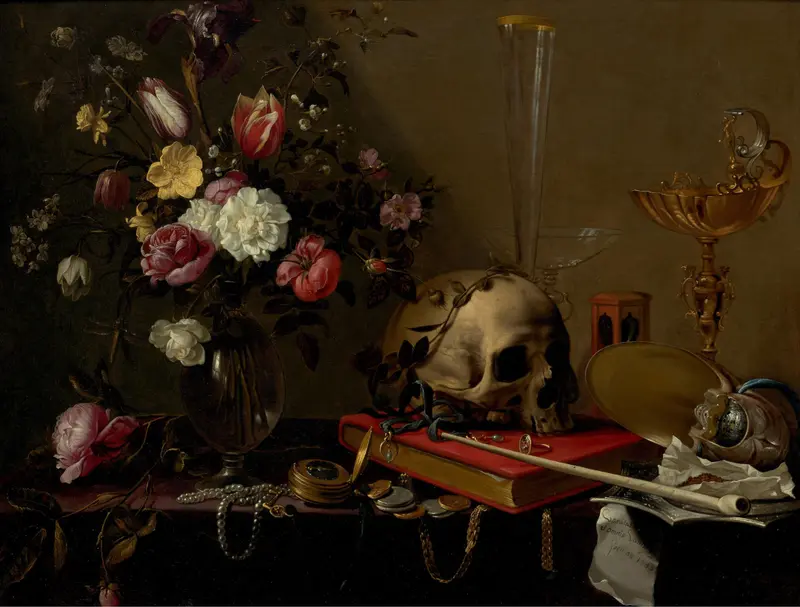
Vanitas - Still Life with Bouquet and Skull
Adriaen van Utrecht
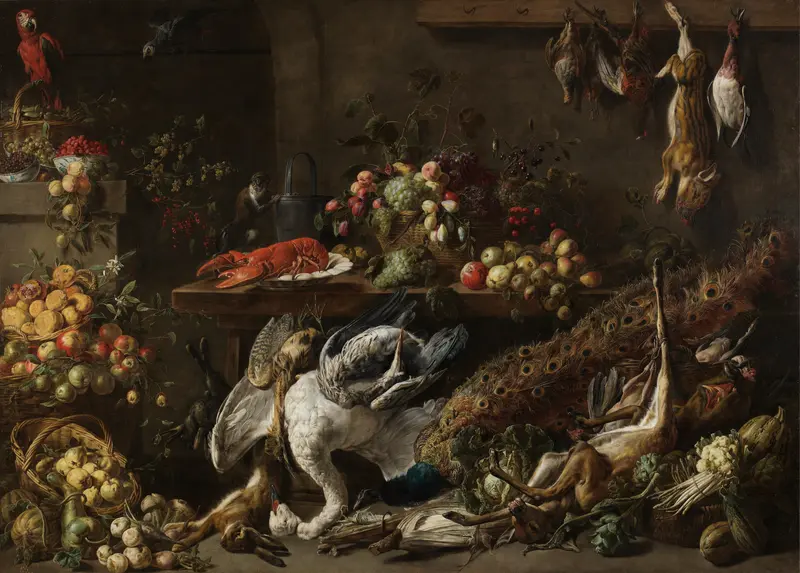
A Larder
Adriaen van Utrecht
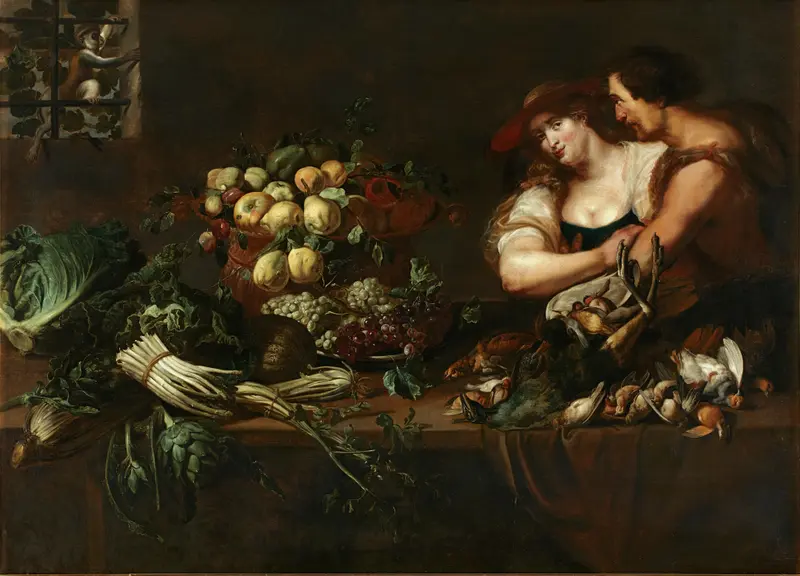
A Kitchen Still Life with Figures
Adriaen van Utrecht





