
A quiet day in the diamond battery – portrait of a Lancaster 68 pounder, 15th Decr. 1854 — History & Facts
Can paint confess what words never could? In the stillness of A quiet day in the diamond battery – portrait of a Lancaster 68 pounder, 15th Decr. 1854, color whispers secrets of valor and despair, each hue revealing layers of emotion that mere words often fail to convey. Look to the foreground, where the intricate details of the Lancaster 68-pounder emerge. The metallic sheen of the cannon contrasts sharply with the muted greens and browns of the surrounding landscape.
Notice how the dappled sunlight plays across the scene, illuminating the cannon’s surface while casting deep shadows that hint at the weight of history. The meticulously rendered textures invite the viewer to lean closer, as if to grasp the silent stories embedded in the canvas. Beyond the immediate beauty lies a profound narrative tension. The choice of somber colors evokes a sense of solitude, suggesting a moment of pause before the storm of battle.
The cannon, a symbol of might, stands in stark contrast to the tranquility of its setting, embodying both power and vulnerability. The juxtaposition of the machine against the natural world reinforces an unsettling reminder of the destructive potential humanity wields, as well as the quiet moments that precede chaos. William Simpson painted this piece in 1855 during the Crimean War, a time when he was documenting the experiences of soldiers and the impact of warfare. Living in the midst of conflict, he sought to capture the reality of military life, a juxtaposition of machinery and human emotion, reflecting the sentiments of a world grappling with the brutalities of war while yearning for moments of peace.
More Artworks by William Simpson
Browse all →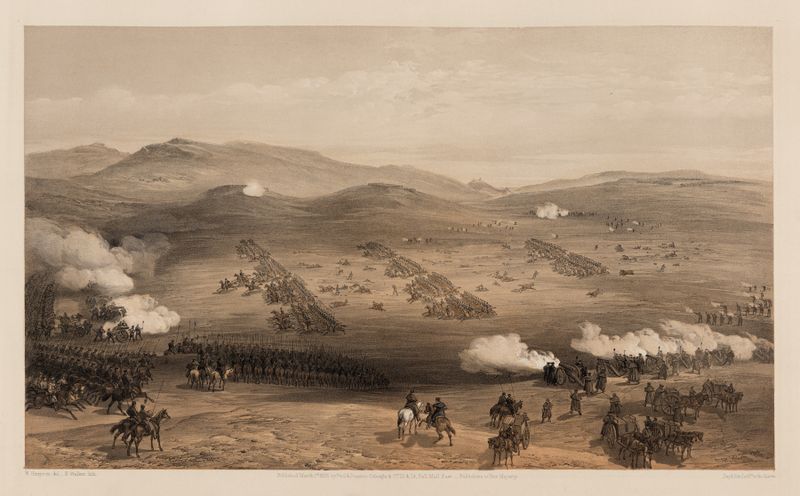
Charge of the light cavalry brigade, 25th Oct. 1854, under Major General the Earl of Cardigan
William Simpson

Charge of the heavy cavalry brigade, 25th Octr. 1854
William Simpson
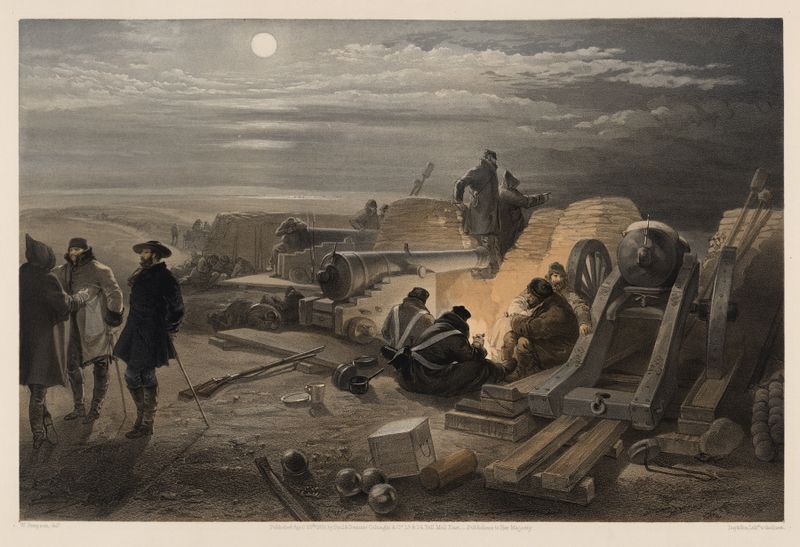
A quiet night in the batteries – a sketch in the Greenhill battery (Major Chapman’s), 29th Jany. 1855
William Simpson

The Great Wall of China
William Simpson
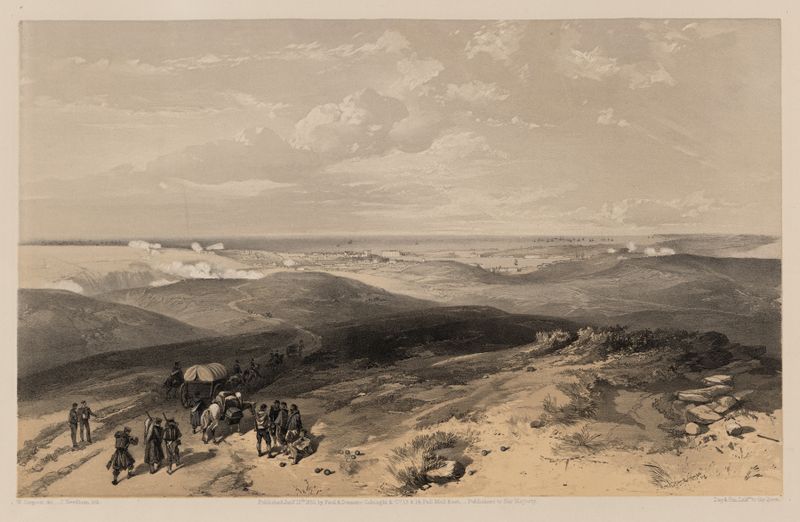
Sebastopol from the rear of the English batteries
William Simpson
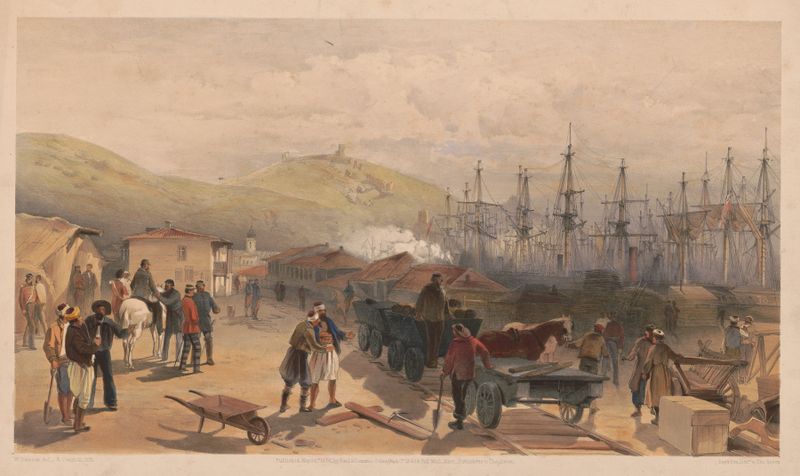
The railway at Balaklava, looking south
William Simpson

The Governor-General’s and Commander-in-Chief’s Camp at Jalandhar, 1 Febuary 1860
William Simpson
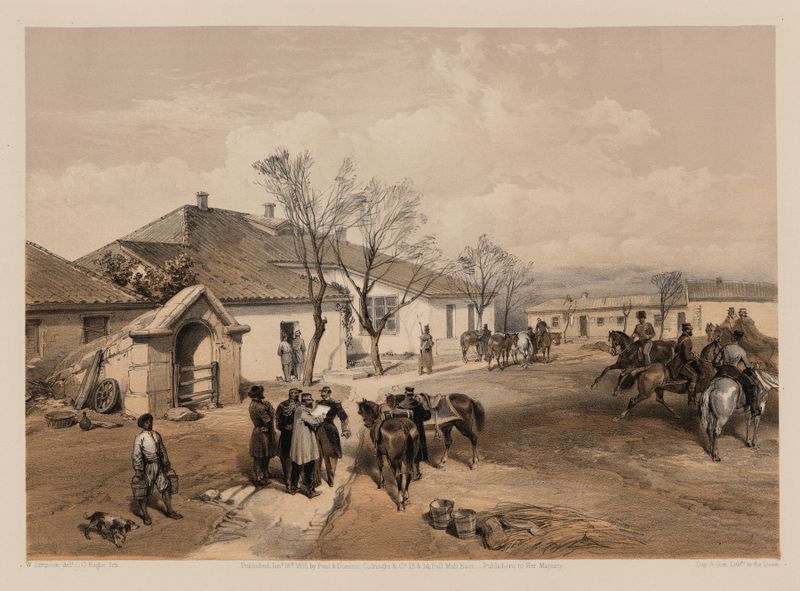
Lord Raglan’s head quarters at Khutor-Karagatch
William Simpson
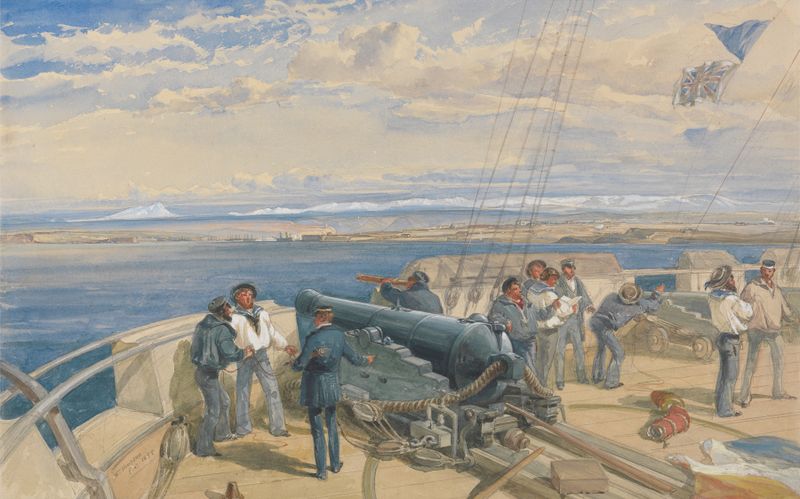
Sebastopol from the Sea, Sketched from the Deck of H. M. S. Sidon, Feb. 1855
William Simpson
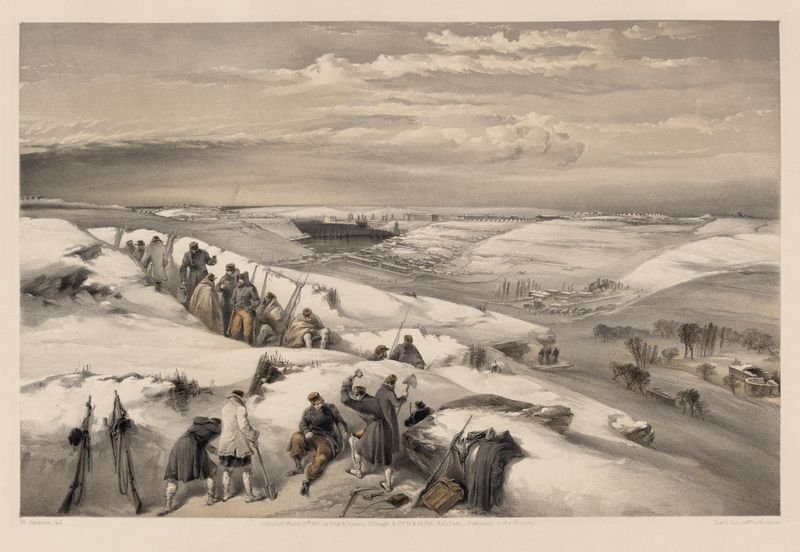
Sebastobol from the 26 gun battery on the extreme right of French attack
William Simpson
More Historical Art
Browse all →
The Night Watch Militia Company of District II under the Command of Captain Frans Banninck Cocq
Rembrandt van Rijn

Lincoln Memorial
Henry Bacon

The Third of May 1808
Francisco de Goya

Isaac and Rebecca, Known as ‘The Jewish Bride’
Rembrandt van Rijn

The Charge of the Mamelukes (1814)
Francisco de Goya

De vier ruiters van de apocalyps
Albrecht Dürer