
A Road Leading to a Village on a Canal: Evening — History & Facts
The first thing that draws the eye in A Road Leading to a Village on a Canal: Evening is the immense, unsettled sky, pressing down on a quiet Dutch village as dusk settles. The drama here is not in grand gestures, but in the tension between the heavy clouds and the last, gentle light that brushes the church tower and glimmers on the canal. A small group of figures—travelers, perhaps, or villagers returning home—move along the winding road, their forms dwarfed by the vastness above.
Each detail is placed with care: the cart trundling forward, the cluster of trees leaning into the wind, the solitary figure at the water’s edge. The palette leans into earthy browns and muted greens, setting a mood of calm anticipation, as if the whole landscape is holding its breath before nightfall. Works like this by Aert van der Neer belong to a world where the landscape was both a source of pride and a daily reality for the Dutch Republic. In the seventeenth century, scenes of local villages, waterways, and rural roads were sought after by urban patrons who found reassurance and identity in these familiar vistas.
Van der Neer was known for his ability to capture the shifting moods of evening and twilight, and this painting—now in the Royal Collection—offers a glimpse into that tradition. History has kept few traces of this particular canvas’s journey, but its quiet presence invites viewers to linger, to follow the road, and to imagine the stories unfolding beneath that restless sky.
More Artworks by Aert van der Neer

A Moonlit River Landscape With Figures Standing By A Gate, A Village Beyond
Aert van der Neer
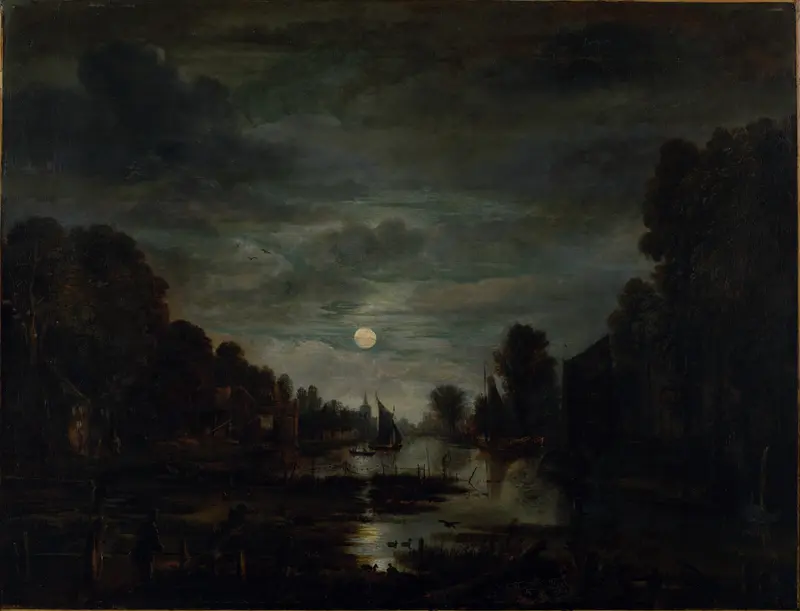
River Landscape in Moonlight
Aert van der Neer
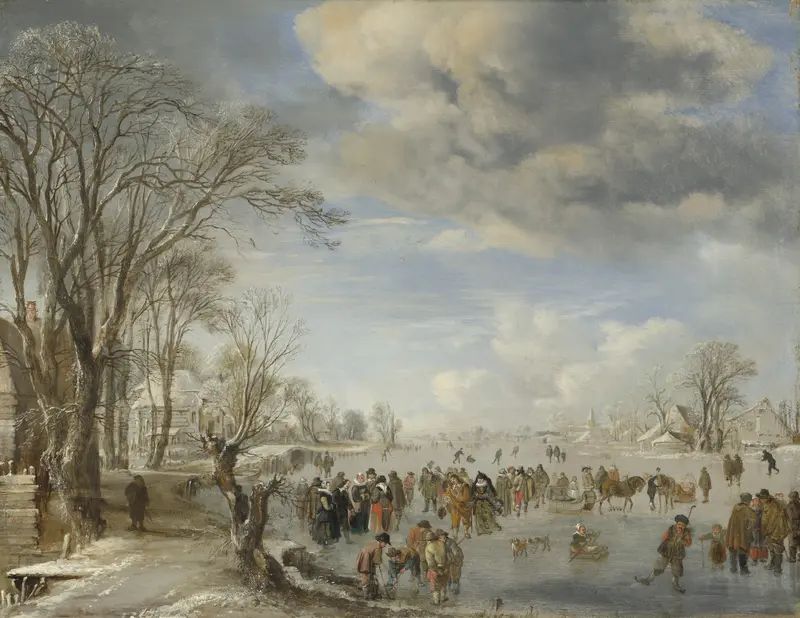
Winter in Holland – Skating Scene
Aert van der Neer

River Landscape
Aert van der Neer
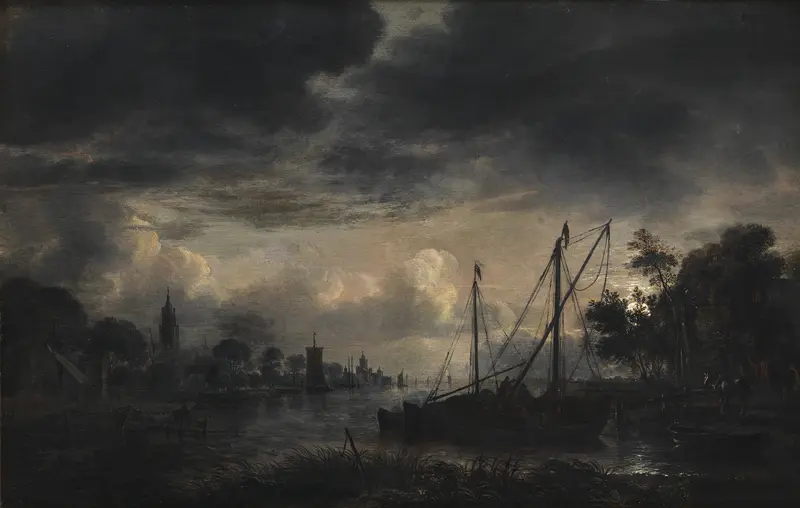
River Landscape in Moonlight
Aert van der Neer
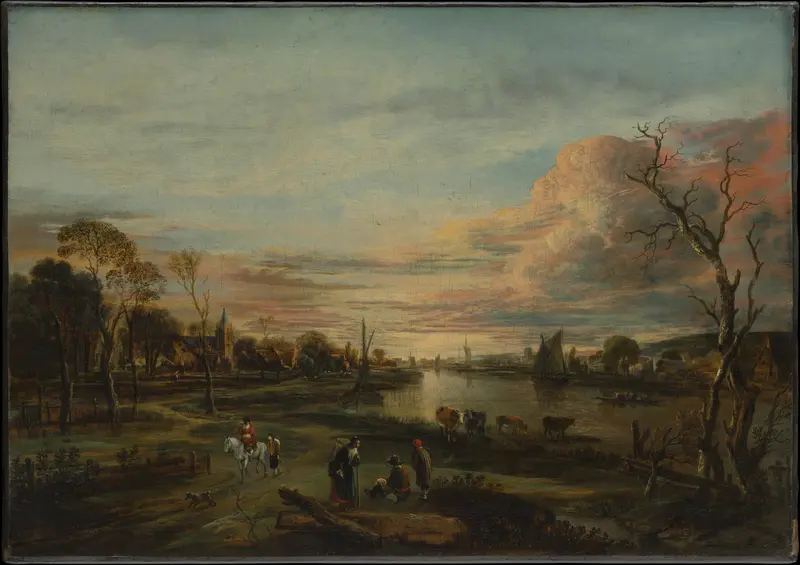
Landscape at Sunset
Aert van der Neer
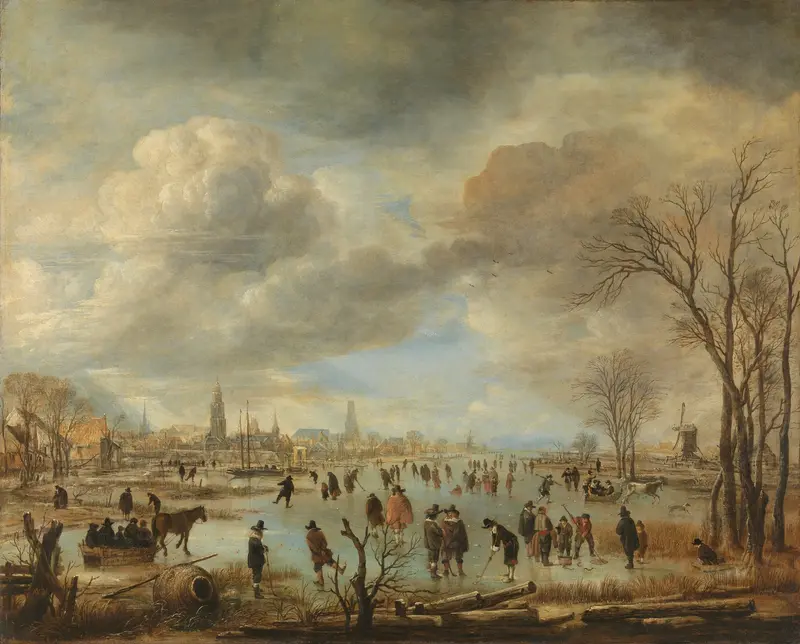
Winter Landscape near a Town with Kolf Players and Horse-Drawn Sleighs
Aert van der Neer

Winter Landscape with Skaters on a Frozen River
Aert van der Neer
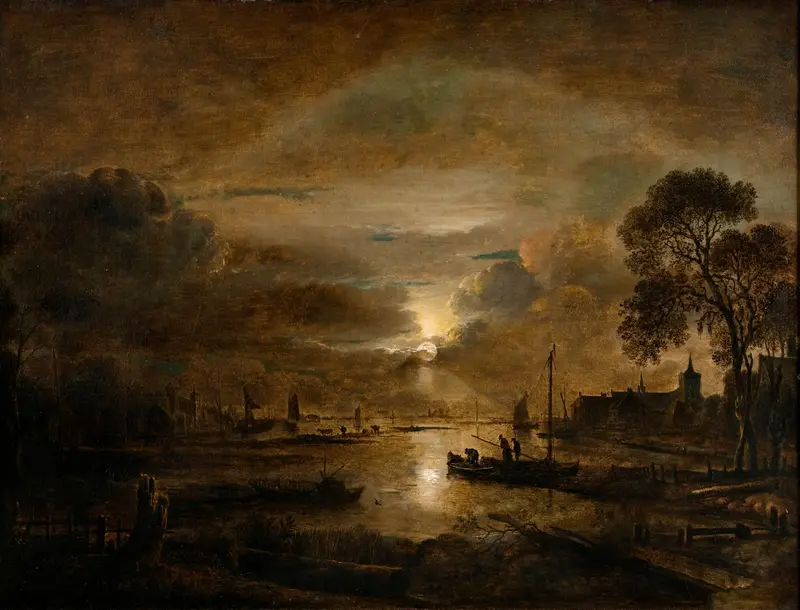
Moonlight at a Dutch River
Aert van der Neer
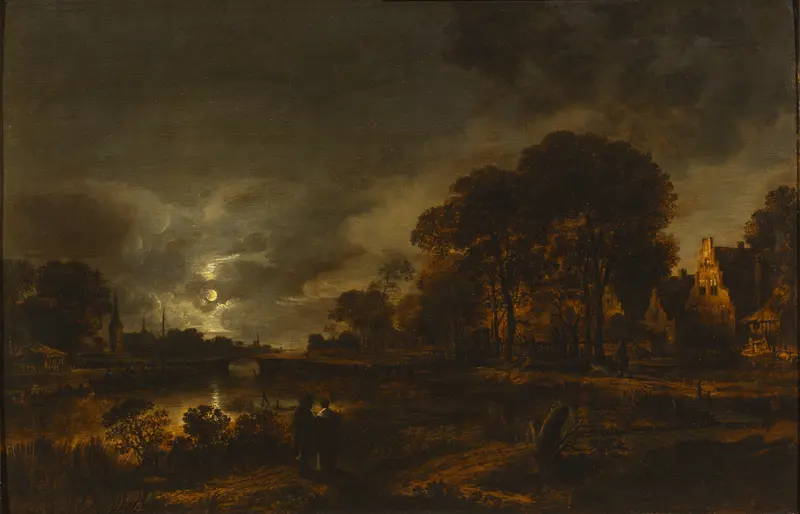
Moonlight Landscape
Aert van der Neer
More Landscape Art

The Starry Night
Vincent van Gogh

View of Delft
Johannes Vermeer

Water Lilies
Claude Monet

The Grand Canal, Venice, looking north-west from the Ca' Corner to the Ca' Contarini degli Scrigni, with the campanile of Santa Maria della Carità
Canaletto

Windsor Castle
Canaletto

The Grand Canal looking North-East from the Palazzo Dolfin-Manin to the Rialto Bridge
Canaletto