
A Road on the Dunes — History & Facts
Can beauty exist without sorrow? The vast expanse of the dunes suggests a delicate balance between tranquility and unrest, where nature’s majesty meets the vulnerability of human existence. Look to the horizon, where the soft curve of the dunes meets a cerulean sky, punctuated by wispy clouds. The radiant sunlight bathes the landscape, casting gentle shadows that dance across the sandy surface. A solitary figure on horseback, almost swallowed by the grandeur around him, draws our gaze with his quiet presence, inviting contemplation on the journey ahead.
Cuyp’s masterful use of warm earth tones, balanced with the coolness of the sky, evokes a sense of harmony that is both inviting and melancholic. As you immerse yourself in the painting, notice the contrast between the expansive landscape and the lone traveler, symbolizing the solitude inherent in every pursuit. The shimmering light on the sand suggests hope and movement, yet the isolation of the rider hints at an underlying sorrow—perhaps a metaphor for faith amidst uncertainty. Here, the viewer is left to ponder the duality of existence: the beauty of nature mirrored by the struggles of the human spirit. Created in the 1640s, this piece emerged during a period of artistic flourishing in the Netherlands, where Cuyp was refining his technique while grappling with themes of light and landscape.
At this time, he was influenced by the burgeoning Baroque movement, which emphasized the emotional power of color and composition. As he painted A Road on the Dunes, Cuyp found himself at the intersection of personal and collective experience, reflecting a world where the sublime beauty of nature coexists with the complexities of human emotions.
More Artworks by Aelbert Cuyp
Browse all →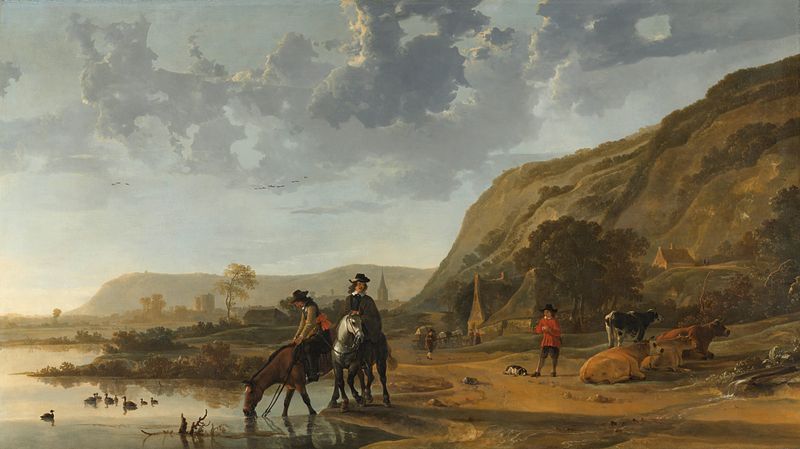
River Landscape with Riders
Aelbert Cuyp

Gezicht op Dordrecht
Aelbert Cuyp
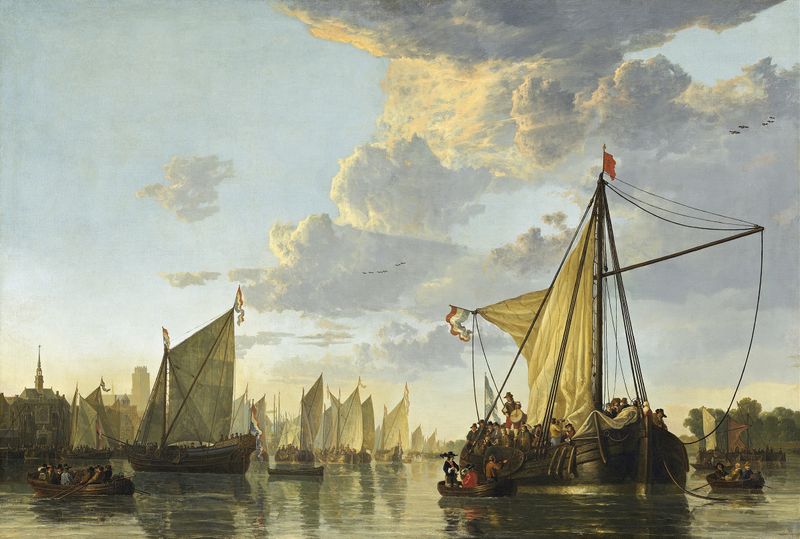
The Maas at Dordrecht
Aelbert Cuyp
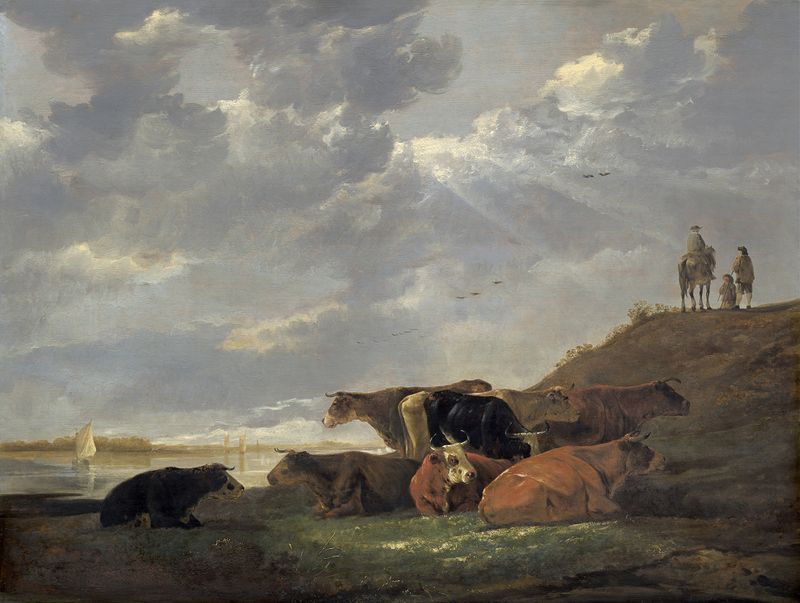
River Landscape with Cows
Aelbert Cuyp
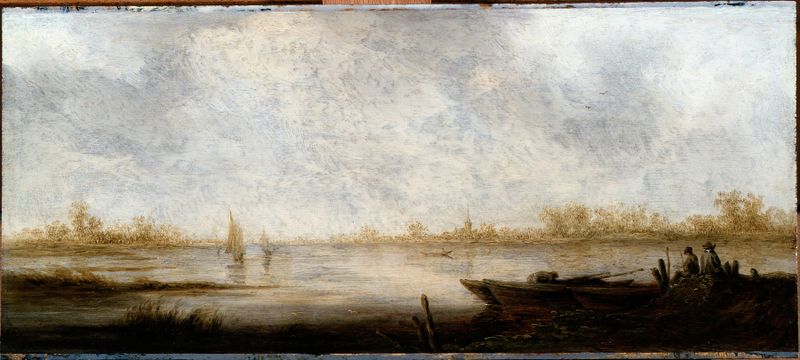
River Landscape
Aelbert Cuyp

Landscape near Dordrecht
Aelbert Cuyp
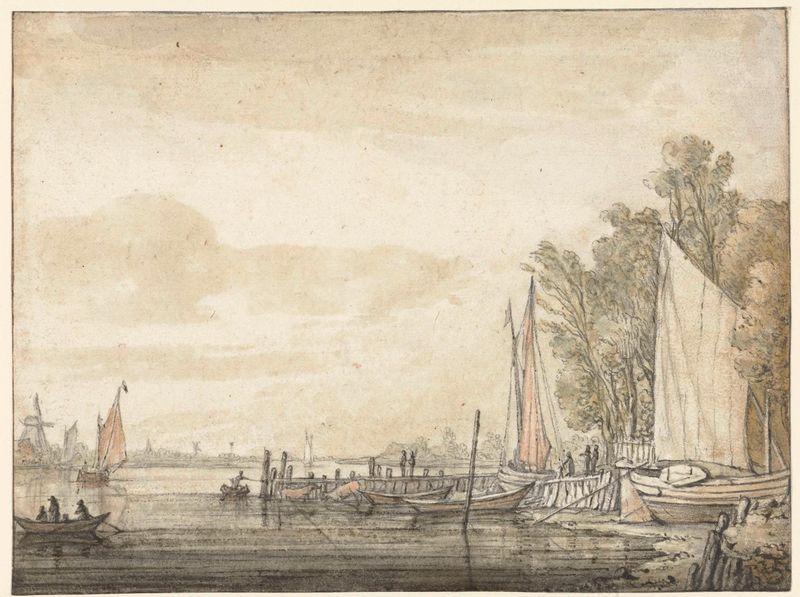
Boten bij een steiger in een rivier
Aelbert Cuyp

Bevroren rivier met schaatsers bij een kerk
Aelbert Cuyp
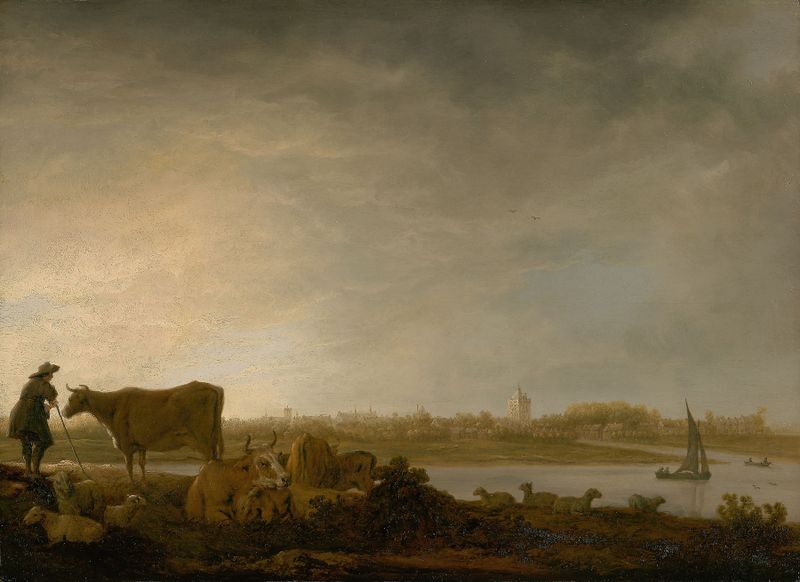
A View of Vianen with a Herdsman and Cattle by a River
Aelbert Cuyp

River Landscape with Cows
Aelbert Cuyp





