
A Spanish three-decker at anchor off Naples — History & Facts
What first seizes the eye is the sheer vertical sweep of A Spanish three-decker at anchor off Naples, an unusual choice for a seascape, which draws the viewer upward from the bustling quay to the proud masts and finally to the golden sky. The artist, Abraham Willaerts, orchestrates the scene with a sense of anticipation—the Spanish ship, lavishly adorned, sits at anchor as if pausing for breath before the next chapter of its journey. The sunlight, diffused and milky, washes over the entire harbor, lending the moment a sense of calm industry rather than drama.
Every figure on the quay and in the boats is caught mid-task, their gestures purposeful, their presence reinforcing the sense of a Mediterranean port alive with commerce and ceremony. The lighthouse, rising like a sentinel at the harbor’s edge, anchors the composition and signals both safety and grandeur. The Spanish three-decker itself is a marvel of detail: its ornately carved stern and the figurehead of a prince on a leaping white horse speak of royal patronage and maritime power. Flags flutter from the masts—Spanish colors, a religious pennant, a red banner—each one a coded message of allegiance and faith.
The high viewpoint allows the viewer to survey not just the ship, but the entire choreography of harbor life: rowboats ferrying passengers, figures gathering on the quay, and the distant haze of Naples beyond. The palette, dominated by golds and soft blues, sets a mood of warmth and order, inviting the eye to linger on each carefully rendered detail. Painted in 1669, this work belongs to a world where maritime painting was both art and advertisement—commemorating power, trade, and the prestige of navies. Such scenes were prized by merchants, naval officers, and statesmen alike, eager to display their connections to the great ports and fleets of Europe.
Abraham Willaerts was known for his Mediterranean views, and here he captures not just a ship, but an entire system of commerce, faith, and spectacle. Little is recorded about the specific journey of this canvas, now in the collection of the Royal Museums Greenwich, but its careful construction and luminous atmosphere speak to the ambitions of its age. Stand before it and you are drawn into a harbor where every mast, flag, and figure has a role to play in the grand pageant of the seventeenth-century sea.
More Artworks by Abraham Willaerts

Ships Moored Off A Rocky Coastline With Fishermen Unloading Their Catch
Abraham Willaerts
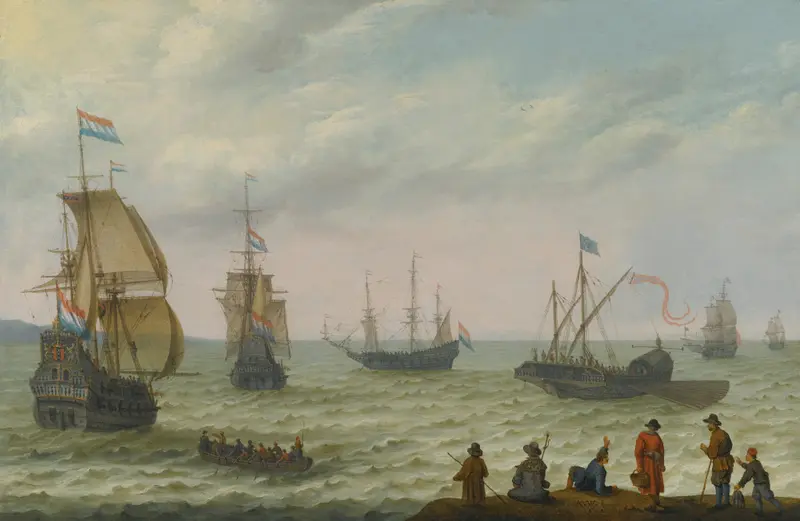
Coastal Landscape With Dutch Shipping In Choppy Seas
Abraham Willaerts
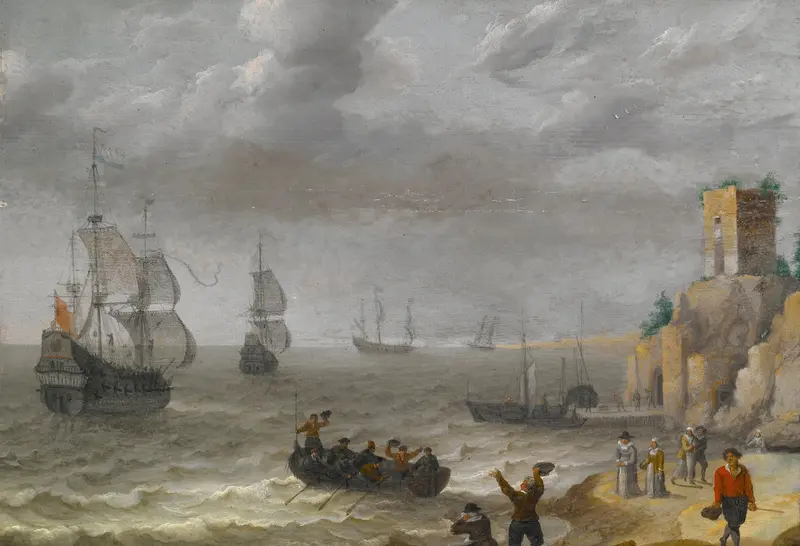
Seascape with Ruins on a Cliff
Abraham Willaerts
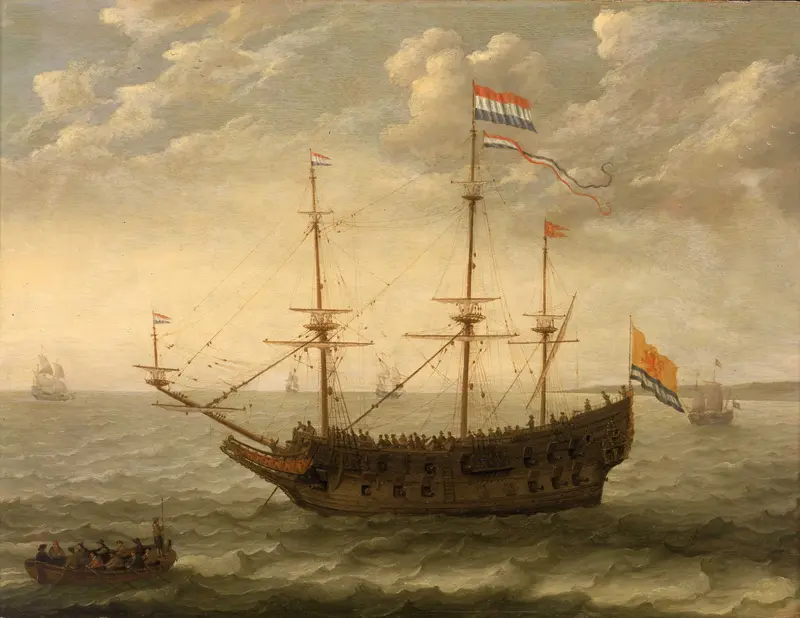
A Zeeland Ship at Anchor
Abraham Willaerts
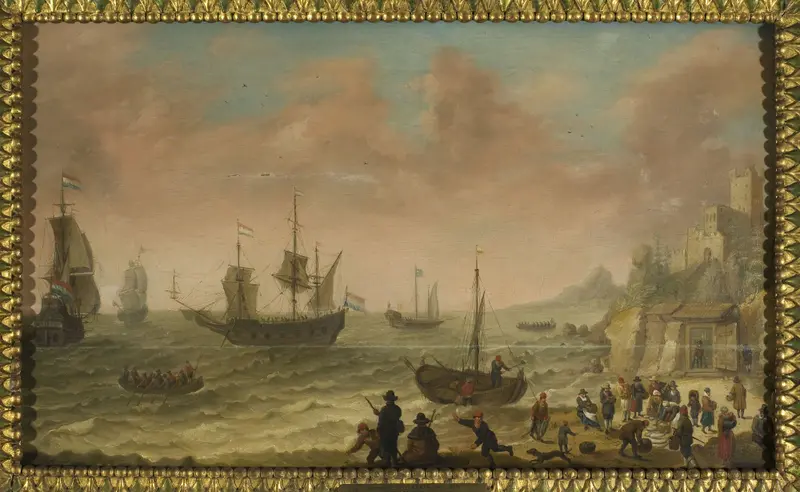
A Coastal Scene with Dutch Vessels and a Fish Market
Abraham Willaerts
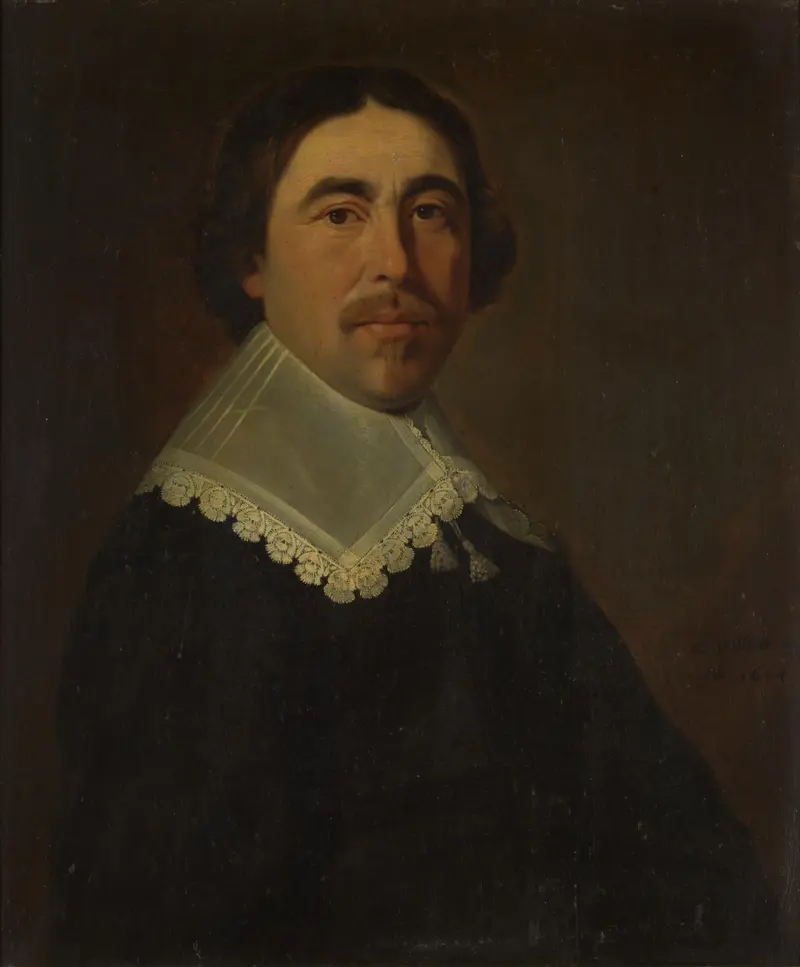
Portrait of a Man by Centraal Museum
Abraham Willaerts
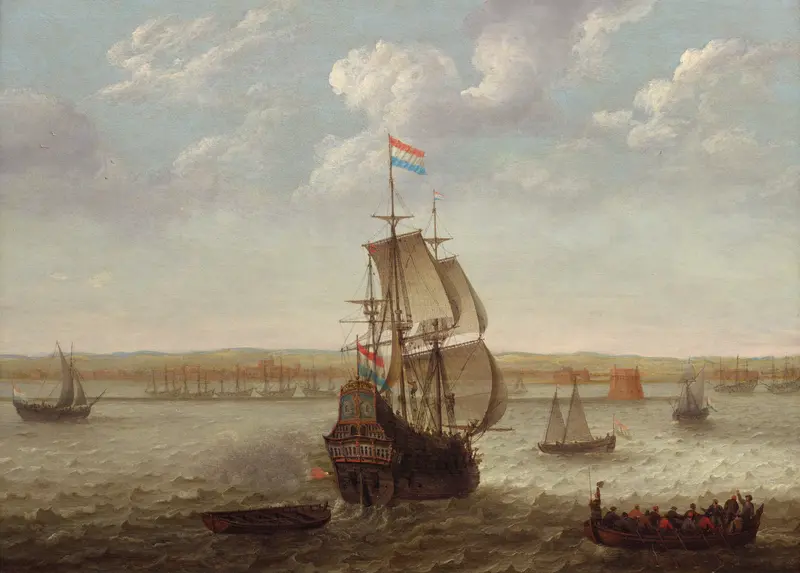
Dutch ships on the roadstead of Recife, Brazil
Abraham Willaerts
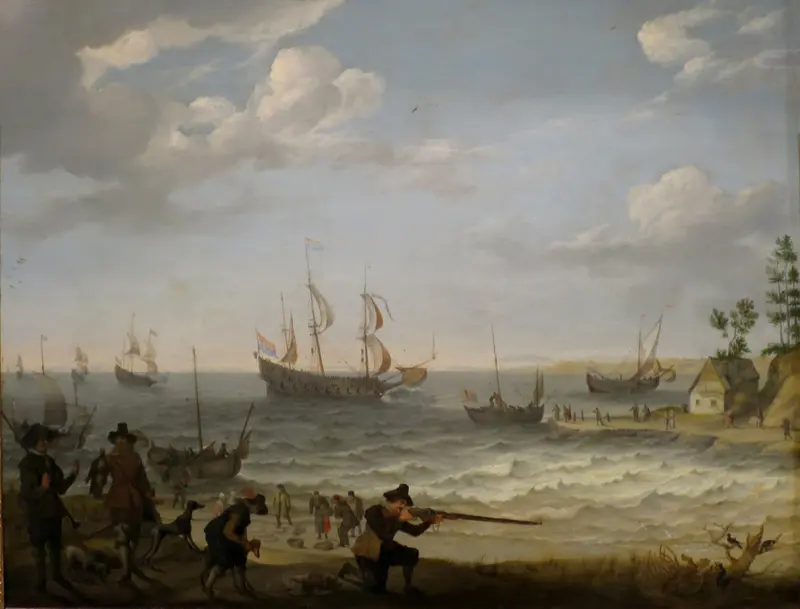
Hunters on the beach
Abraham Willaerts





