
Dutch ships on the roadstead of Recife, Brazil — History & Facts
What first catches the eye in Dutch ships on the roadstead of Recife, Brazil is the proud display of Dutch flags, crisp against the pale Atlantic sky, as a fleet gathers just off a distant, sunlit coast. The largest ship, its stern richly ornamented and its sails half-furled, dominates the foreground, while a boat full of figures rows briskly toward the shore. The painter draws you in with a careful play of scale: the main vessel’s grandeur is heightened by the smaller craft and the scattered silhouettes of other ships, each one a marker of commerce, ambition, or conquest.
The light is gentle but purposeful, picking out the rigging and the flags, guiding the viewer’s gaze from the bustling water to the low, ochre line of Recife’s fortifications. This is a scene born of the mid-seventeenth century, when Dutch maritime power stretched across the Atlantic and Brazil was briefly a Dutch colonial prize. Marine paintings like this, especially in the hands of artists such as Abraham Willaerts—whose name is linked to both the Dutch Republic and its overseas ventures—were more than decoration: they were records of naval prowess, commissioned by merchants, admirals, or city fathers eager to commemorate their reach. The date, 1640, places this work in the thick of Dutch Brazil’s short-lived golden age, when Recife was a hub of trade and conflict.
History has kept few traces of many such paintings, but this one, documented in the scholarship of Michiel van Groesen, invites us to linger over its details and imagine the world it once celebrated.
More Artworks by Abraham Willaerts

Ships Moored Off A Rocky Coastline With Fishermen Unloading Their Catch
Abraham Willaerts
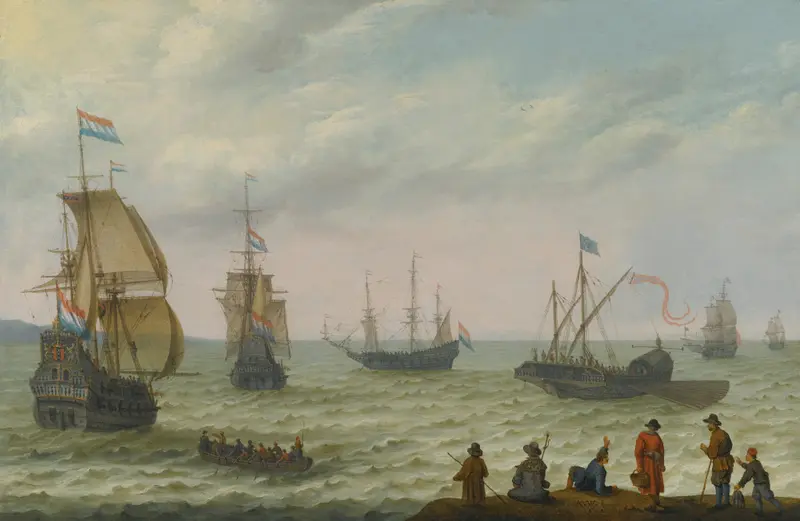
Coastal Landscape With Dutch Shipping In Choppy Seas
Abraham Willaerts
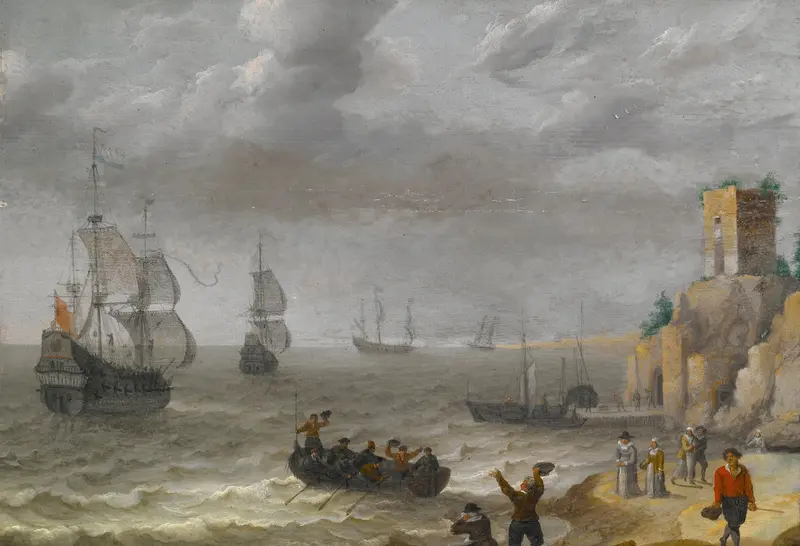
Seascape with Ruins on a Cliff
Abraham Willaerts
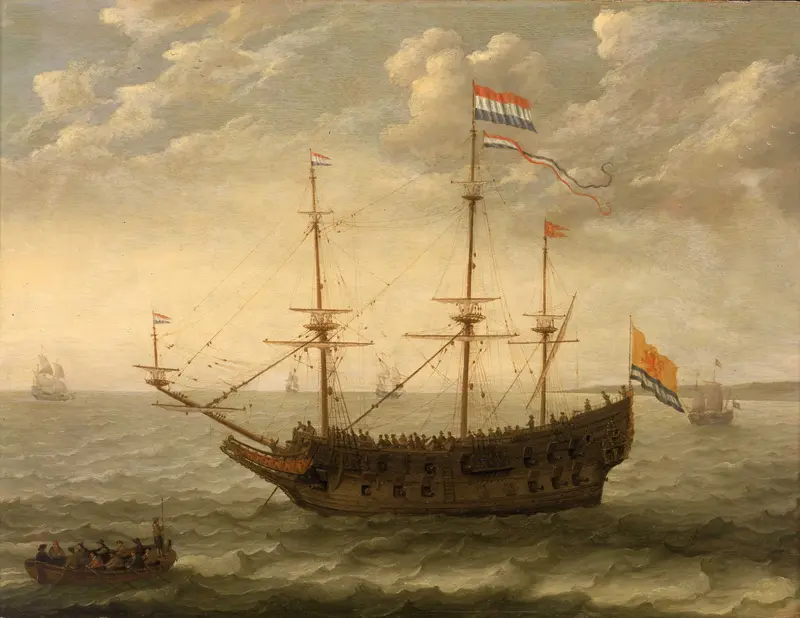
A Zeeland Ship at Anchor
Abraham Willaerts
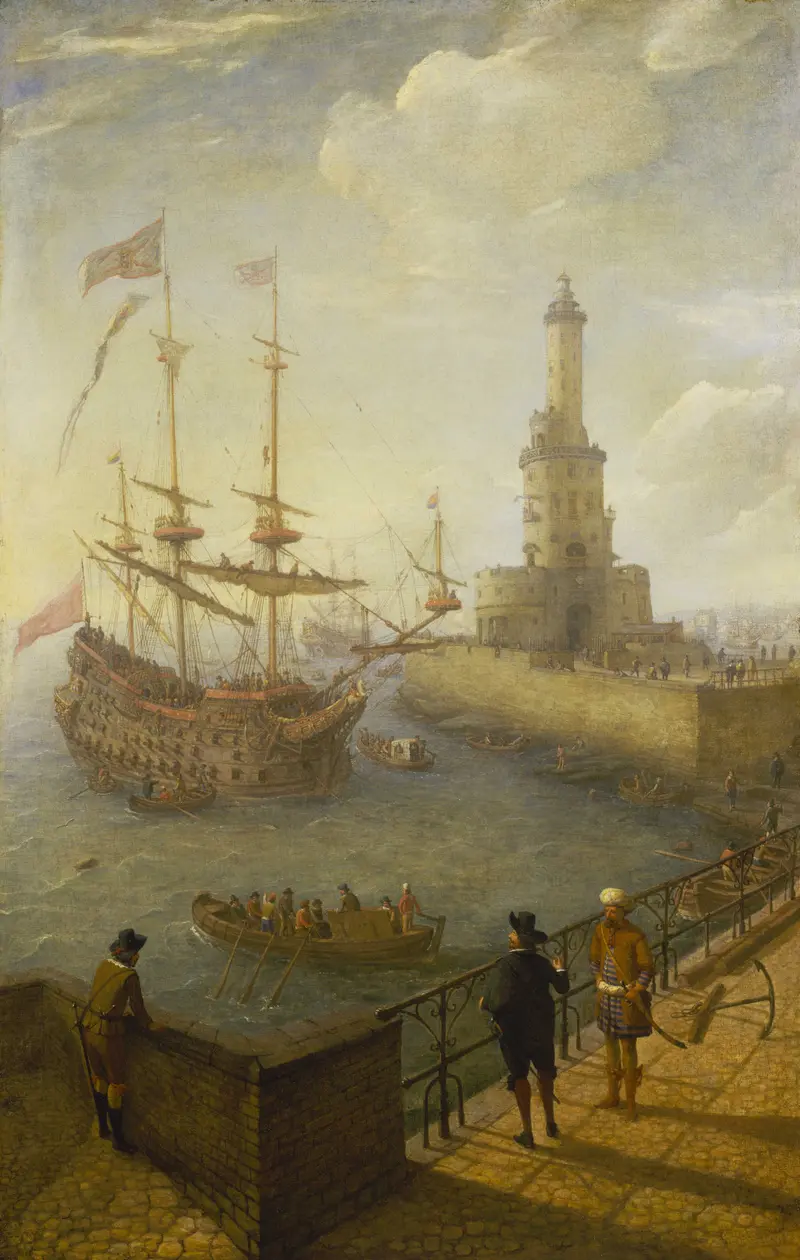
A Spanish three-decker at anchor off Naples
Abraham Willaerts
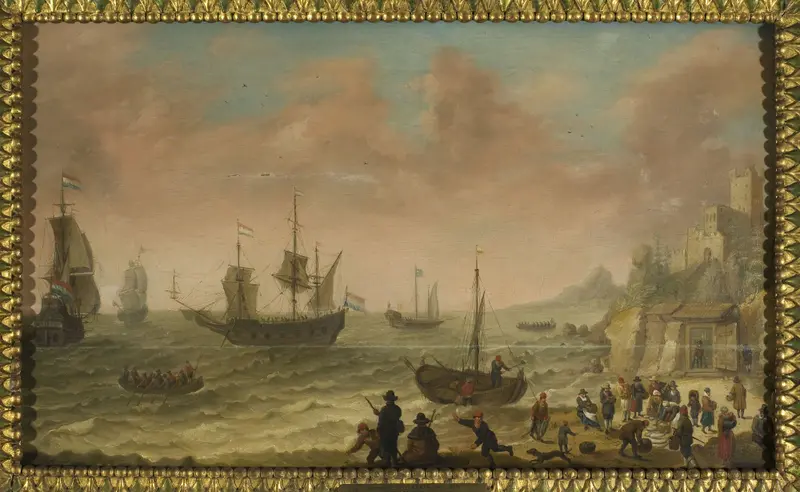
A Coastal Scene with Dutch Vessels and a Fish Market
Abraham Willaerts
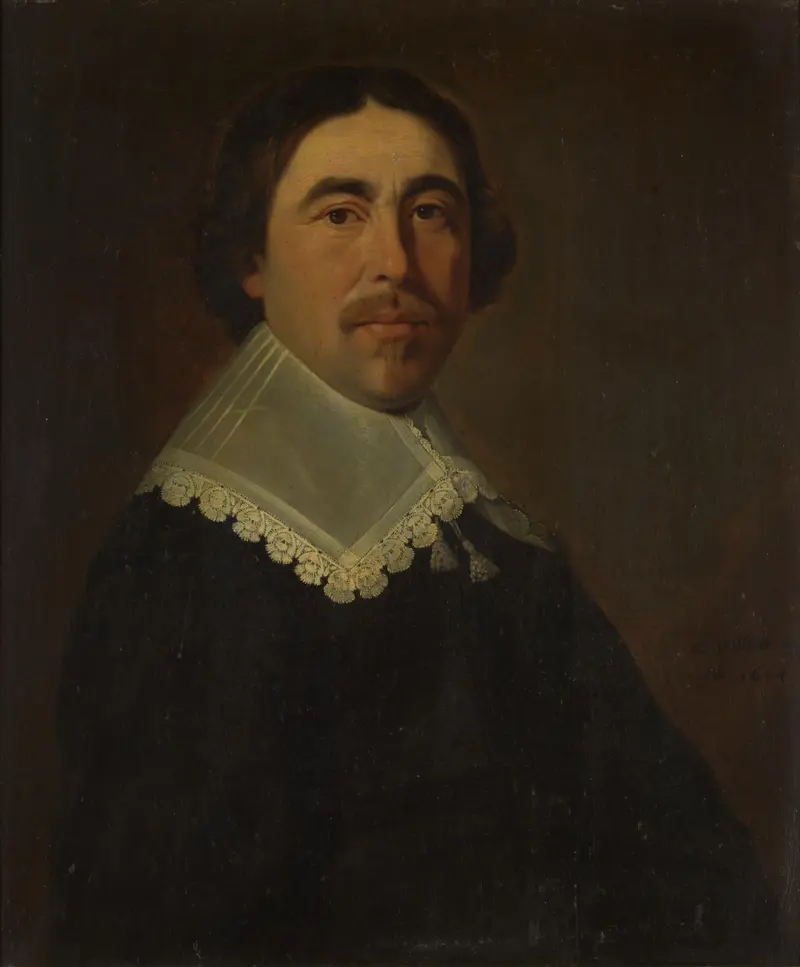
Portrait of a Man by Centraal Museum
Abraham Willaerts
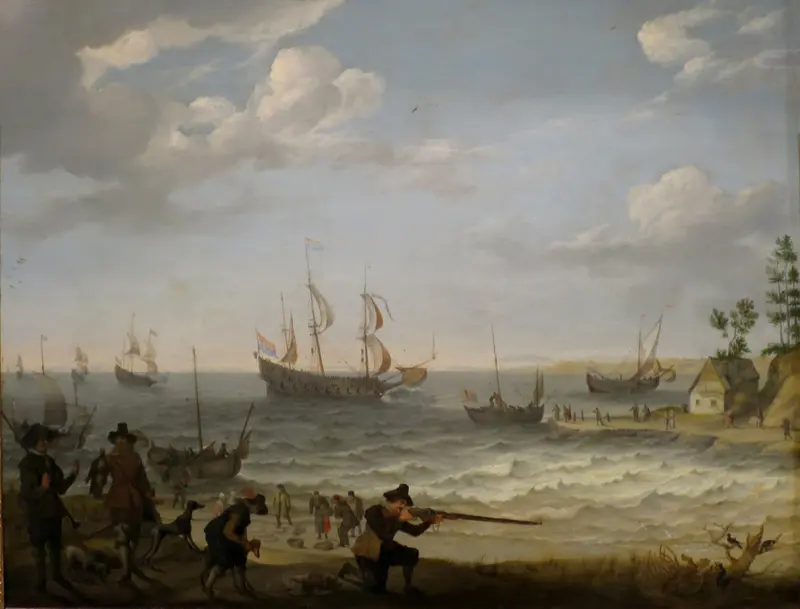
Hunters on the beach
Abraham Willaerts





