
Hunters on the beach — History & Facts
A restless energy runs through Hunters on the Beach, drawing the viewer first to the poised hunter at the shoreline, his musket trained on unseen prey beyond the frame. The eye is then swept out to sea, where Dutch ships—flags snapping in the wind—anchor the composition and hint at the era’s maritime ambitions. The low horizon gives the sky a commanding presence, its billowing clouds echoing the rolling surf below.
The figures scattered across the sand—some tending to dogs, others bent over their catch—form a frieze of activity, their gestures and groupings inviting us to imagine the rhythms of coastal life. Every detail, from the glint of sunlight on a musket barrel to the distant bustle near a whitewashed cottage, is placed to balance human industry with the vastness of sea and sky. Painted in 1641, this work belongs to the Dutch Golden Age, a period when scenes of everyday life and local landscapes became prized subjects for collectors and merchants alike. Artists such as Abraham Willaerts responded to a world shaped by trade, exploration, and the assertion of national identity—motifs that surface here in the proud ships and the orderly, industrious figures.
Though little is recorded about this specific painting’s early history, its presence today in the Bergen Kunstmuseum testifies to the enduring appeal of such scenes. The painting invites us to linger, to trace the connections between land and water, work and leisure, and to imagine the stories carried on the wind.
More Artworks by Abraham Willaerts

Ships Moored Off A Rocky Coastline With Fishermen Unloading Their Catch
Abraham Willaerts
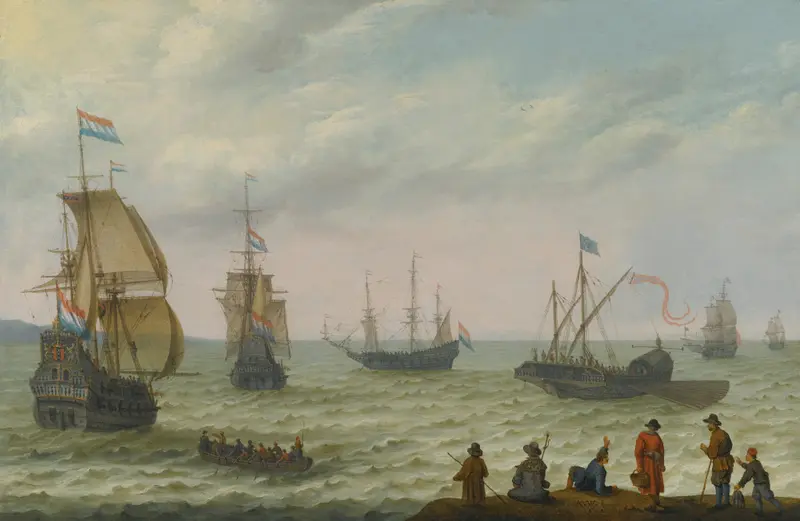
Coastal Landscape With Dutch Shipping In Choppy Seas
Abraham Willaerts
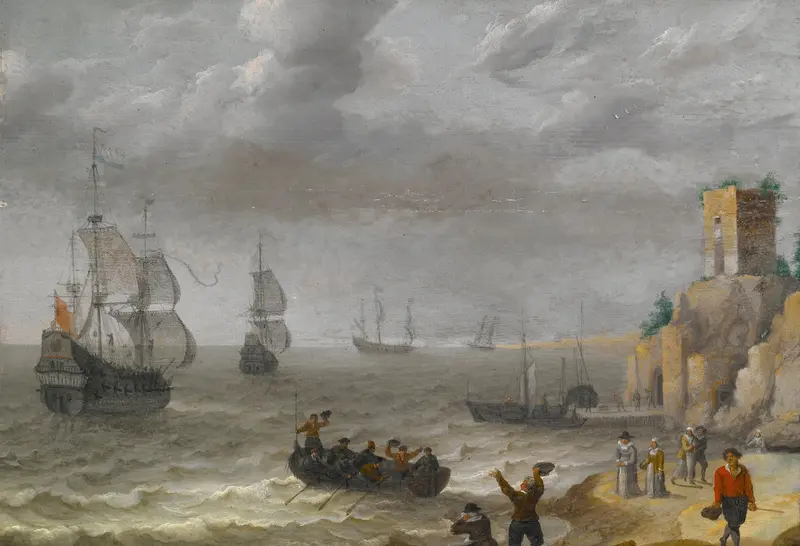
Seascape with Ruins on a Cliff
Abraham Willaerts
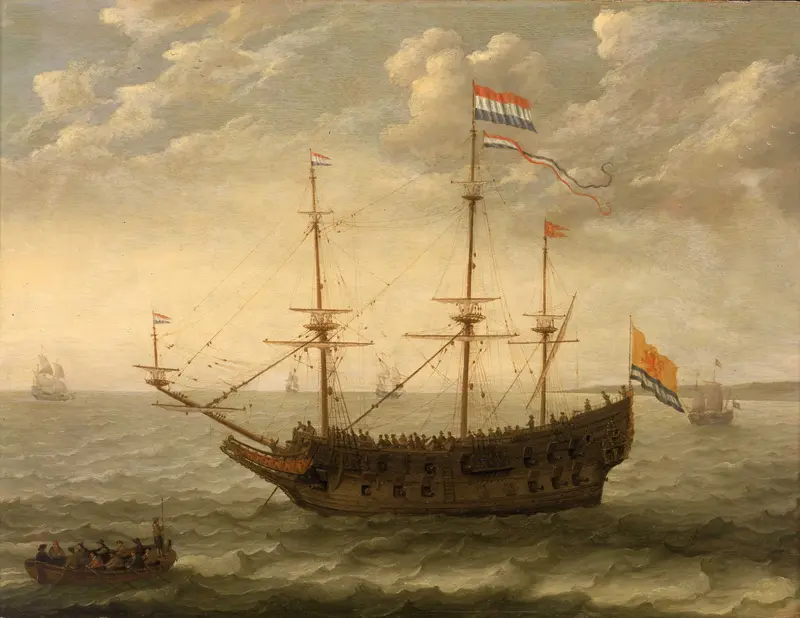
A Zeeland Ship at Anchor
Abraham Willaerts
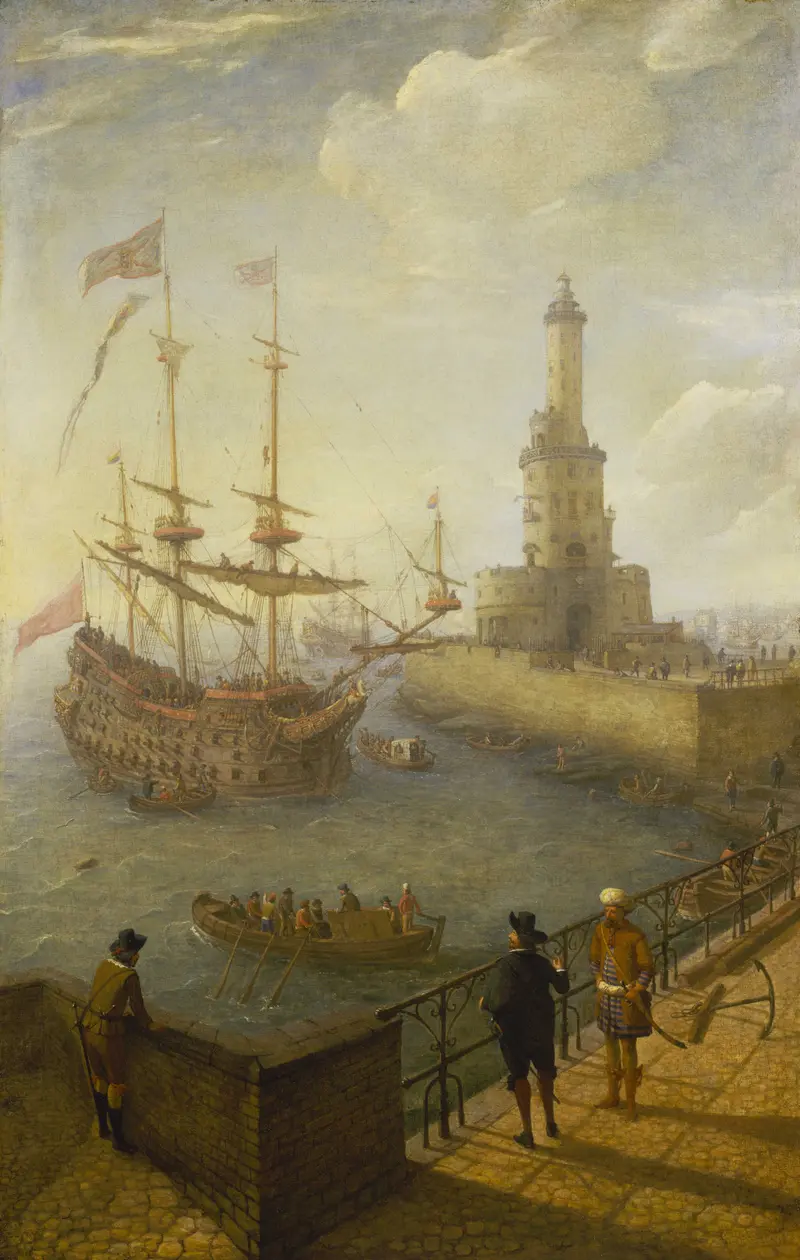
A Spanish three-decker at anchor off Naples
Abraham Willaerts
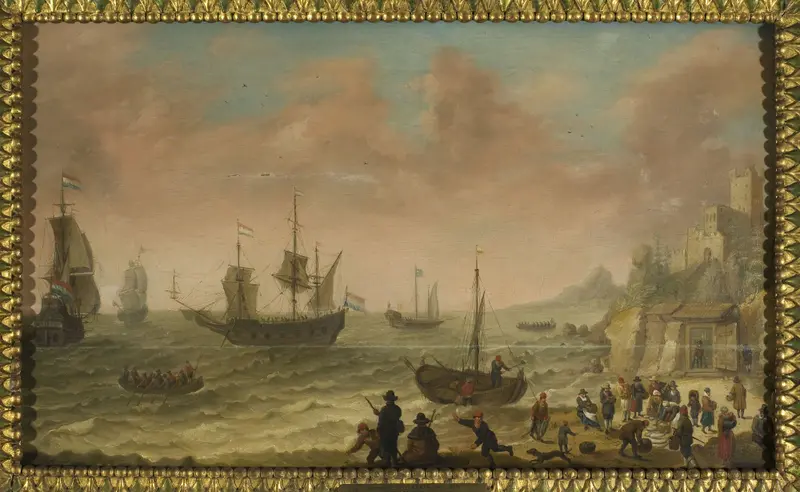
A Coastal Scene with Dutch Vessels and a Fish Market
Abraham Willaerts
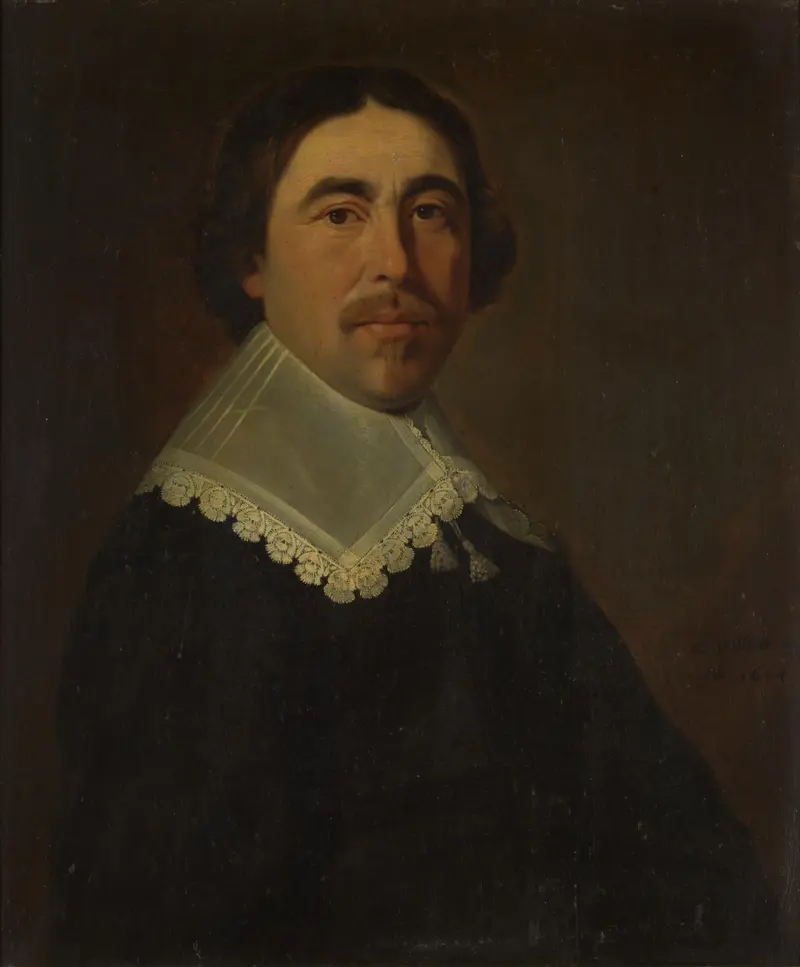
Portrait of a Man by Centraal Museum
Abraham Willaerts
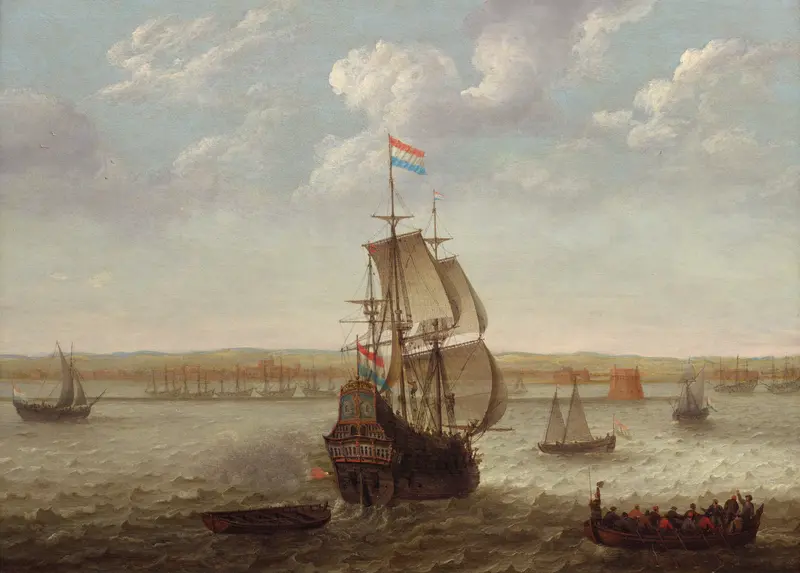
Dutch ships on the roadstead of Recife, Brazil
Abraham Willaerts
More Genre Scene Art

Banquet of the Officers of the St George Civic Guard
Frans Hals

Rembrandt and Saskia in the Scene of the Prodigal Son
Rembrandt van Rijn

Bal du moulin de la Galette
Pierre-Auguste Renoir

Quadrille at the Moulin Rouge
Henri de Toulouse-Lautrec

A Burial at Ornans
Gustave Courbet

When Will You Marry?
Paul Gauguin