
A view of the city of Hebron with camels and figures in the foreground — History & Facts
What if silence could speak through light? In A view of the city of Hebron with camels and figures in the foreground, this question comes to life as the shadows of the landscape whisper secrets of the past. Look closely at the horizon where the city rises, bathed in a warm glow that contrasts with the deeper tones of the desert floor. Notice how the light caresses the silhouettes of camels, their forms elongated and almost ethereal against the surrounding terrain. As your gaze shifts downward, observe the figures in the foreground, their postures suggesting quiet conversations that punctuate the stillness of the scene.
The palette intertwines golden yellows and earthy browns, creating a harmonious balance that reflects both the vibrancy and harshness of desert life. The interplay of light and shadow creates a duality that captivates the eye, revealing more than just a cityscape. The camels, symbols of endurance and travel, stand as guardians of the past, while the human figures hint at a moment of pause—a fleeting respite from the relentless journey. This contrast between the vastness of the landscape and the intimacy of the figures evokes a sense of connection to both the environment and the story it tells.
Silence wraps around the viewer, inviting contemplation and reflection. Edward Lear painted this piece during the mid-19th century, a time when he was exploring the Middle East and capturing its diverse landscapes. His travels influenced his artistic vision, blending a keen observation of nature with a romantic sensibility. During this period, the art world was beginning to embrace realism, and Lear’s works reflected both his adventurous spirit and the intricate beauty of the scenes he encountered.
More Artworks by Edward Lear
Browse all →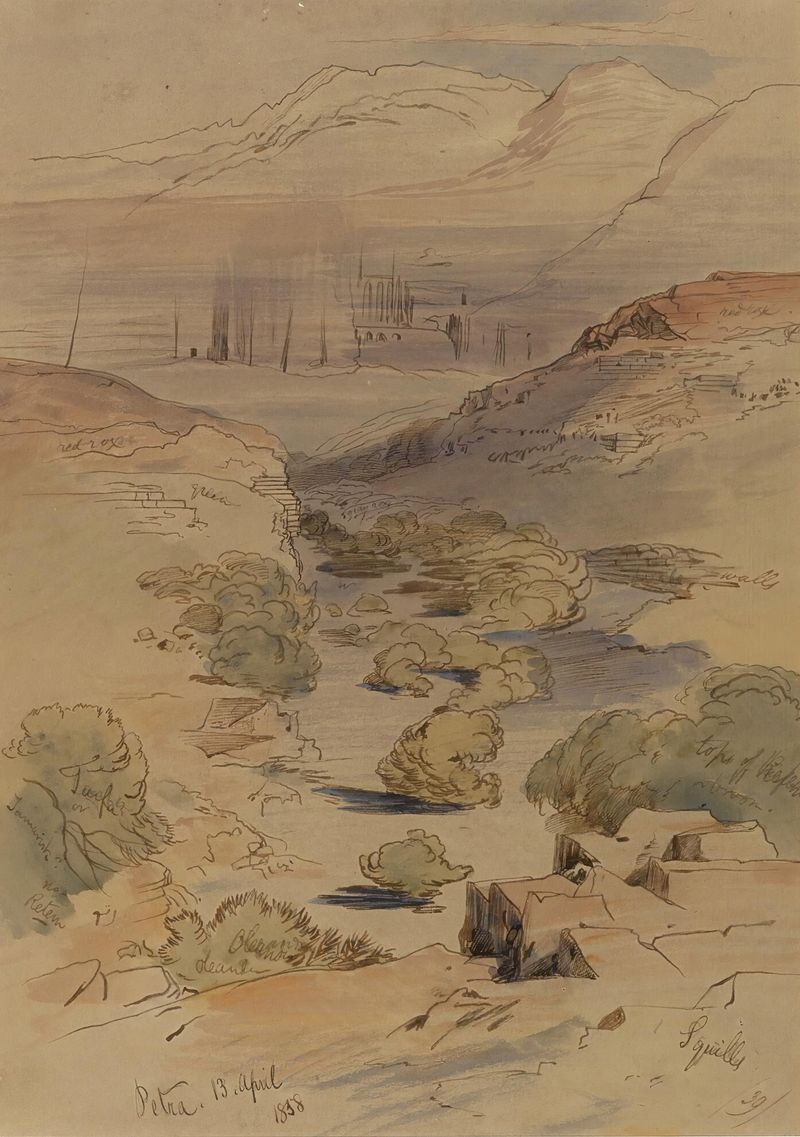
Petra
Edward Lear
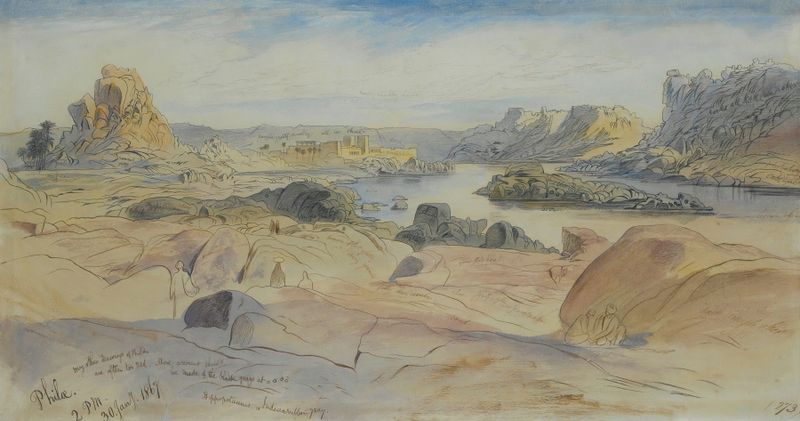
Philae, Egypt
Edward Lear
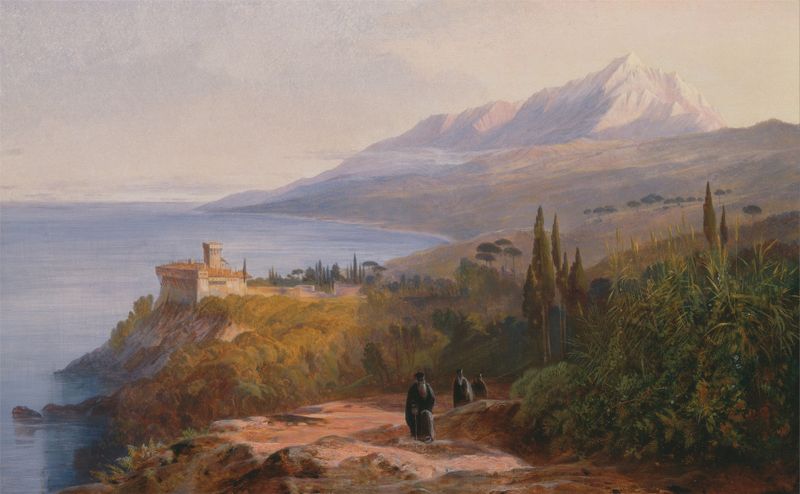
Mount Athos and the Monastery of Stavronikétes
Edward Lear
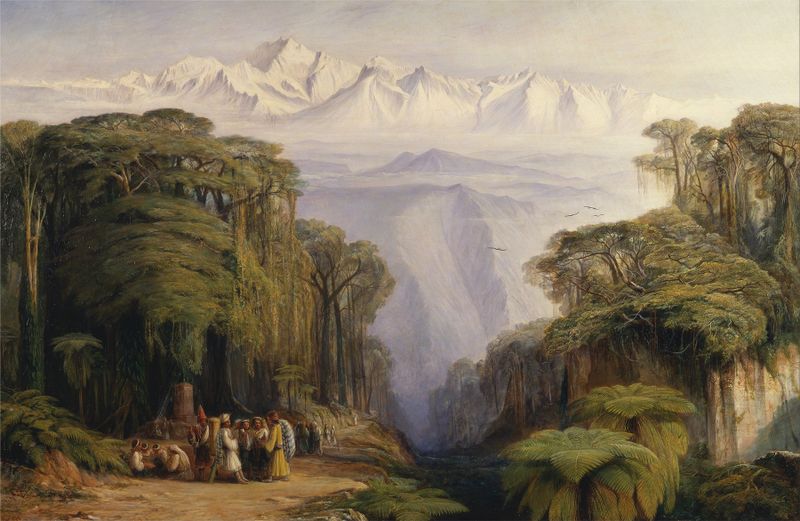
Kangchenjunga from Darjeeling
Edward Lear
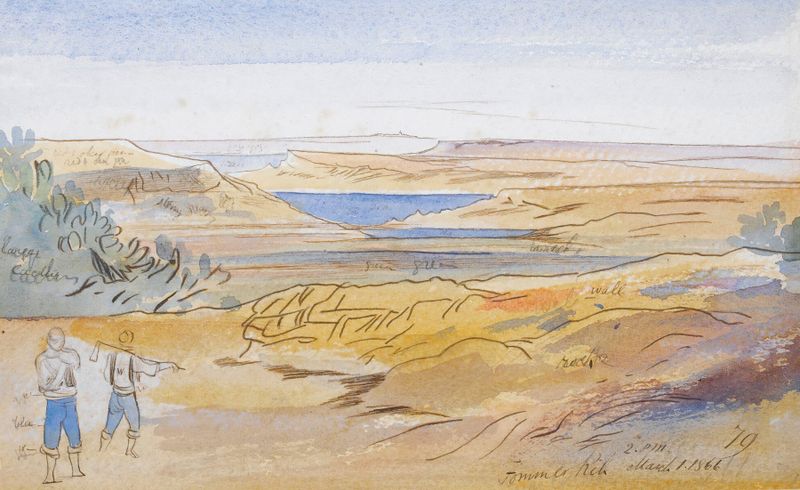
Fomm Ir-Rih, Malta
Edward Lear
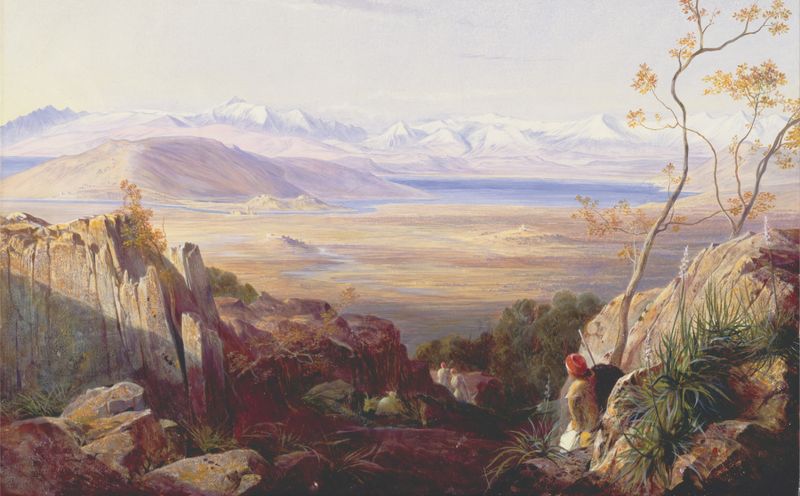
Butrinto, Albania
Edward Lear
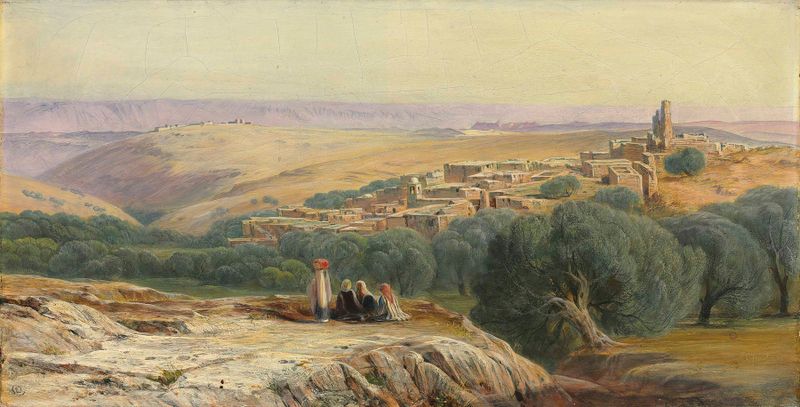
The Plains of Bethany
Edward Lear

Karnak, 9-30 pm, 22 January 1867
Edward Lear
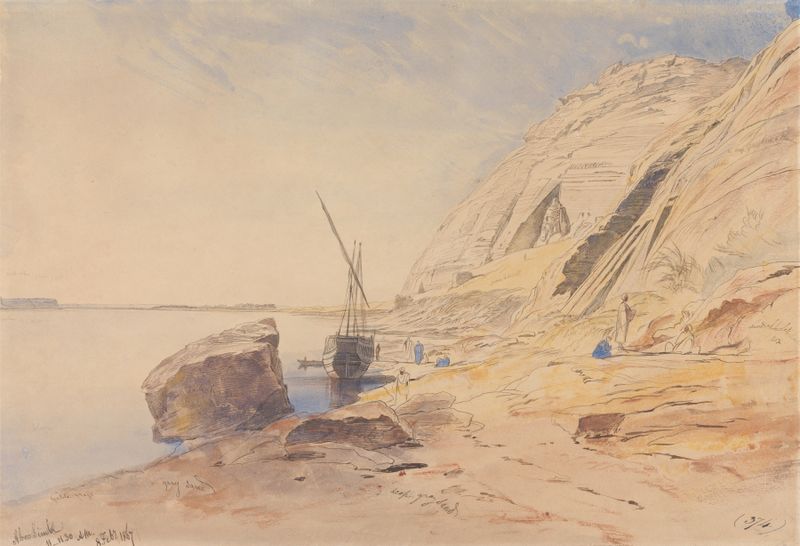
Abu Simbel, 11-11;30 am, 8 February 1867 (374)
Edward Lear

A View Of Mount Athos And The Pantokrator Monastery, Greece
Edward Lear





