
A View of the Pine Woods Above Cannes — History & Facts
When did color learn to lie? In a world painted with vibrancy, the hues can mask despair, whispering tales of solitude beneath their brilliance. Look to the left at the deep greens of the towering pines, their needles trembling in the breeze, a stark contrast to the soft blue sky that stretches infinitely above. Notice how the layers of color blend seamlessly, yet the brushstrokes reveal a hurried hand, suggesting an artist grappling with fleeting moments. The light catches the edges of the trees, illuminating their texture, while shadows linger, hinting at the loneliness that rests within the depths of the forest. As you navigate the shifting planes of color, consider the juxtaposition between the natural beauty of the landscape and the inherent isolation it evokes.
Each tree stands as a silent sentinel, suggesting that beauty can exist alongside profound solitude. The soft, inviting palette lures you in, yet the repetitive forms of the pines remind us of the inescapable nature of our own isolation, echoing the complex relationship between the observer and the observed. In 1869, Edward Lear painted this work during a period of personal transition, seeking solace in the landscapes of southern France. He was known for his travel sketches, yet the loneliness present in his art during this time reflects a broader artistic shift as Romanticism began to give way to modern sensibilities.
The world was rapidly changing, and Lear's exploration of solitude amid beauty resonates as a poignant commentary on the human experience.
More Artworks by Edward Lear
Browse all →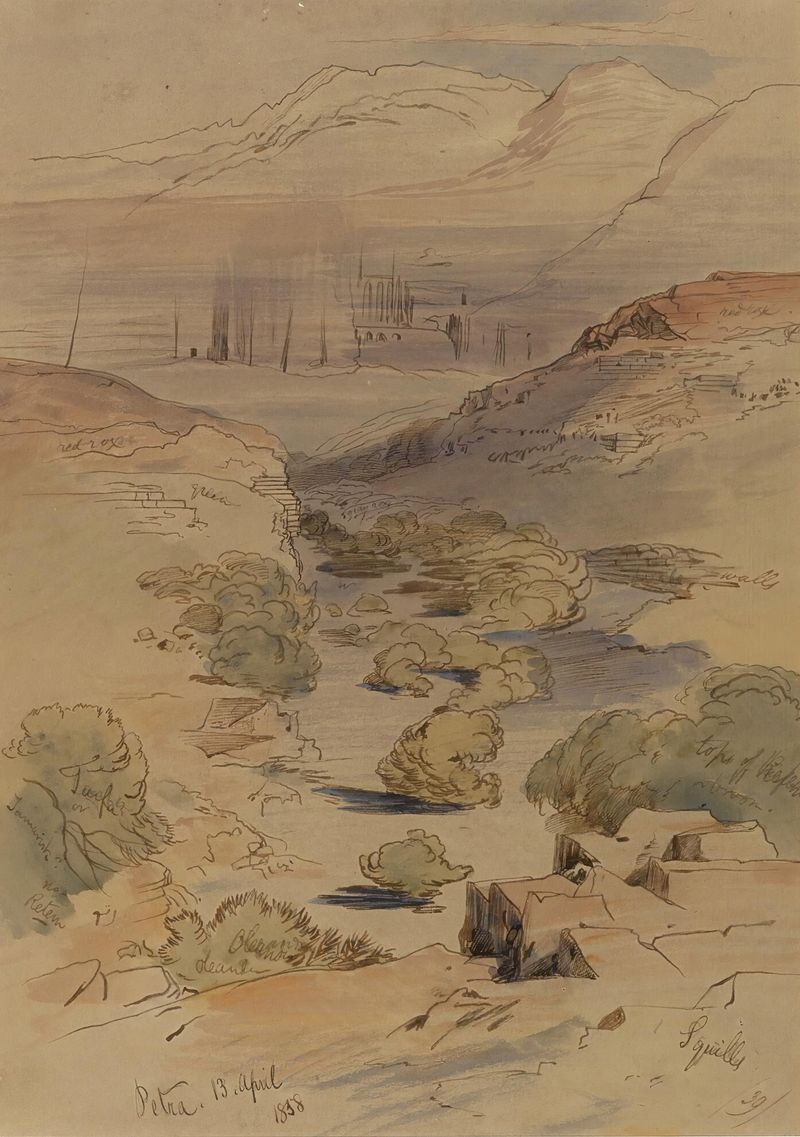
Petra
Edward Lear
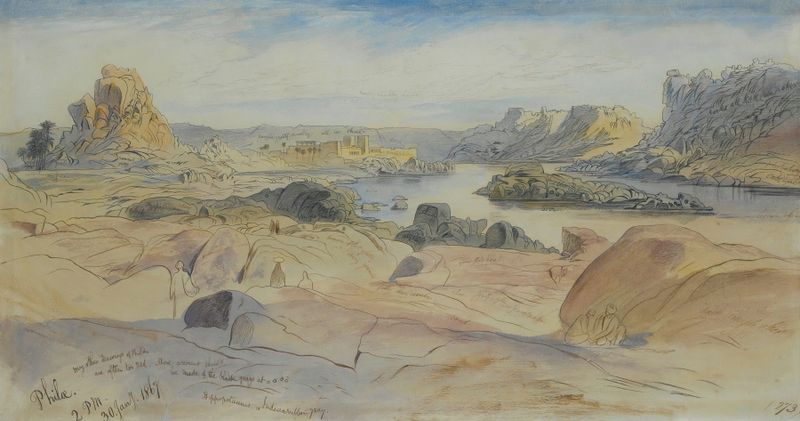
Philae, Egypt
Edward Lear
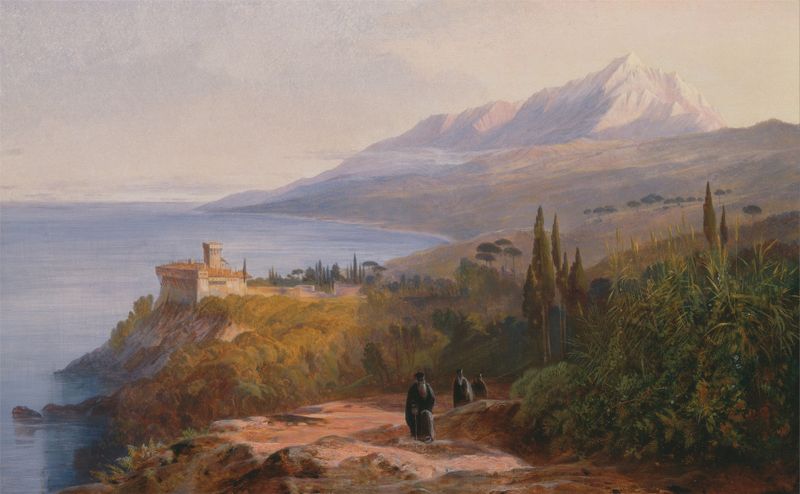
Mount Athos and the Monastery of Stavronikétes
Edward Lear
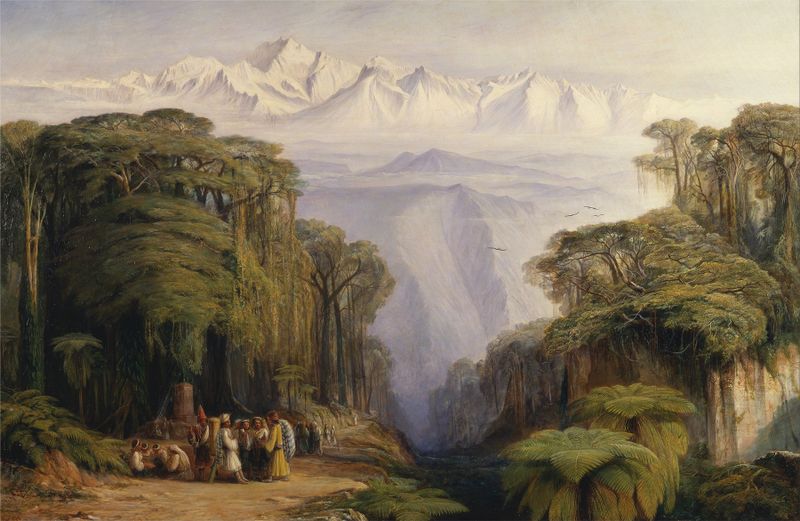
Kangchenjunga from Darjeeling
Edward Lear
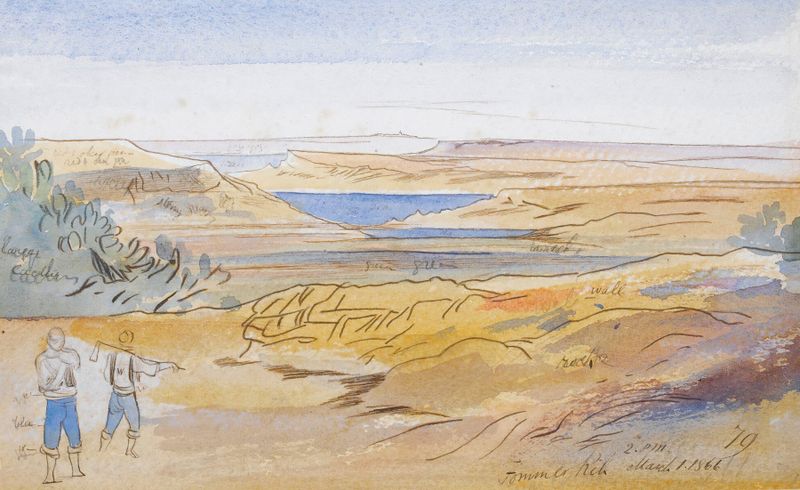
Fomm Ir-Rih, Malta
Edward Lear
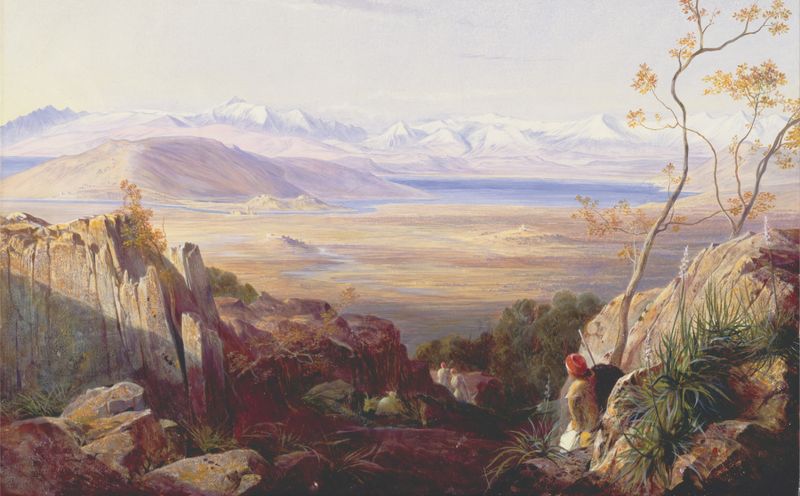
Butrinto, Albania
Edward Lear
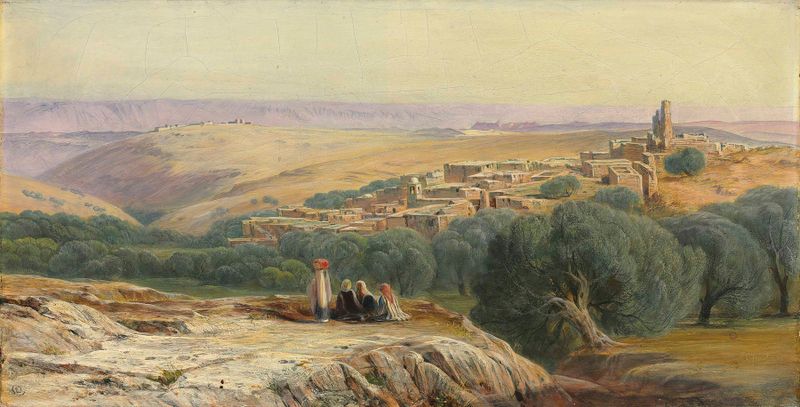
The Plains of Bethany
Edward Lear

Karnak, 9-30 pm, 22 January 1867
Edward Lear
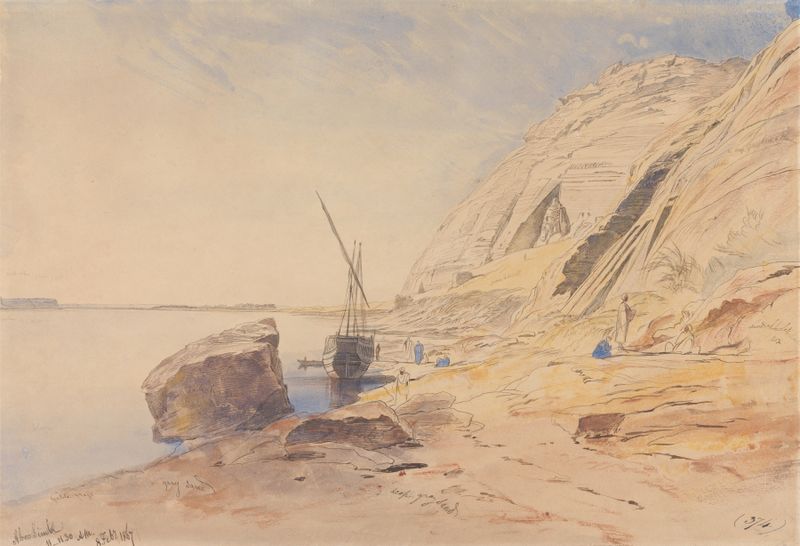
Abu Simbel, 11-11;30 am, 8 February 1867 (374)
Edward Lear

A View Of Mount Athos And The Pantokrator Monastery, Greece
Edward Lear





