
A Village at Moonlight — History & Facts
A hush settles over the landscape as the moon rises, its pale disk caught just above the horizon, threading silver through the tangled branches and pooling in the ruts of a muddy lane. A Village at Moonlight by Aert van der Neer draws the eye not to the bustle of village life, but to the quiet that descends when the world is half-lit and half-shadowed. The painter’s hand guides us from the dense, sheltering trees on the left—where two figures linger in conversation—across a sweep of open pasture, where cows graze under the watchful gaze of the moon.
Every element seems chosen to heighten the contrast between the warmth of home, visible in a single glowing window, and the cool, uncertain vastness of the night. This is the world of the Dutch Golden Age, where landscape painting flourished as both a celebration of local scenery and a meditation on nature’s moods. Works like this, created between 1618 and 1677, were prized by a new class of urban collectors who sought scenes that felt both familiar and quietly dramatic. Aert van der Neer became known for his mastery of nocturnes—night scenes where the play of moonlight and shadow became a subject in themselves.
Now in the collection of Museum Boijmans Van Beuningen, this painting invites us to linger in its twilight, to trace the moon’s reflection in puddles and the silhouettes of distant spires, and to imagine the stories unfolding just out of sight.
More Artworks by Aert van der Neer

A Moonlit River Landscape With Figures Standing By A Gate, A Village Beyond
Aert van der Neer
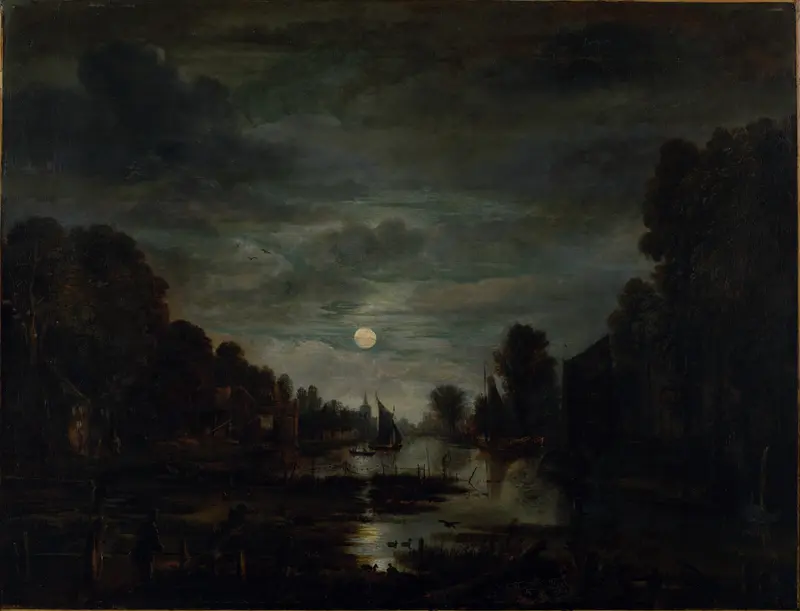
River Landscape in Moonlight
Aert van der Neer
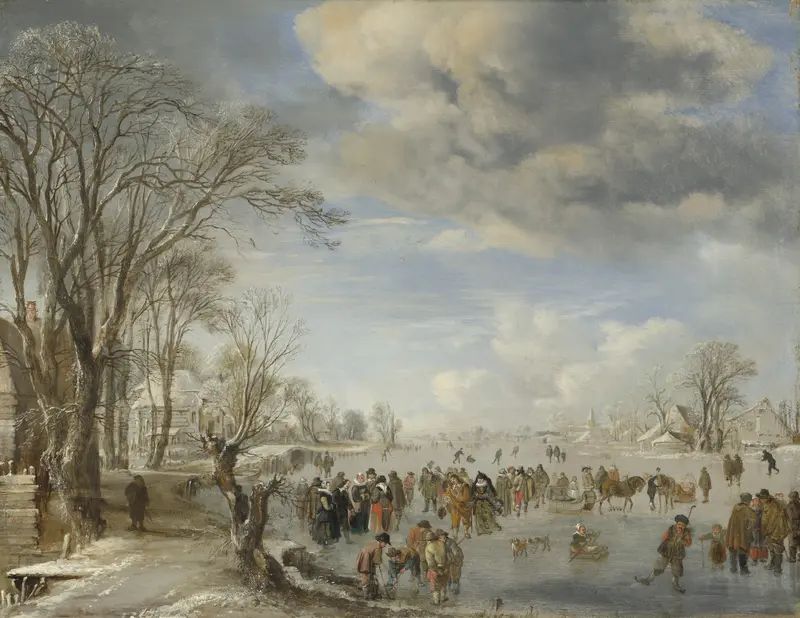
Winter in Holland – Skating Scene
Aert van der Neer

River Landscape
Aert van der Neer
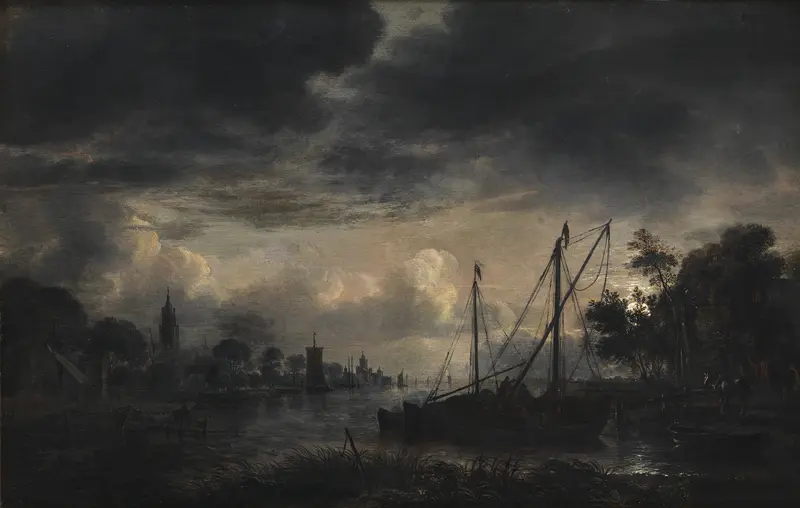
River Landscape in Moonlight
Aert van der Neer
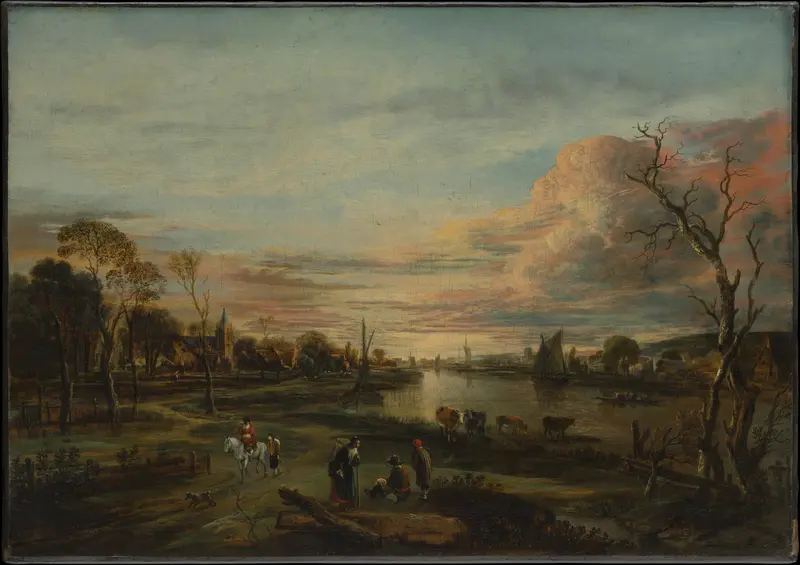
Landscape at Sunset
Aert van der Neer
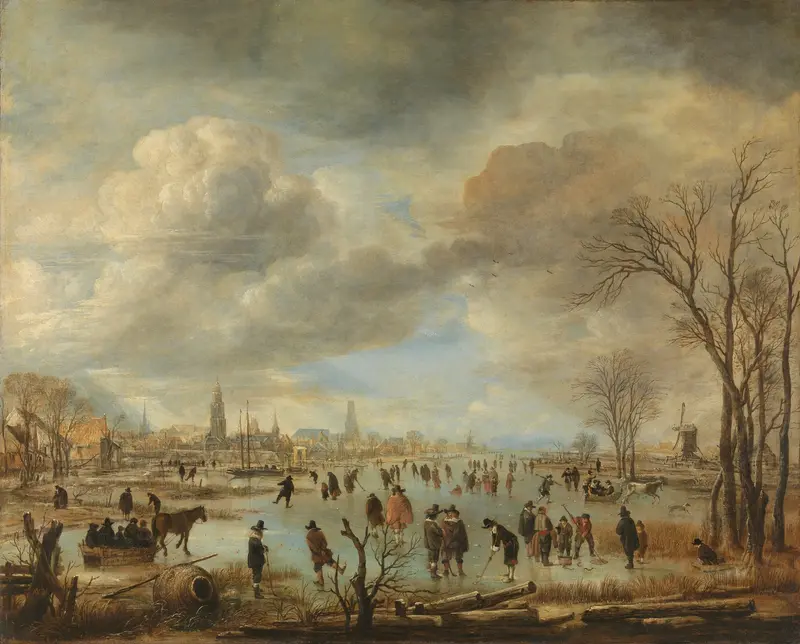
Winter Landscape near a Town with Kolf Players and Horse-Drawn Sleighs
Aert van der Neer

Winter Landscape with Skaters on a Frozen River
Aert van der Neer
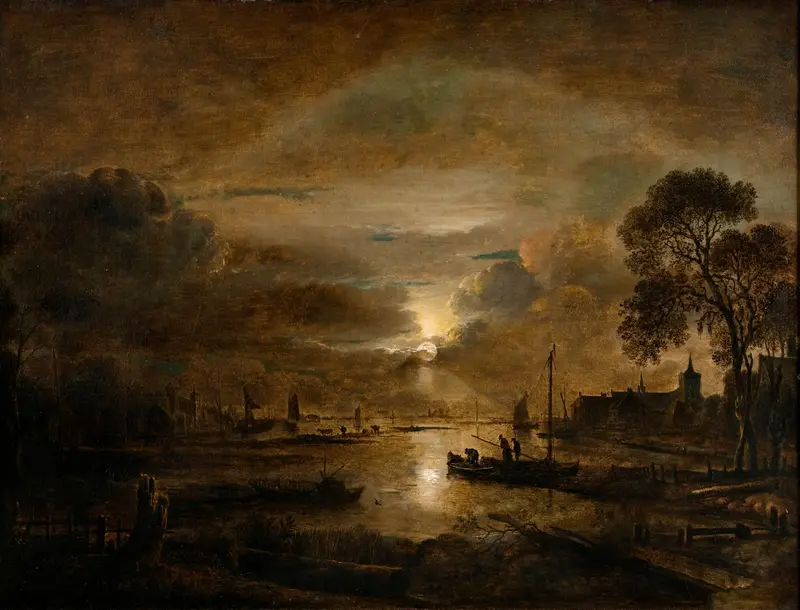
Moonlight at a Dutch River
Aert van der Neer
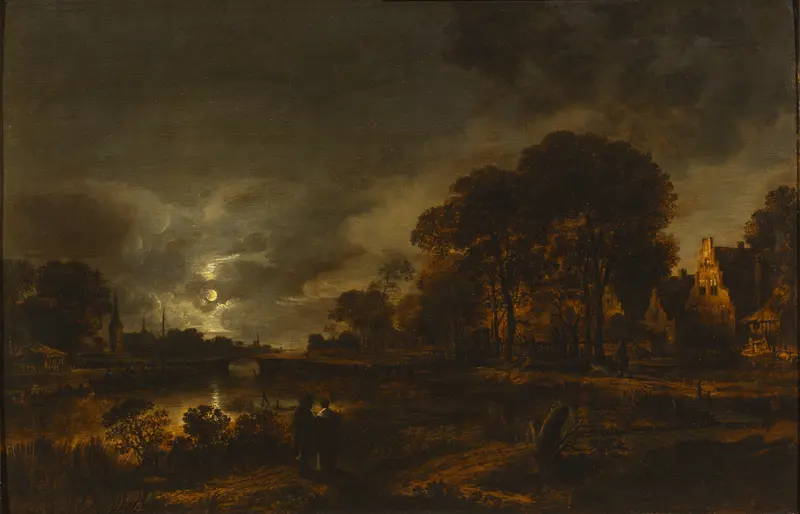
Moonlight Landscape
Aert van der Neer
More Landscape Art

The Starry Night
Vincent van Gogh

View of Delft
Johannes Vermeer

Water Lilies
Claude Monet

The Grand Canal, Venice, looking north-west from the Ca' Corner to the Ca' Contarini degli Scrigni, with the campanile of Santa Maria della Carità
Canaletto

Windsor Castle
Canaletto

The Grand Canal looking North-East from the Palazzo Dolfin-Manin to the Rialto Bridge
Canaletto