
A Village by Night — History & Facts
What if beauty was never meant to be finished? This question lingers in the stillness of twilight, where shadows play and the world holds its breath. Focus on the broad expanse of deepening indigo in the sky, where the last vestiges of daylight cling to the horizon. The village rests below, cloaked in shades of muted earth tones, bathed in a soft glow that hints at the flickering lights within the homes. Notice how the delicate brushstrokes evoke a sense of serenity and repose, each stroke capturing not just the physical presence of the buildings but also their ethereal essence.
The juxtaposition of the darkened landscape against the shimmering stars invites contemplation and wonder. Beyond its tranquil beauty, the painting reveals the tension between the mundane and the sublime. Small details—a faint silhouette of a figure in the doorway, the smoke curling from a chimney—suggest life continues even in the dark. The interplay of light and shadow signifies not just the closing of day but a transition into a realm where the ordinary becomes extraordinary, where the viewer is beckoned to linger in the moment and reflect on life’s fleeting nature. During the years between 1840 and 1889, the artist created A Village by Night amidst a growing Romantic movement that sought to capture nature’s emotional resonance.
Living in France, Dupré was influenced by the evolving perceptions of landscape painting, transitioning from strict realism to a more contemplative representation, mirroring the societal shifts of his time as industrialization began to alter the rural landscape. His work embodies a yearning for connection to nature, reflecting both personal introspection and a universal desire for transcendence.
More Artworks by Jules Dupré
Browse all →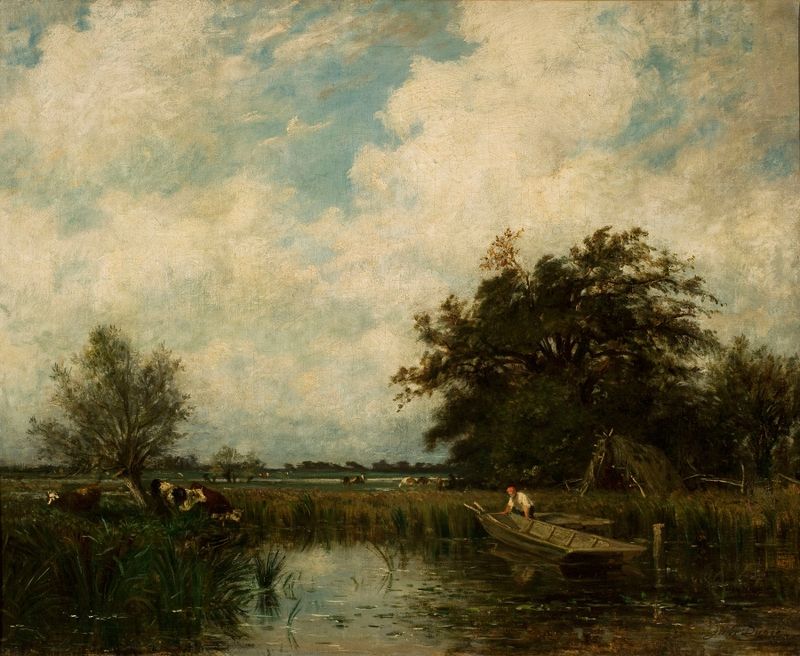
Landscape with a pond
Jules Dupré

The Cottage by the Roadside, Stormy Sky
Jules Dupré
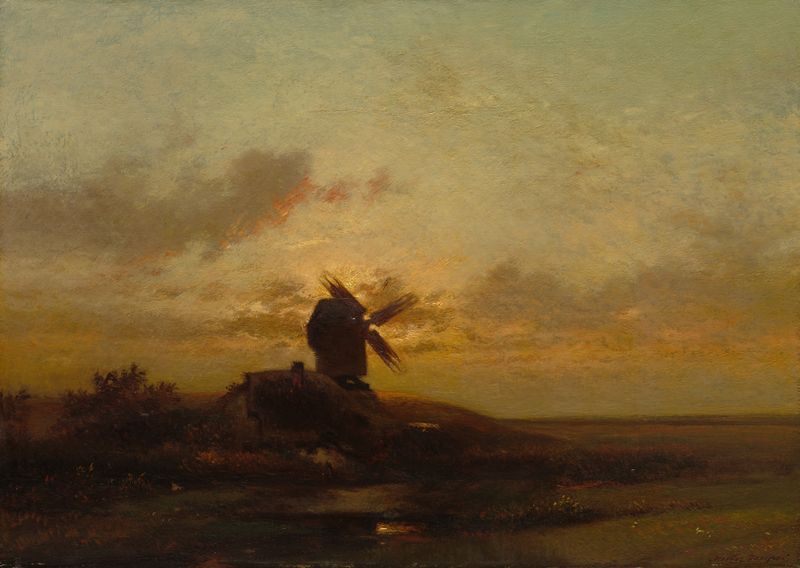
The Windmill
Jules Dupré

The Estuary Farm
Jules Dupré

Fontainebleau Oaks
Jules Dupré

Village Scene, Sunset
Jules Dupré

Barks Fleeing Before the Storm
Jules Dupré

Cows Crossing a Ford
Jules Dupré

The Old Oak
Jules Dupré

Weidelandschaft im Limousin
Jules Dupré





