
A Village Scene in Winter with a Frozen River — History & Facts
What first draws the eye in A Village Scene in Winter with a Frozen River is the hush that settles over the landscape, as if the world has paused to let the cold seep in. The river, now a broad, glassy stage, invites villagers to step out—some glide across its surface, others stoop to examine the ice or simply trudge along its edge. The muted palette of browns, grays, and whites lends the scene a quiet clarity, while the bare trees and snow-dusted rooftops sharpen the sense of season.
Smoke drifts from chimneys, hinting at warmth within, but the figures outside seem content to linger in the brisk air, their gestures and postures speaking of daily routines undeterred by winter’s grip. The composition leads the viewer’s gaze from the intimate foreground—where a dog stands alert beside two bundled figures—toward the distant town, its spires and towers softened by haze. Painted in the 1640s, this work belongs to the world of the Dutch Golden Age, when artists like Aert van der Neer found poetry in the everyday and the ordinary. Scenes of winter were especially prized in this period, reflecting both the harshness and the pleasures of life in a land shaped by water and weather.
Such paintings were collected by prosperous burghers who saw their own towns and pastimes reflected in the icy rivers and bustling villages. While little is recorded about the journey of this particular painting, its survival—photographed in 2010 and dated to the mid-seventeenth century—reminds us how much of Dutch art was rooted in observation and the subtle drama of communal life. Look again, and let the stillness of the frozen river draw you further into the world it quietly preserves.
More Artworks by Aert van der Neer

A Moonlit River Landscape With Figures Standing By A Gate, A Village Beyond
Aert van der Neer
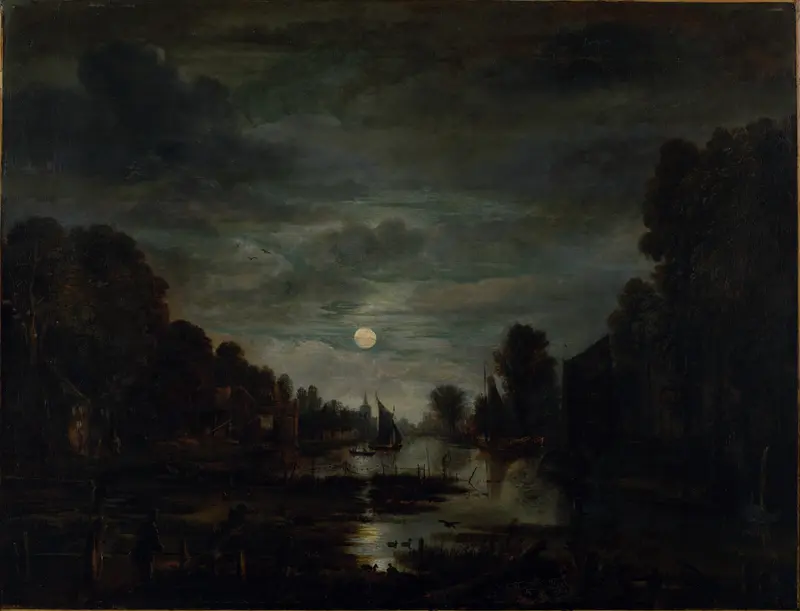
River Landscape in Moonlight
Aert van der Neer
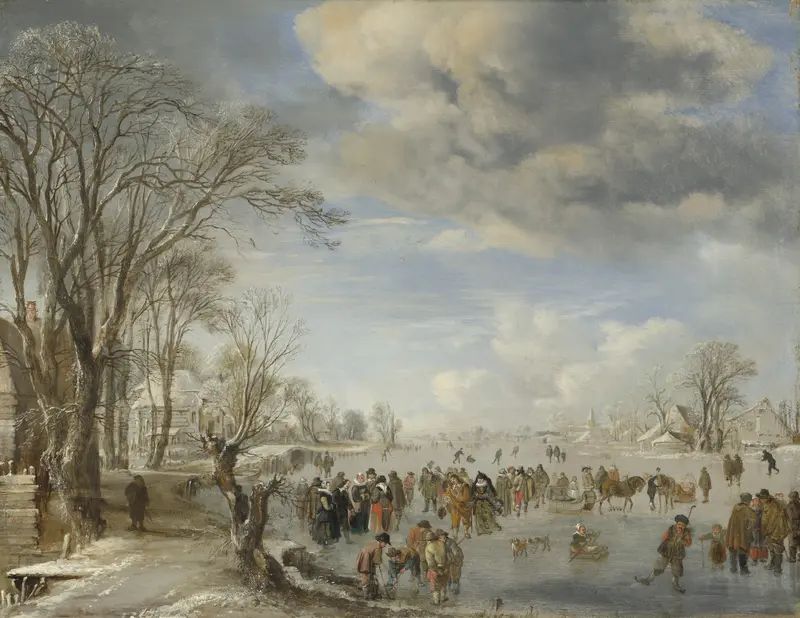
Winter in Holland – Skating Scene
Aert van der Neer

River Landscape
Aert van der Neer
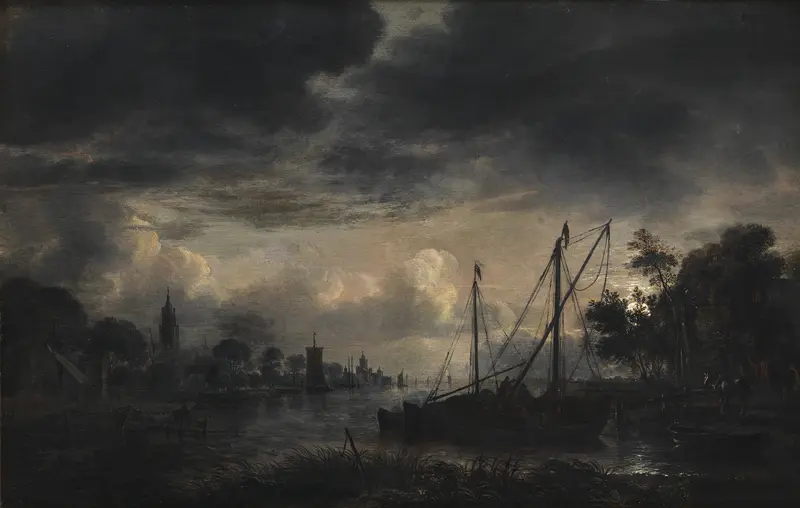
River Landscape in Moonlight
Aert van der Neer
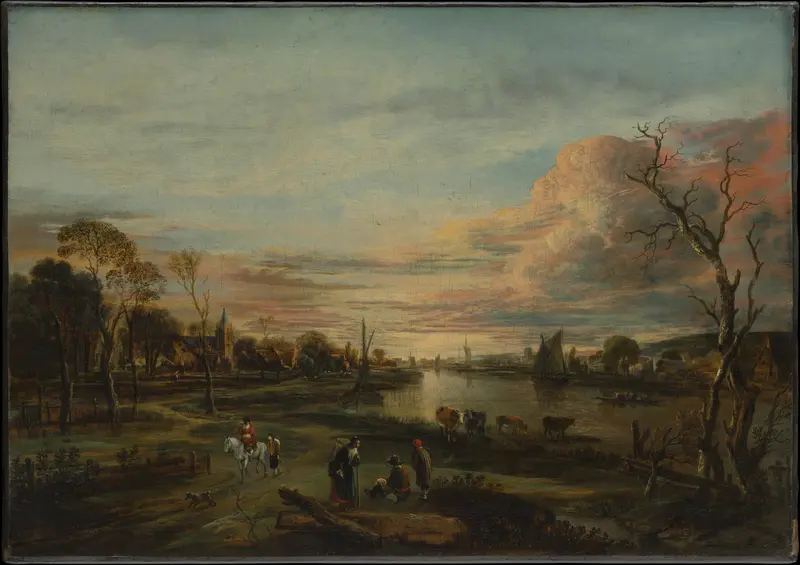
Landscape at Sunset
Aert van der Neer
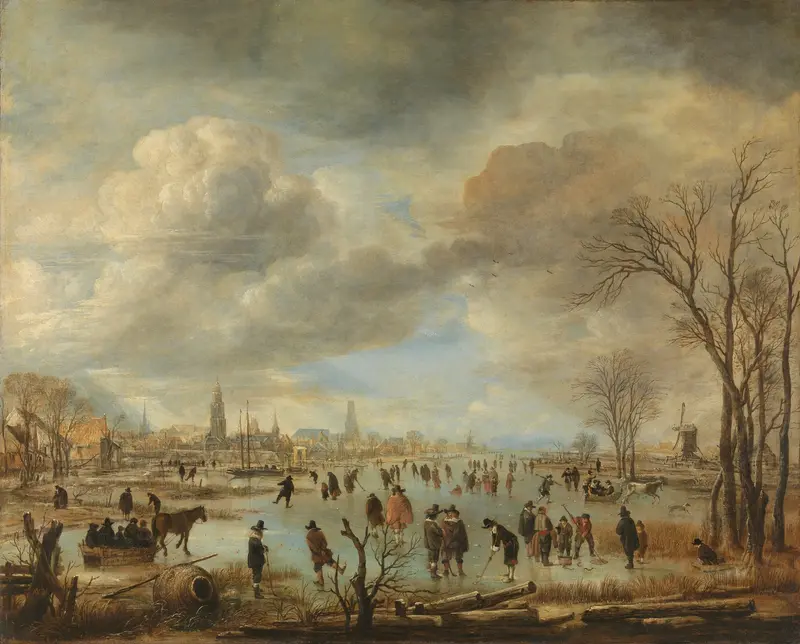
Winter Landscape near a Town with Kolf Players and Horse-Drawn Sleighs
Aert van der Neer

Winter Landscape with Skaters on a Frozen River
Aert van der Neer
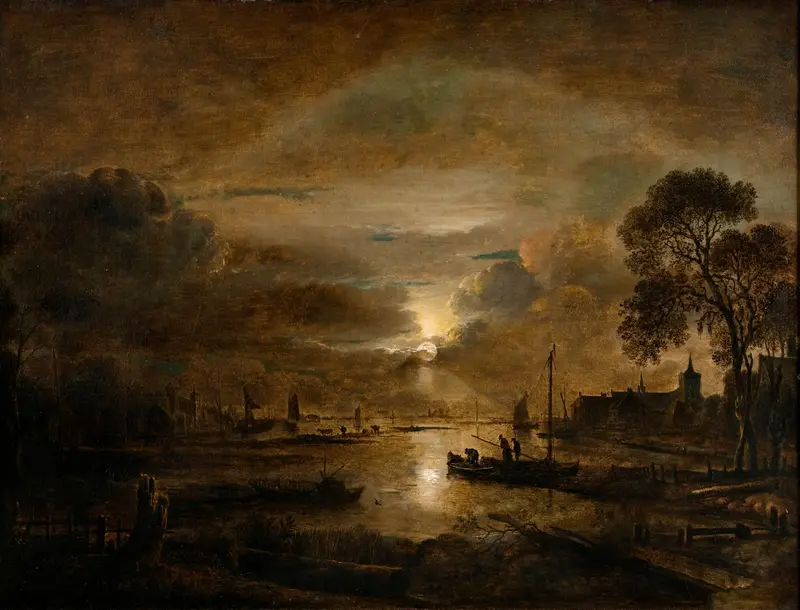
Moonlight at a Dutch River
Aert van der Neer
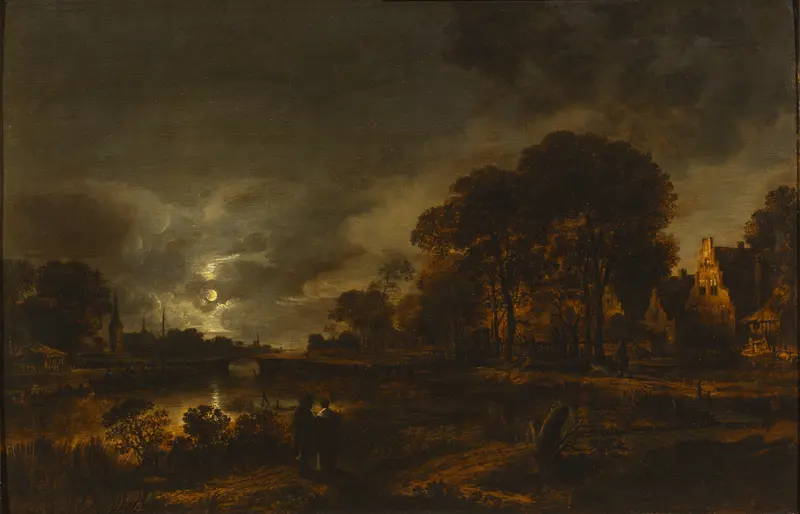
Moonlight Landscape
Aert van der Neer
More Landscape Art

The Starry Night
Vincent van Gogh

View of Delft
Johannes Vermeer

Water Lilies
Claude Monet

The Grand Canal, Venice, looking north-west from the Ca' Corner to the Ca' Contarini degli Scrigni, with the campanile of Santa Maria della Carità
Canaletto

Windsor Castle
Canaletto

The Grand Canal looking North-East from the Palazzo Dolfin-Manin to the Rialto Bridge
Canaletto