A Waterfall — History & Facts
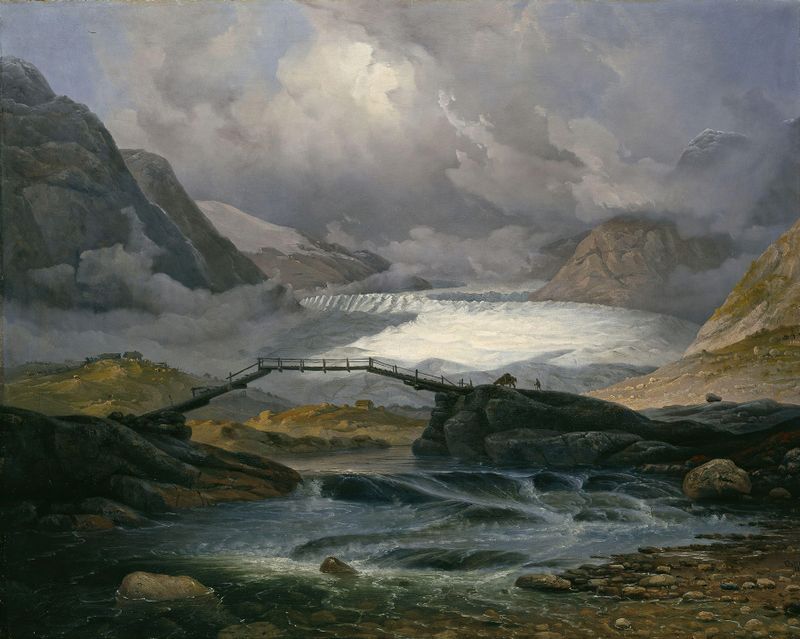
Where does light end, and longing begin? In the depths of solitude, a cascade of water tumbles, perhaps echoing the yearning that resides in the heart. Focus on the shimmering water as it pours over the rocky ledge, cascading down in a brilliant display of white and blue. The light catches the droplets, creating a dance of sparkles that momentarily distracts from the starkness surrounding it. Notice how the rugged rock formations rise ominously, their dark hues providing a striking contrast to the effervescent stream.
The painter’s deft use of color and texture guides our gaze toward the interplay of movement and stillness, enveloping the scene in a sense of poignant beauty. The waterfall itself serves as a poignant metaphor for loneliness; it flows relentlessly, yet its solitude is palpable against the backdrop of a desolate landscape. Alongside the water, the muted colors of the surroundings evoke a sense of melancholy, while the untouched nature surrounding the waterfall amplifies the feeling of isolation. Each brushstroke communicates a deep-seated yearning, as if the artist urges us to confront our own moments of solitude, revealing the emotional weight carried by the serene spectacle. In 1833, Knud Baade painted this scene while living in Norway, a period marked by personal and artistic exploration.
Surrounded by breathtaking landscapes, he sought to capture the sublime beauty of nature while grappling with themes of isolation. At this time, romanticism in art was gaining momentum, causing Baade to reflect on the emotional landscapes as much as the physical ones, ultimately finding beauty in the depths of solitude and longing.