Cloud Study — History & Facts
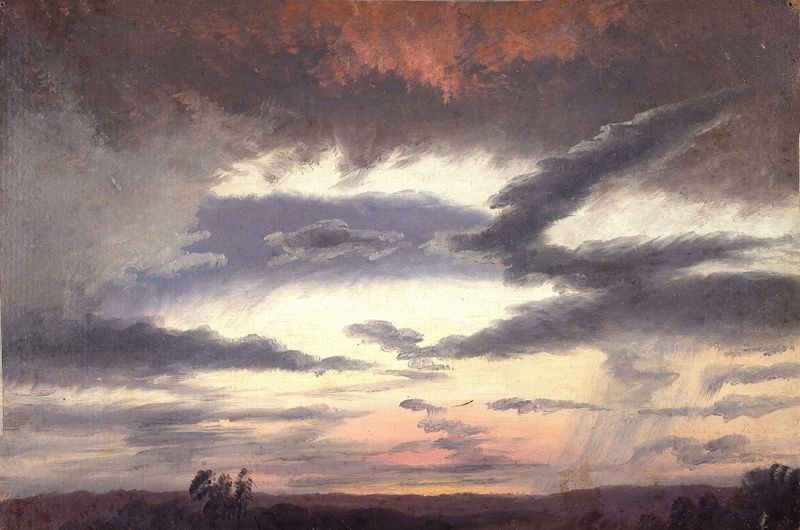
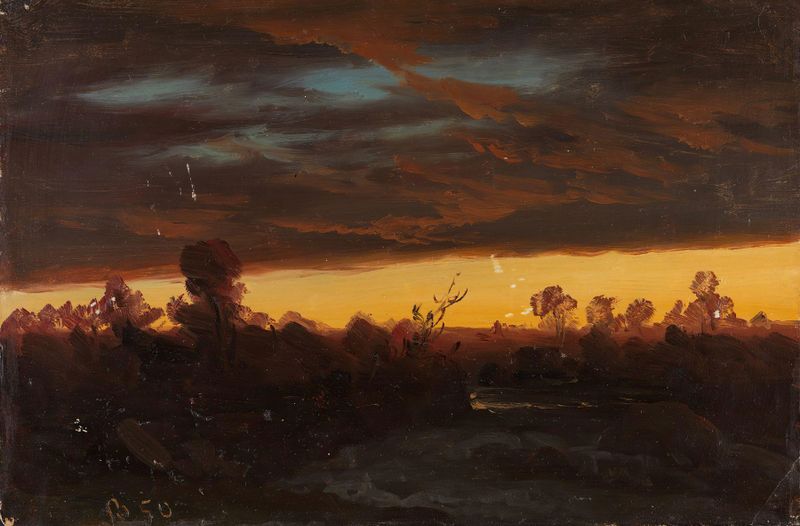
Could beauty survive in a century of chaos? In Cloud Study, the viewer is invited to ponder this question while basking in the serene interplay of light and atmosphere. Begin by looking to the upper left, where billowing clouds dominate the canvas, their soft whites and grays contrasted against deeper hues of blue. Notice the delicate brushstrokes that evoke a sense of movement, capturing the clouds as they dance and swirl, hinting at the changing moods of the sky. The composition draws the eye upwards, instilling a feeling of infinite space while the horizon subtly anchors the scene, highlighting a delicate balance between turmoil and tranquility. Yet, within this idyllic portrayal lies a tension—between the ephemeral beauty of nature and the impending chaos suggested by the dark undertones in the clouds.
The contrast of light and shadow plays a crucial role, emphasizing the transitory moments of serenity in our lives and hinting at the ever-present uncertainty. The painting encapsulates not just the physical elements of weather but also reflects the emotional weight of the human experience as it contemplates fleeting beauty amid greater existential struggles. Knud Baade painted Cloud Study in 1838 while residing in Norway, a period marked by significant change in European art, with Romanticism shaping the imagery of nature. The artist, known for his atmospheric landscapes, was deeply influenced by the rising tensions in society and the quest for a harmonious representation of nature amidst turmoil.
This work captures a moment of introspection, revealing Baade's commitment to portraying the beauty that can still be found in a world fraught with chaos.