Clouds in Moonlight — History & Facts
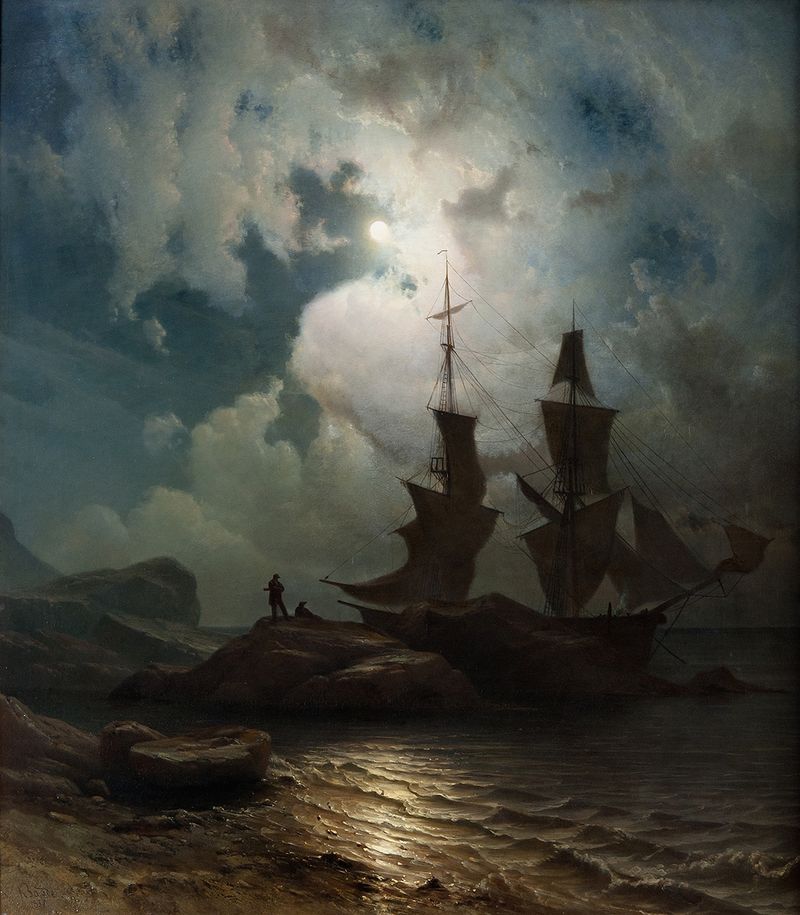
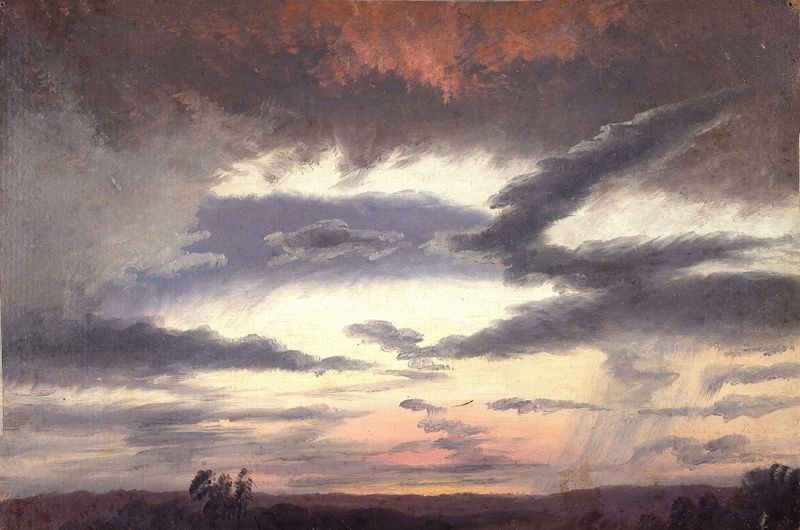
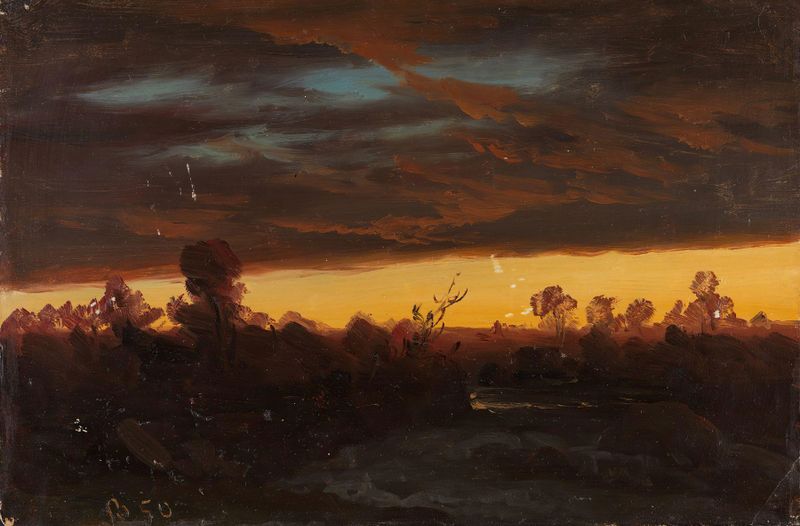
In Clouds in Moonlight, the chaos of nature’s tempest transforms through the lens of serene beauty, inviting viewers to ponder the stillness within tumult. Focus first on the exquisite interplay of light and shadow that dances across the canvas. The moon casts a silvery glow, illuminating intricate cloud formations that seem both ethereal and tumultuous. Rich blues and grays swirl together, creating a dynamic texture that captures the viewer's gaze, urging them to explore the delicate tension between the calm of the night sky and the chaotic brushstrokes portraying the clouds. As you delve deeper, consider the emotional undercurrents.
The contrast between the luminescence of the moon and the dark, rolling clouds speaks to the duality of chaos and tranquility in life. The turbulent sky, while chaotic, is not devoid of beauty; it reflects the complexities of human experience, where moments of serenity coexist with emotional storms. Each brushstroke draws you closer to understanding the delicate balance of light and dark—both externally in nature and internally within ourselves. In 1843, while residing in Norway, Baade painted this piece at a time when Romanticism was flourishing, emphasizing emotional depth and the sublime in nature.
His life was marked by struggles and a deep appreciation for the landscapes that surrounded him, mirroring the turbulence and beauty he depicted. The artwork stands as a testament to his ability to encapsulate both chaos and serenity in a single, compelling moment.