Cloud Study — History & Facts
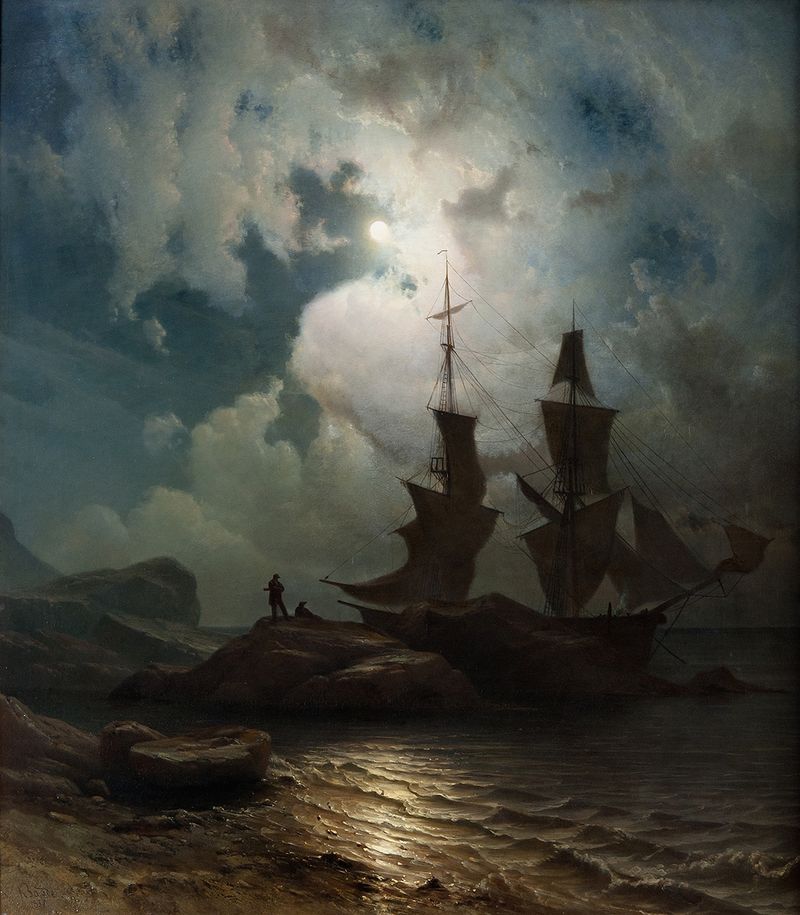
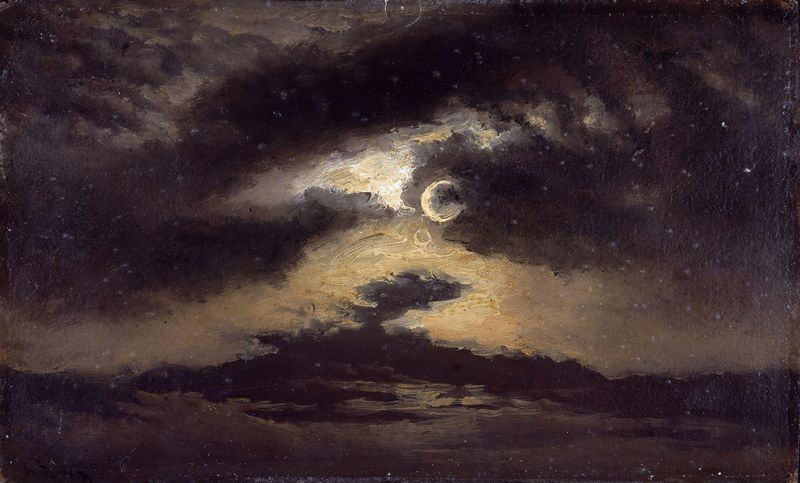
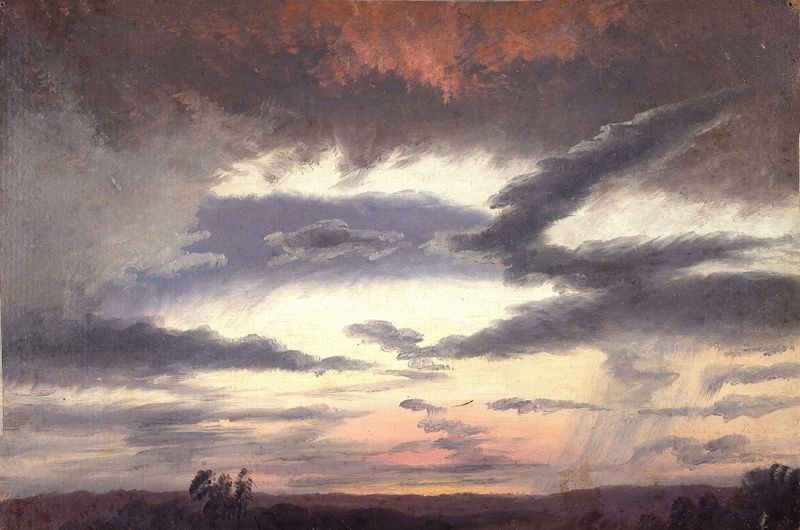
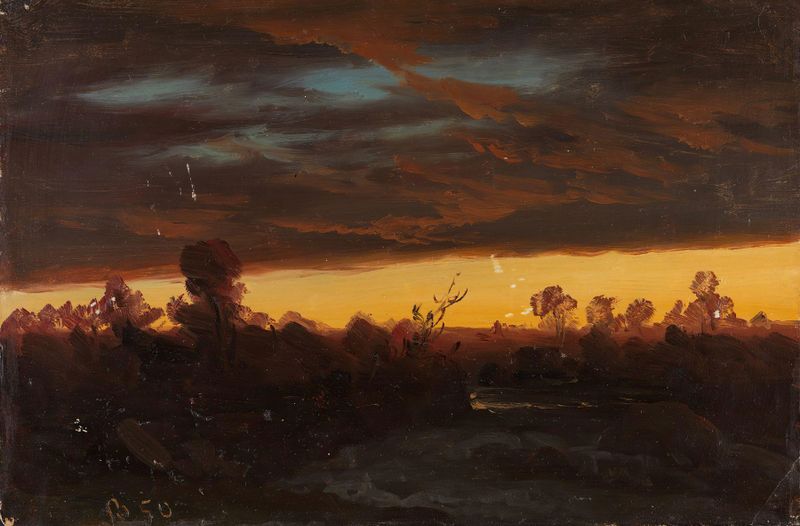
When did color learn to lie? The very essence of illusion pervades the canvas, blurring the lines between reality and perception with every brushstroke. Focus first on the swirling clouds that dominate the upper half of the composition, a cacophony of whites, greys, and muted blues. Notice how the artist’s masterful technique creates a sense of movement, as if the clouds are not merely painted but alive, shifting and swirling. The brushwork is both delicate and bold, inviting the viewer to engage closely and lose themselves in the alternating layers of light and shadow, which dance across the surface.
The ground beneath, barely sketched, provides a subtle anchoring contrast that amplifies the sky's ethereal beauty. Hidden within this serene scene is a profound tension between chaos and calm. The clouds, while appearing serene, suggest an impending storm, reflecting the duality of nature’s beauty and ferocity. The interplay of light creates an illusion of depth and dimension, urging the viewer to ponder the ever-changing moods of the sky.
Subtly, there's a commentary on perception—what we see is not always what we understand, inviting contemplation about our relationship with the natural world. Knud Baade painted this work during a period that lacked specific documentation in the mid-19th century, yet he was active in Norway, a country renowned for its dramatic landscapes. At this time, the Romantic movement was flourishing, impacting artists across Europe who were drawn to the sublime forces of nature. Baade's fascination with atmospheric effects and light reflects the broader artistic trends while establishing his unique voice within the evolving dialogue of landscape painting.