Cloud Study — History & Facts
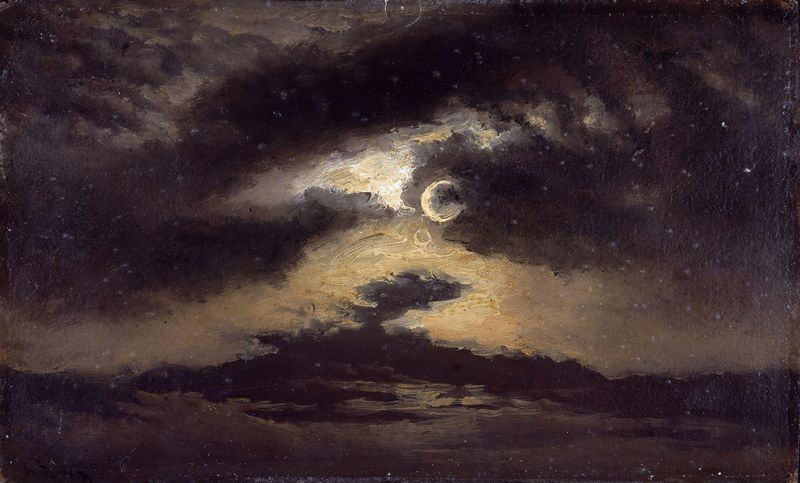
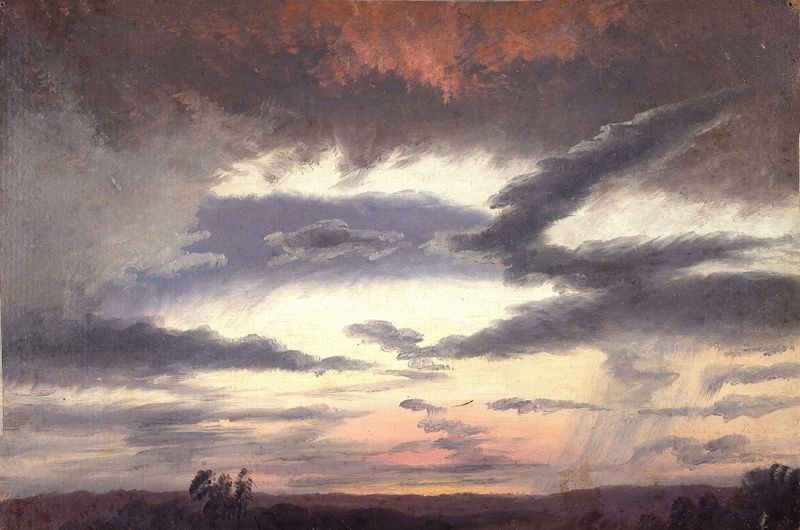
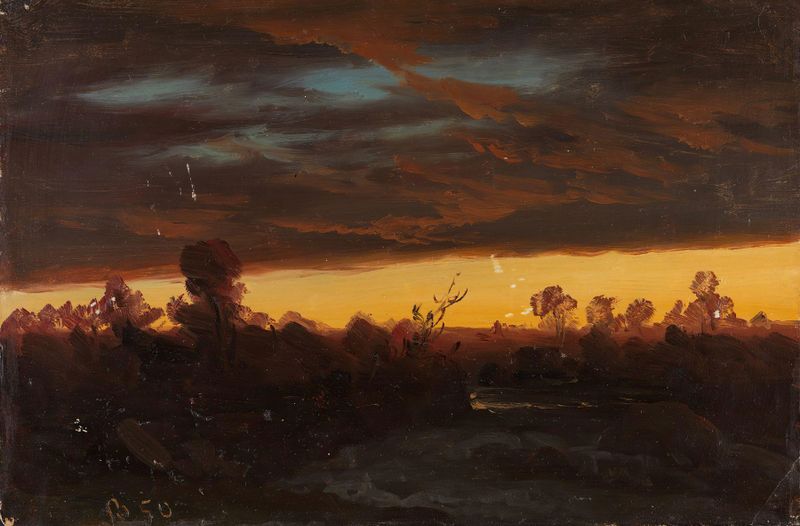
In Cloud Study, the canvas reveals an ephemeral dance between illusion and reality, inviting us to ponder the nature of perception itself. Look to the upper portion of the canvas, where swirling, ethereal forms of clouds collide and intertwine. Notice how the artist employs a soft, muted palette, allowing shades of gray, cream, and hints of blue to mingle, creating a sense of depth and movement. The brushstrokes here are both bold and delicate, suggesting a lively breath of wind that seems to carry the weight of the sky.
As your gaze descends, the clouds dissolve into an atmosphere that feels almost tangible, blurring the boundaries between the viewer and the vastness above. Deeper insights emerge as one contemplates the interplay of light and shadow, evoking a sense of transience and the constant flux of nature. The wispy clouds may symbolize fleeting thoughts or the ephemeral quality of life itself, while the overall composition encourages reflection on the space we inhabit and the illusions we perceive. There’s a harmony in the chaos, urging us to find beauty in the uncertain and the ever-changing. Knud Baade created this work in 1853, a period marked by significant shifts in the art world, particularly in Northern Europe.
Living in Norway at the time, Baade was influenced by the Romantic movement, which emphasized nature’s majesty and the human spirit’s connection to it. His exploration of atmospheric phenomena in this piece reflects his deep engagement with landscape painting, as well as a response to the burgeoning interest in capturing the sublime in art.