Landscape in Sunset — History & Facts
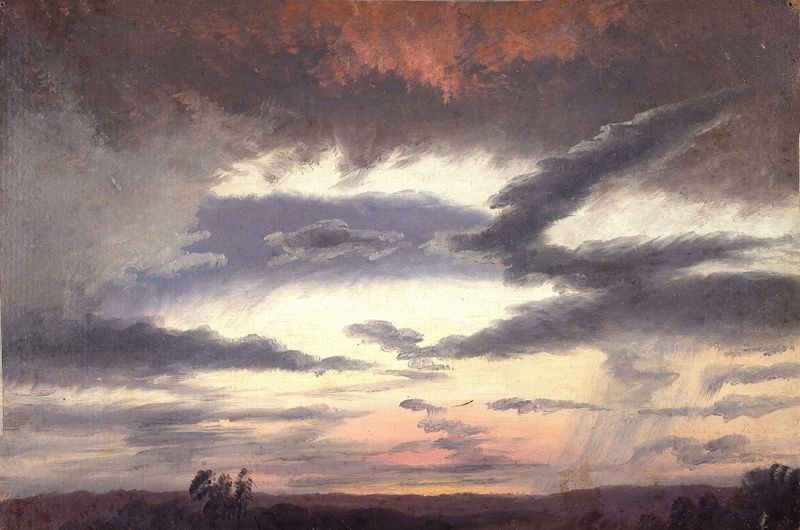
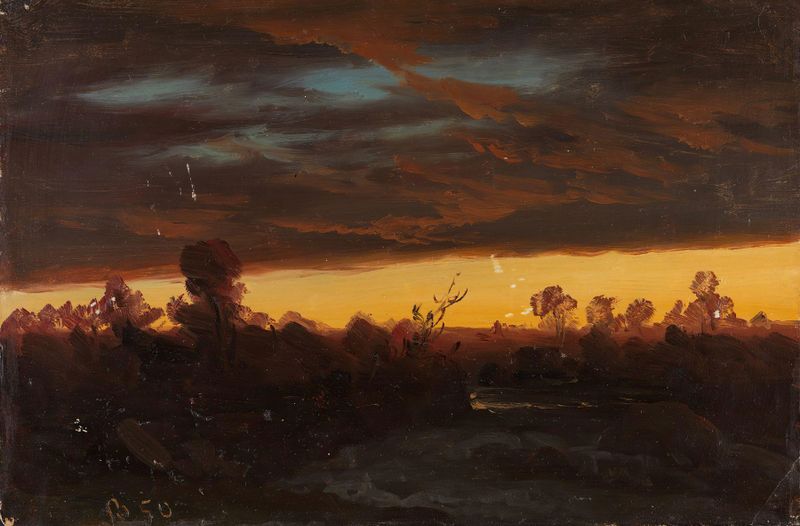
Can paint confess what words never could? In Landscape in Sunset, the canvas bursts with an ecstasy that transcends language, inviting viewers into a world drenched in vivid hues. Look to the center, where a radiant sun sinks below the horizon, casting an amber glow over a tranquil lake. The soft brushstrokes capture the water's serene surface, mirroring the sky's fiery palette of oranges, pinks, and purples. Notice how the dark silhouettes of distant trees frame this natural spectacle, creating a dynamic contrast that emphasizes the vibrancy of the sunset.
The gentle blending of colors evokes a sense of warmth and fleeting beauty, drawing the eye deeper into the composition. Within this landscape, layers of meaning unfold like petals of a flower. The juxtaposition of light and dark symbolizes the transient nature of life, suggesting a moment of quiet introspection amid the riot of colors. The stillness of the water reflects both the calm and the chaos of human emotion, hinting at the internal struggles that often accompany such sublime beauty.
It becomes a meditation on the fleeting nature of joy and the inevitability of change. In 1852, Knud Baade painted this work during a period of personal and artistic exploration in Norway. He was captivated by the sublime beauty of his homeland, seeking to convey the emotional resonance of nature through light and color. At a time when Romanticism was gaining momentum, Baade found himself at the intersection of this movement, striving to capture not just the visual but the spiritual essence of the landscapes he loved.