
A West Indian Flower Girl and Two other Free Women of Color — History & Facts
What first seizes the eye in this work is the quiet confidence of three women, each poised in vibrant dress, their presence commanding the open courtyard. The painter draws us in with the crisp geometry of striped skirts and headwraps, their colors echoing the sunlit walls behind them. One woman balances a wide-brimmed hat atop her head, a feat of both fashion and skill, while another extends a delicate hand, offering flowers from a shallow tray.
Every gesture is deliberate: the turned back, the sidelong glance, the subtle tilt of a wrist. Light falls evenly across the scene, flattening the architecture yet lending the figures a sculptural solidity, as if they were carved from the very air of the Caribbean morning. Painted around 1769, this image belongs to a world in flux: the Caribbean colonies, where free women of color navigated a complex social landscape shaped by trade, slavery, and creole cultures. Such paintings were often commissioned by European patrons eager to document colonial life, sometimes as souvenirs, sometimes as subtle arguments about race and status.
The artist, Agostino Brunias, became known for these scenes, which hover between ethnographic record and genteel fantasy. History has kept few traces of the individual lives behind these faces, but the painting’s survival—now accessible through the Google Cultural Institute—invites us to look again, and to wonder what stories these women might have told in their own voices.
More Artworks by Agostino Brunias
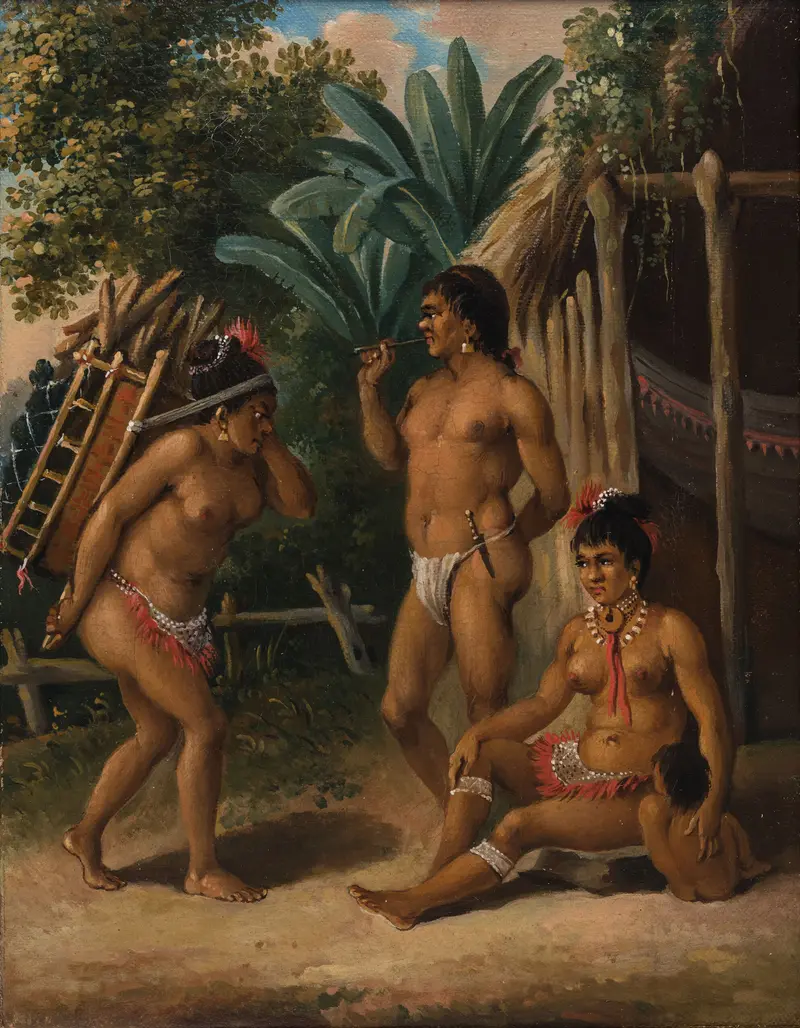
Indigenous Kalinago of St. Vincent [Aboriginal Caraibs of St. Vincents]
Agostino Brunias
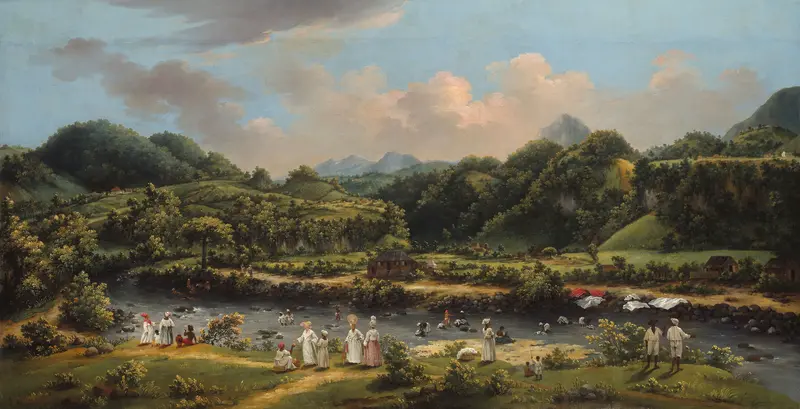
View on the River Roseau, Dominica
Agostino Brunias
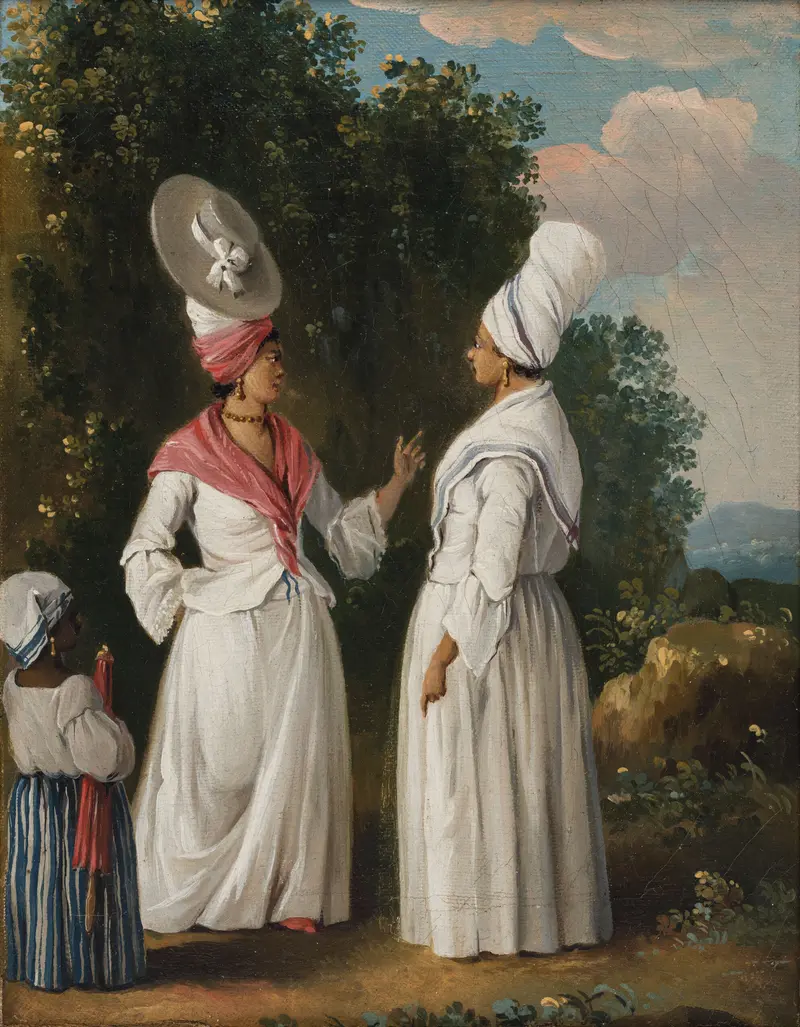
Francophone Women of Color and a Young Attendant, Dominica [French Mulatresses of Dominica in their Proper Dress]
Agostino Brunias
View on the River Roseau, Dominica
Agostino Brunias
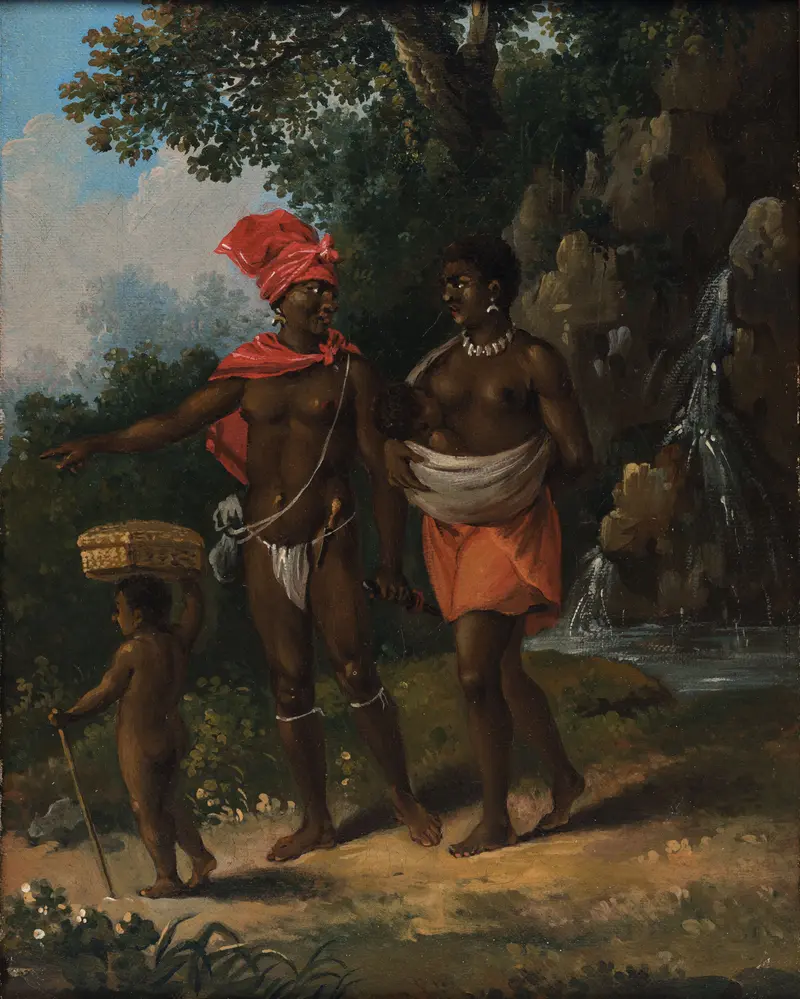
Garifuna Peoples of St. Vincent [Caraibs of St. Vincents]
Agostino Brunias
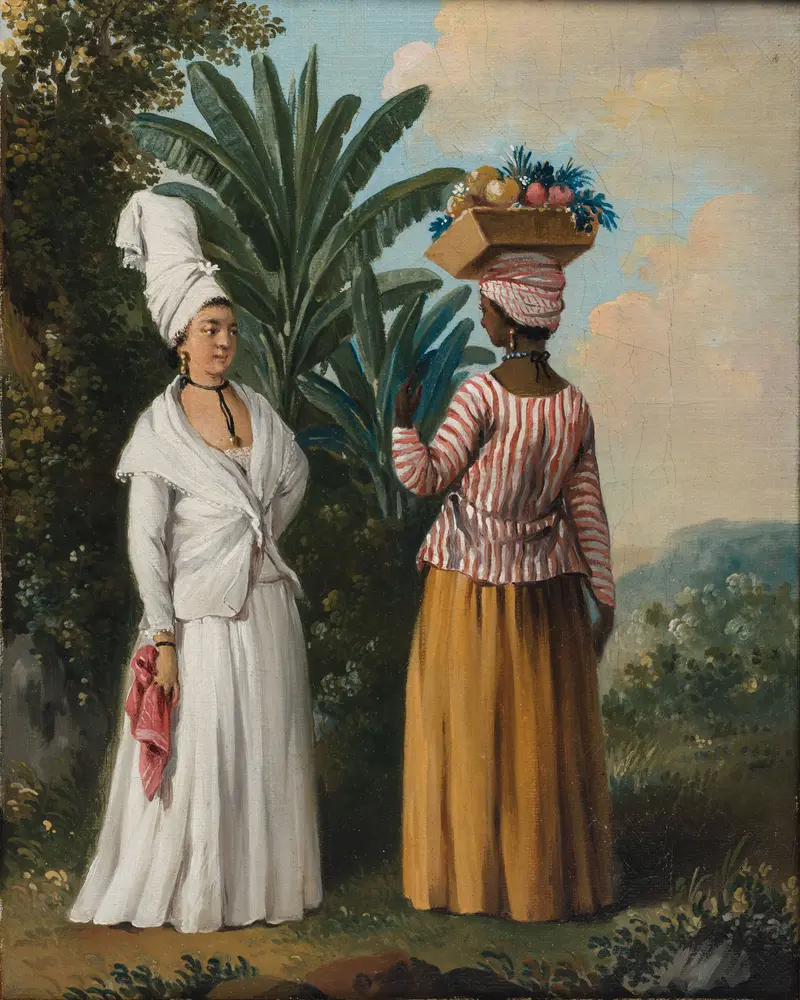
Two Women of Color, Dominica [French Mulatress of Dominica and a Negro Woman in their Proper Dress]
Agostino Brunias

Purchasing Fruit [A French Mulatress Purchasing Fruit from a Negro Wench]
Agostino Brunias

Women of Color Bathing and a Voyeur [Mulatresses and Negro Woman Bathing]
Agostino Brunias
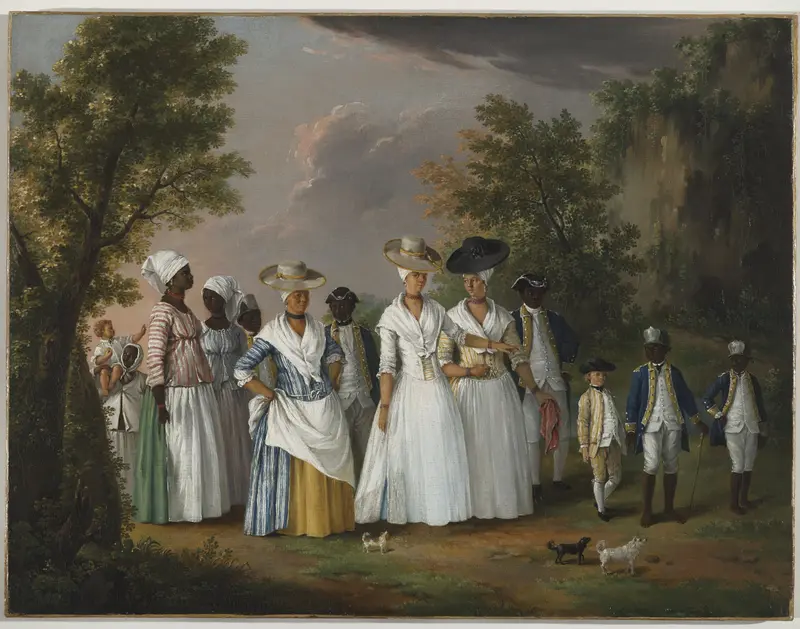
Free Women of Color with their Children and Servants in a Landscape
Agostino Brunias
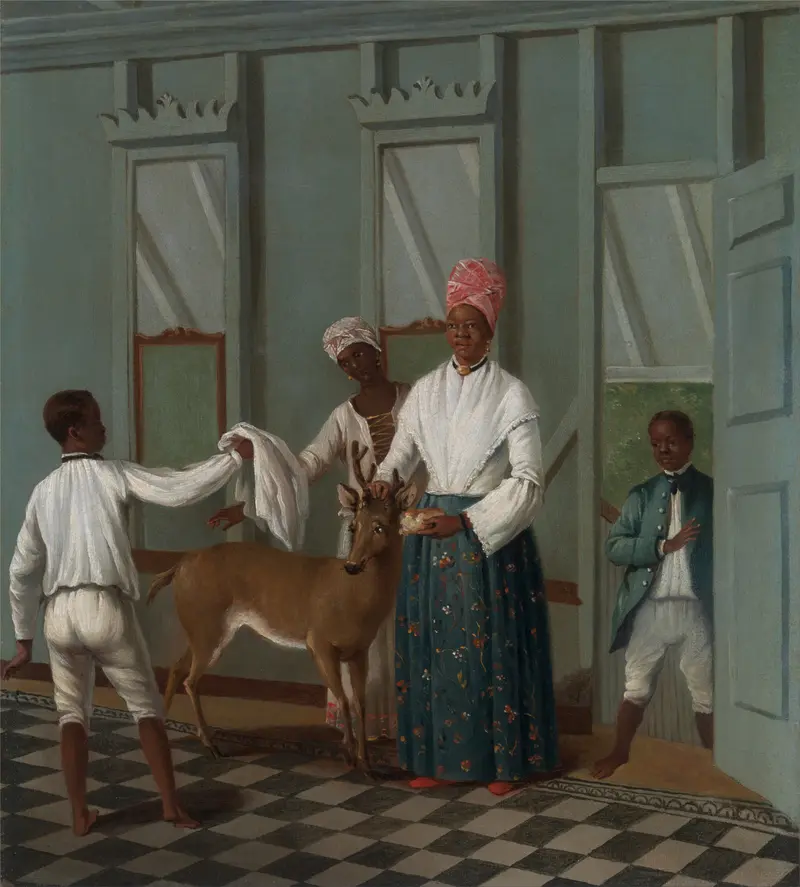
Servants Washing a Deer
Agostino Brunias
More Genre Scene Art

Banquet of the Officers of the St George Civic Guard
Frans Hals

Rembrandt and Saskia in the Scene of the Prodigal Son
Rembrandt van Rijn

Bal du moulin de la Galette
Pierre-Auguste Renoir

Quadrille at the Moulin Rouge
Henri de Toulouse-Lautrec

A Burial at Ornans
Gustave Courbet

When Will You Marry?
Paul Gauguin