
A Windy Day — History & Facts
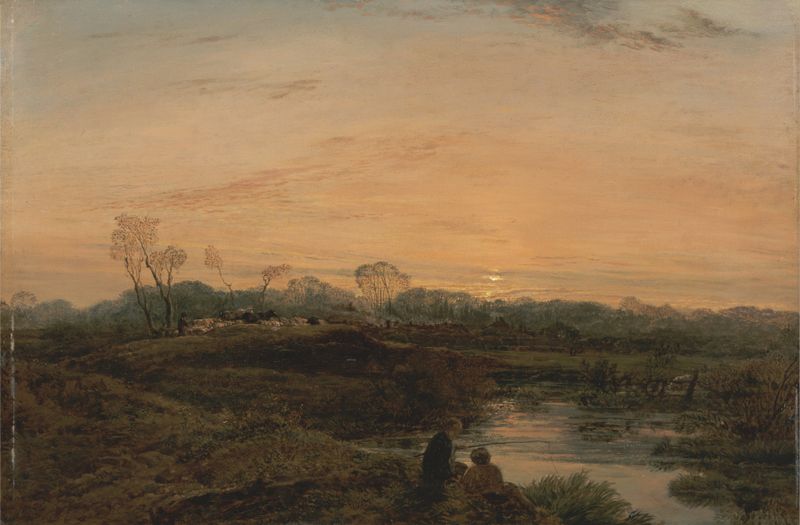
Who listens when art speaks of silence? In A Windy Day, light becomes a powerful voice, enveloping the scene with a whisper of nature's breath as it dances through the trees and stirs the grass. Look to the center of the composition, where a gentle breeze sways the branches of a sturdy oak. The painter’s masterful use of soft greens and golden hues captures the vitality of the moment, inviting your eyes to wander along the undulating lines of the foliage. Notice how the dappled sunlight filters through, creating intricate shadows that reveal the texture of the leaves, while the distant horizon fades into a soft blur, enhancing the scene's tranquility against the chaos of the wind. Within this serene landscape, contrasts emerge.
The stillness of the ground is juxtaposed with the lively movement of the treetops, symbolizing the tension between the stability of nature and the unpredictability of the elements. Even the clouds above seem to convey a sense of urgency, racing across the sky as if echoing the fleeting nature of life's moments. Each brush stroke resonates with an unspoken narrative, inviting contemplation on the coexistence of peace and disturbance. In 1815, while creating this work, the artist was deeply immersed in the vibrant English Romantic movement, which sought to explore not only landscapes but also the emotional experiences they evoke.
During this period, Linnell was influenced by the changes in nature surrounding him, reflecting the collective yearning for beauty and serenity amidst the tumultuous social and political climate of his time.
More Artworks by John Linnell
Browse all →
A View Near Hampstead
John Linnell
An English Landscape
John Linnell

Travelers Resting by a Fallen Tree
John Linnell
Figures on a Bank, Kensington Gravel Pits
John Linnell
Redhill Common, Surrey
John Linnell

Netley Abbey
John Linnell

The Sand Pits, Hampstead Heath
John Linnell
Entrance To Dovedale From Ashbourne, Derbyshire
John Linnell
Evening, Bayswater
John Linnell

In Dovedale
John Linnell





