
Abdication of Charles III — History & Facts
A ripple of anticipation runs through the vast, crimson chamber, where every figure seems caught mid-breath, eyes fixed on the raised dais at the room’s heart. The painter draws you into a moment of ceremonial gravity: a king, resplendent in gold, stands before his kneeling son, the baton of power poised between them. Light streams in from tall windows, gilding the assembly of courtiers and dignitaries, their wigs and silks forming a living tapestry of 18th-century Europe.
The ceiling’s painted cherubs peer down as silent witnesses, echoing the grandeur below. Every gesture and glance in the crowd is choreographed to focus your gaze on the act of abdication—a transfer of destiny, not just a crown. Works like this, painted in 1759, were born from a world where royal transitions were staged as theater for both court and country, immortalized to assert legitimacy and continuity. The Abdication of Charles III by Antonio Joli belongs to a tradition of grand history painting, often commissioned to commemorate pivotal dynastic events for posterity and propaganda alike.
In the age of the Bourbon monarchs, such images reinforced the spectacle of power and the divine right of kings, while also serving as diplomatic statements to foreign courts. History has kept few traces of the individual stories behind many such canvases, but their opulent detail and careful composition invite us to step inside the rituals that shaped Europe’s fate. The more you look, the more the silent crowd seems to murmur with the weight of history.
More Artworks by Antonio Joli

Monastery Di San Martino, Naples
Antonio Joli
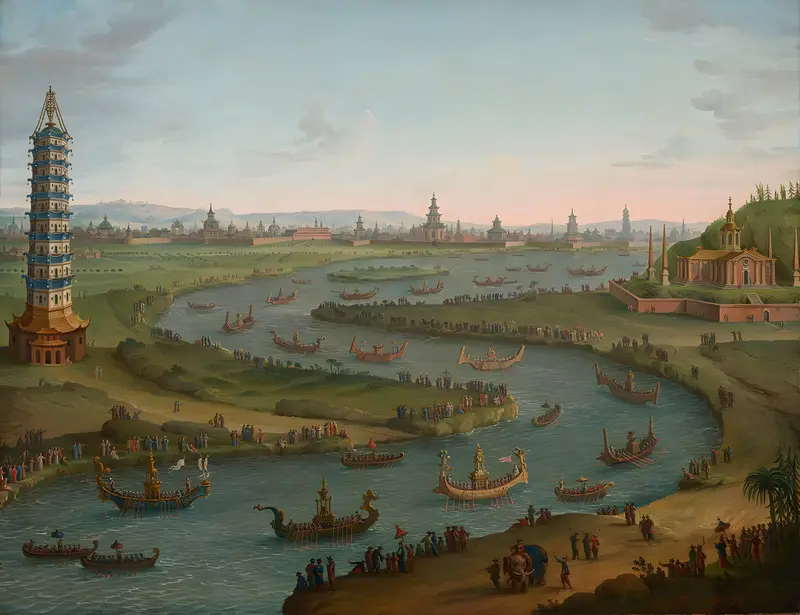
A capriccio with the French Ambassador approaching the King of Siam’s Palace in a state barge, in October
Antonio Joli
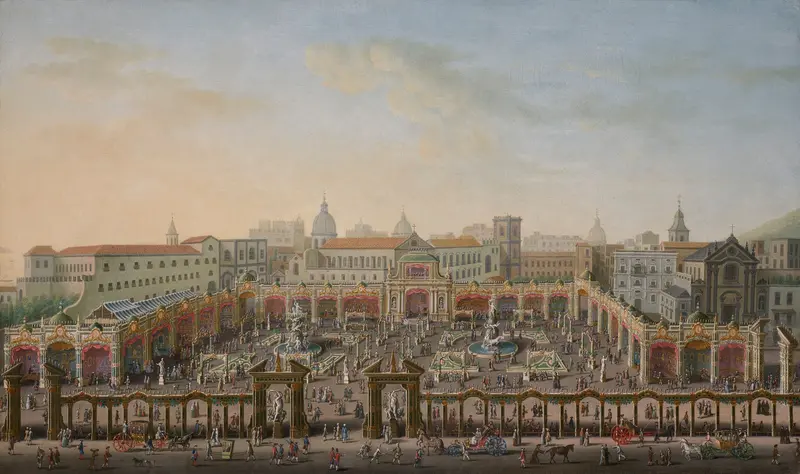
Naples, Piazza Trieste e Trento with a fair viewed from a balcony of the Palazzo Reale
Antonio Joli
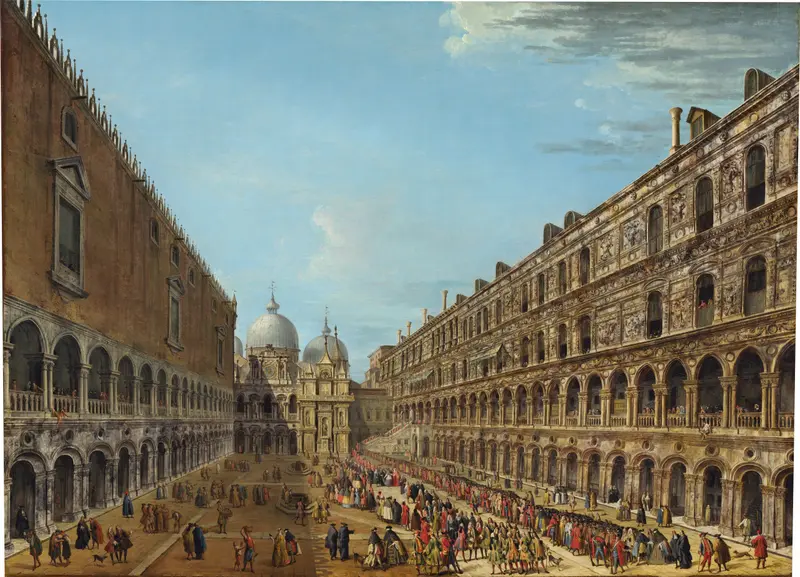
Procession in the Courtyard of the Ducal Palace,Venice
Antonio Joli
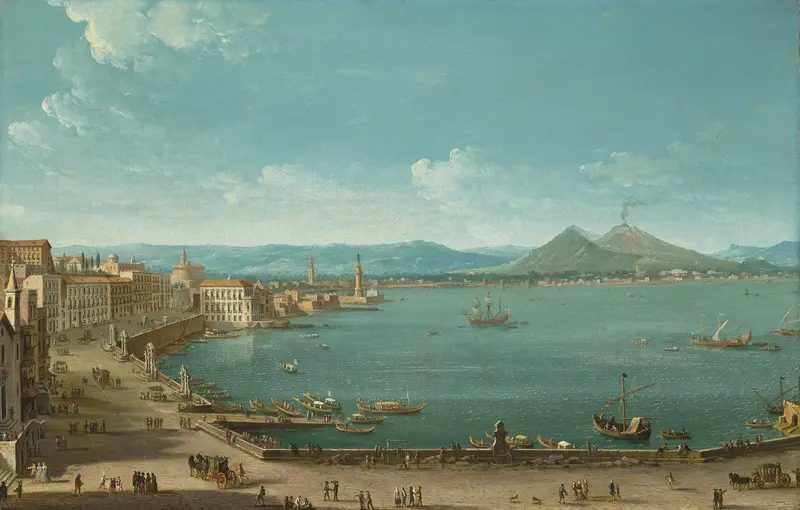
Naples with the Bay of Santa Lucia and Vesuvius beyond
Antonio Joli
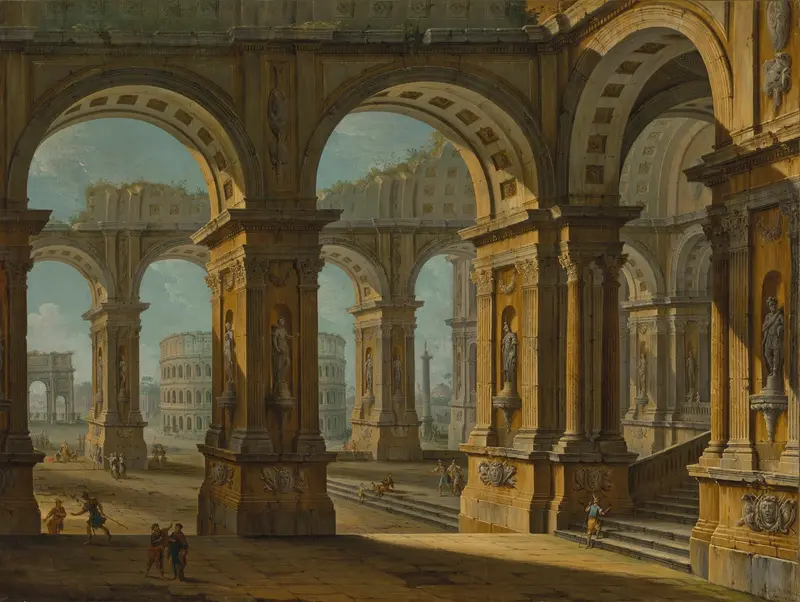
A capriccio of Rome with the Colusseum and Arch of Titus
Antonio Joli
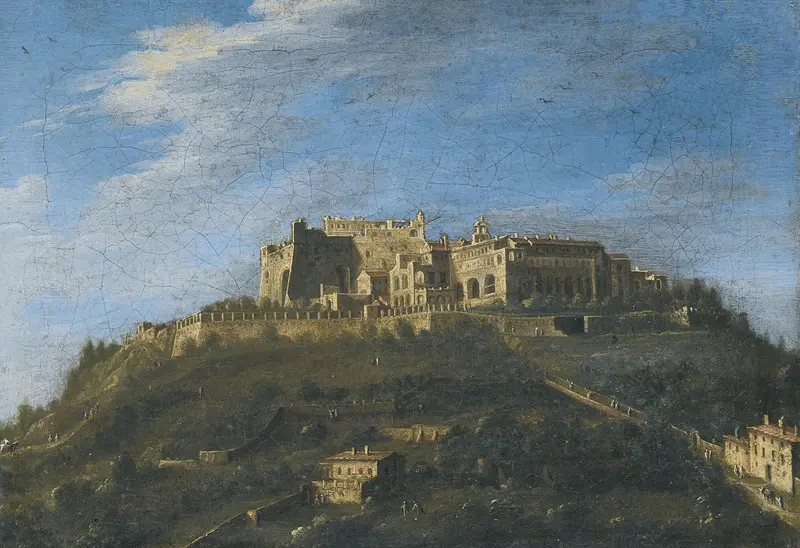
Monastery Di San Martino, Naples
Antonio Joli
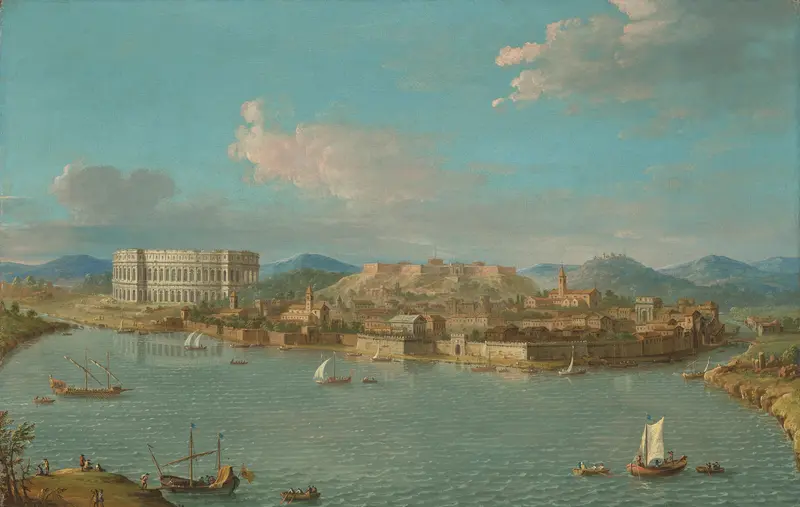
Pula, with the Pula Arena
Antonio Joli
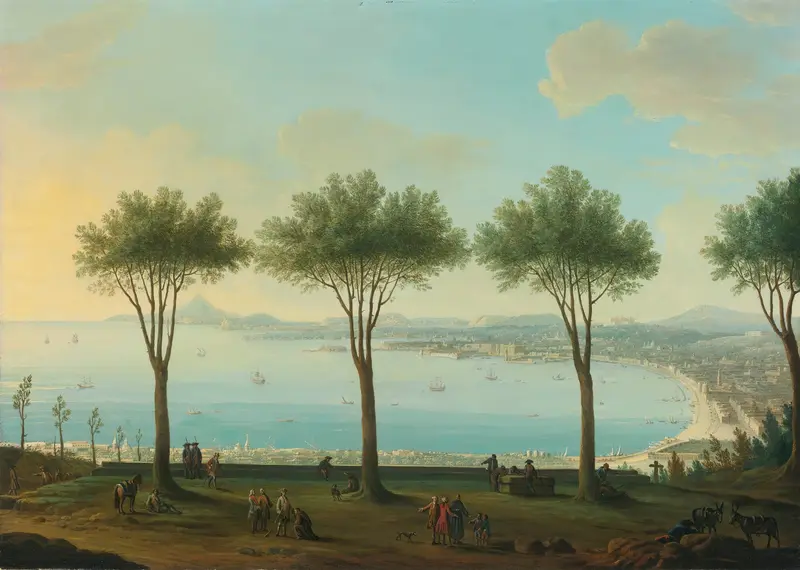
View Of The Bay Of Naples From The South (Possibly Poggioreale), Looking North With A King Of The Bourbon Family, Possibly Ferdinand Iv, In The Foreground
Antonio Joli
Capriccio with St. Paul’s and Old London Bridge
Antonio Joli





