
Monastery Di San Martino, Naples — History & Facts
In Monastery Di San Martino, Naples, Antonio Joli captures the grandeur of the monastery with a vibrant palette. The painting features a striking contrast between the warm tones of the building and the cooler hues of the surrounding landscape. The sky is filled with soft clouds, adding a sense of depth to the scene.
Figures can be seen in the foreground, engaging in daily activities, which brings life to the architectural setting. The painting is executed in oil on canvas, a common medium for the Rococo period. Joli's technique showcases his skill in rendering light and shadow, enhancing the three-dimensionality of the architecture. The brushwork is fluid, allowing for a sense of movement in the clouds and foliage.
Viewers can appreciate the intricate details of the monastery's façade, which reflects the Rococo style's emphasis on ornamentation. Antonio Joli was known for his depictions of landscapes and architecture, often focusing on Italian sites. This work, created in the 1750s, exemplifies the Rococo style, characterized by its decorative elements and playful themes. Interestingly, Joli was also a skilled stage designer, which influenced his ability to create dramatic compositions in his paintings.
The Monastery Di San Martino remains a testament to his talent and the beauty of Naples.
More Artworks by Antonio Joli
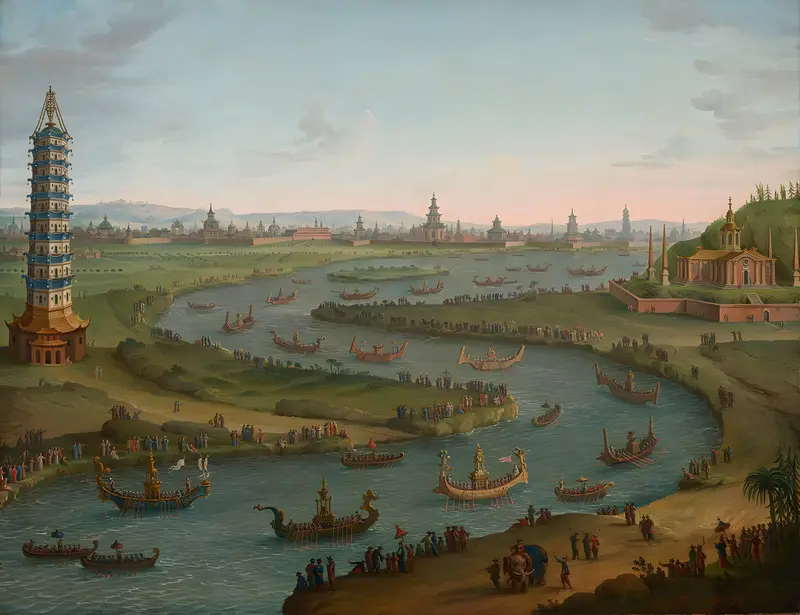
A capriccio with the French Ambassador approaching the King of Siam’s Palace in a state barge, in October
Antonio Joli
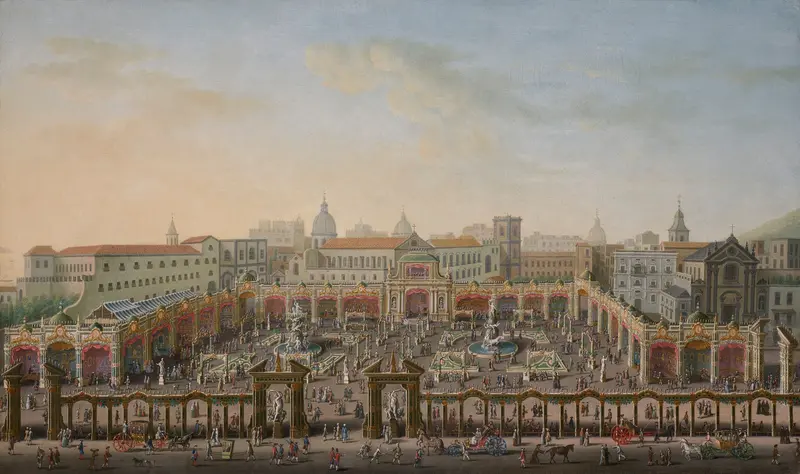
Naples, Piazza Trieste e Trento with a fair viewed from a balcony of the Palazzo Reale
Antonio Joli
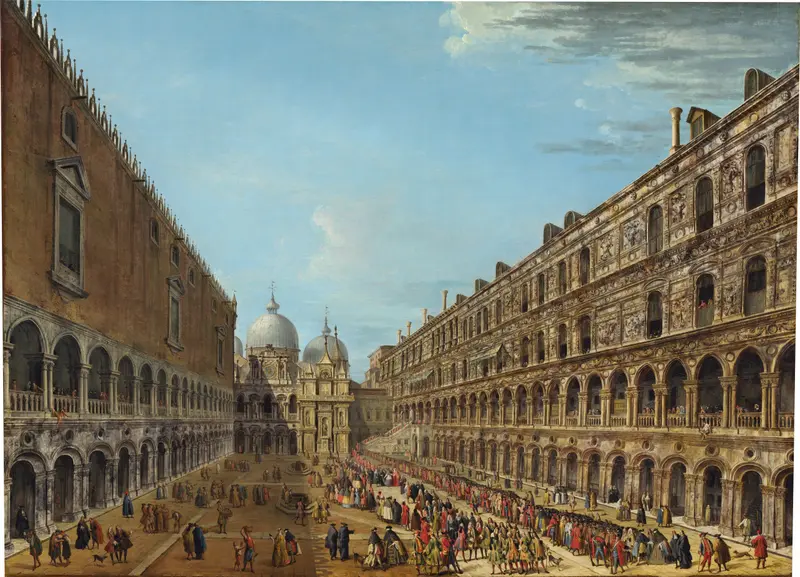
Procession in the Courtyard of the Ducal Palace,Venice
Antonio Joli
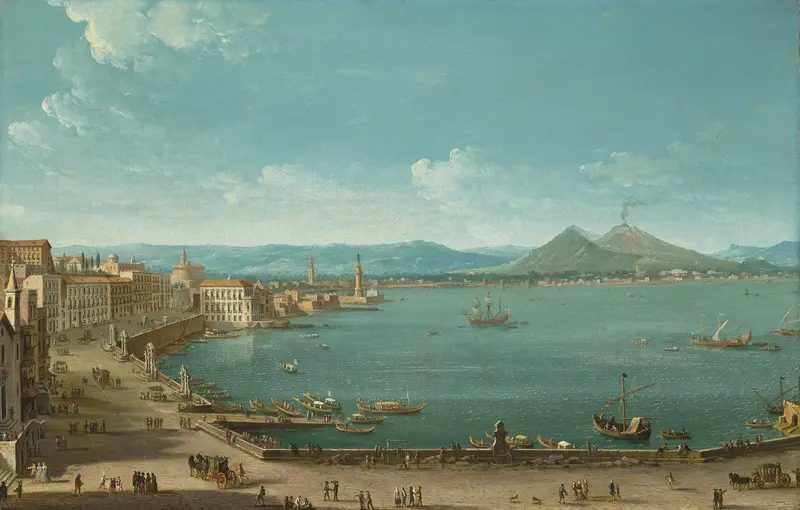
Naples with the Bay of Santa Lucia and Vesuvius beyond
Antonio Joli
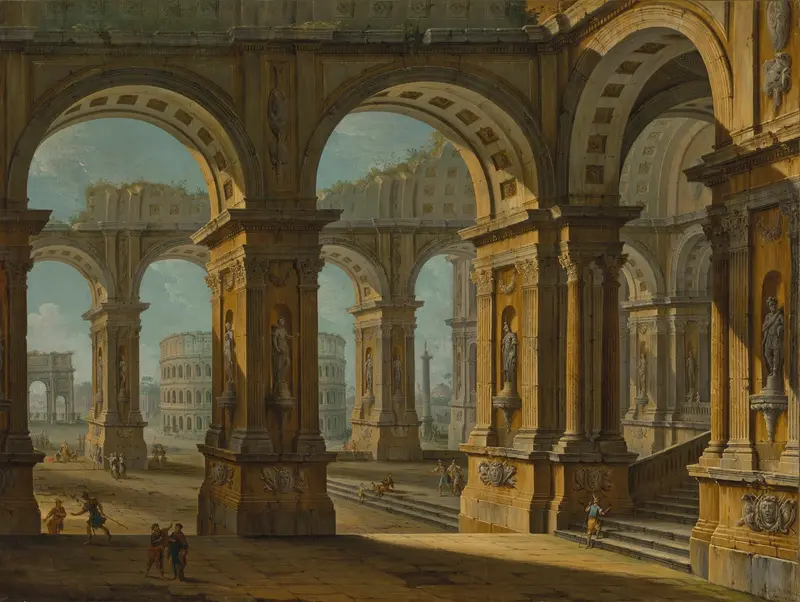
A capriccio of Rome with the Colusseum and Arch of Titus
Antonio Joli
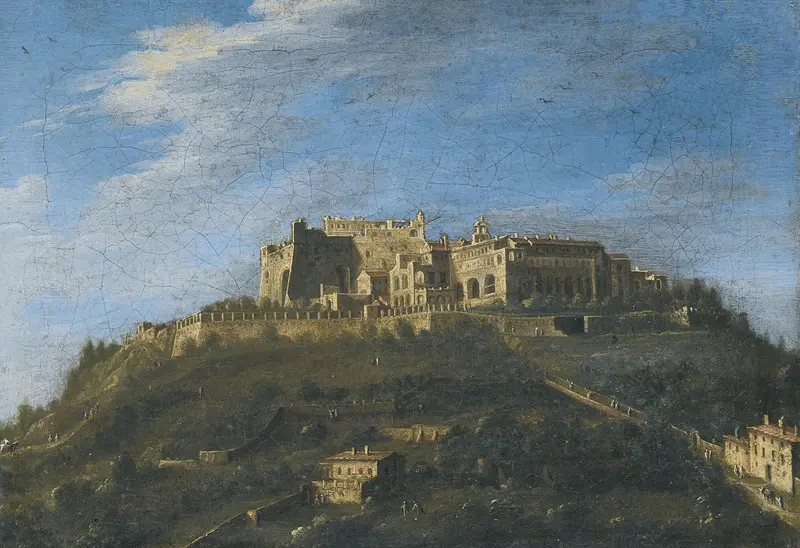
Monastery Di San Martino, Naples
Antonio Joli
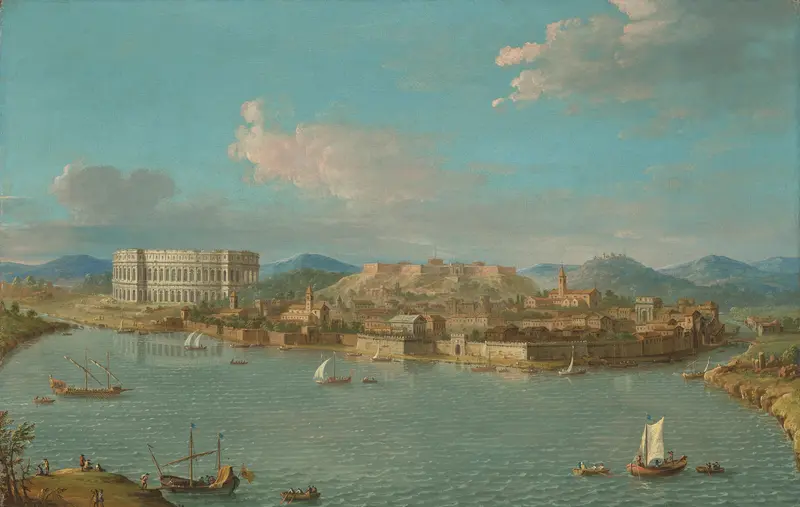
Pula, with the Pula Arena
Antonio Joli
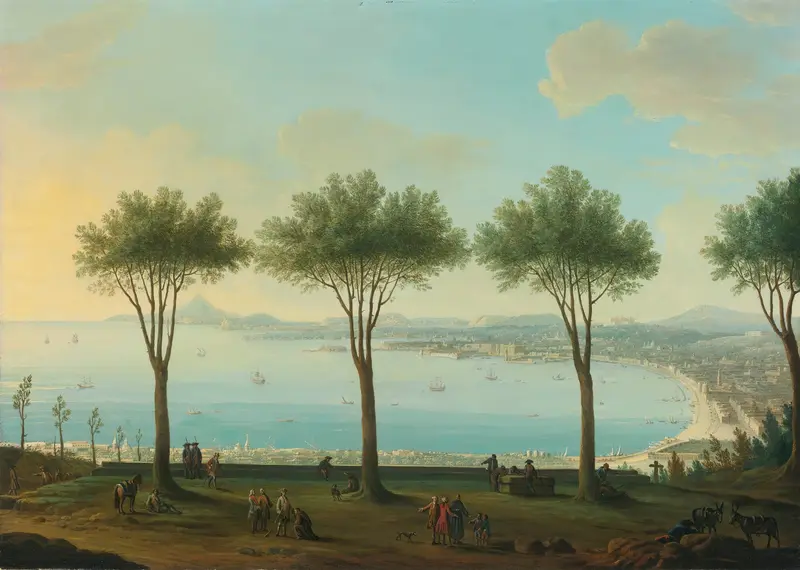
View Of The Bay Of Naples From The South (Possibly Poggioreale), Looking North With A King Of The Bourbon Family, Possibly Ferdinand Iv, In The Foreground
Antonio Joli
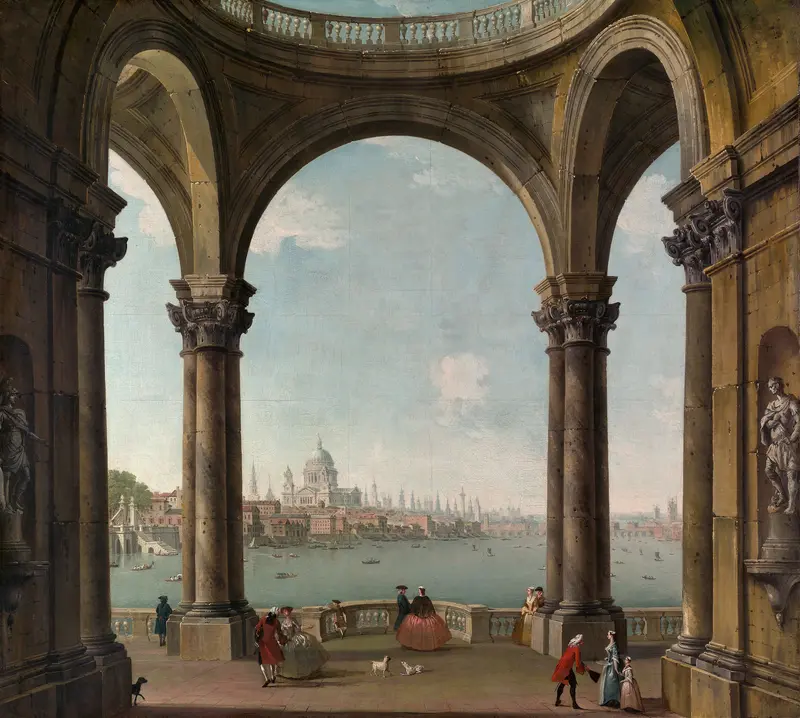
Capriccio with St. Paul’s and Old London Bridge
Antonio Joli
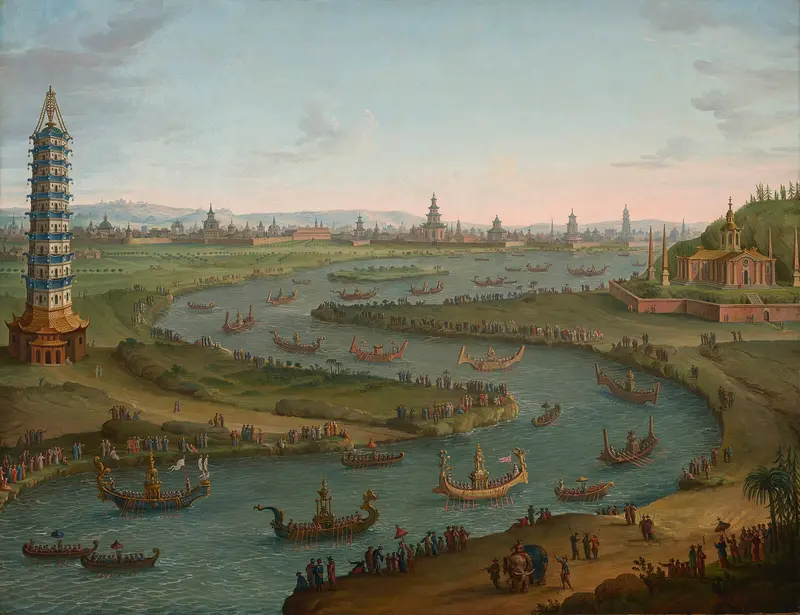
A capriccio with the French Ambassador approaching the King of Siam’s Palace in a state barge, in October 1685
Antonio Joli





