
Adoration of the Magi — History & Facts
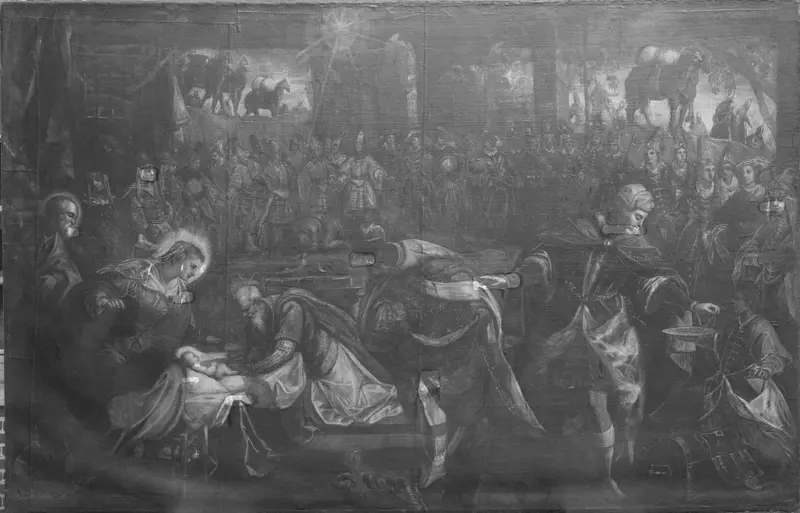
When Tintoretto painted his Adoration of the Magi in 1605, he was nearing the end of a long and prolific career, and this work stands as one of his final meditations on the theme of revelation and wonder. What makes this painting especially fascinating is that it revisits a subject Tintoretto had explored many times before, yet here, in his late style, he treats it with a theatrical dynamism and a looseness of brushwork that some contemporaries found shocking. The painting’s date places it among the artist’s last works, created just before his death, and it is sometimes cited as a summation of his lifelong fascination with dramatic light and movement. The scene unfolds at the very moment the three Magi, resplendent in their exotic robes, kneel before the infant Christ, presenting their gifts of gold, frankincense, and myrrh.
Mary, seated at the center, draws the eye with her gentle gesture, while Joseph stands protectively behind her. The swirling crowd—servants, animals, and onlookers—fills the composition with restless energy, a hallmark of Tintoretto’s mature style. The star that guided the Magi burns above, casting a supernatural light that picks out the gold of the gifts and the white of the Christ child’s swaddling.
Unlike the calm, ordered Adoration by Veronese, Tintoretto’s version is alive with motion and surprise, emphasizing the awe and confusion of the moment. The exact commission for this Adoration of the Magi remains uncertain, as does its original intended location, but it likely belonged to a Venetian confraternity or private chapel, reflecting the city’s appetite for grand religious spectacle. Over the centuries, the painting’s attribution has never been seriously doubted, though the lack of documentation has left some details of its early history obscure. Today, the work is recognized as a late masterpiece, embodying the restless energy and spiritual drama that defined Tintoretto’s final years.
Its survival allows us to witness the artist’s last word on a story he had painted for decades, a testament to his enduring fascination with the mysteries of faith.
More Artworks by Tintoretto
The Last Supper
Tintoretto
The Miracle of the Slave
Tintoretto
Venus and Mars Surprised by Vulcan
Tintoretto

Adoration of the Shepherds
Tintoretto
Adoration of the Magi
Tintoretto
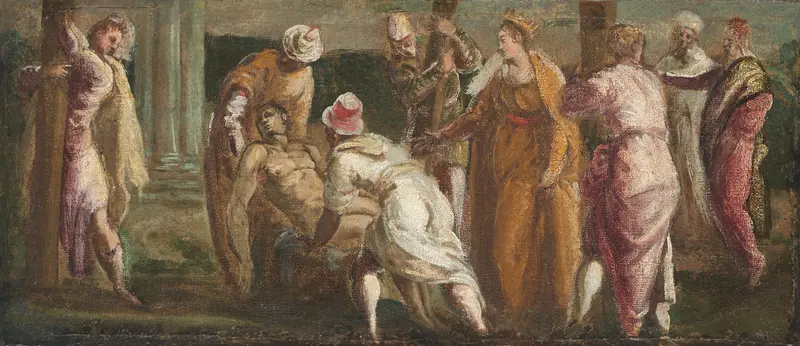
Saint Helen Testing the True Cross
Tintoretto
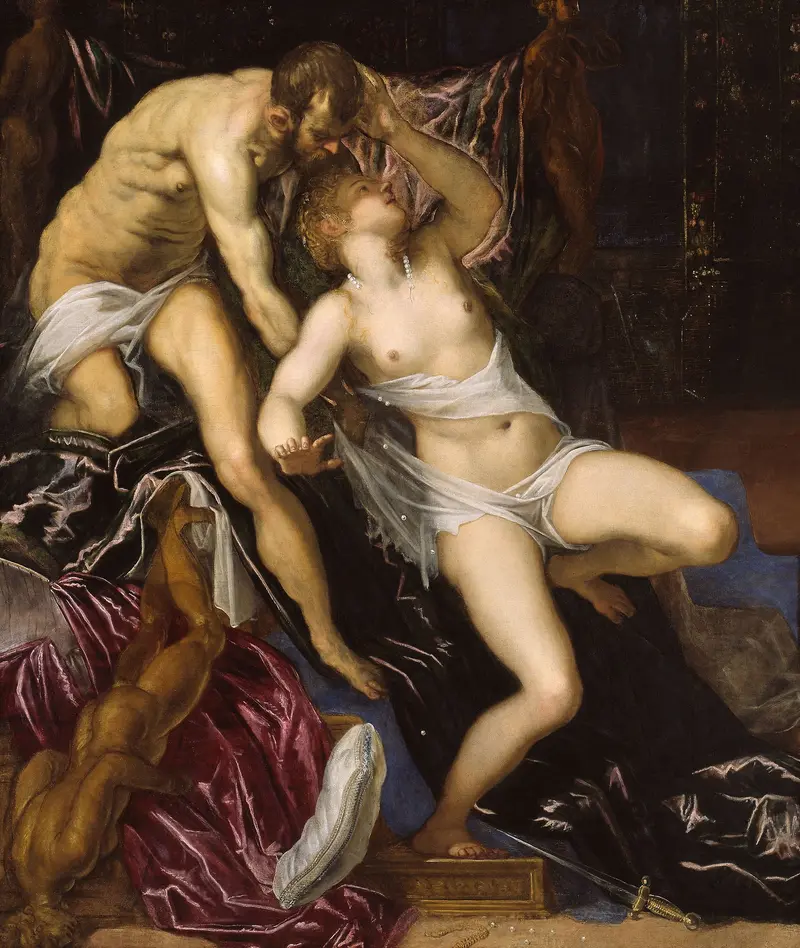
Tarquin and Lucretia
Tintoretto
Two Male Figures in Motion (verso)
Tintoretto
A Female Nude [verso]
Tintoretto
Veduta Kopra
Tintoretto





