
Two Male Figures in Motion (verso) — History & Facts
What first catches the eye in Two Male Figures in Motion (verso) is the restless energy captured in just a few sweeping lines. The figures emerge from the brown wash like memories half-recalled, their forms twisting and overlapping in a tangle of limbs and flowing drapery. The artist’s hand is visible in every stroke: a bold arc suggests a shoulder, a quick flick conjures a lock of hair, while the faces—one with eyes closed, the other barely sketched—seem caught between exertion and contemplation.
The unfinished quality invites the viewer to imagine the next movement, as if the scene is still unfolding on the page. Tintoretto’s signature dynamism is present even in this preparatory study, the figures straining against the confines of the paper. Drawings like this were the lifeblood of late Renaissance workshops, where artists such as Tintoretto honed their compositions before committing them to canvas or wall. In Venice around 1600, the demand for large narrative paintings was matched by a hunger for studies that revealed the artist’s process.
These sheets, often passed among students or kept for reference, were rarely intended for display; yet they offer a privileged glimpse into the creative mind at work. The date, 1598/1605, places this study at the twilight of Tintoretto’s career, a period when his bold, experimental approach was influencing a new generation. Now held in the National Gallery of Art and shared through its open access policy, this drawing invites us to linger over every line, searching for the spark of invention that would ignite a finished masterpiece.
More Artworks by Tintoretto
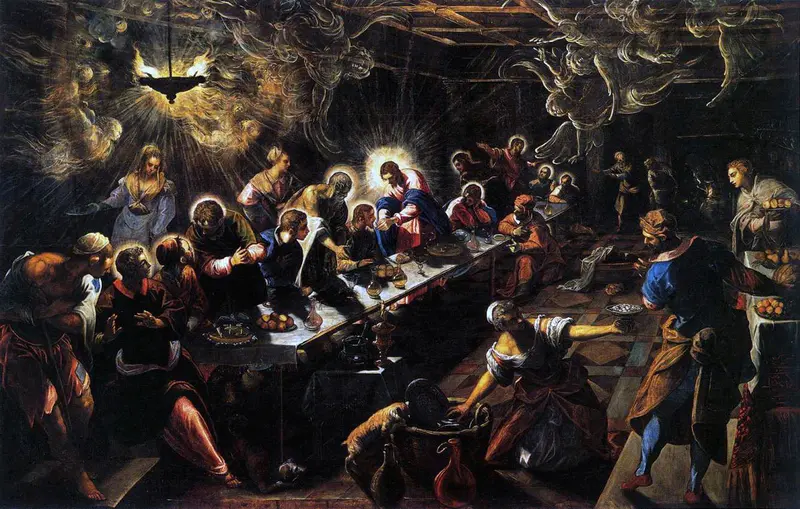
The Last Supper
Tintoretto
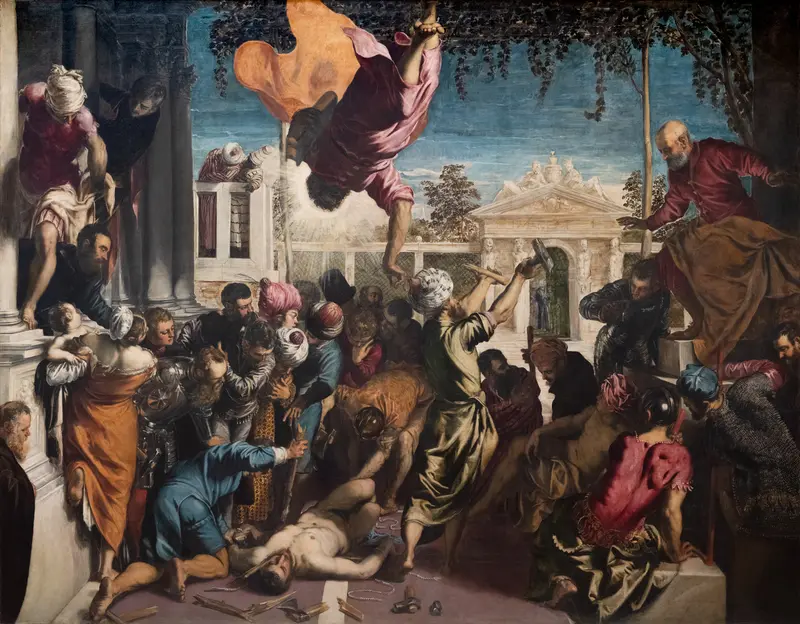
The Miracle of the Slave
Tintoretto
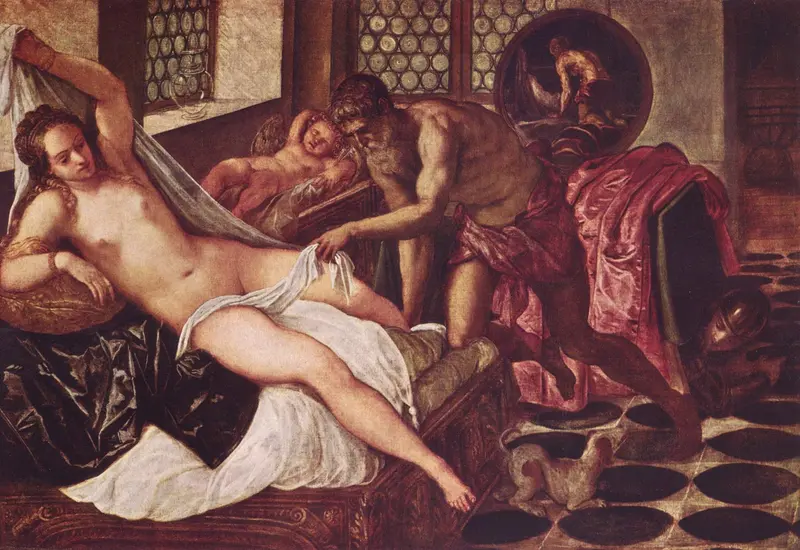
Venus and Mars Surprised by Vulcan
Tintoretto

Adoration of the Shepherds
Tintoretto
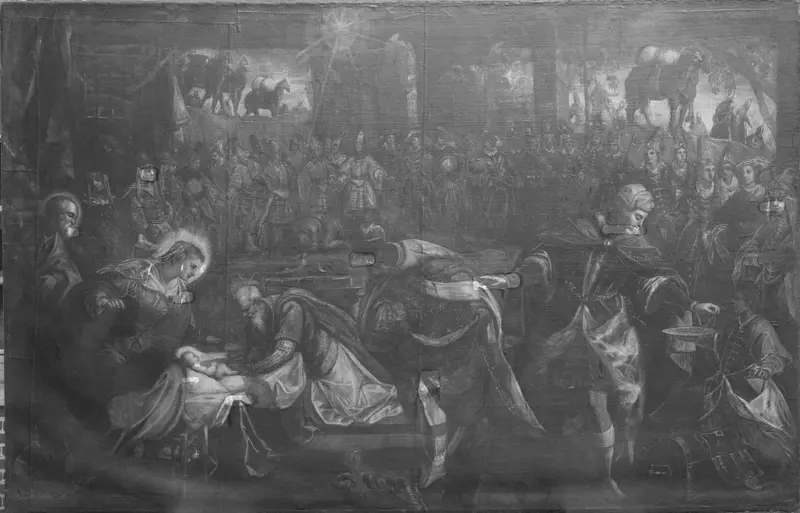
Adoration of the Magi
Tintoretto
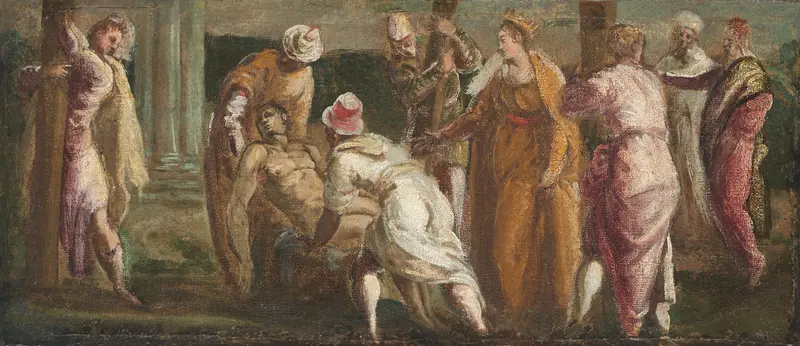
Saint Helen Testing the True Cross
Tintoretto
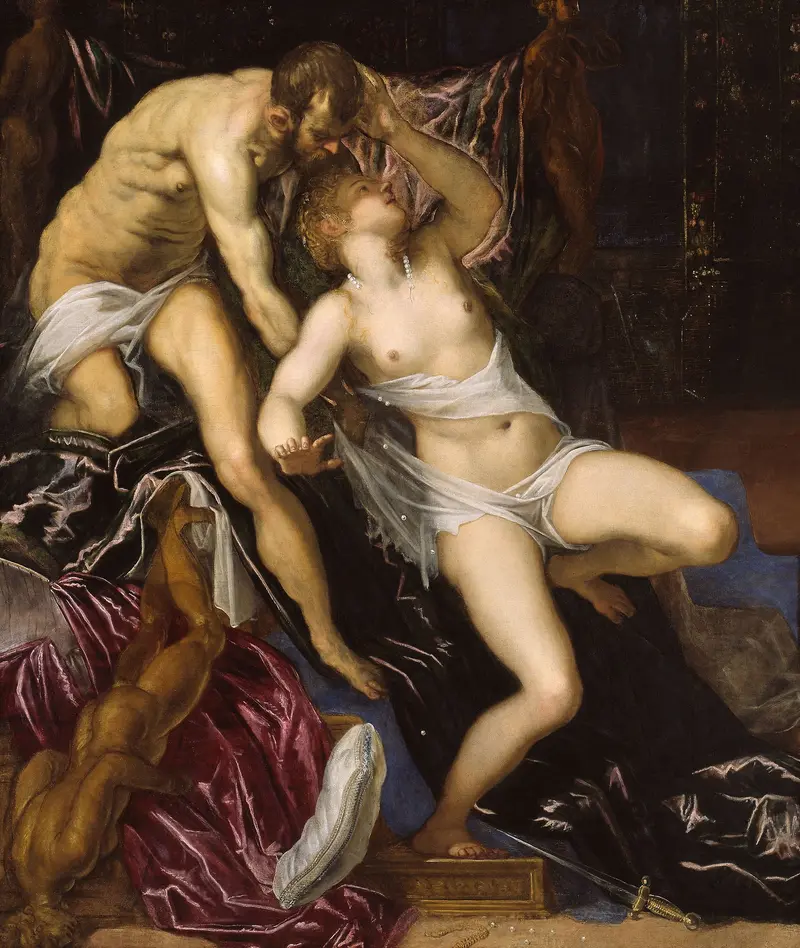
Tarquin and Lucretia
Tintoretto
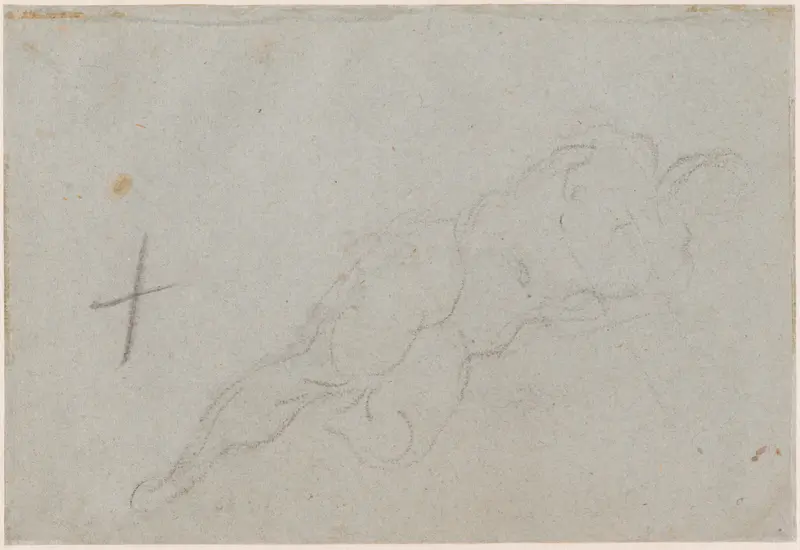
A Female Nude [verso]
Tintoretto
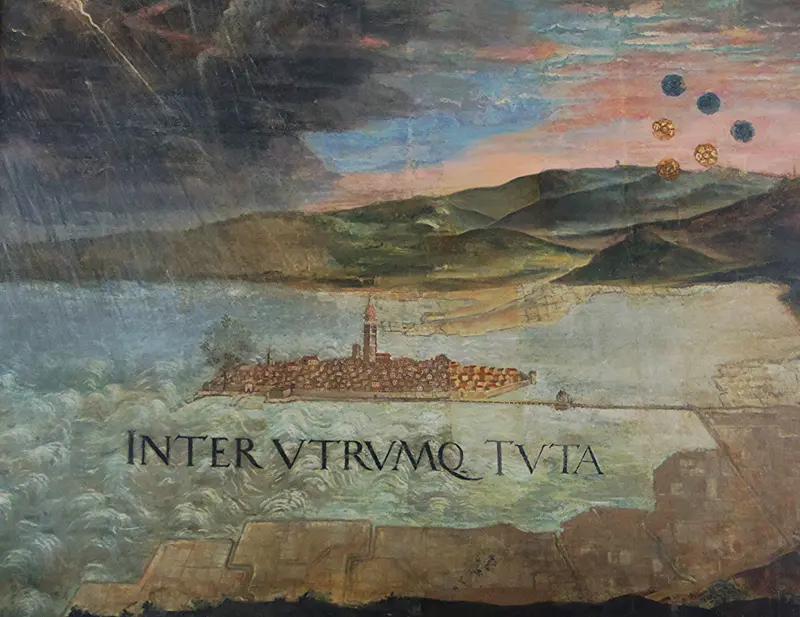
Veduta Kopra
Tintoretto

Venetian Soldiers Attacking Constantinople (recto)
Tintoretto




