
Adoring Angel, Looking Right — History & Facts
When the friars of San Marco in Florence commissioned a cycle of frescoes for their convent in the late 1430s, they entrusted the task to Fra Angelico, a Dominican friar whose reputation for piety and innovation was already spreading. Among the many angels that grace these walls, Adoring Angel, Looking Right stands out as a fragment from a larger narrative, believed to have once flanked an Annunciation scene. The exact original placement and composition remain a subject of scholarly debate, as several similar angels survive, each with subtle differences in posture and gaze.
The painting’s survival as an independent panel is itself remarkable, given the fragility and losses suffered by many works from this period. The angel is caught in a moment of silent devotion, head bowed, eyes cast to the right, hands delicately crossed in reverence. This gesture, so characteristic of Fra Angelico, conveys both humility and awe, inviting the viewer to share in the sacred event unfolding just out of sight—most likely the Virgin receiving the message from Gabriel. The soft modeling of the face, the almost translucent wings, and the gentle fall of light over the angel’s robe all serve to heighten the sense of quiet adoration.
Unlike the more theatrical angels of Filippo Lippi or the later High Renaissance, Fra Angelico’s figures remain anchored in contemplation, their beauty inseparable from their spiritual purpose. Though the precise medium of Adoring Angel, Looking Right is not firmly established—possibly tempera on panel, as was common in Florence at the time—its delicate execution links it closely to other works from Fra Angelico’s San Marco period, around 1437. Over the centuries, fragments such as this have been dispersed from their original settings, often sold or given as devotional objects. Today, the angel is valued not only as a surviving piece of a lost ensemble but also as a testament to Fra Angelico’s unique ability to combine technical skill with deep religious feeling.
Its journey from the quiet cloisters of San Marco to the walls of modern museums echoes the enduring appeal of early Renaissance devotion.
More Artworks by Fra Angelico

Condemnation of St Lawrence by the Emperor Valerian
Fra Angelico
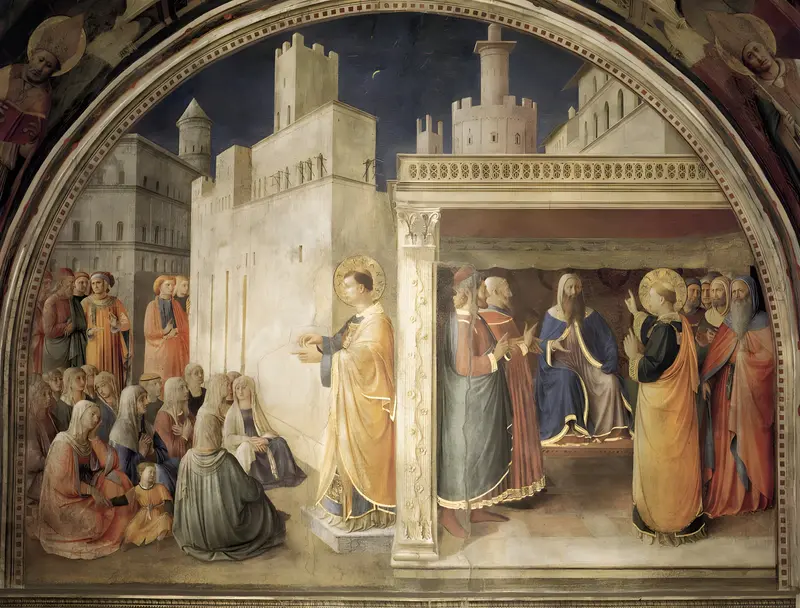
Lunette of the north wall
Fra Angelico
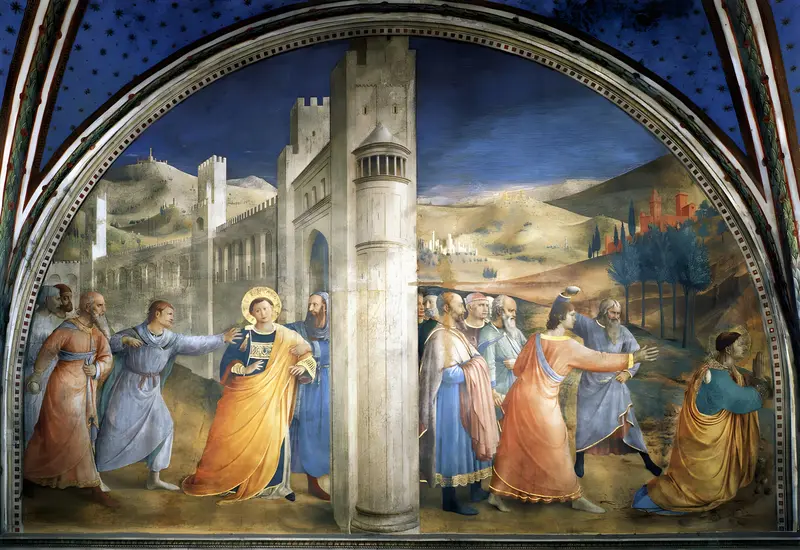
Lunette of the east wall in Niccoline Chapel
Fra Angelico
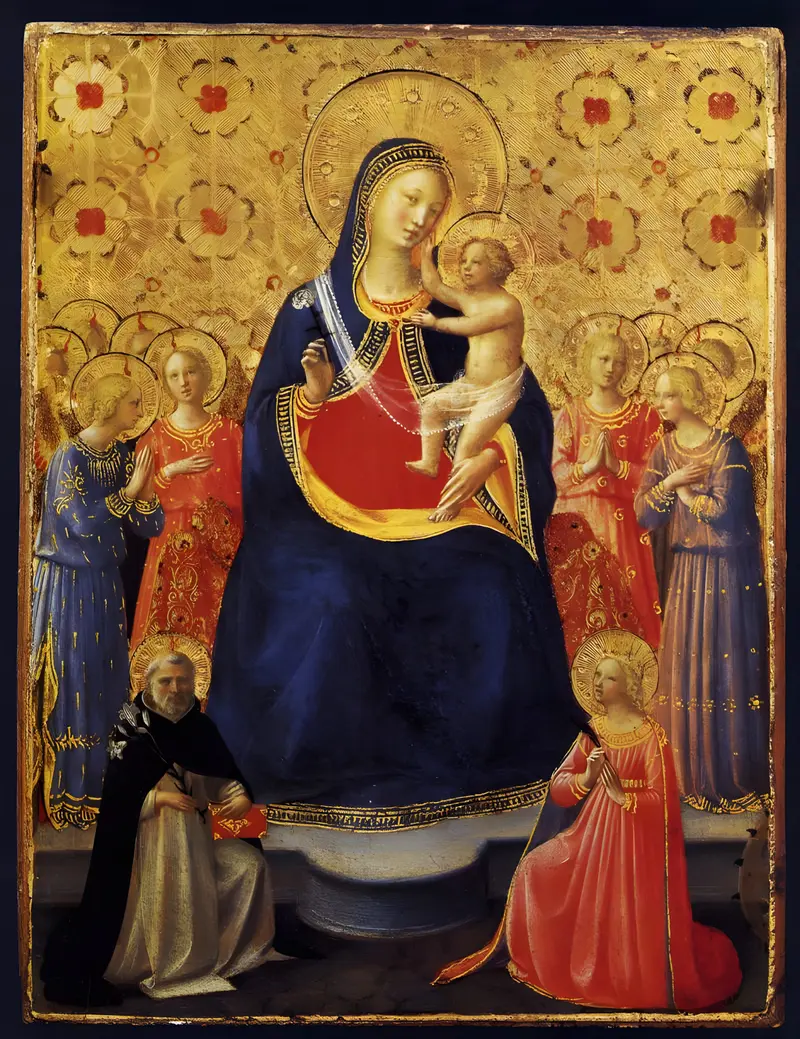
Madonna and Child Enthroned with Nine Angels and Saints Dominic and Catherine of Alexandria
Fra Angelico
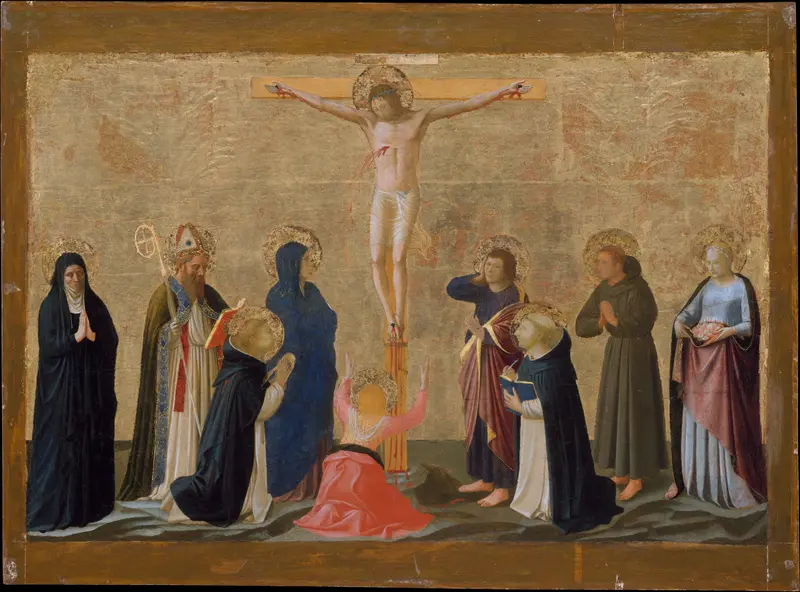
The Crucifixion
Fra Angelico
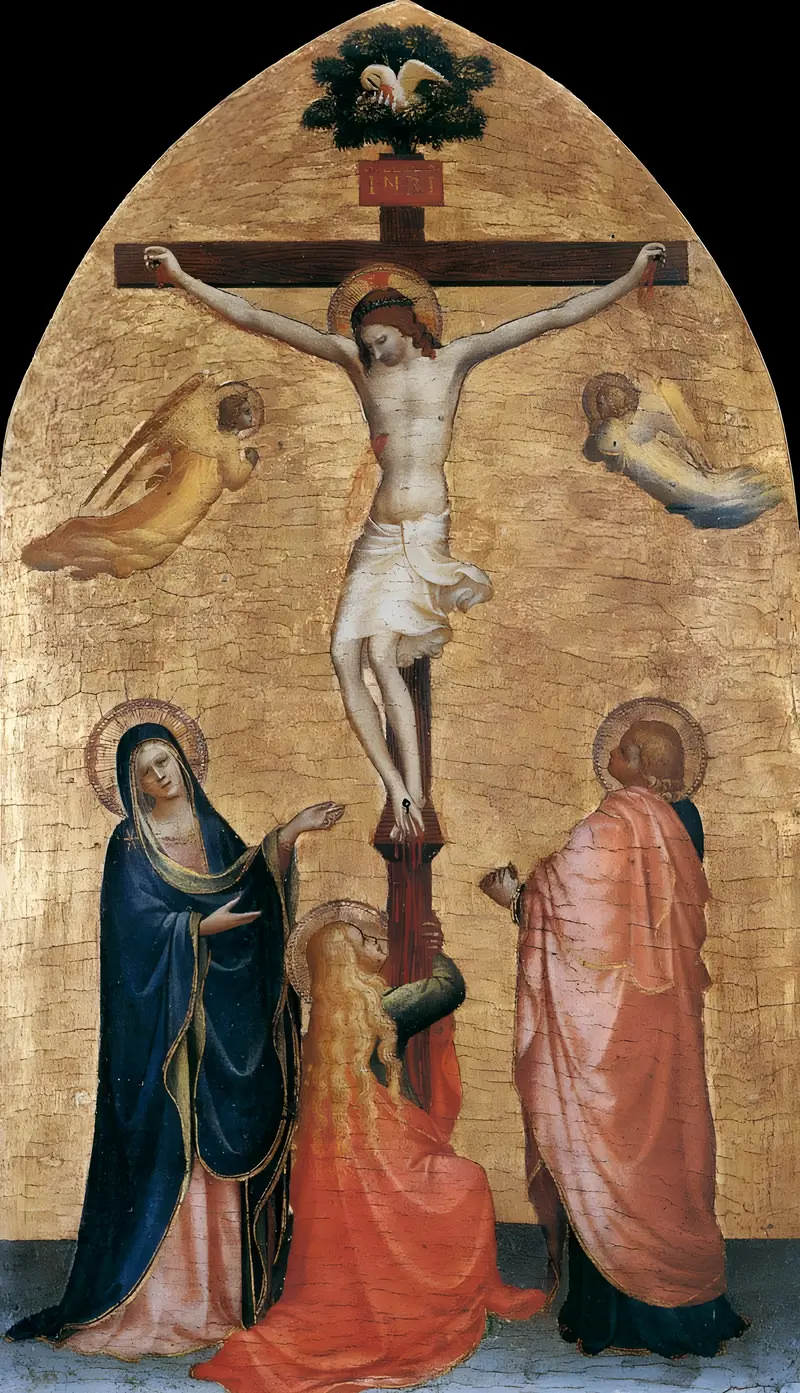
Crucifixion with the Virgin, John the Evangelist, and Mary Magdelene
Fra Angelico
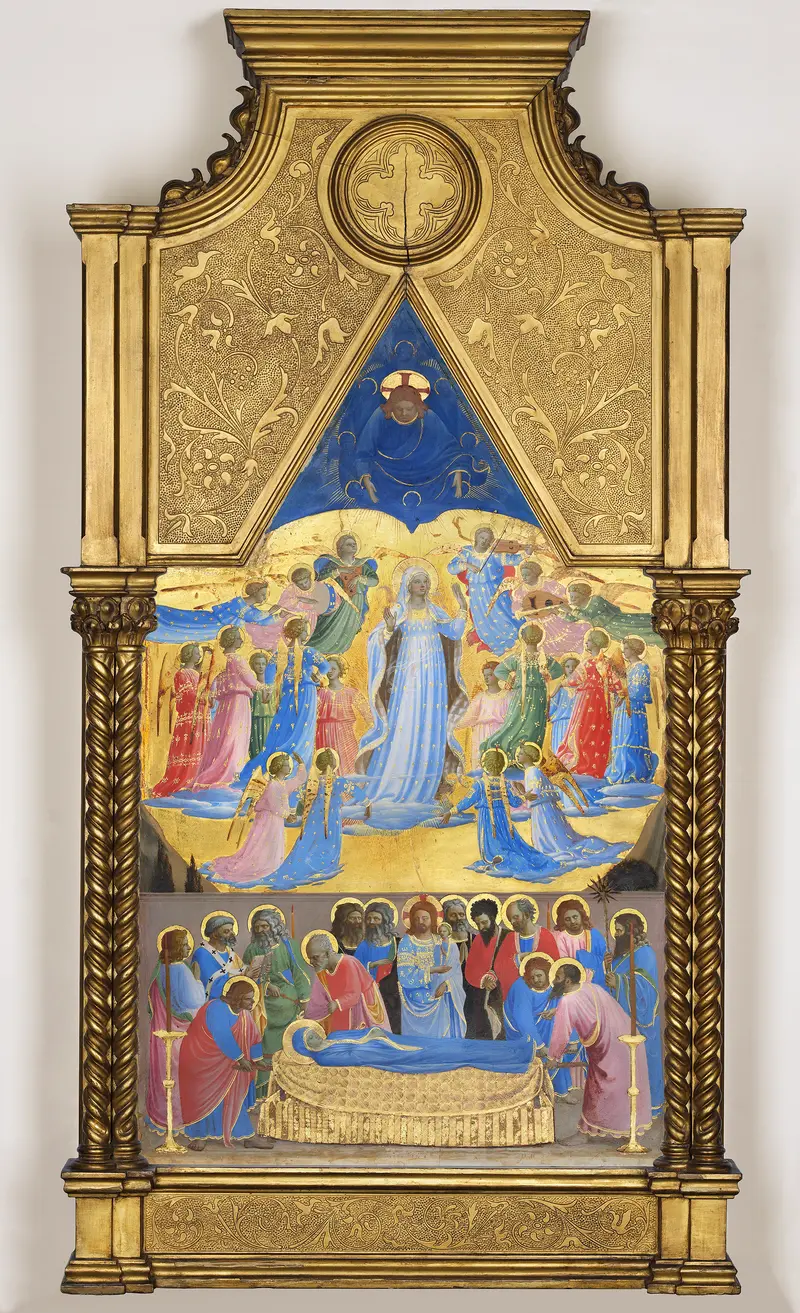
Dormition and Assumption of the Virgin
Fra Angelico
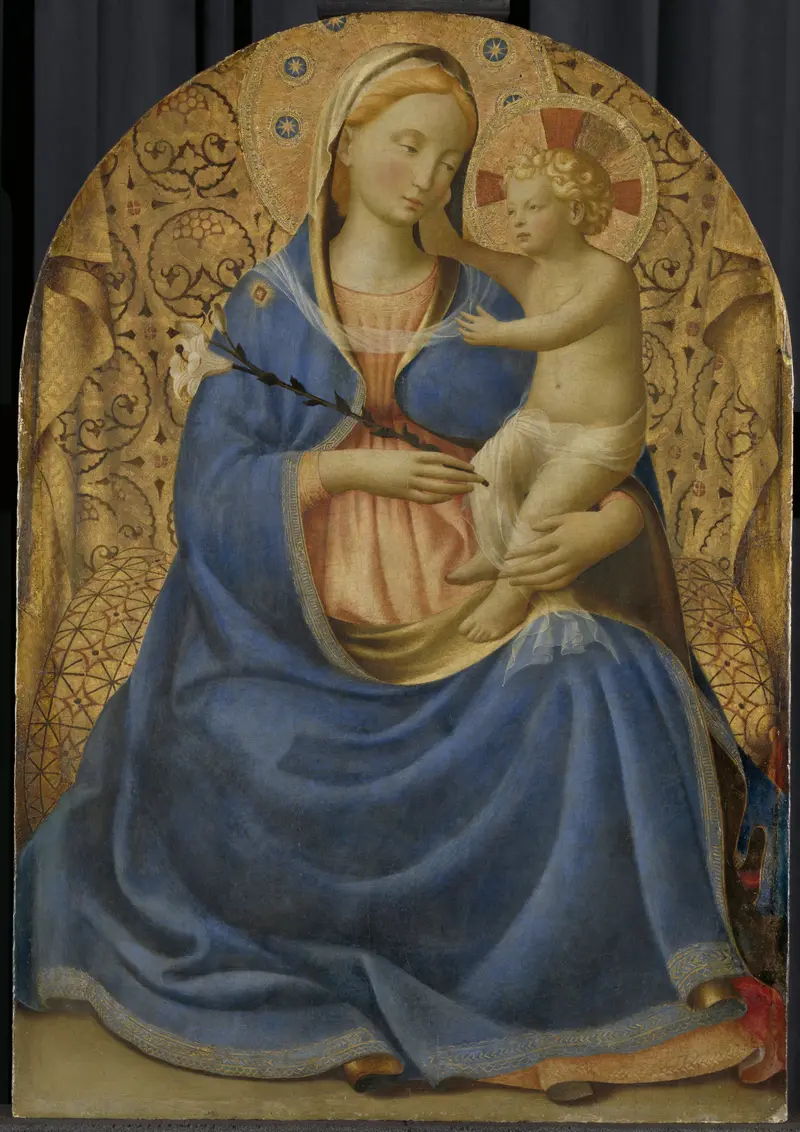
Madonna of Humility
Fra Angelico
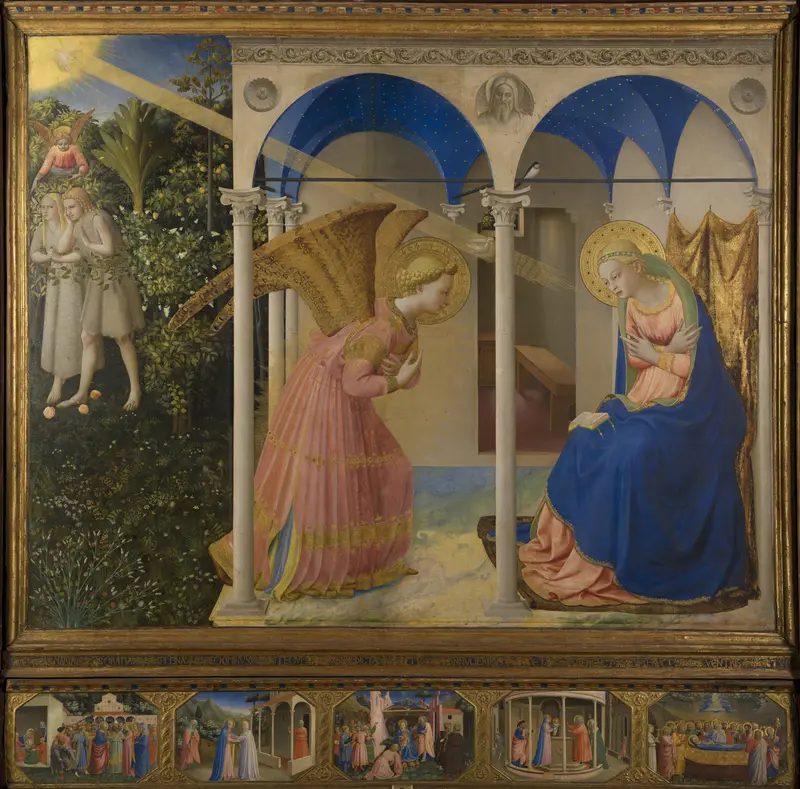
The Annunciation
Fra Angelico

Saint Anthony Abbot
Fra Angelico





