
Agia Paraskevi, Epirus, Greece — History & Facts
In this world of dreams, distant echoes of landscapes invite a sense of nostalgia and longing, hinting at the beauty that lies just beyond our reach. Look to the left at the elegant sweep of the hills, rolling gently under an expansive sky brushed with soft, pastel hues. Notice how the light filters through the delicate clouds, casting ethereal shadows upon the rugged terrain. Each stroke conveys the vibrancy of nature, while the interplay of greens and blues creates a harmonious balance, drawing the viewer deeper into the serene landscape. Beneath the tranquil surface lies a tension between the depicted tranquility and the inherent impermanence of life.
The vibrant foliage contrasts with the looming mountains, suggesting a fleeting moment captured in time. The delicate details of the foreground—each leaf and blade of grass—speak to a world teeming with life, yet whisper of the passage of time, inviting contemplation on the fragility of existence and the dreams that persist amidst nature's cycles. In 1857, Lear found himself exploring the picturesque landscapes of Greece, a period marked by his transition from literary endeavors to a more profound engagement with visual art. As he painted Agia Paraskevi, Epirus, Greece, he navigated the shifting tides of Romanticism, capturing evocative scenes that resonated with the era's fascination with the sublime beauty of the natural world.
This work encapsulates not just a moment in a foreign land, but also Lear's own journey of discovery and creativity.
More Artworks by Edward Lear
Browse all →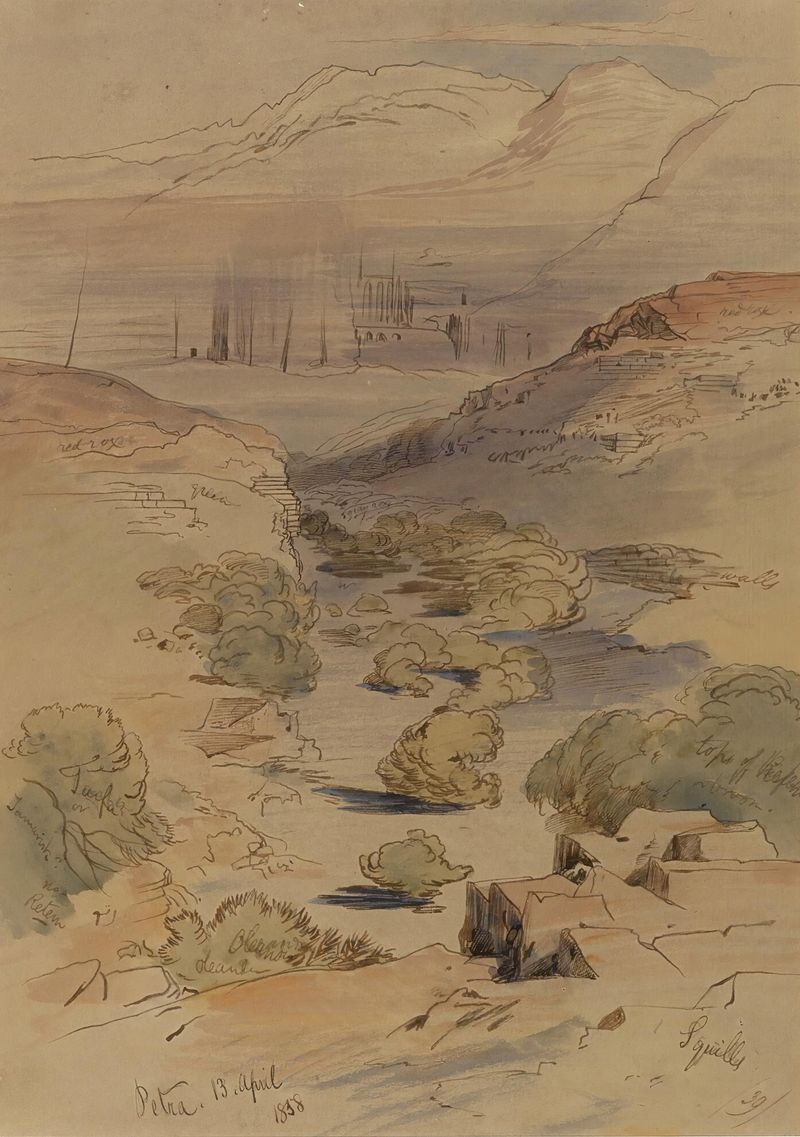
Petra
Edward Lear
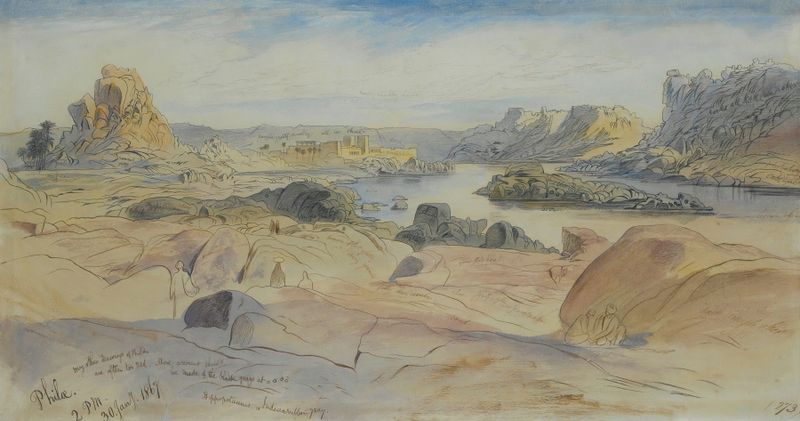
Philae, Egypt
Edward Lear
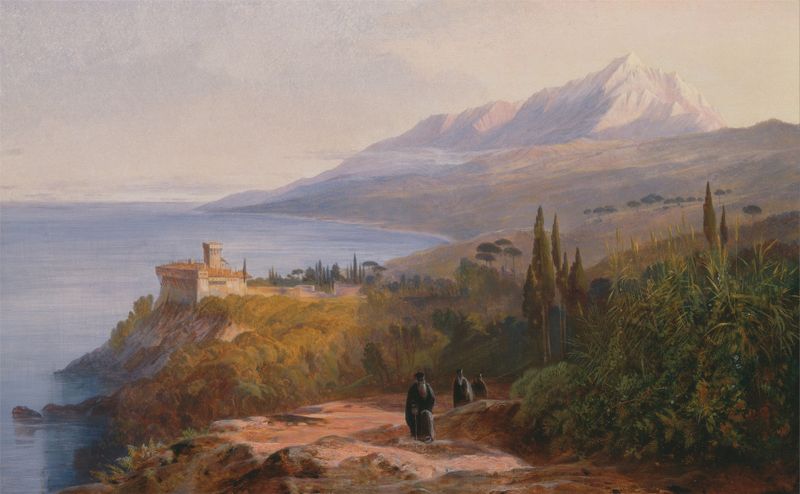
Mount Athos and the Monastery of Stavronikétes
Edward Lear
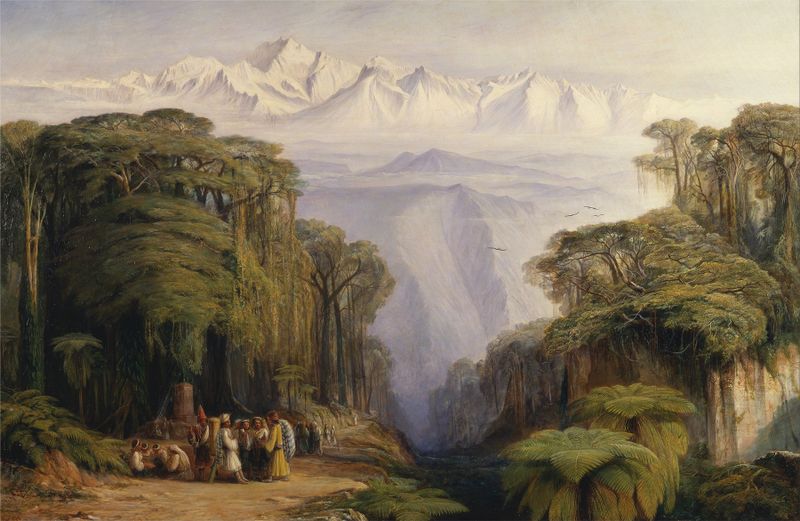
Kangchenjunga from Darjeeling
Edward Lear
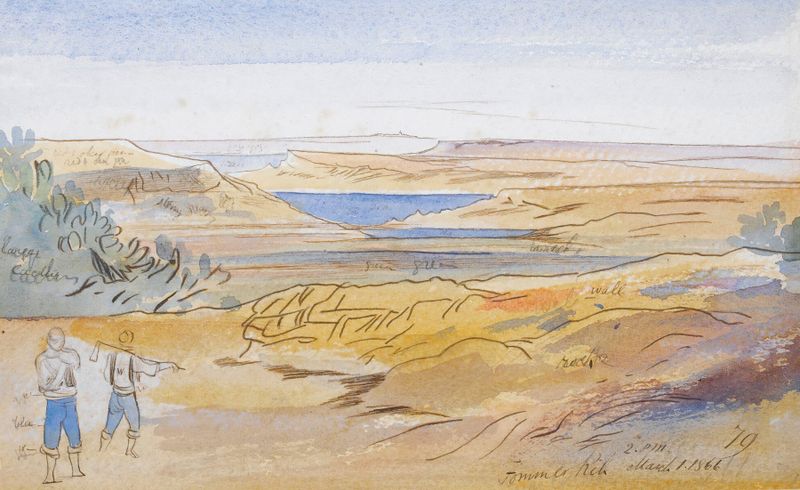
Fomm Ir-Rih, Malta
Edward Lear
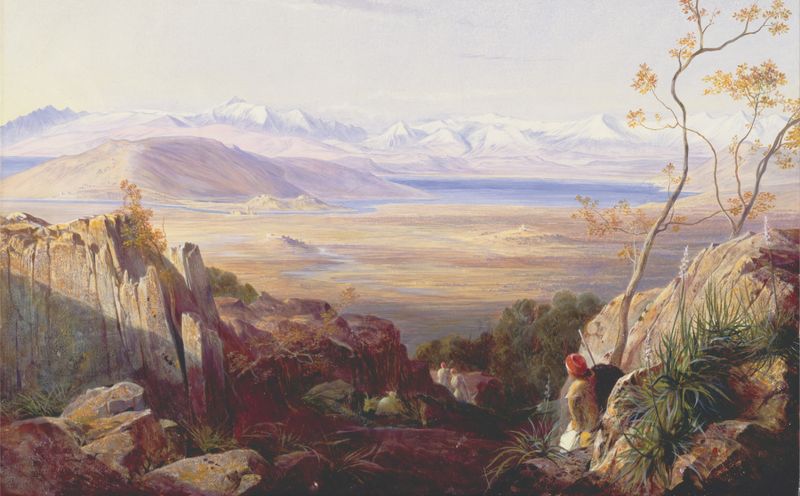
Butrinto, Albania
Edward Lear
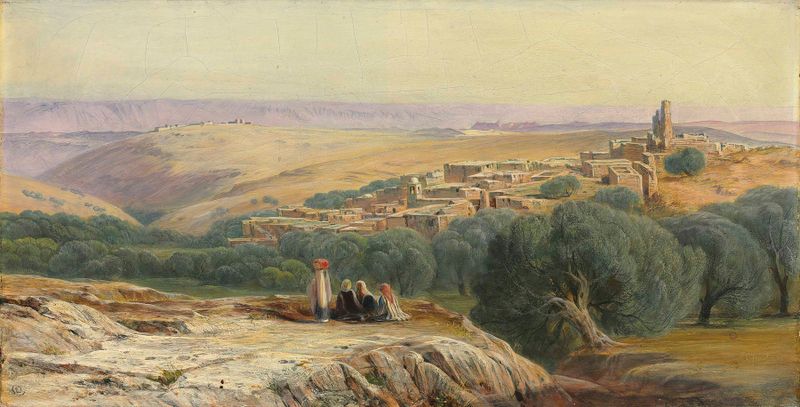
The Plains of Bethany
Edward Lear

Karnak, 9-30 pm, 22 January 1867
Edward Lear
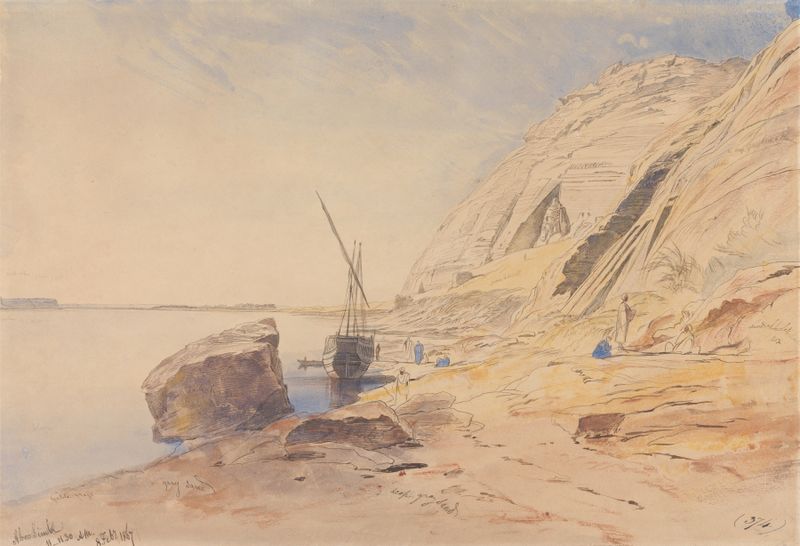
Abu Simbel, 11-11;30 am, 8 February 1867 (374)
Edward Lear

A View Of Mount Athos And The Pantokrator Monastery, Greece
Edward Lear





