
Allegory of the Twelve Years Truce — History & Facts
What first catches the eye is the sudden hush at the heart of chaos: a swirl of figures, banners, and discarded armor, all stilled beneath a sky that stretches wide and pale above the dense, golden woods. The painter draws us into a moment of uneasy celebration, where the central gathering of elegantly dressed men and women—some in animated conversation, others with instruments poised—signals a pause in the long rhythm of war. The scattered helmets and weapons in the foreground are not trophies, but cast-offs, their presence reminding us that peace, here, is both a relief and a question.
Light pours in from the left, guiding us from the abandoned battlefield toward the festive throng, then to the distant, fortified city—its spires and walls a silent witness to the fragile accord. This is a scene born of the early seventeenth century, when allegory and history painting merged to commemorate treaties and truces as hard-won as any battle. The Allegory of the Twelve Years Truce by Adriaen Pietersz van de Venne belongs to a world where political agreements were celebrated with public spectacle and visual pageantry, and artists were called to translate fleeting diplomatic triumphs into lasting images. Commissioned works of this kind were often intended for civic halls or the collections of those who negotiated peace, their details rich with coded references for viewers who knew the stakes.
Today, this painting resides in the Musée du Louvre, its date and subject preserved, but much of its original context lost to time—a reminder that every truce, like every painting, is a negotiation between memory and forgetting. Let your gaze linger on the revelers and the abandoned arms, and imagine the silence that follows the end of gunfire.
More Artworks by Adriaen Pietersz van de Venne
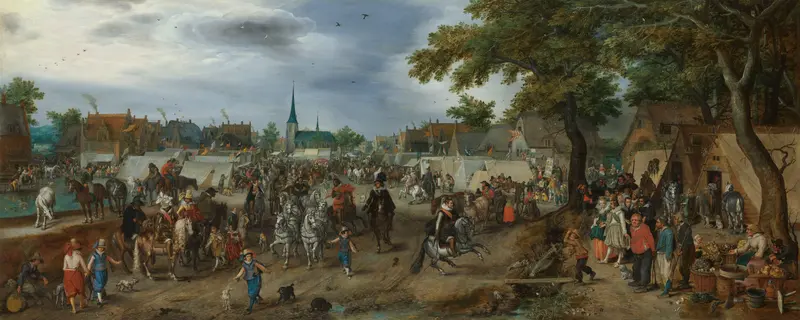
Princes Maurice and Frederick Henry at the Valkenburg Horse Fair
Adriaen Pietersz van de Venne
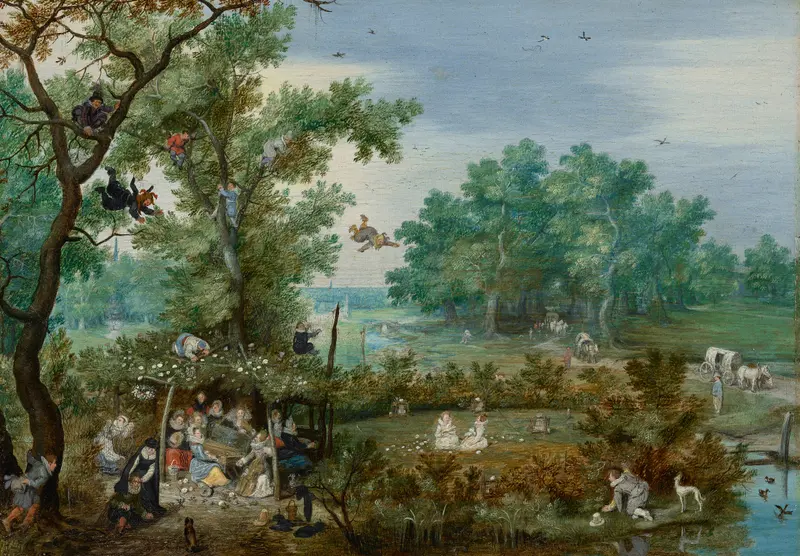
Merry Company in an Arbor
Adriaen Pietersz van de Venne
Princes Maurice and Frederick Henry at the Valkenburg Horse Fair
Adriaen Pietersz van de Venne
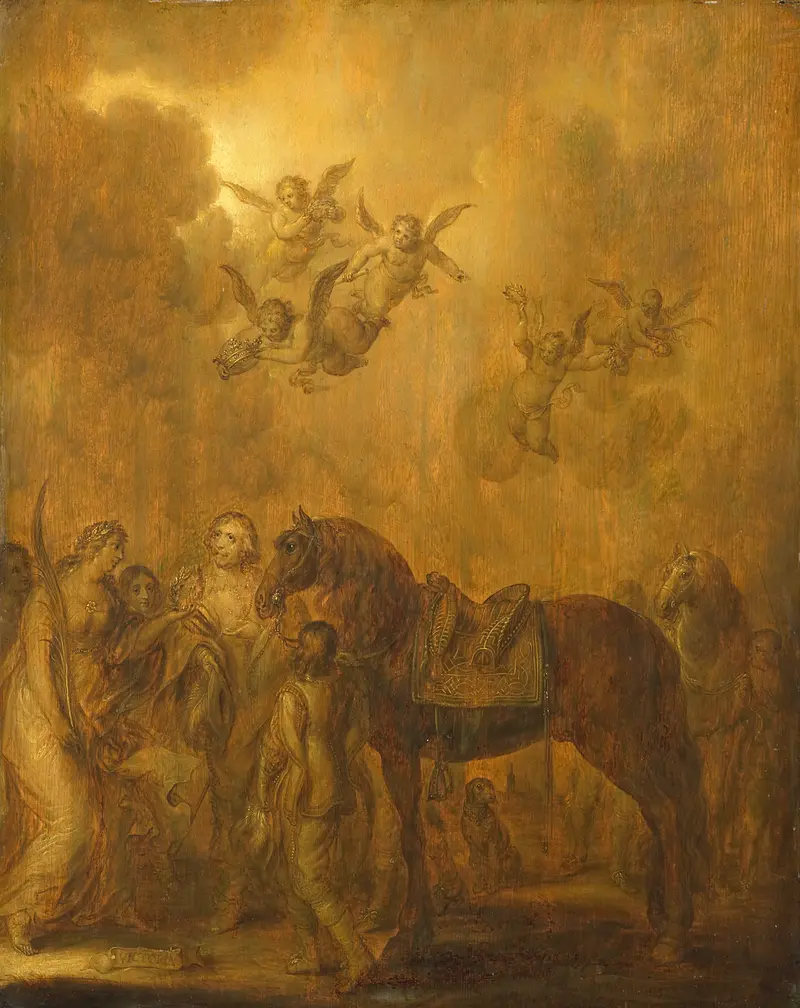
Allegory of the Stadtholdership of Prince Frederick Henry
Adriaen Pietersz van de Venne
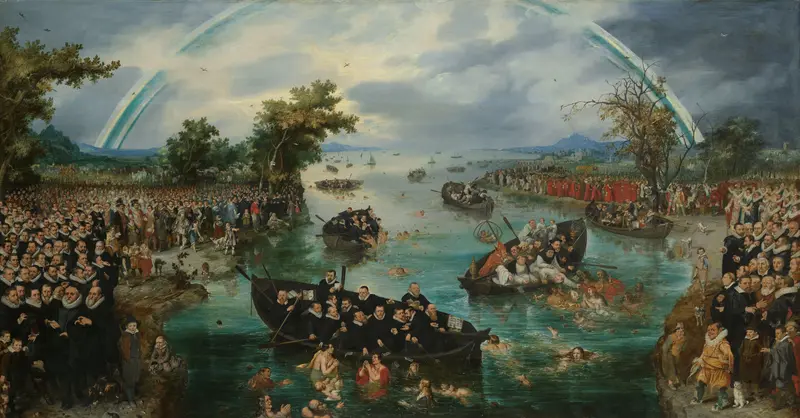
Fishing for Souls
Adriaen Pietersz van de Venne
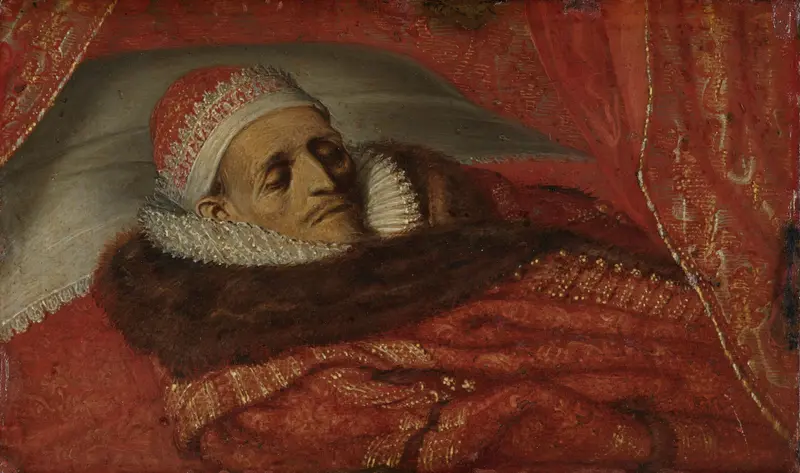
Stadtholder Prince Maurice Lying in State
Adriaen Pietersz van de Venne
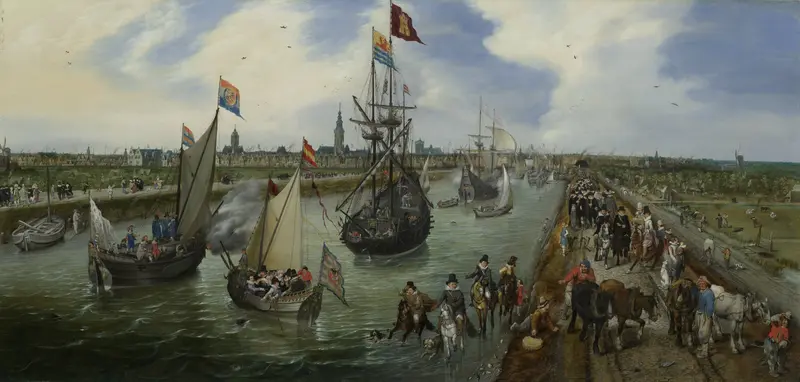
The Departure of a Dignitary from Middelburg
Adriaen Pietersz van de Venne
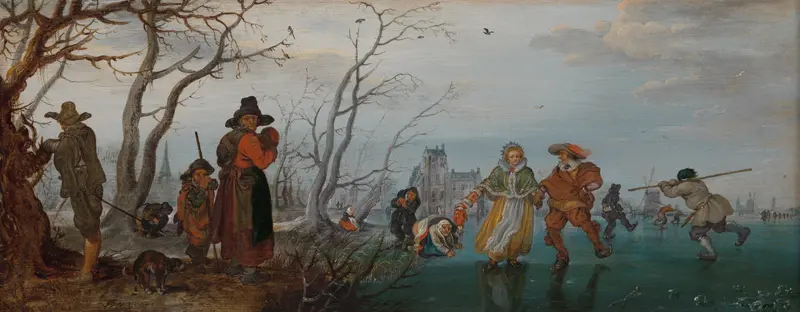
Winter
Adriaen Pietersz van de Venne

A Jeu de Paume Before a Country Palace
Adriaen Pietersz van de Venne
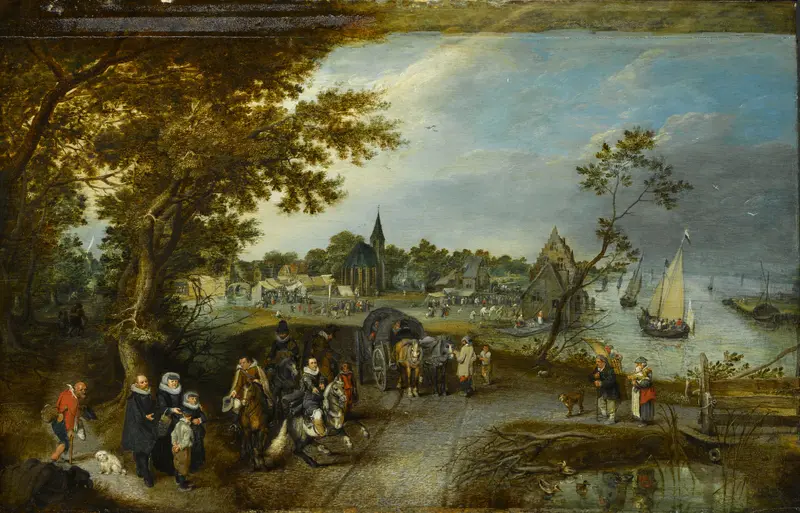
Landscape with Figures and a Village Fair (Village Kermesse)
Adriaen Pietersz van de Venne





