
Alpine Landscape with Beck — History & Facts
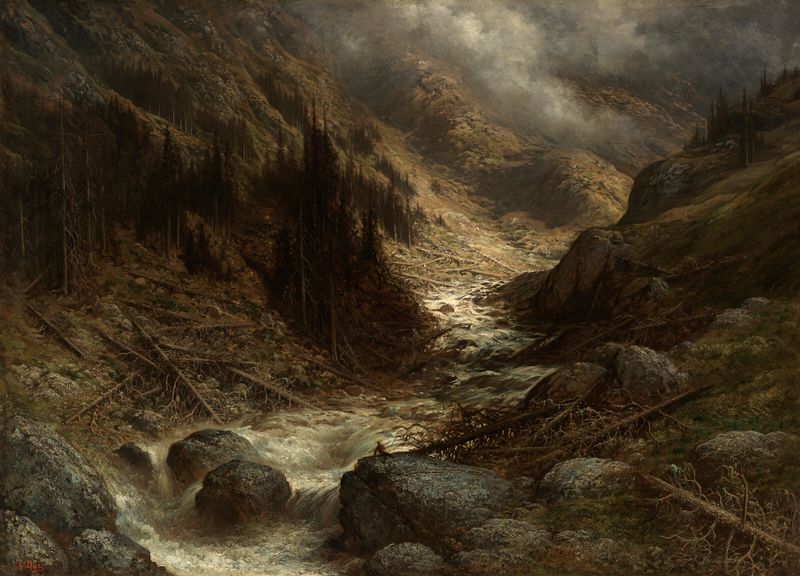
Time, in all its stillness and flow, is intricately woven into the fabric of this landscape, inviting contemplation and reverence. In this masterpiece, look to the horizon, where majestic peaks rise sharply against a cerulean sky, their snow-capped summits glowing softly beneath the tender light. Notice how the brushwork varies; bold strokes depict the rugged cliffs, while delicate touches give life to the verdant valleys below. The composition is carefully balanced, drawing the viewer's gaze across the undulating terrain, where rich greens and earthy browns meld seamlessly, suggesting both harmony and the passage of time. Yet beneath the beauty lies a tension that speaks to the transient nature of existence.
The interplay of light and shadow evokes a sense of nostalgia, hinting at the moments lost within the vastness of the landscape. The solitary beck winding through the scene symbolizes life's journey—a reminder of how the smallest details can carry profound significance. Here, the stillness of nature contrasts with the fleeting nature of human experience, inviting introspection on what is truly enduring. Gustave Doré created this work after 1870, during a period of personal reflection and artistic exploration.
Living in Paris, he was deeply influenced by the Romantic movement and the emerging interests in landscapes, which mirrored the societal shifts of the time. As industrialization transformed the world, Doré’s landscapes offered an escape into nature's eternal beauty, reflecting both his internal struggles and the collective yearning for a connection with the natural world.
More Artworks by Gustave Doré
Browse all →
A Rider and a Dead Horse in a Landscape
Gustave Doré

Fairy Land
Gustave Doré
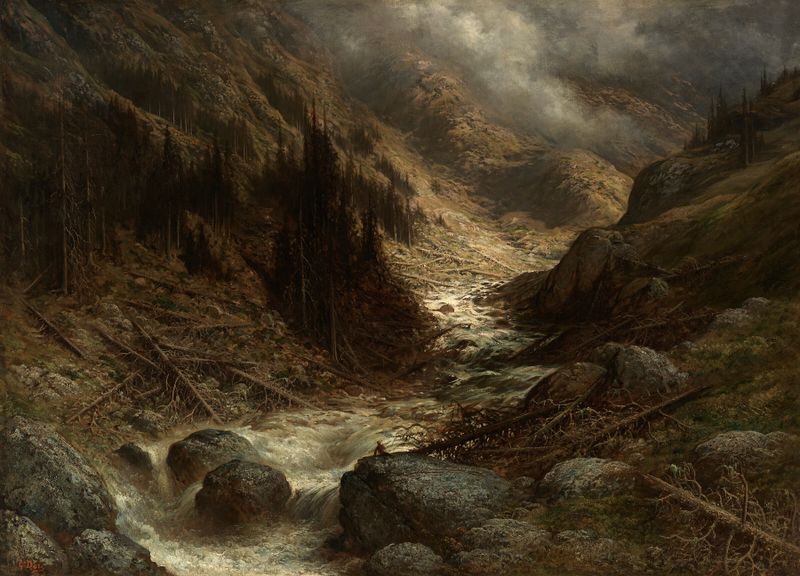
Un torrent dans l’Engadine
Gustave Doré
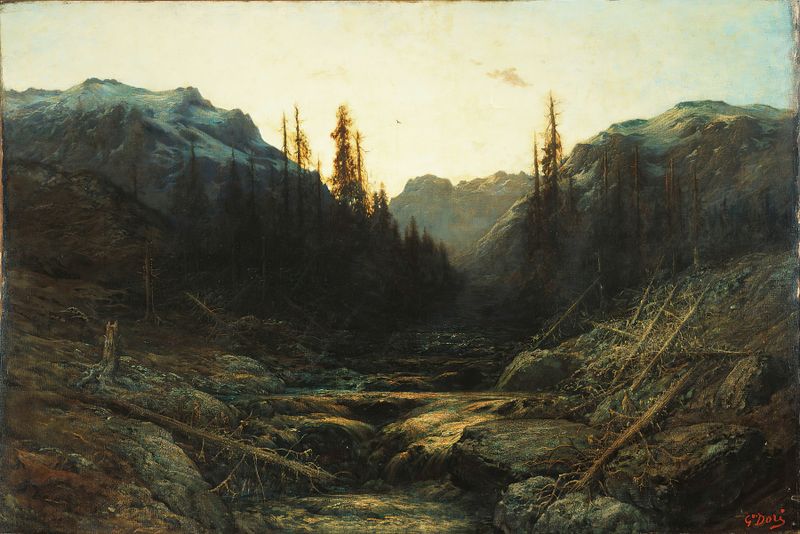
Stream in Mountains at Dusk
Gustave Doré
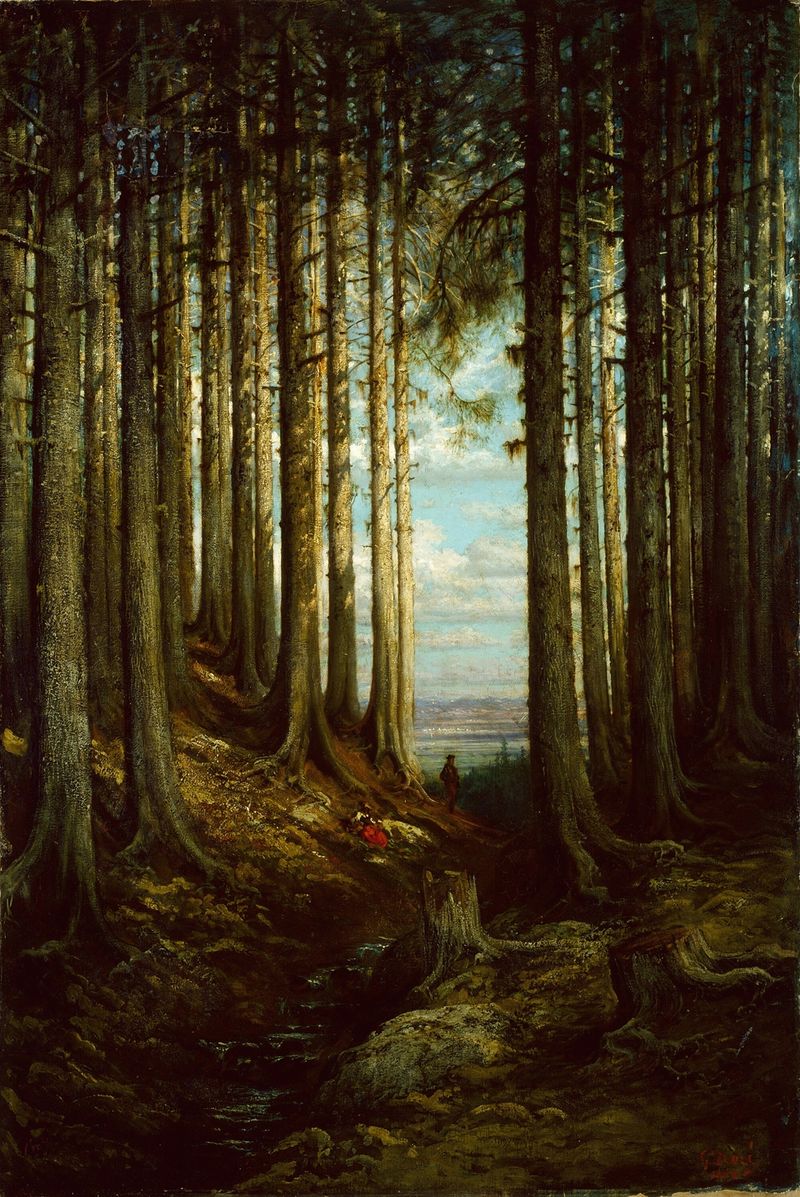
Alpine Scene
Gustave Doré

Torrent in the Highlands
Gustave Doré

An Alpine Valley with Trees and Boulders
Gustave Doré
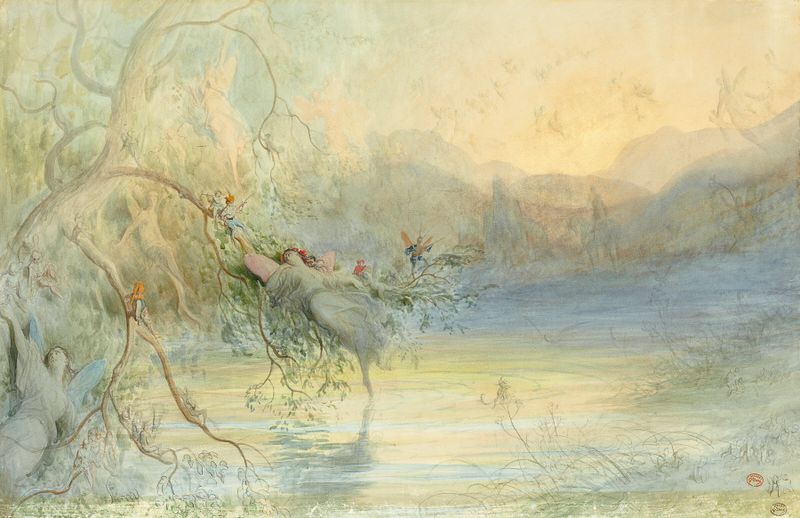
Étude pour ‘Les Fées’
Gustave Doré

Via Mala
Gustave Doré
Un torrent dans l’Engadine
Gustave Doré





