
Torrent in the Highlands — History & Facts
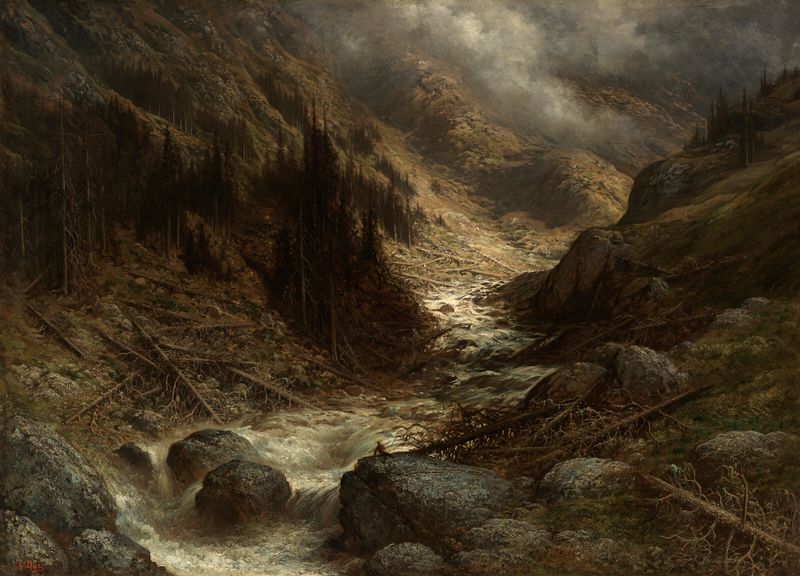
Is this a mirror — or a memory? In Torrent in the Highlands, the undulating flow of water intertwines with the very essence of nature, suggesting a rebirth that flows endlessly through time. Focus first on the cascade that dominates the painting, where rivulets of water tumble over jagged rocks. Notice how the light dances on the surface, creating a shimmering contrast against the dark, moody hues of the surrounding landscape. The careful strokes of Doré’s brush evoke a wild, untamed energy, while the towering trees in the background anchor the scene, their silhouettes dark yet full of life. In this work, the tumultuous river becomes a symbol of both destruction and renewal.
The swirling currents reflect the duality of nature — it is at once fierce and nurturing. The interplay between the rugged terrain and the flowing water invites contemplation of life’s cyclical patterns; though storms may rage, the water ultimately nourishes the earth. The tension between the light and dark elements amplifies this sense of rebirth, suggesting that from chaos emerges beauty. Gustave Doré painted Torrent in the Highlands in 1881 during a period of prolific creativity in his life.
Living in France, he was celebrated for his detailed illustrations and visionary landscapes. At this time, the art world was evolving, with movements like Impressionism budding alongside traditional styles. Doré’s work reflects the romantic ideal of nature's sublime power, captured in the intricate interplay between shadow and light, demonstrating his mastery over both form and emotion.
More Artworks by Gustave Doré
Browse all →
A Rider and a Dead Horse in a Landscape
Gustave Doré

Fairy Land
Gustave Doré
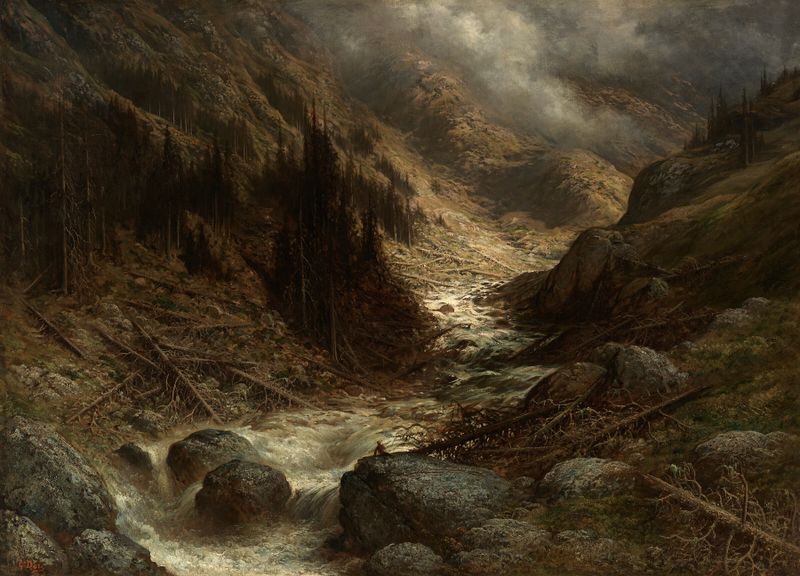
Un torrent dans l’Engadine
Gustave Doré
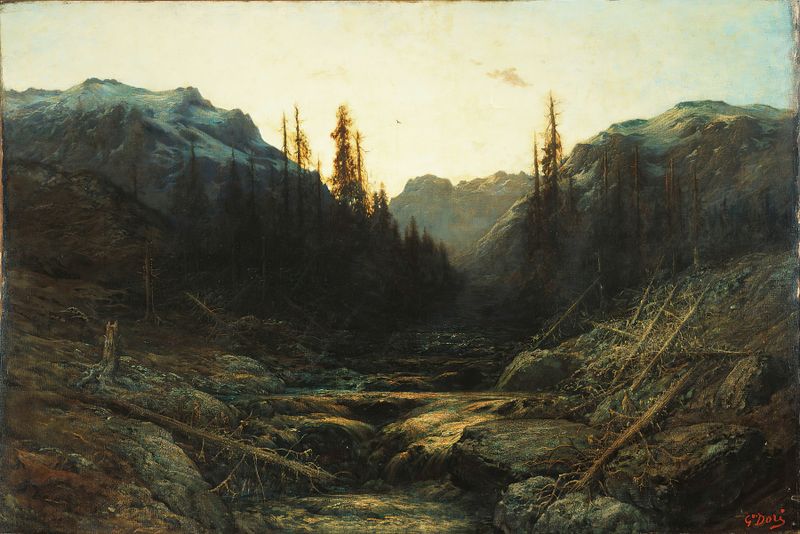
Stream in Mountains at Dusk
Gustave Doré
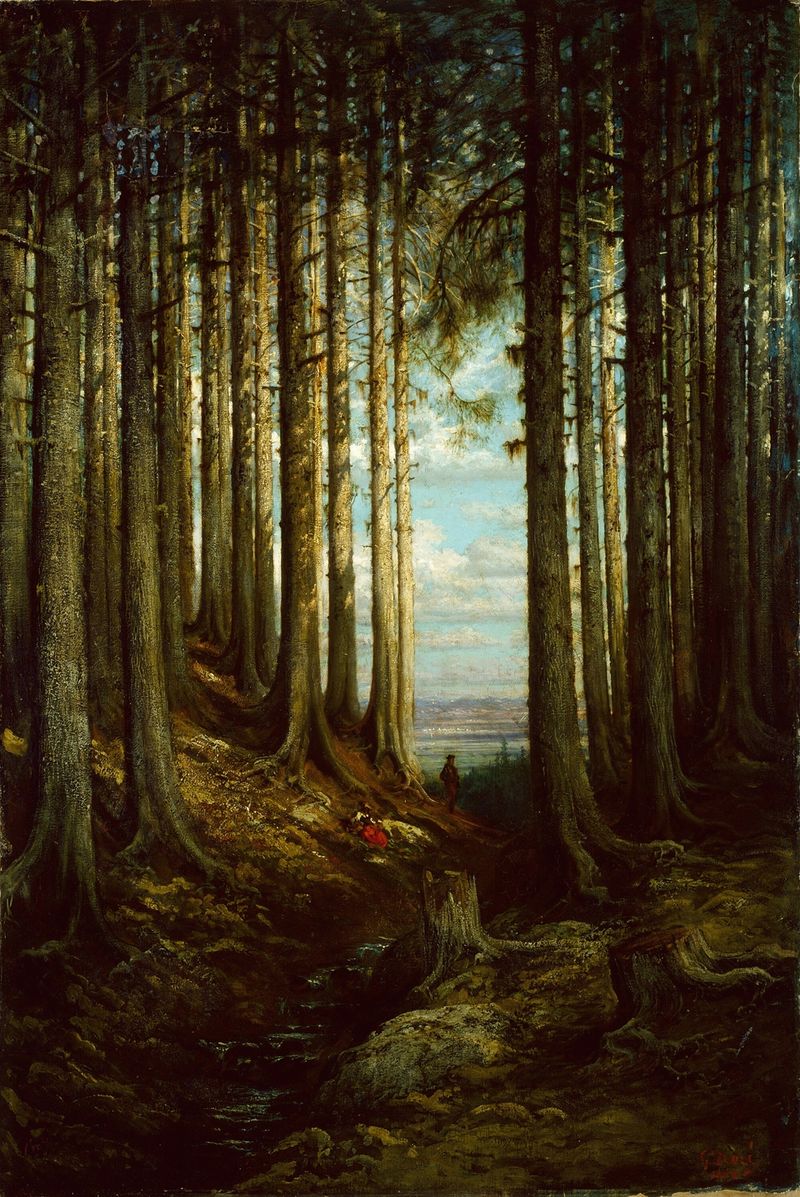
Alpine Scene
Gustave Doré

An Alpine Valley with Trees and Boulders
Gustave Doré
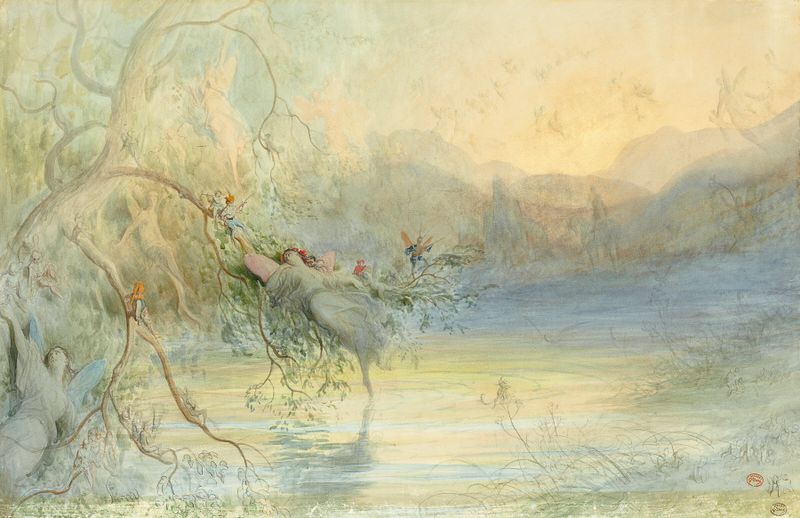
Étude pour ‘Les Fées’
Gustave Doré

Via Mala
Gustave Doré
Un torrent dans l’Engadine
Gustave Doré

Loch Lomond
Gustave Doré





