
Via Mala — History & Facts
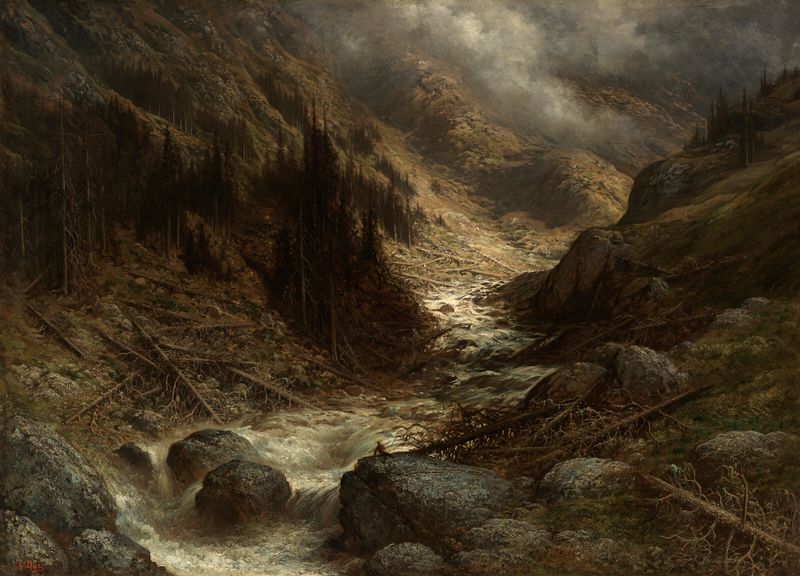
In the tumultuous interplay of nature and human frailty lies the essence of rebirth, where destruction gives way to renewal. Focus on the vibrant strokes that depict the jagged cliffs on either side of the tumultuous river, drawing your eyes along its winding path. The contrasting dark hues of the rocky terrain set against the shimmering blues and whites of the rushing water create a visceral tension. Notice how the light dances on the surface, momentarily illuminating the chaos, while shadowy depths evoke a sense of foreboding.
Doré's mastery of chiaroscuro not only heightens the dramatic impact but also invites contemplation of the duality of existence. As you explore the painting, consider the hidden narratives woven within the turbulent water and steep cliffs. The swirling currents represent struggle, yet they also suggest a journey towards transformation. The towering rocks, standing sentinel, evoke the weight of obstacles that must be faced to achieve rebirth.
This contrast between chaos and serenity is a powerful reminder that even in turmoil, there is the potential for growth and renewal. In 1881, Gustave Doré painted this scene during a period of personal and artistic upheaval. Having already established himself as a prominent illustrator, he was grappling with shifting tastes in the art world, moving towards more expressive and emotive works. Capturing the raw power of nature in Via Mala reflects not only his technical prowess but also a profound exploration of human resilience during a time marked by change.
More Artworks by Gustave Doré
Browse all →
A Rider and a Dead Horse in a Landscape
Gustave Doré

Fairy Land
Gustave Doré
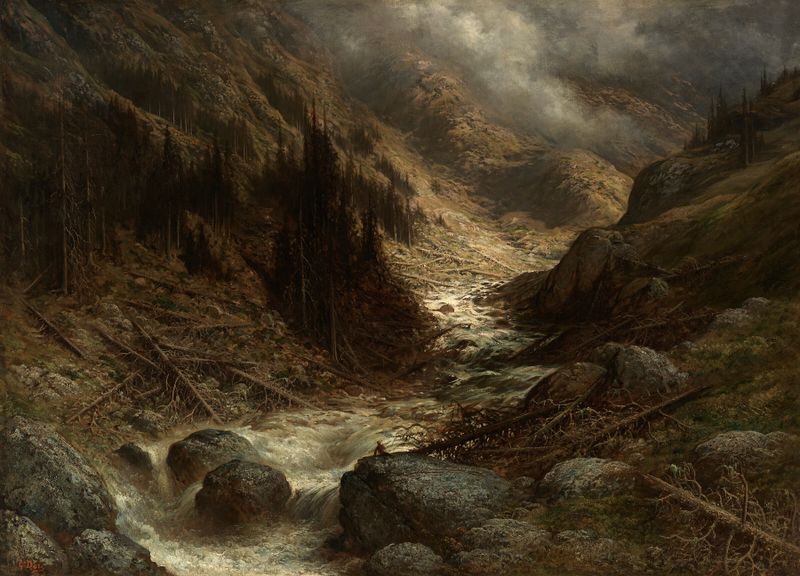
Un torrent dans l’Engadine
Gustave Doré
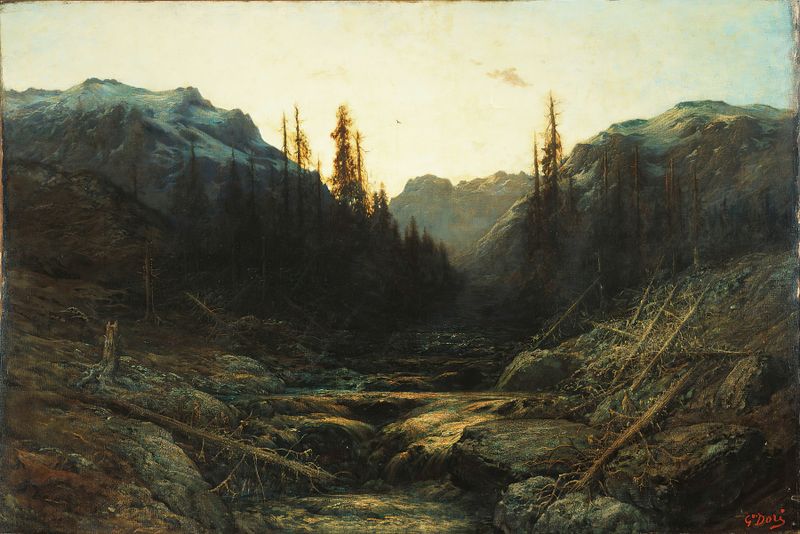
Stream in Mountains at Dusk
Gustave Doré
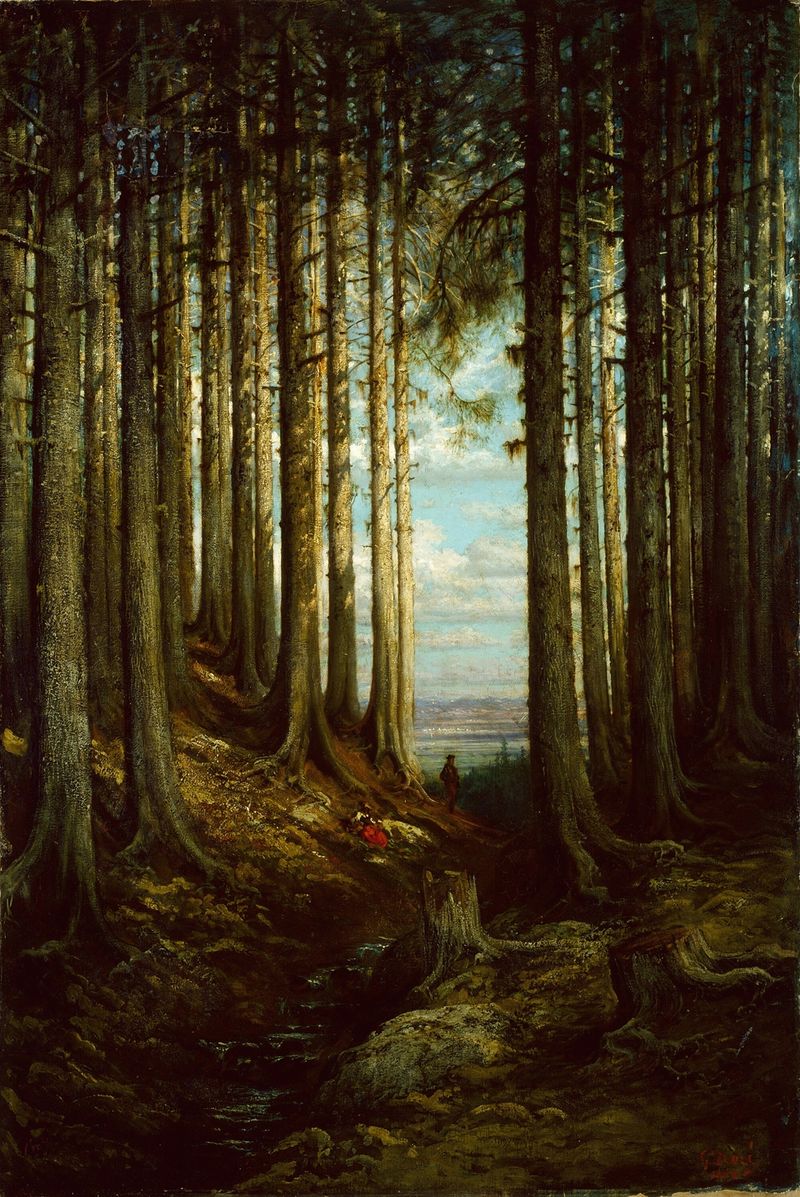
Alpine Scene
Gustave Doré

Torrent in the Highlands
Gustave Doré

An Alpine Valley with Trees and Boulders
Gustave Doré
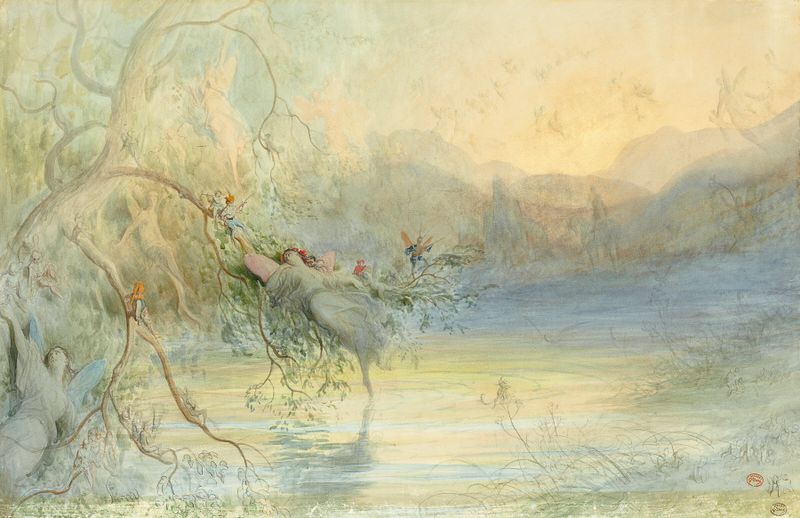
Étude pour ‘Les Fées’
Gustave Doré
Un torrent dans l’Engadine
Gustave Doré

Loch Lomond
Gustave Doré





