
Alpine Scene — History & Facts
In the sweeping landscapes of nature, there lies a power of rebirth, a testament to resilience against the harshness of existence. Look to the center of the composition, where rugged peaks rise defiantly against the soft, ethereal clouds. The interplay of light and shadow reveals the texture of the mountain faces, rendered with meticulous detail, emphasizing their formidable presence. Notice how the palette shifts from the deep greens of the valley floor to the pristine whites and grays of the towering summits, creating a striking contrast that highlights nature's beauty and brutality in tandem. The painting encapsulates a duality of emotion; the majestic mountains evoke a sense of awe, yet their intimidating scale may provoke feelings of isolation.
The tranquility of the scene, marked by the gentle flow of a river winding through the valley, suggests a moment of peace amid the tumultuous forces of nature. This interplay highlights the rebirth often sought in nature; despite the cold, the warmth of life persists in the delicate flora dotting the foreground. Gustave Doré created Alpine Scene in 1865, during a time when his reputation as an illustrator was growing, having recently achieved acclaim for his detailed engravings. Living in Paris, Doré was influenced by Romanticism, capturing the sublime and often turbulent relationship between humanity and the natural world.
His work during this period often reflected themes of adventure and exploration, resonating with an era marked by both industrial progress and a longing for the serenity found in untouched landscapes.
More Artworks by Gustave Doré
Browse all →
A Rider and a Dead Horse in a Landscape
Gustave Doré

Fairy Land
Gustave Doré
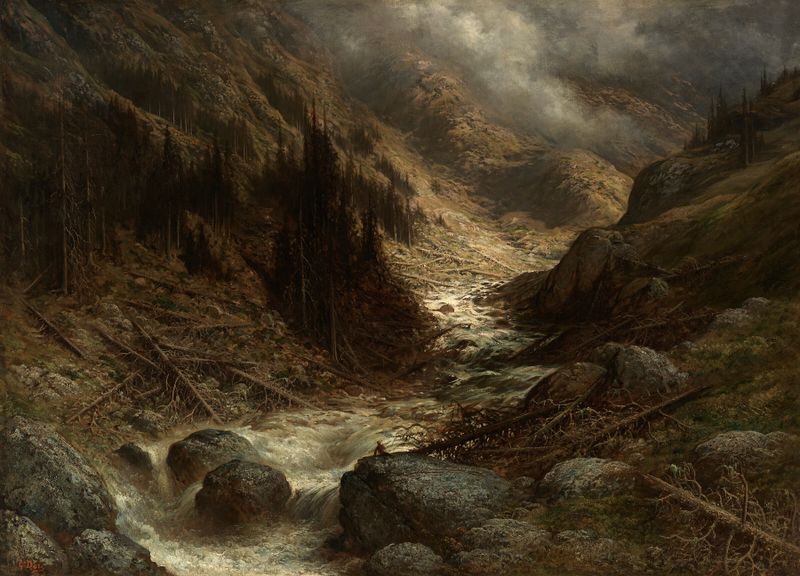
Un torrent dans l’Engadine
Gustave Doré
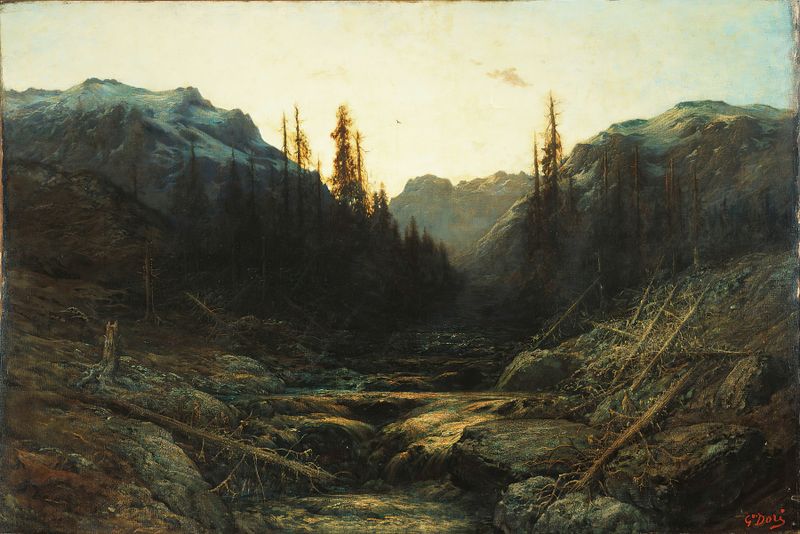
Stream in Mountains at Dusk
Gustave Doré

Torrent in the Highlands
Gustave Doré

An Alpine Valley with Trees and Boulders
Gustave Doré
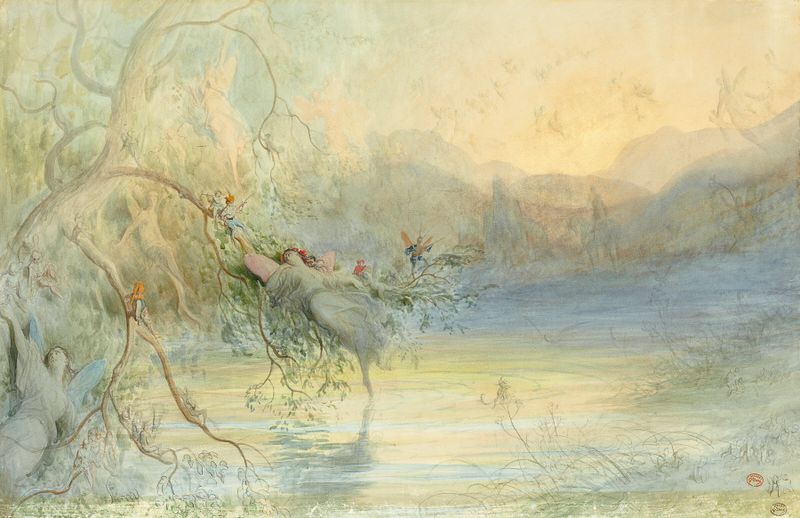
Étude pour ‘Les Fées’
Gustave Doré

Via Mala
Gustave Doré
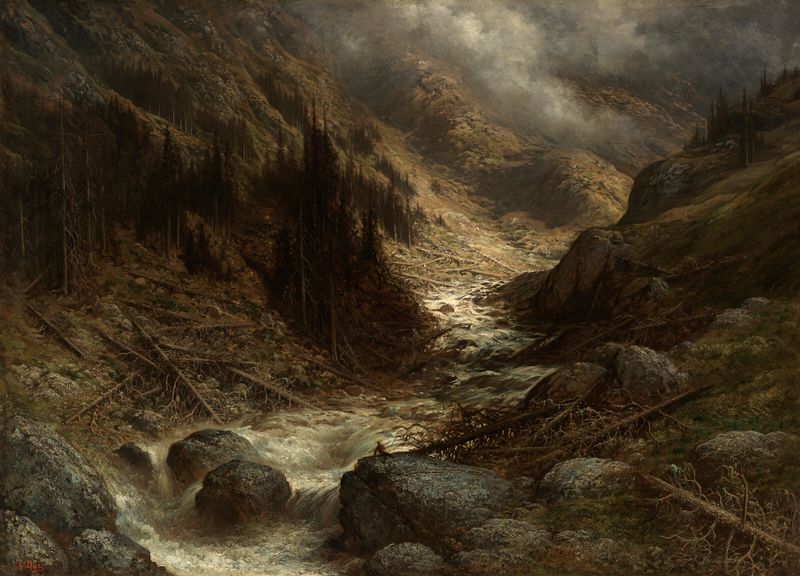
Un torrent dans l’Engadine
Gustave Doré

Loch Lomond
Gustave Doré





