
Loch Lomond — History & Facts
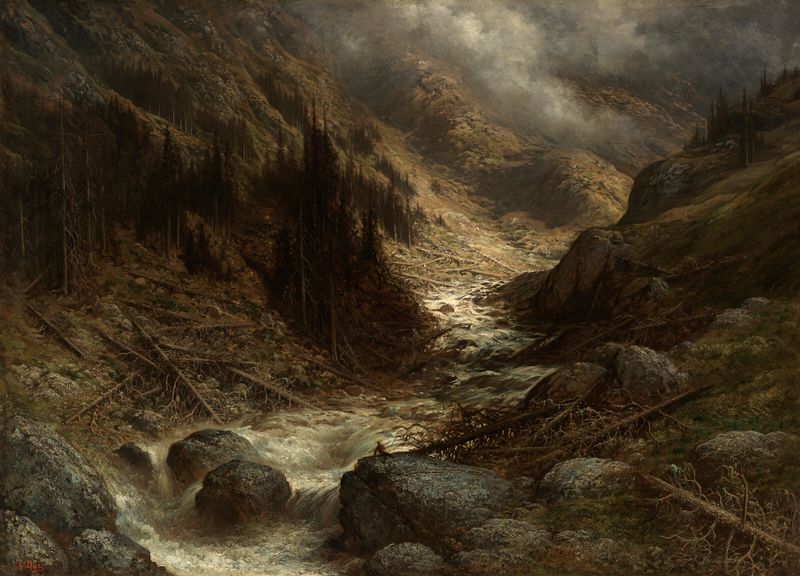
Can paint confess what words never could? The echoes of revolutions whisper through the brushstrokes, weaving tales of beauty and turmoil into a single frame. Focus on the sweeping landscape that sprawls before you, where vibrant greens and deep blues merge in an embrace of nature’s majesty. The shimmering expanse of Loch Lomond captures the eye, bordered by rugged hills that loom majestically, their contours softened by the gentle caress of the sun. Notice how Doré meticulously layers the colors, each stroke revealing the intricate dance of light upon the water, evoking a sense of serene introspection amidst the grandeur. As you delve deeper, the interplay between tranquility and unrest unfolds.
The stillness of the lake contrasts sharply with the rugged cliffs, symbolizing the tension between nature’s peace and the chaos of the human experience. The clouds, heavy with the promise of change, suggest an impending storm, reflecting the emotional weight of the era — a time of societal upheaval and the struggle for identity. Each element, from the lush foreground to the tumultuous sky, serves as a reminder of the duality of existence. In 1875, during the height of the Industrial Revolution, Doré painted this work while living in London.
The world around him was shifting, with urban landscapes rising and traditional ways of life fading. This piece, a serene yet powerful homage to nature, captures not only the picturesque beauty of Scotland but also the underlying tension of a society on the brink of transformation. Here, the artist immortalized a moment where the idyllic meets the imperative, reflecting the complexities of his time.
More Artworks by Gustave Doré
Browse all →
A Rider and a Dead Horse in a Landscape
Gustave Doré

Fairy Land
Gustave Doré
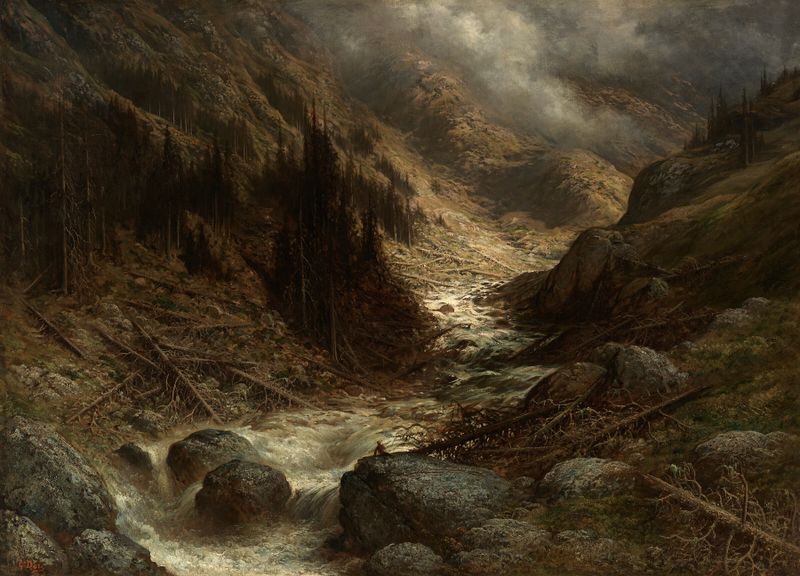
Un torrent dans l’Engadine
Gustave Doré
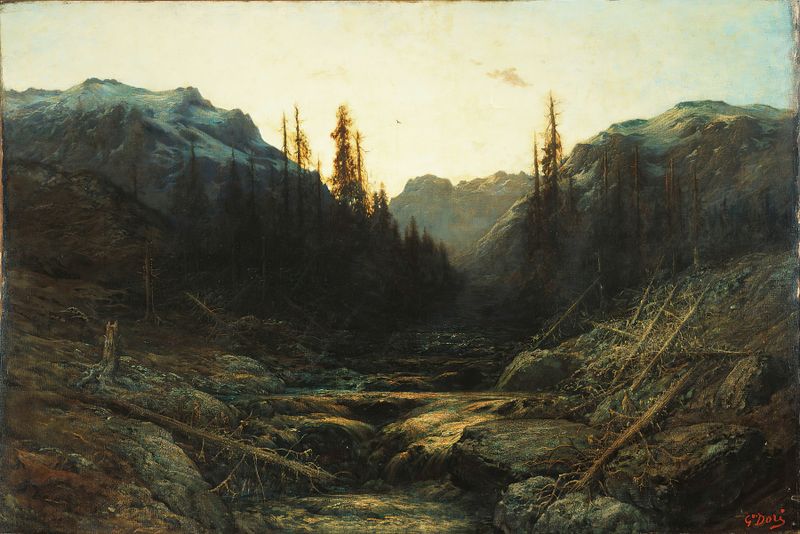
Stream in Mountains at Dusk
Gustave Doré
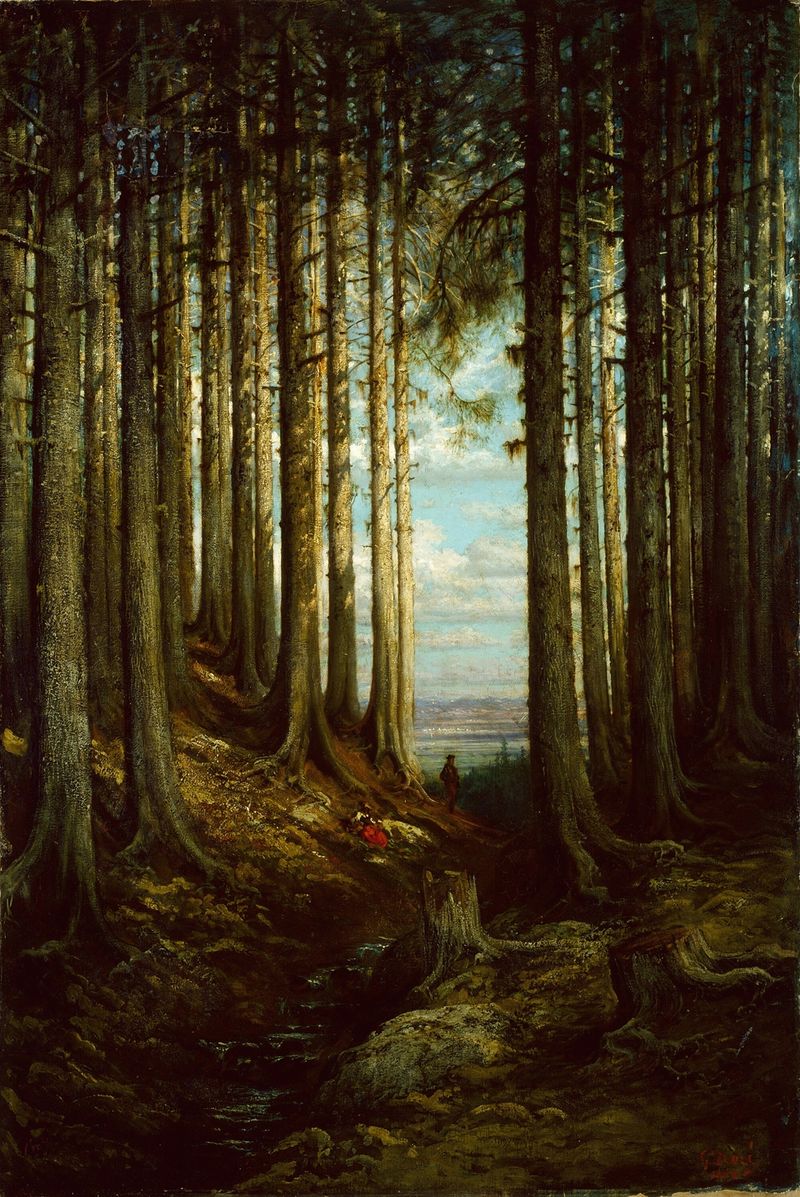
Alpine Scene
Gustave Doré

Torrent in the Highlands
Gustave Doré

An Alpine Valley with Trees and Boulders
Gustave Doré
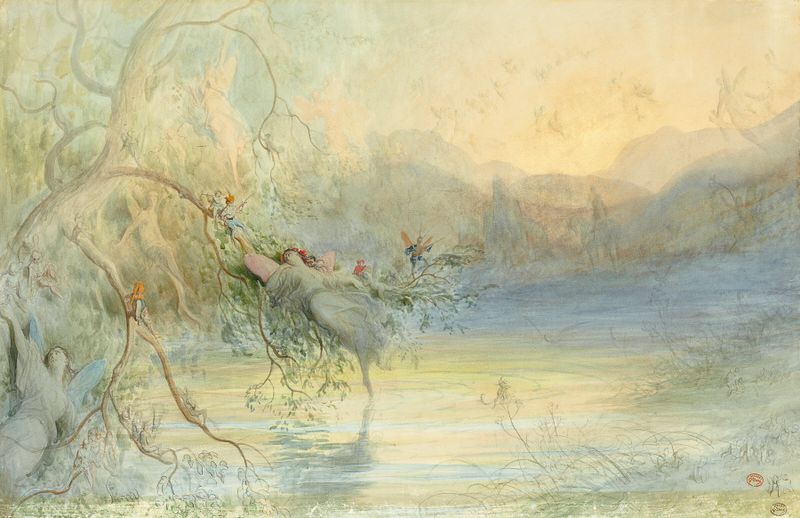
Étude pour ‘Les Fées’
Gustave Doré

Via Mala
Gustave Doré
Un torrent dans l’Engadine
Gustave Doré





