
Amsterdam Street Scene — History & Facts
A shaft of sunlight falls across the cobblestones, guiding the eye toward a solitary woman at the center of the scene, basket in hand, as if she were the quiet protagonist of a story unfolding in the heart of old Amsterdam. The buildings lean in with their red-tiled roofs and weathered facades, framing the street like a stage set, while the dappled shadows of leafy trees soften the geometry of brick and mortar. Each figure—some gathered in conversation, others moving purposefully—anchors the painting in the rhythms of daily life, their gestures and postures hinting at errands, meetings, or simple pauses in the day.
Eversen’s palette, rich with warm earth tones and cool sky blues, creates a gentle contrast that invites the viewer to linger, to imagine the sounds and scents of this tranquil moment. Works like Amsterdam Street Scene belong to a long tradition of Dutch cityscapes, a genre that flourished in the nineteenth century as artists and collectors alike sought to capture the character of their rapidly changing urban environments. Painters such as Adrianus Eversen specialized in these intimate views, often inventing or idealizing their settings to evoke nostalgia or civic pride. Though little is recorded about the specific history of this painting, now in the collection of the National Gallery of Art, its quiet charm and attention to everyday detail speak to the era’s fascination with the ordinary made memorable.
The next time you look, notice how the light not only illuminates the street but also seems to hold a moment of Amsterdam’s past in suspension.
More Artworks by Adrianus Eversen

View of a sunlit Dutch street scene
Adrianus Eversen
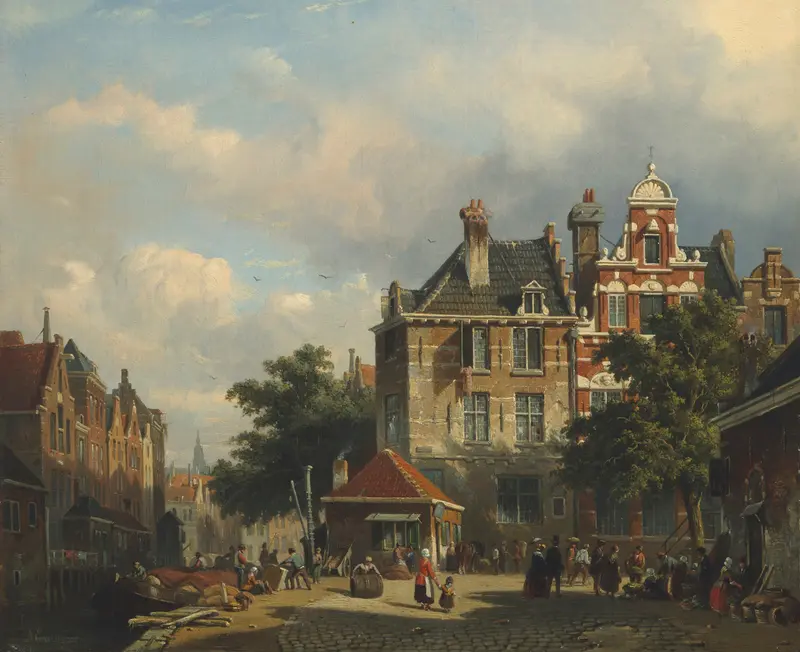
A Dutch street scene
Adrianus Eversen
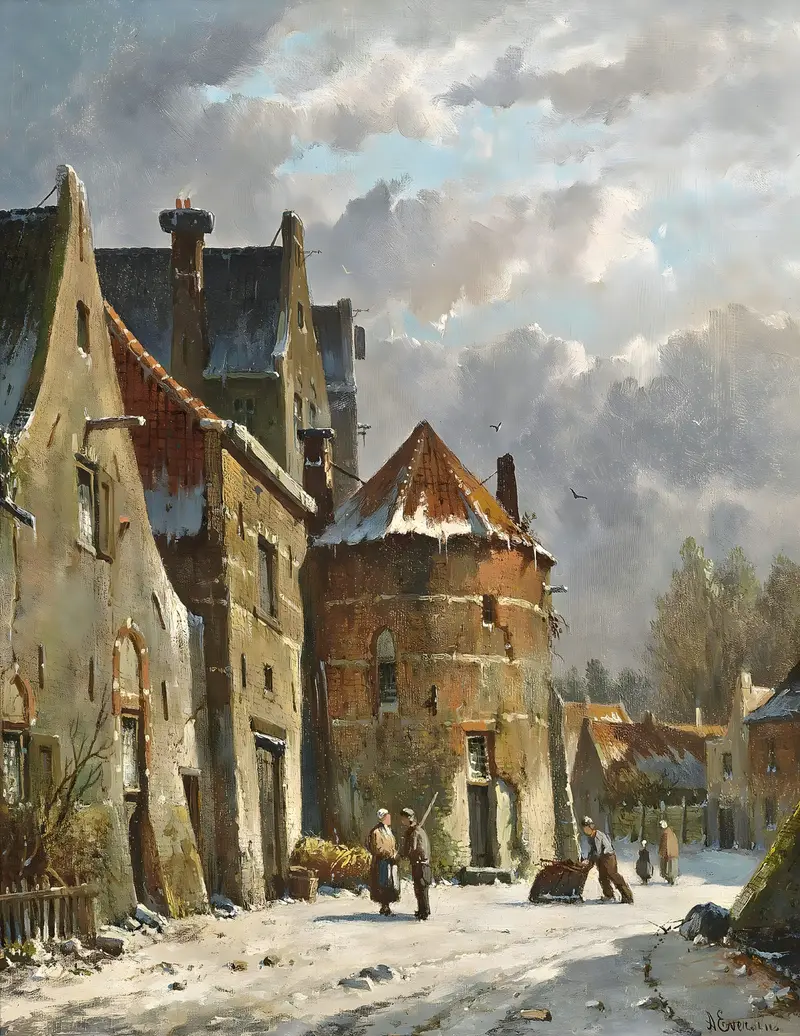
Figures On A Dutch Street, Winter
Adrianus Eversen
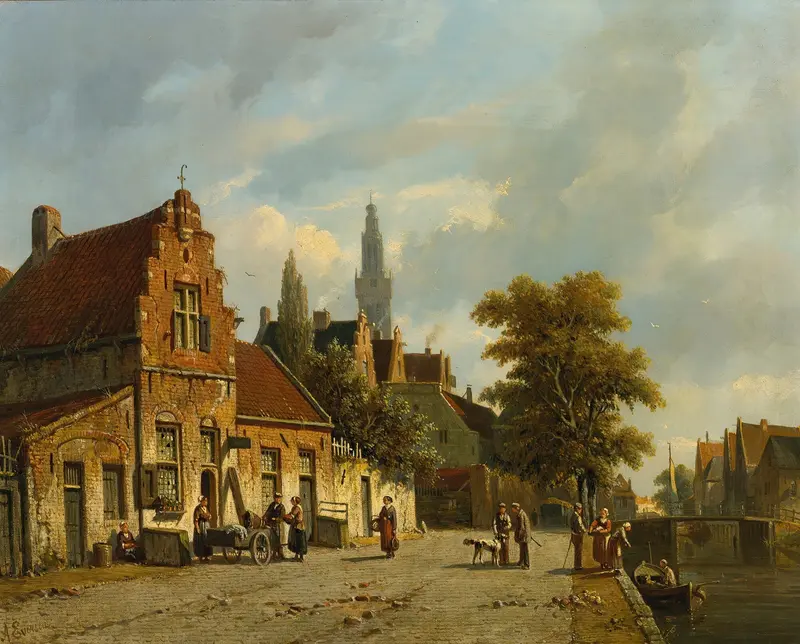
A Town In Holland
Adrianus Eversen
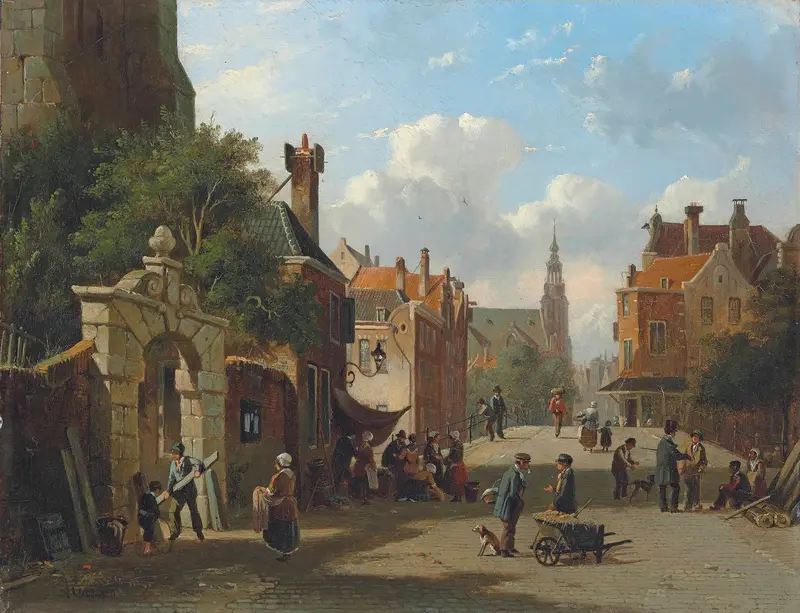
A busy street in Holland
Adrianus Eversen
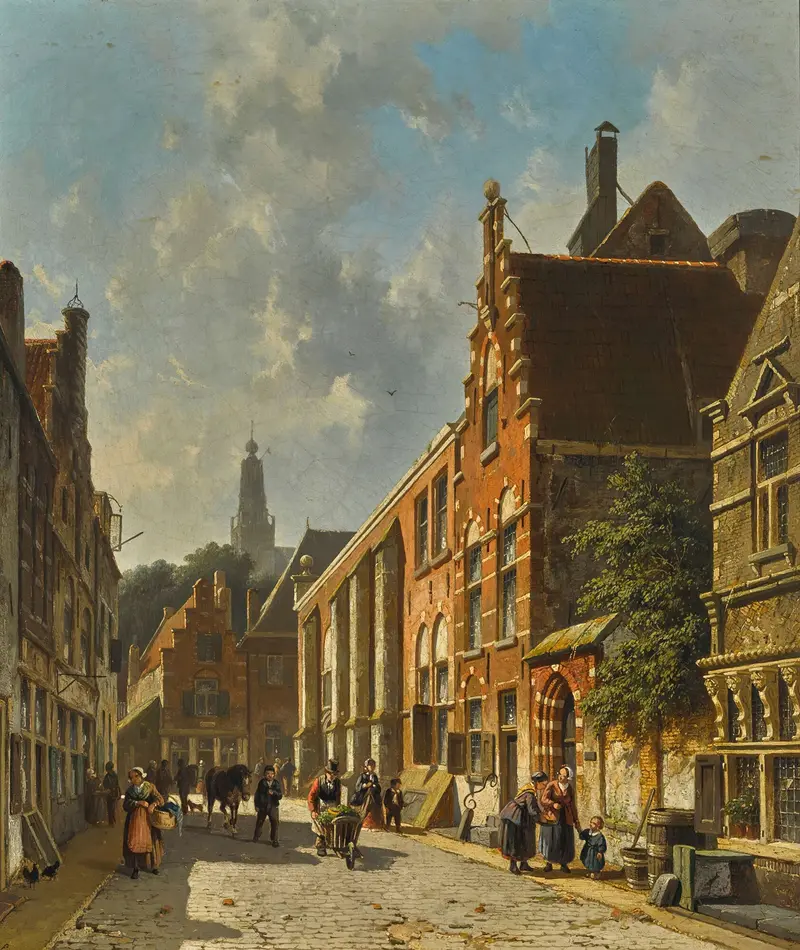
A busy street in summer
Adrianus Eversen

Figures on a Sunlit Street
Adrianus Eversen
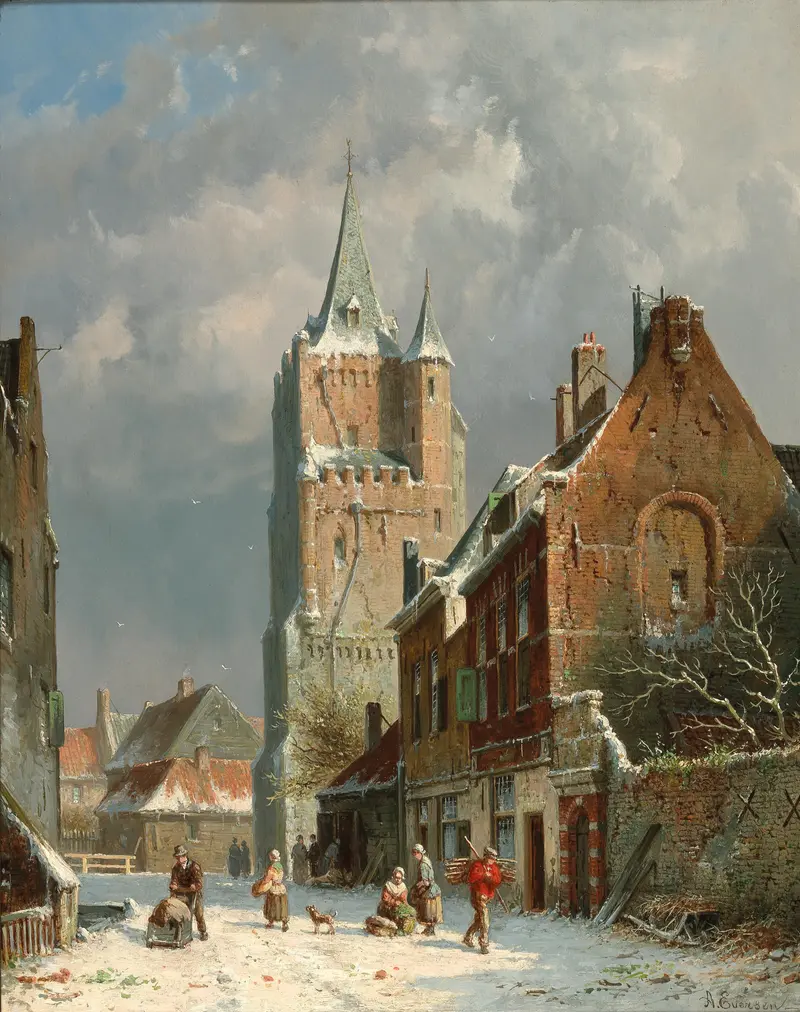
In the Voldersgracht in Delft
Adrianus Eversen
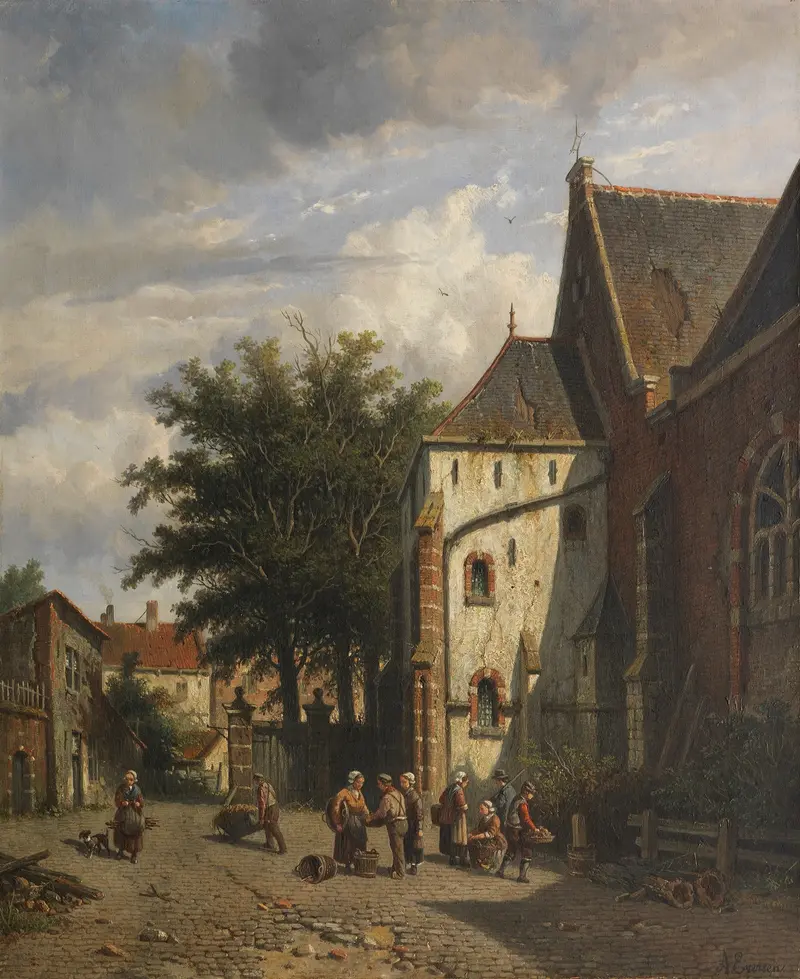
Achter de Westerkerk in Enkhuizen
Adrianus Eversen
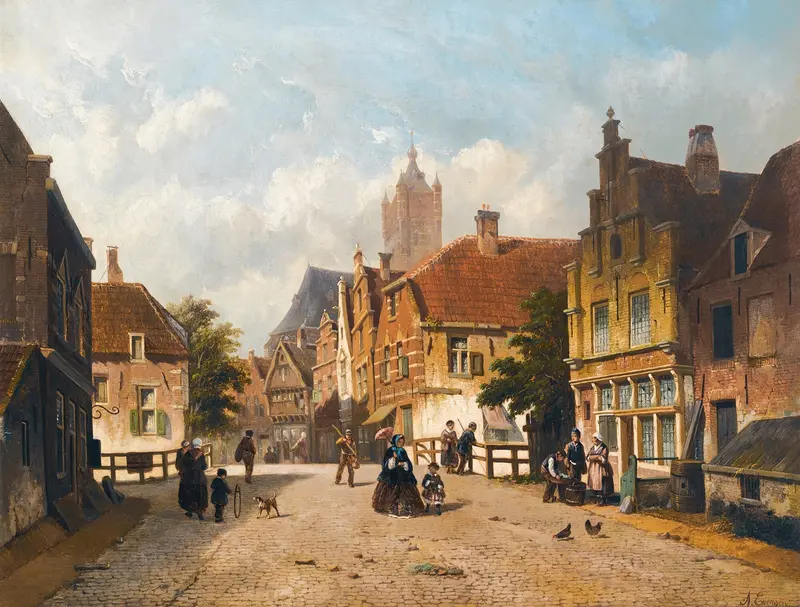
A dutch street
Adrianus Eversen
More Genre Scene Art

Banquet of the Officers of the St George Civic Guard
Frans Hals

Rembrandt and Saskia in the Scene of the Prodigal Son
Rembrandt van Rijn

Bal du moulin de la Galette
Pierre-Auguste Renoir

Quadrille at the Moulin Rouge
Henri de Toulouse-Lautrec

A Burial at Ornans
Gustave Courbet

When Will You Marry?
Paul Gauguin