
An Italianate Landscape with an unidentified Subject from the Old Testament — History & Facts
In the quiet embrace of its hues, it holds a tale of timelessness, of a world where stories unfurl in whispers rather than shouts. Focus first on the soft, rolling hills that cradle the horizon, their gentle slopes painted in rich greens and warm ochres. Notice how the light dances across the landscape, creating a chiaroscuro that brings depth and life to the scene. Look to the left where a solitary figure stands—perhaps a shepherd or a contemplative traveler—its presence grounding the vibrant surroundings.
The interplay of shadow and light not only highlights the figure but also imbues the entire composition with a sense of serene yet poignant movement, as if the land itself breathes and shifts. In the heart of the painting lies a tension between the tranquil beauty of the landscape and the weight of the unidentified subject. This ambiguity invites the viewer to ponder its significance: is it an allegory of faith or a reflection on solitude? Subtle details, like the fluttering leaves or the distant mountains, evoke the passage of time, suggesting that while the landscape remains, the narrative it holds shifts with every glance. The carefully crafted elements encourage introspection, leaving one to consider the human experience amidst the vastness of nature. Cornelis van Poelenburch created this work between 1620 and 1627, during a period when the baroque movement was flourishing in Europe, characterized by dramatic expressions and rich detail.
Living in Utrecht, he was influenced by the prevailing styles of his contemporaries while forging a unique path that melded classical themes with his own interpretations. This painting reflects not just the artist's technical prowess but also a moment in history where nature was revered, and biblical stories were woven into the artistic fabric of everyday life.
More Artworks by Cornelis van Poelenburch
Browse all →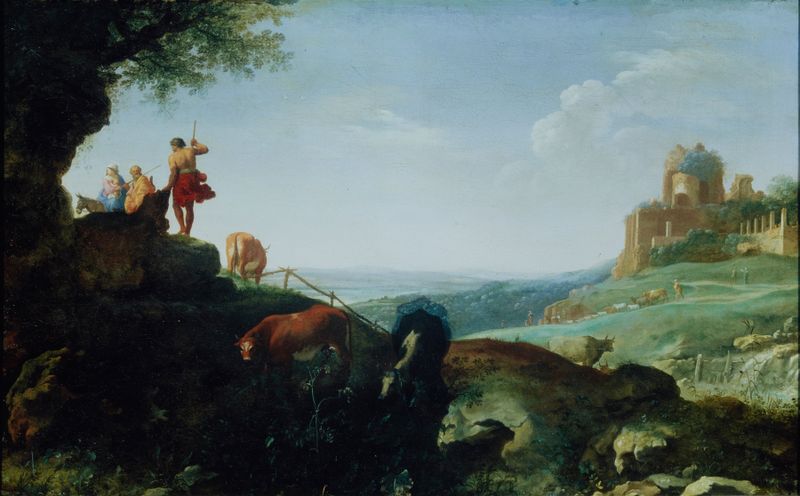
Landscape with the Flight to Egypt
Cornelis van Poelenburch

Figures Dancing near a Ruin
Cornelis van Poelenburch

Landscape with a Ruin
Cornelis van Poelenburch

Landscape with Bathing Nudes
Cornelis van Poelenburch
The Rest on The Flight into Egypt
Cornelis van Poelenburch
Rest on the Flight into Egypt
Cornelis van Poelenburch
Wooded Landscape with Figures
Cornelis van Poelenburch

Feast of the gods
Cornelis van Poelenburch
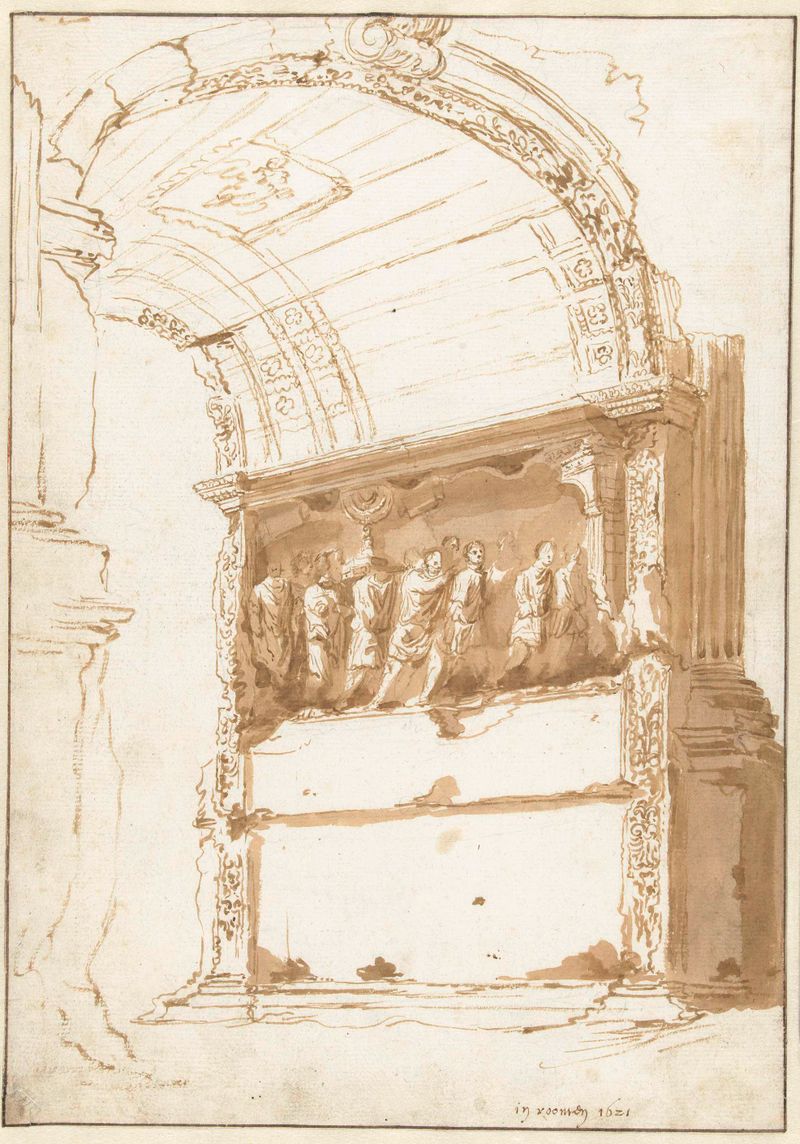
De boog van Titus
Cornelis van Poelenburch





