
De boog van Titus — History & Facts
Who listens when art speaks of silence? In De boog van Titus, echoes of mortality linger beneath the serene surface, inviting us to contemplate the transient beauty of life. Look to the center of the canvas, where the grand arch of the ancient structure rises majestically against a softening sky. The interplay of warm hues and cool shadows reveals a masterful understanding of light, enhancing the monument's solemnity. Notice how the artist employs delicate brushwork to capture the fading daylight, a visual metaphor for the passage of time, while subtle figures meander in the foreground, dwarfed by the titan of architecture. Beneath the tranquil surface, layers of meaning unfold.
The arch, a symbol of triumph and endurance, stands in contrast to the fleeting presence of the wandering souls, evoking the tension between permanence and transience. The muted color palette evokes a sense of introspection, urging viewers to reflect on their own mortality. Each element, from the horizon to the figures, speaks to the inevitable march of time that shadows human existence, transforming the scene into a meditation on what endures. Cornelis van Poelenburch painted De boog van Titus in 1621 during a vibrant period of Dutch art.
Living in Utrecht, he was influenced by the styles of Caravaggio and the Italian Renaissance, merging their dramatic techniques with his own interpretations of landscape and human experience. The artwork reflects a growing interest in classical themes and the beauty of ruins, as artists grappled with the complexities of life and death amid an era of increasing philosophical inquiry.
More Artworks by Cornelis van Poelenburch
Browse all →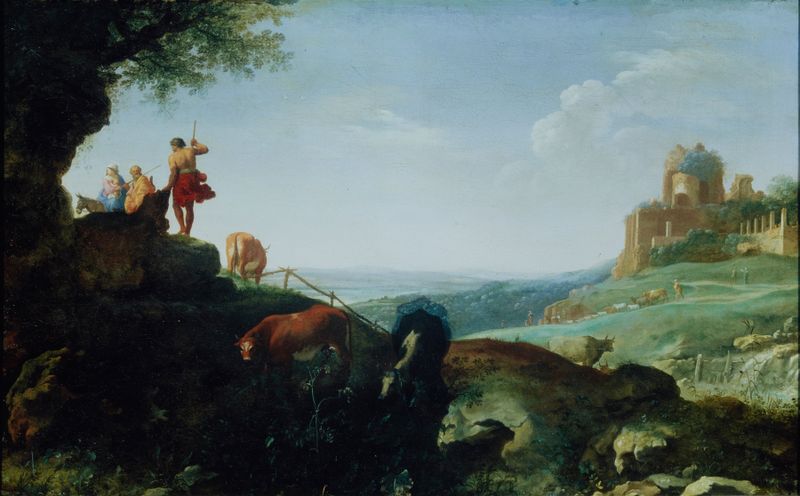
Landscape with the Flight to Egypt
Cornelis van Poelenburch

Figures Dancing near a Ruin
Cornelis van Poelenburch

Landscape with a Ruin
Cornelis van Poelenburch

Landscape with Bathing Nudes
Cornelis van Poelenburch
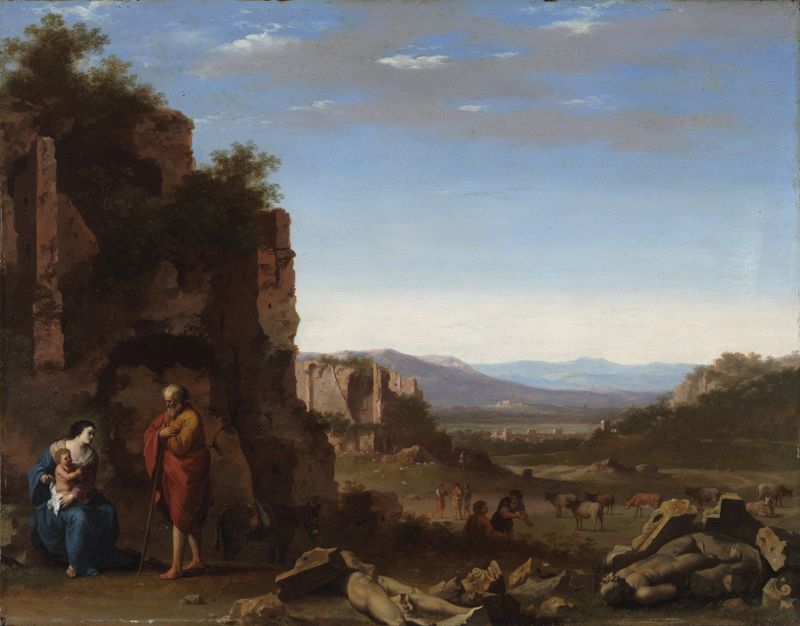
The Rest on The Flight into Egypt
Cornelis van Poelenburch
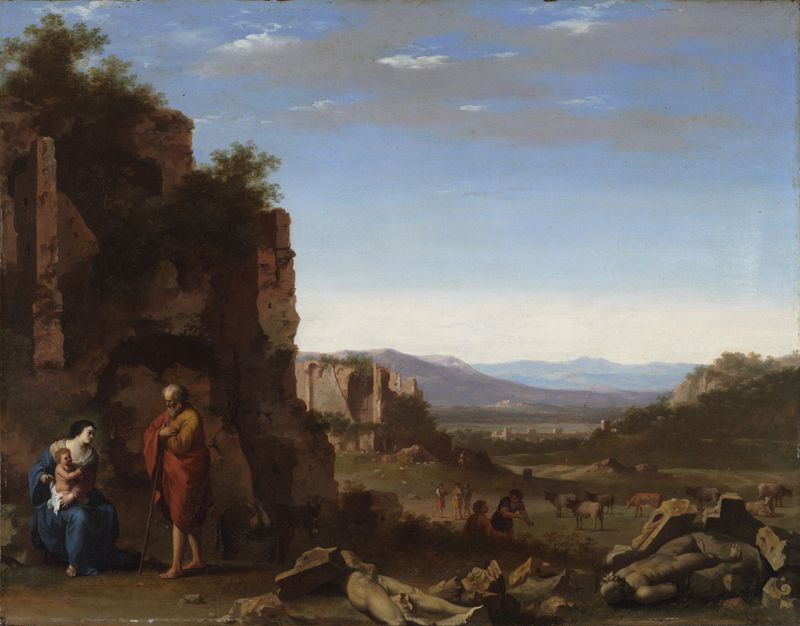
Rest on the Flight into Egypt
Cornelis van Poelenburch
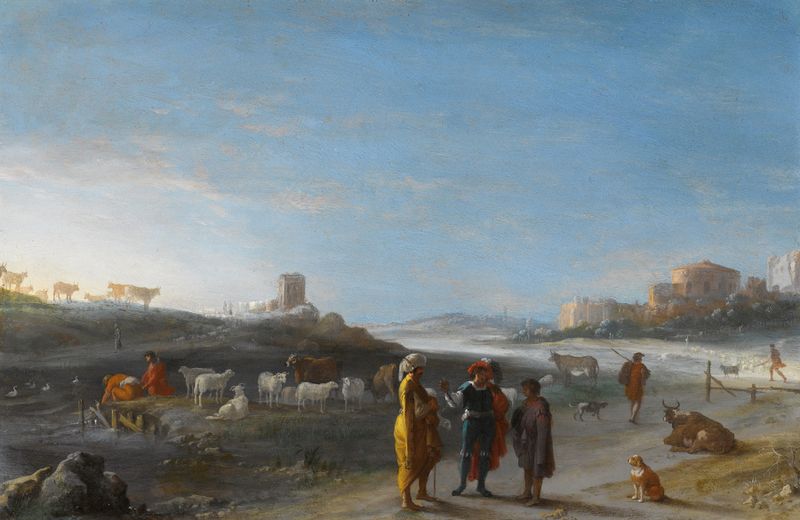
An Italianate Landscape with an unidentified Subject from the Old Testament
Cornelis van Poelenburch
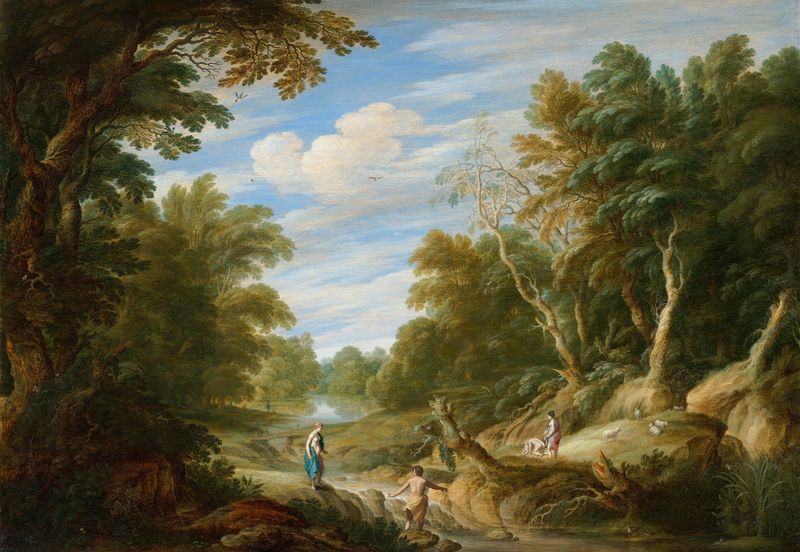
Wooded Landscape with Figures
Cornelis van Poelenburch

Feast of the gods
Cornelis van Poelenburch
More Architecture Art
Browse all →
The statue of Liberty
Frédéric Auguste Bartholdi

View of Houses in Delft, Known as ‘The Little Street’
Johannes Vermeer

View of Houses in Delft, Known as ‘The Little Street’
Johannes Vermeer

The Cathedral in Rouen. The portal, Grey Weather
Claude Monet

The yellow house
Vincent van Gogh

The Church in Auvers-sur-Oise, View from the Chevet
Vincent van Gogh