
Landscape with Bathing Nudes — History & Facts
What if beauty was never meant to be finished? The ephemeral quality of nature and the human form intertwines in a moment suspended, inviting contemplation of both time and art. Look to the left at the tranquil pool, where sunlight dances across the water's surface, creating ripples that shimmer like gold. The nudes, engaged in their leisurely bath, exude a sense of harmony with their surroundings, their graceful poses echoing the organic curves of the landscape. Notice how the soft, earthy tones of the vegetation contrast with the warm flesh of the figures, establishing a serene equilibrium that feels both intimate and expansive. Amidst this idyllic scene lies a tension between the natural and the artificial; the idyllic beauty of the nudes invites admiration, yet their nudity also evokes vulnerability in a world that often seeks to conceal rather than reveal.
The brushstrokes reveal an intricate interplay of light and shadow, suggesting both the physical and emotional depths of the figures, while the surrounding flora hints at the transience of their beauty. Each element, from the glistening water to the lush foliage, mirrors the fleeting nature of life itself. Cornelis van Poelenburch created this work between 1640 and 1650 during a period of prolific artistic exploration in the Netherlands. As the Baroque style flourished, he contributed to its evolution with a focus on the sublime beauty of landscape and the human figure.
At this time, artists were increasingly drawn to themes of nature and leisure, reflecting both personal and societal desires for escape and introspection.
More Artworks by Cornelis van Poelenburch
Browse all →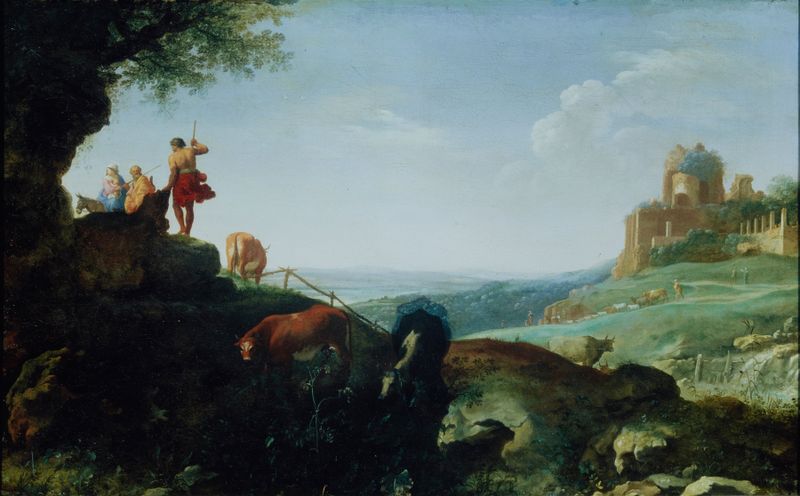
Landscape with the Flight to Egypt
Cornelis van Poelenburch

Figures Dancing near a Ruin
Cornelis van Poelenburch

Landscape with a Ruin
Cornelis van Poelenburch
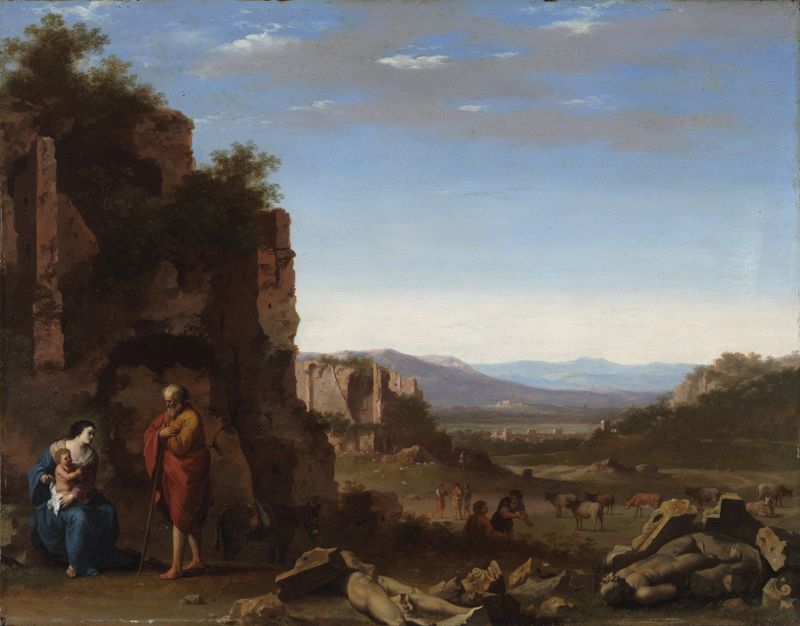
The Rest on The Flight into Egypt
Cornelis van Poelenburch
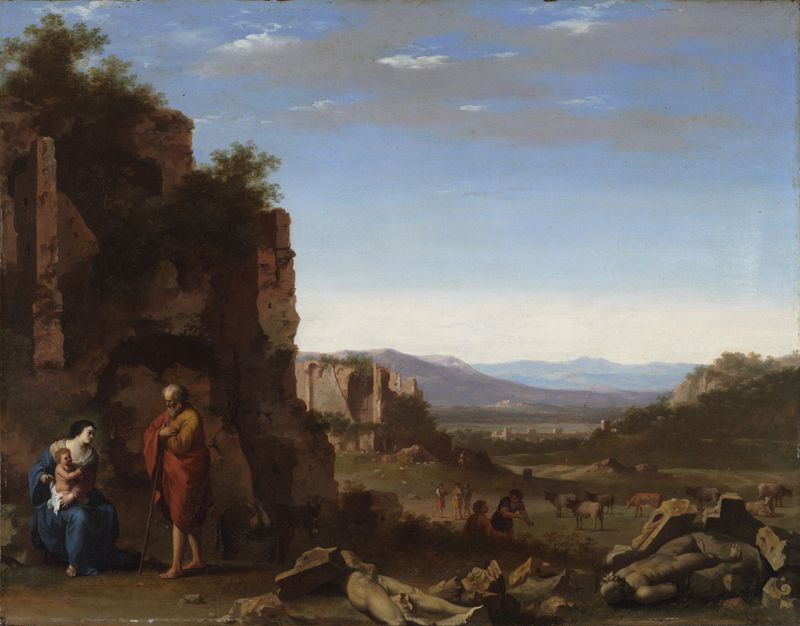
Rest on the Flight into Egypt
Cornelis van Poelenburch
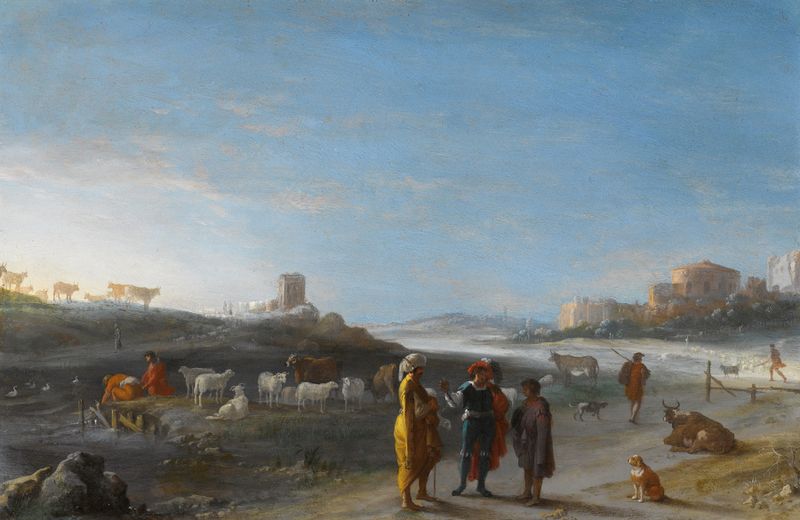
An Italianate Landscape with an unidentified Subject from the Old Testament
Cornelis van Poelenburch
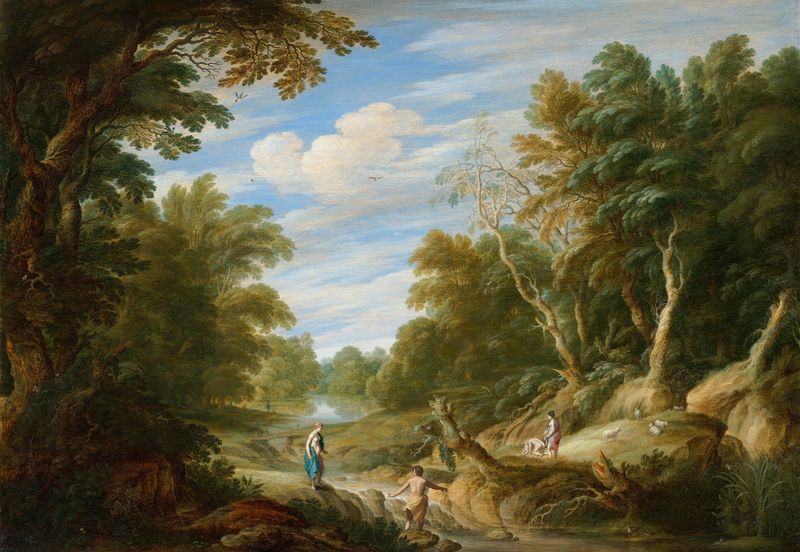
Wooded Landscape with Figures
Cornelis van Poelenburch

Feast of the gods
Cornelis van Poelenburch
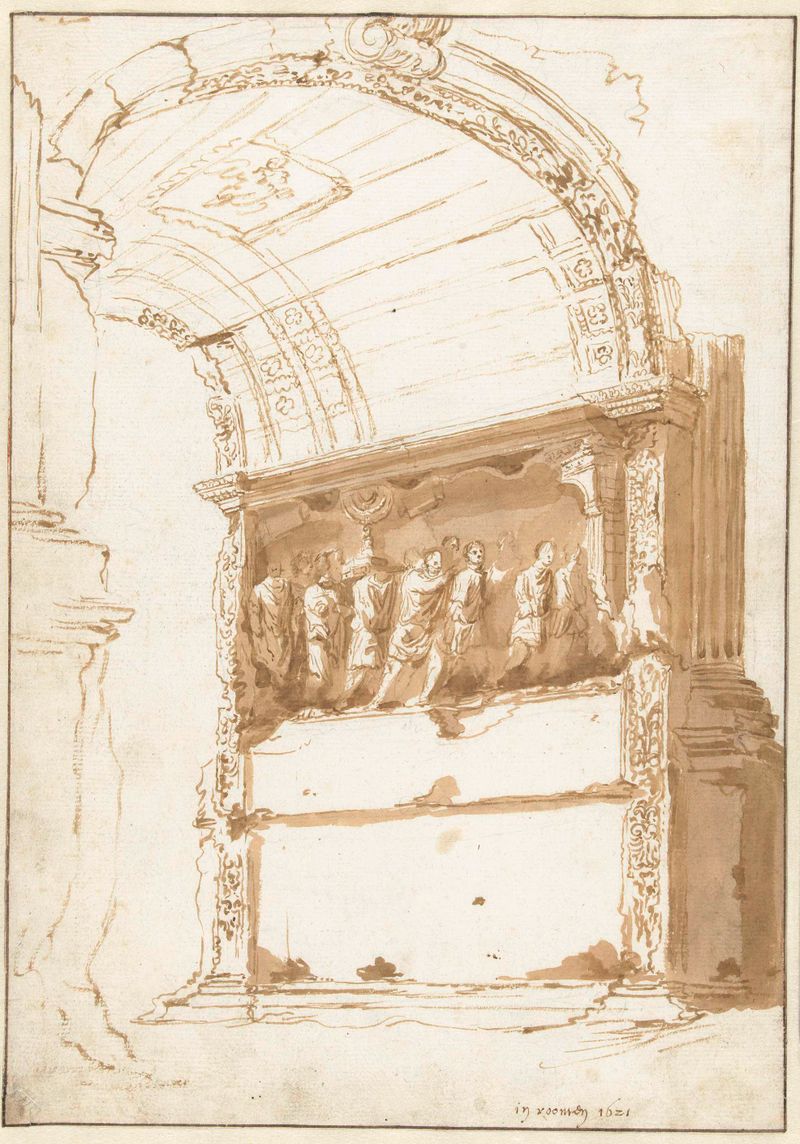
De boog van Titus
Cornelis van Poelenburch





