
Ancient Aqueduct in Samos — History & Facts
Could beauty survive in a century of chaos? The question lingers like the echoes of time, woven through the ancient stones and arches that rise majestically in this artwork. Look to the center where the aqueduct stretches across the canvas, its towering structure defined by the meticulous lines and soft, earthy hues. Notice how the warm sunlight bathes the stone in golden tones, accentuating the textures and imperfections that tell tales of endurance. Surrounding foliage hints at life reclaiming its space, while a serene sky looms above, offering a contrast of permanence against the fleeting nature of the world below. The aqueduct stands as a testament to human ingenuity and the relentless passage of time.
It symbolizes not just a physical structure, but the legacy of civilization’s triumphs and struggles. The juxtaposition of nature encroaching upon this man-made marvel reflects an emotional tension between decay and preservation, a reminder of how beauty can endure amidst chaos. Each crack and moss-covered stone serves as a dialogue between past and present, urging the viewer to ponder the resilience of legacy. In 1810, Luigi Mayer created this piece during a period of upheaval in Europe.
Amidst political revolutions and shifting artistic movements, he was immersed in the Neoclassical style and sought to capture the grandeur of antiquity. This work emerged from his travels through Greece and the Mediterranean, where a fascination with ruins and landscapes inspired him to immortalize the intersection of nature and architecture, waiting for a viewer to reflect upon the passage of time.
More Artworks by Luigi Mayer
Browse all →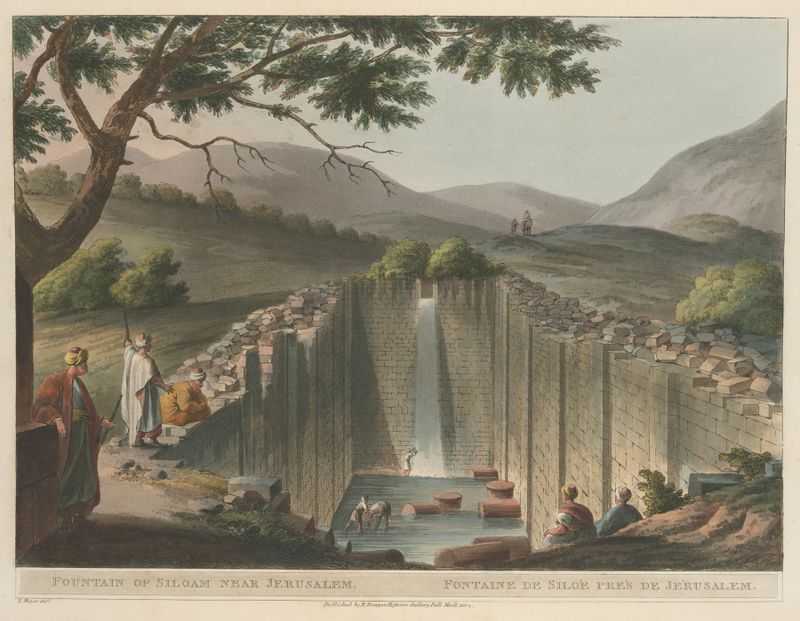
Fountain of Siloam Near Jerusalem
Luigi Mayer

View of the Dardanelles
Luigi Mayer
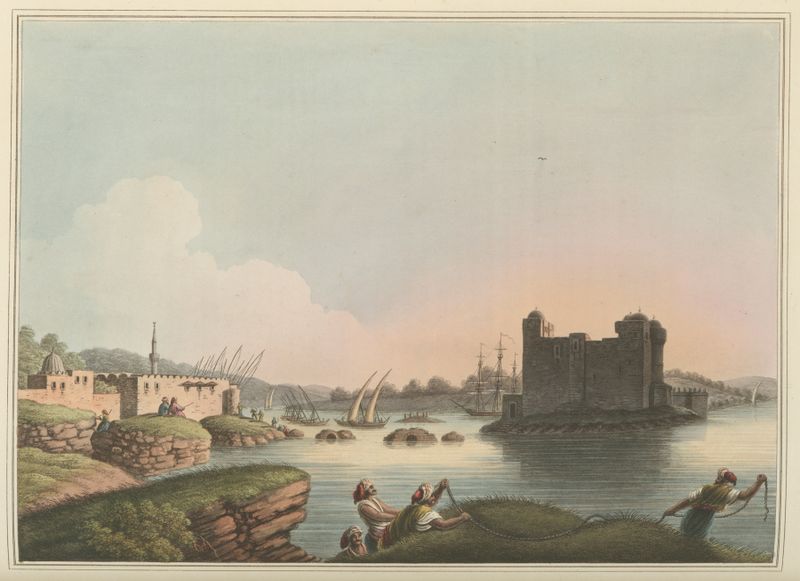
Port of Latachia
Luigi Mayer

Stadium at Ephesus
Luigi Mayer

Ancient Temples at Agrigentum
Luigi Mayer
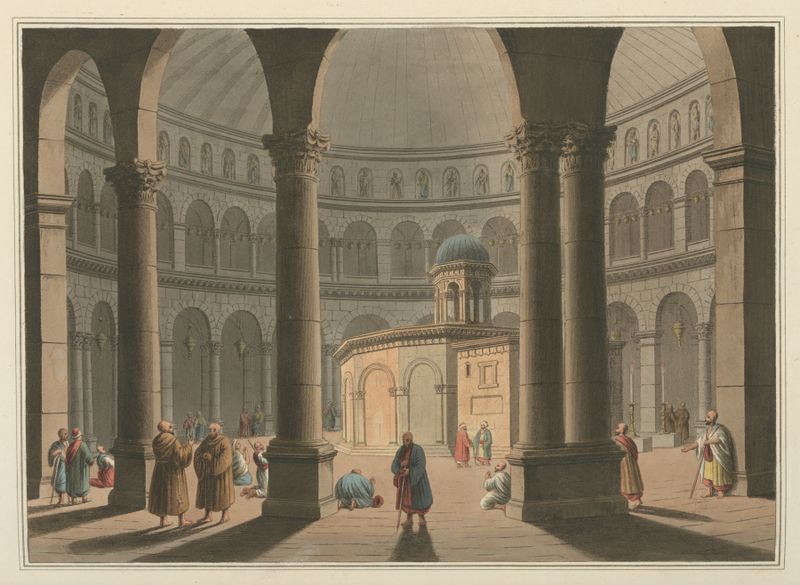
Church of the Holy Sepulchre
Luigi Mayer
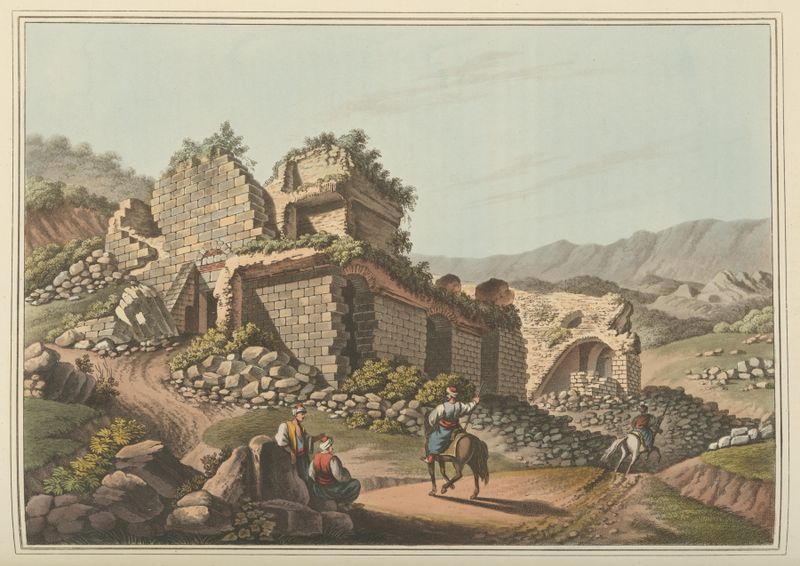
Theatre at Ephesus
Luigi Mayer
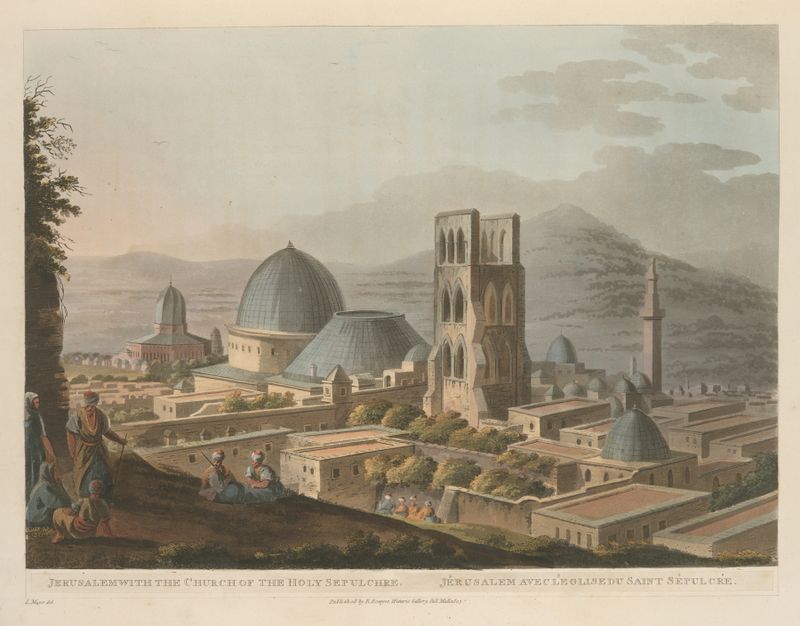
Jerusalem with the Church of the Holy Sepulchre
Luigi Mayer
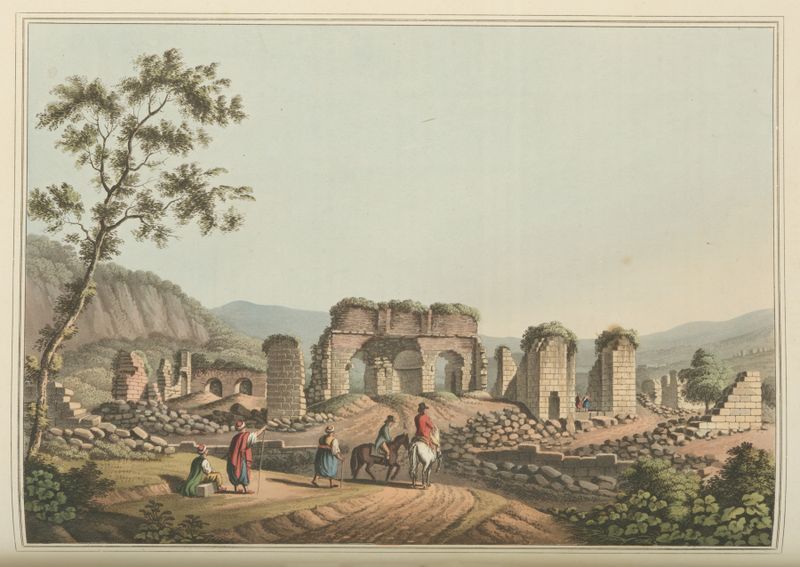
Ruins of the Temple of Diana at Ephesus
Luigi Mayer

Crater in the Island of Volcano
Luigi Mayer
More Architecture Art
Browse all →
The statue of Liberty
Frédéric Auguste Bartholdi

View of Houses in Delft, Known as ‘The Little Street’
Johannes Vermeer

View of Houses in Delft, Known as ‘The Little Street’
Johannes Vermeer

The Cathedral in Rouen. The portal, Grey Weather
Claude Monet

The yellow house
Vincent van Gogh

The Church in Auvers-sur-Oise, View from the Chevet
Vincent van Gogh