
Ancient Walls, Monte Circello — History & Facts
In a world teetering on the brink of revolution, art stands as both witness and catalyst, capturing the essence of change. Look to the center of the canvas, where ancient walls rise majestically against a vivid blue sky, their textures whispering secrets of time. The sharp lines of the stone contrast with the delicate strokes of verdant foliage encroaching upon their surfaces. Notice how the light dances across the weathered stones, illuminating crags and crevices, creating a dialogue between past and present.
The palette blends earthy hues with vibrant greens, evoking a sense of life that both embraces and challenges the immovable structures. Beneath the serene facade of Ancient Walls, Monte Circello lies a tension between permanence and change. The walls, symbols of a storied past, are not only a testament to endurance but also evoke a sense of impending transformation as nature reclaims its space. The juxtaposition of the rigid architecture against the soft, organic shapes of the flora encapsulates the struggle between civilization and wilderness, echoing the revolutionary spirit of Lear's time.
Each brushstroke embodies the complexities of existence—how history informs the present and how the future can unfurl in unexpected ways. In 1846, Lear painted this work while traveling through Italy, exploring its landscapes and rich history. At this time, he was deeply influenced by the Romantic movement, which championed the beauty of nature and encouraged introspection. Lear's own journey reflects the broader artistic quest for authenticity and emotional truth, a pursuit that resonated across Europe as artists began to challenge conventions and express their visions of a changing world.
More Artworks by Edward Lear
Browse all →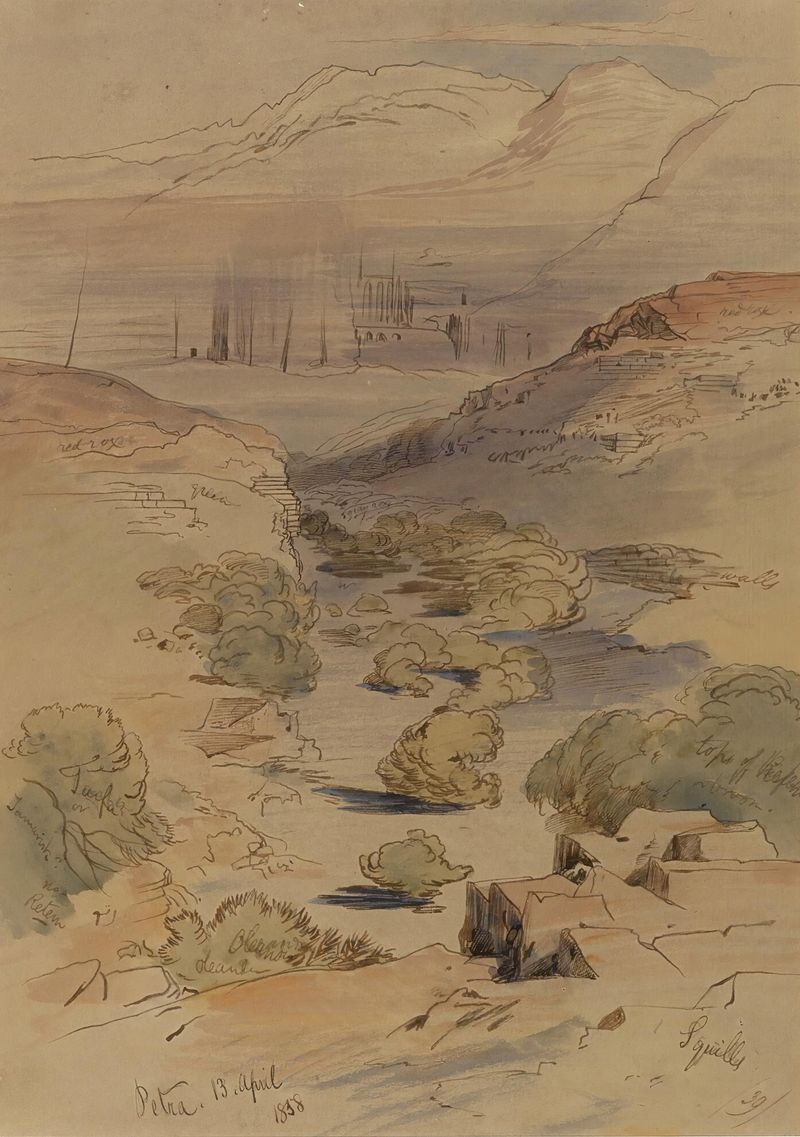
Petra
Edward Lear
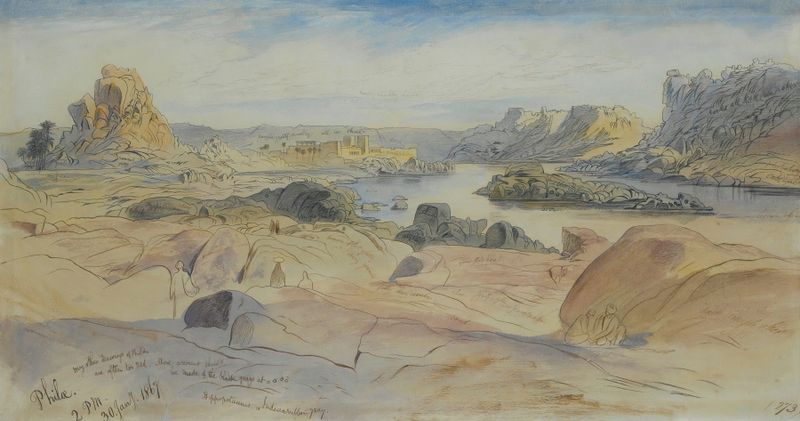
Philae, Egypt
Edward Lear
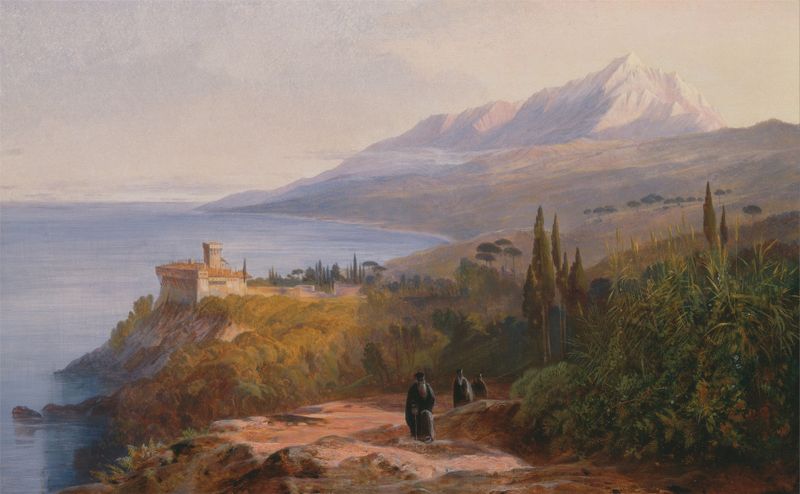
Mount Athos and the Monastery of Stavronikétes
Edward Lear
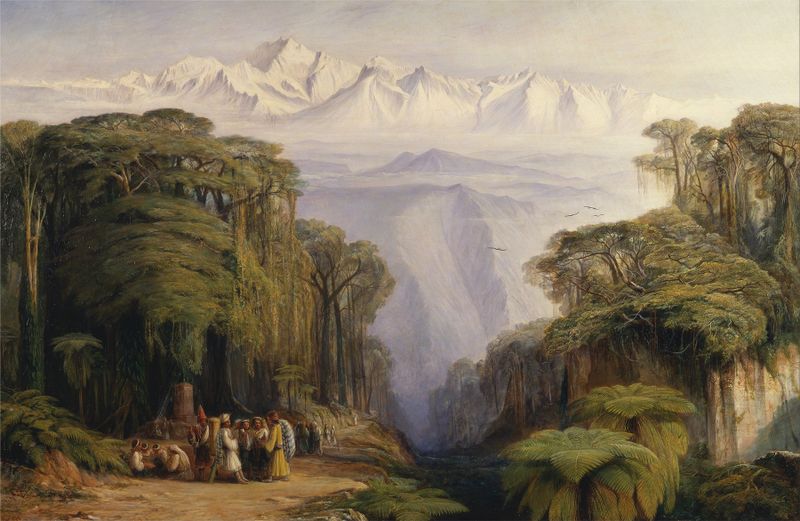
Kangchenjunga from Darjeeling
Edward Lear
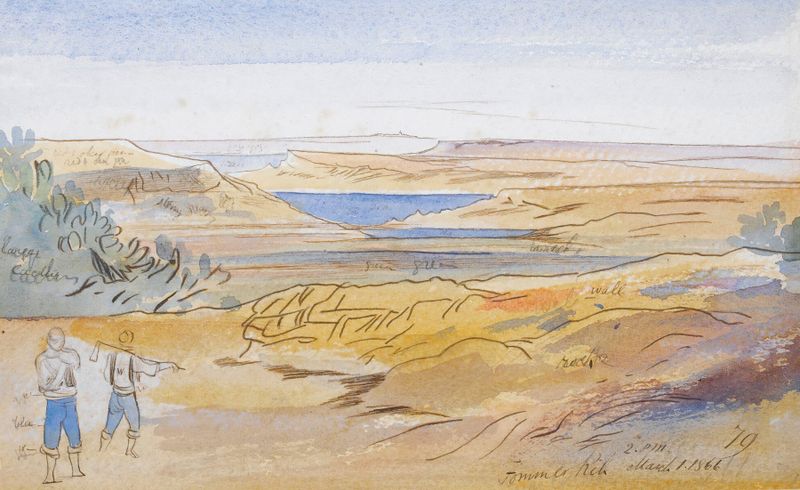
Fomm Ir-Rih, Malta
Edward Lear
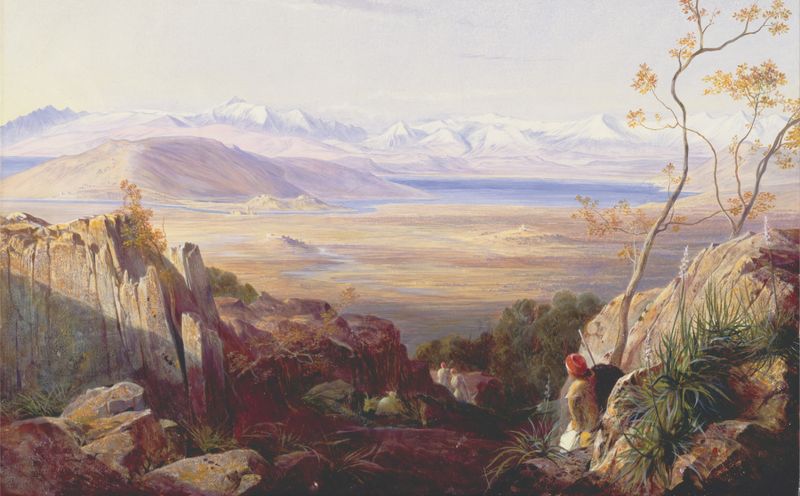
Butrinto, Albania
Edward Lear
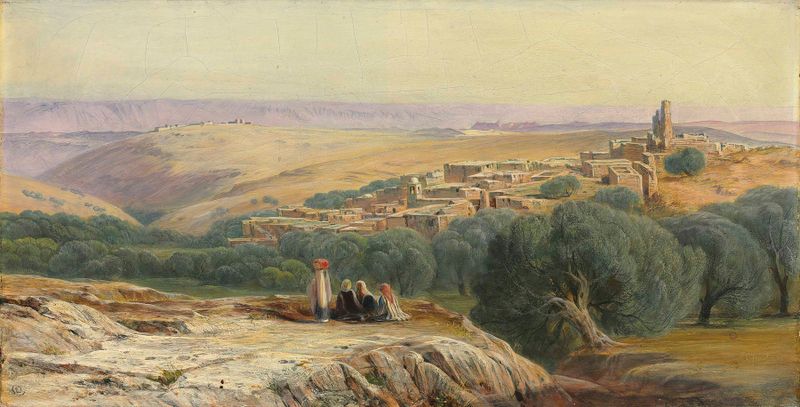
The Plains of Bethany
Edward Lear

Karnak, 9-30 pm, 22 January 1867
Edward Lear
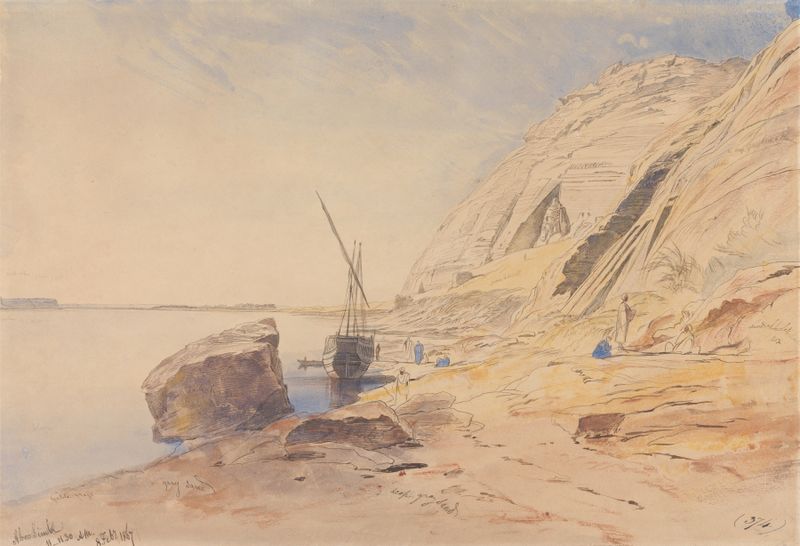
Abu Simbel, 11-11;30 am, 8 February 1867 (374)
Edward Lear

A View Of Mount Athos And The Pantokrator Monastery, Greece
Edward Lear





