Annunciatie — History & Analysis
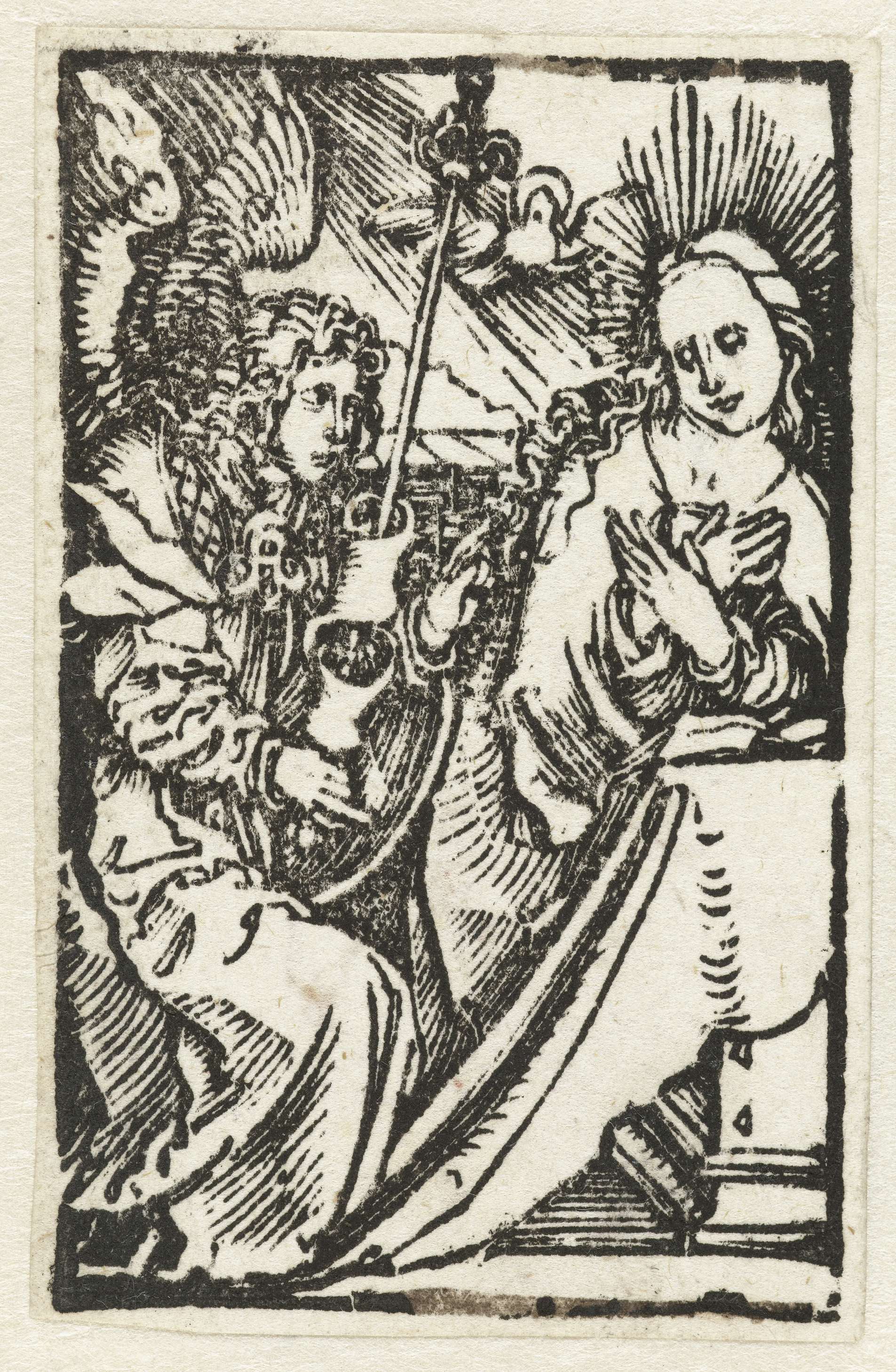
Could a single brushstroke hold eternity? In *Annunciatie*, beauty unfurls with each meticulous detail, suggesting a divine connection that transcends time itself. Look to the left at the delicate figure of the Virgin Mary, her soft, flowing robes painted in shades of azure and cream. Notice how the light bathes her face, illuminating her serenity and revealing an expression of quiet contemplation. The angel, wings outstretched, embodies a contrast; his vibrant colors and dynamic gesture draw the eye, reflecting the startling moment of revelation. The careful arrangement of elements creates a harmonious balance, inviting viewers to meditate on the significance of the encounter. Within this sacred scene lies a profound interplay of innocence and divine intervention. The tension between the calm demeanor of Mary and the urgency of the angel suggests the weight of the message being delivered. The subtle play of light and shadow evokes a sense of spiritual awakening, while the intricate details, such as the delicate flowers at Mary’s feet, symbolize purity and the coming of new life. This blend of realism and symbolism heightens the emotional resonance of the piece, making it a fervent exploration of beauty and faith. In 1503, Dürer was at the height of his artistic prowess, working in Nuremberg during a period of great cultural and artistic flourishing in Northern Europe. His mastery of engraving and painting was already well-established, and the exploration of religious themes was pivotal within the context of a society grappling with the Reformation's challenges. This painting captures not just an event, but a moment of transformation, encapsulating the essence of spiritual revelation and artistic ambition.