
Arachnida (Spiders) — History & Facts
What first arrests the eye in Arachnida (Spiders) by Ernst Haeckel is the sense of almost architectural order imposed on what might otherwise be a chaotic parade of forms. Each arachnid is rendered with a precision that borders on reverence, their bodies and limbs radiating outward like the spokes of a wheel or the petals of a flower. The artist’s meticulous attention to symmetry and pattern transforms these often-feared creatures into objects of wonder, inviting the viewer to linger over the delicate hairs, armored plates, and jewel-like markings.
Every detail—each spine, spot, and segment—is a clue, guiding the gaze from the armored mites at the corners to the flamboyant, spiked spiders at the center, and finally to the almost floral composition at the lower right, which seems to blur the line between animal and ornament. Created in 1904 for the celebrated volume Kunstformen der Natur, this plate belongs to a world where science and art were not rivals but partners in discovery. The late nineteenth and early twentieth centuries saw a surge of interest in cataloging the natural world, with artists like Haeckel producing lavish illustrations for both scientific and popular audiences. Such works were commissioned to educate, to inspire, and to persuade the public of nature’s hidden harmonies.
The names and dates attached to each specimen—gleaned from decades of taxonomic labor—remind us that every form here was once a mystery, newly described and named. Today, history has kept few traces of the individual journeys of these images, but their purpose endures: to turn the unfamiliar into the unforgettable, and to reward every second glance with a new marvel.
More Artworks by Ernst Haeckel
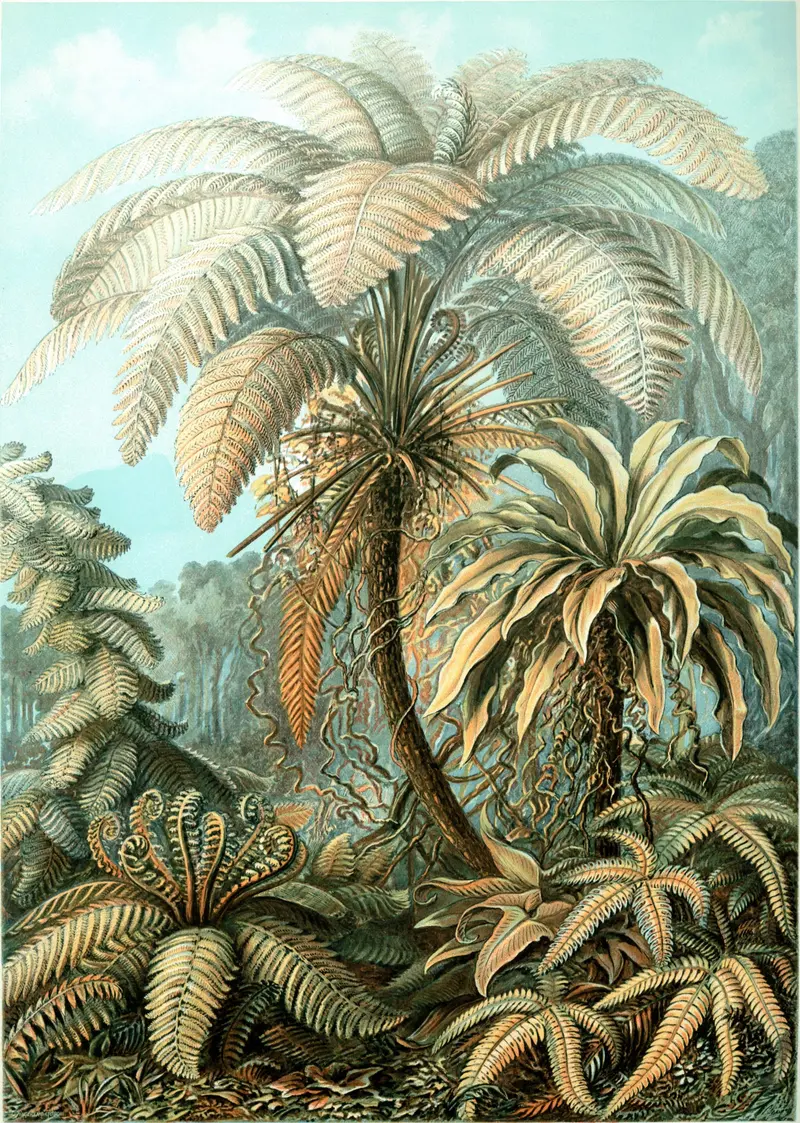
Filicinae (Ferns)
Ernst Haeckel
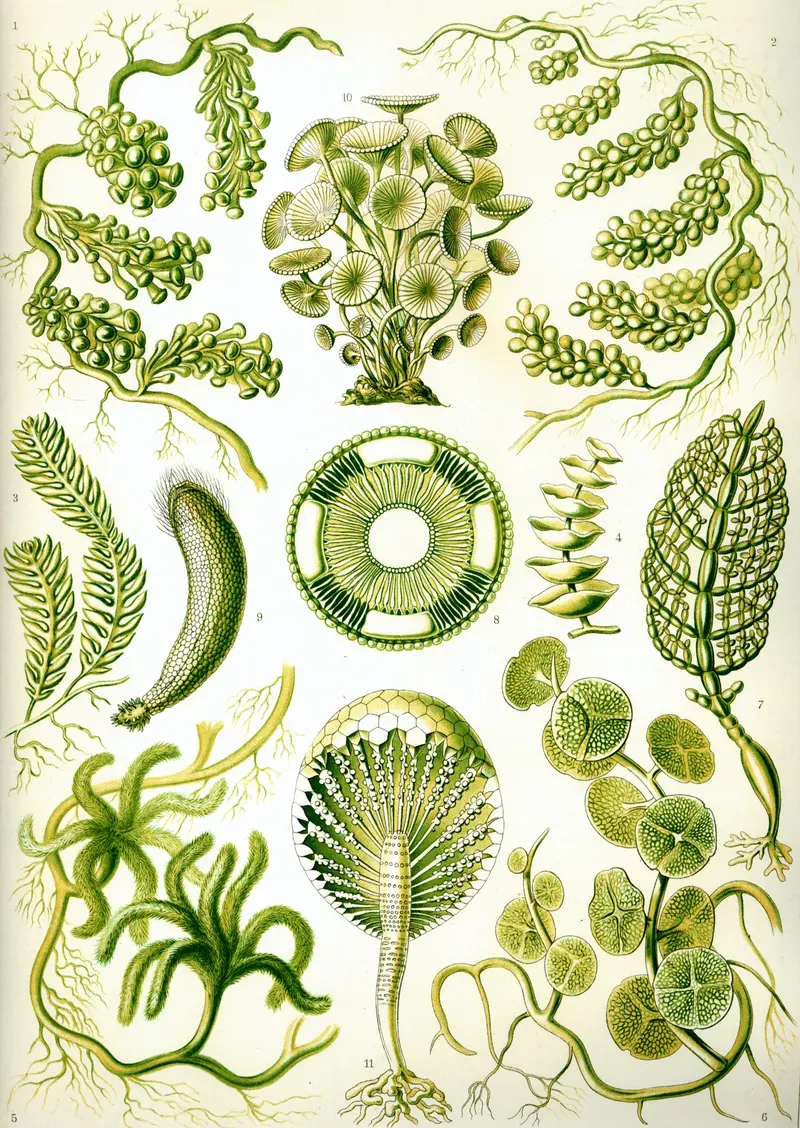
Siphoneae (Green Algae)
Ernst Haeckel

Cirripedia (Barnacles)
Ernst Haeckel

Actiniae (Sea Anemones)
Ernst Haeckel
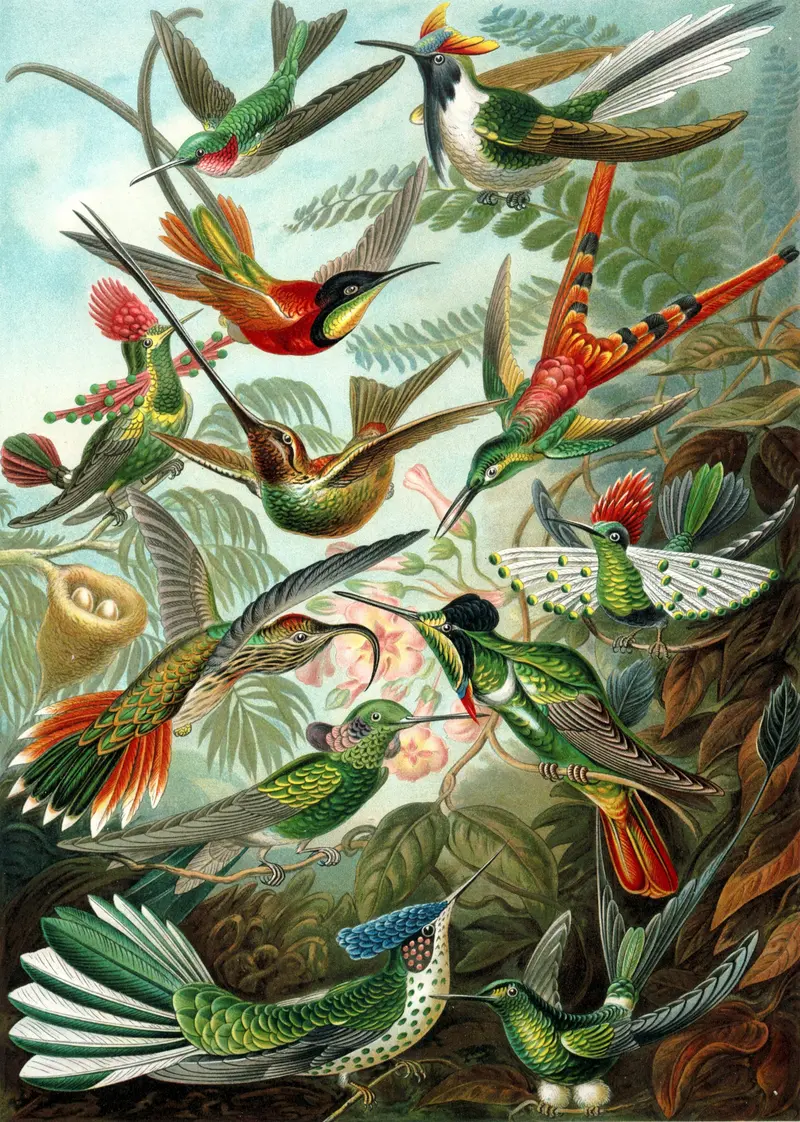
Trochilidae (Hummingbirds)
Ernst Haeckel
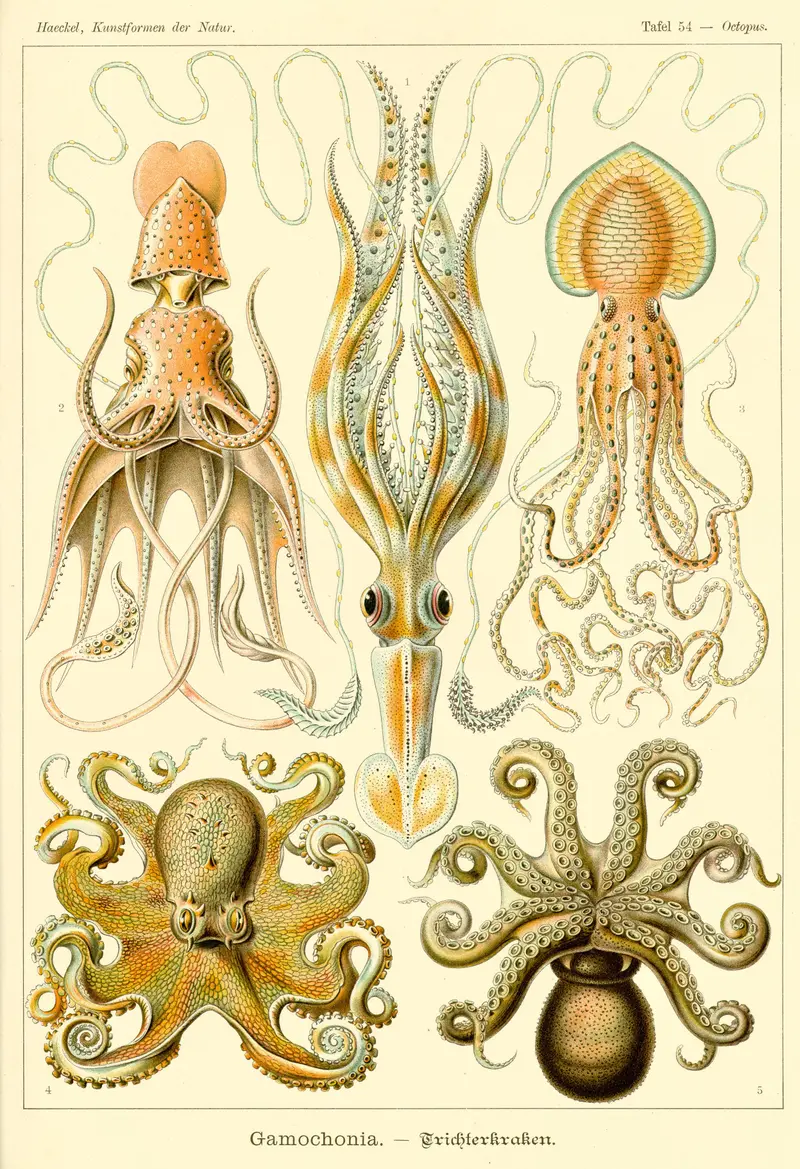
Gamochonia (Cephalopods)
Ernst Haeckel
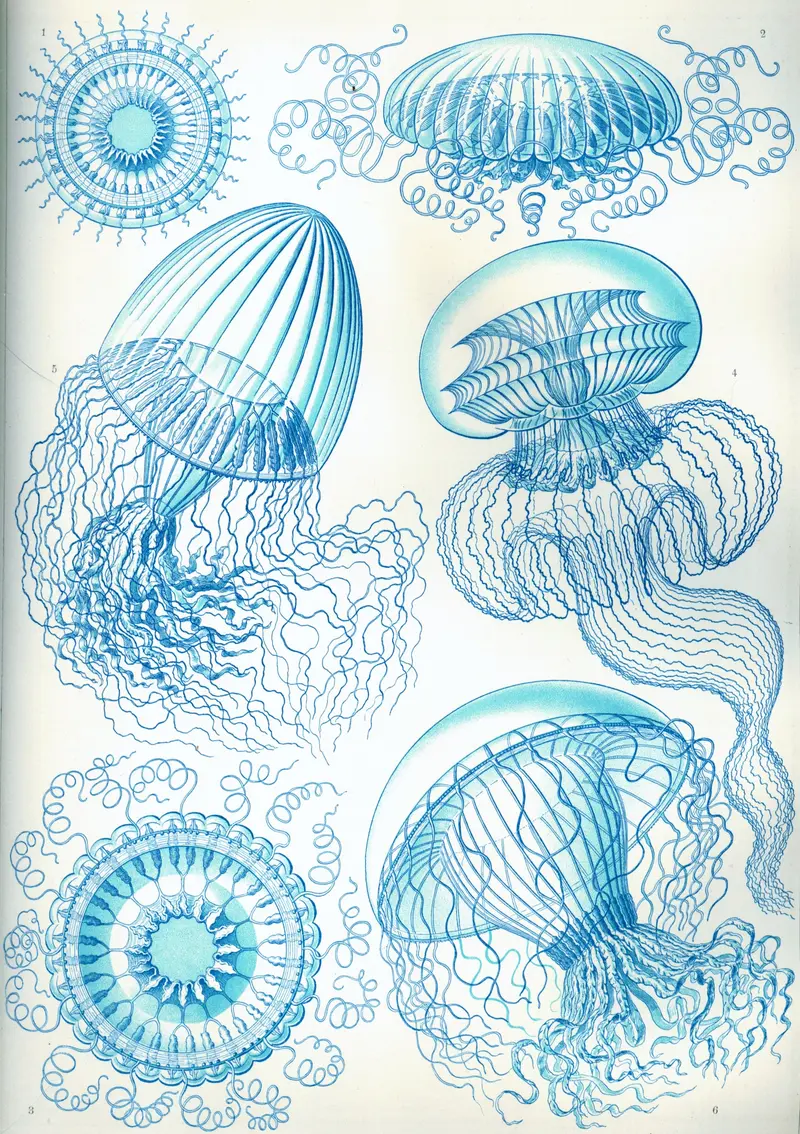
Leptomedusae (Jellyfish)
Ernst Haeckel
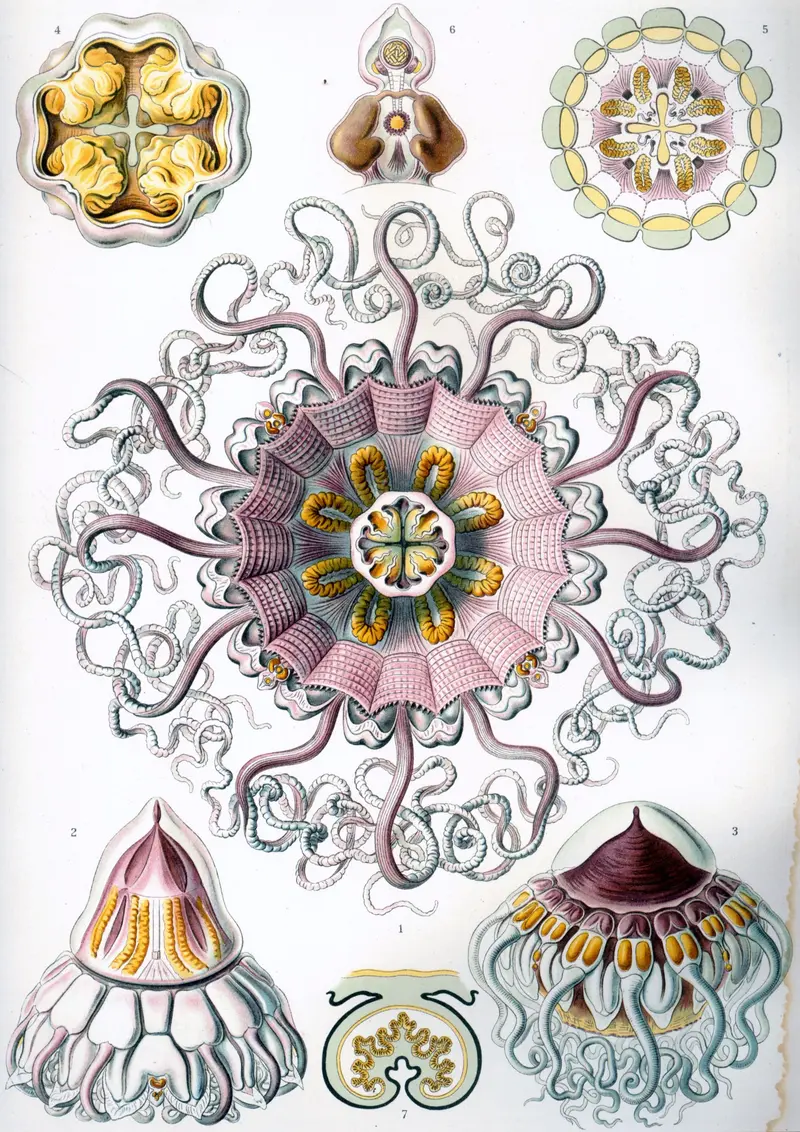
Peromedusae (Jellyfish)
Ernst Haeckel
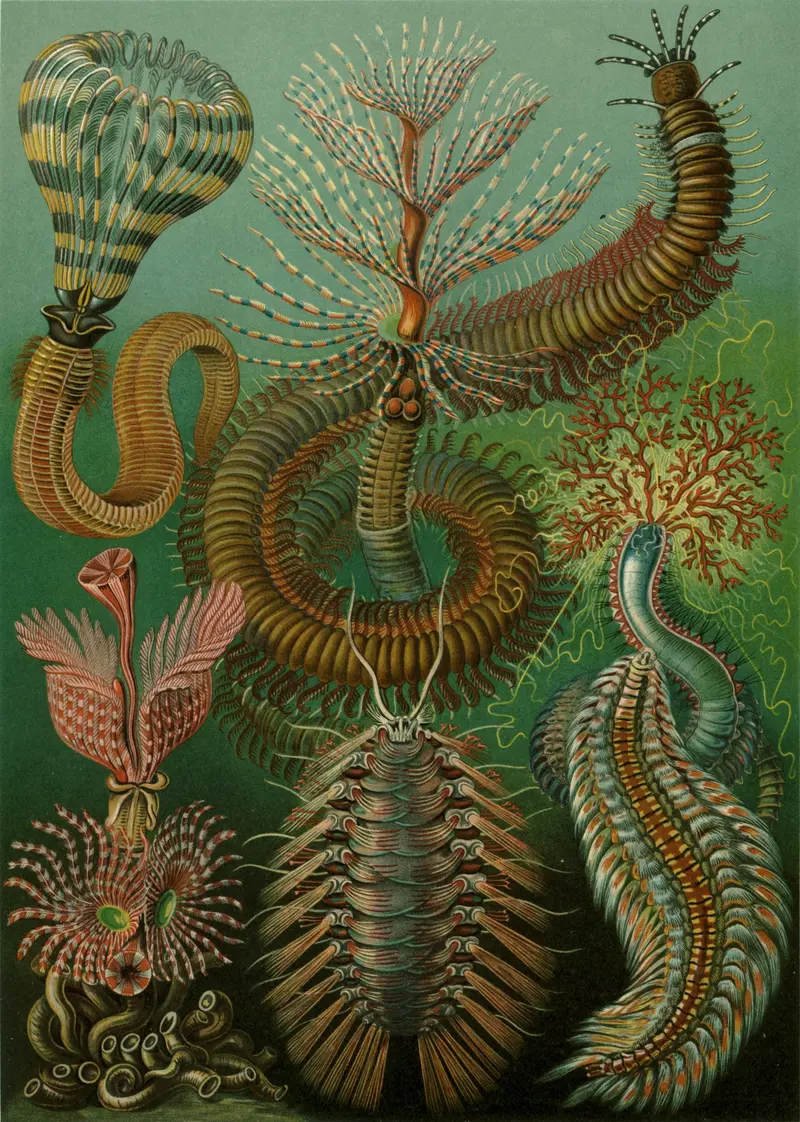
Chaetopoda (Bristle Worms)
Ernst Haeckel
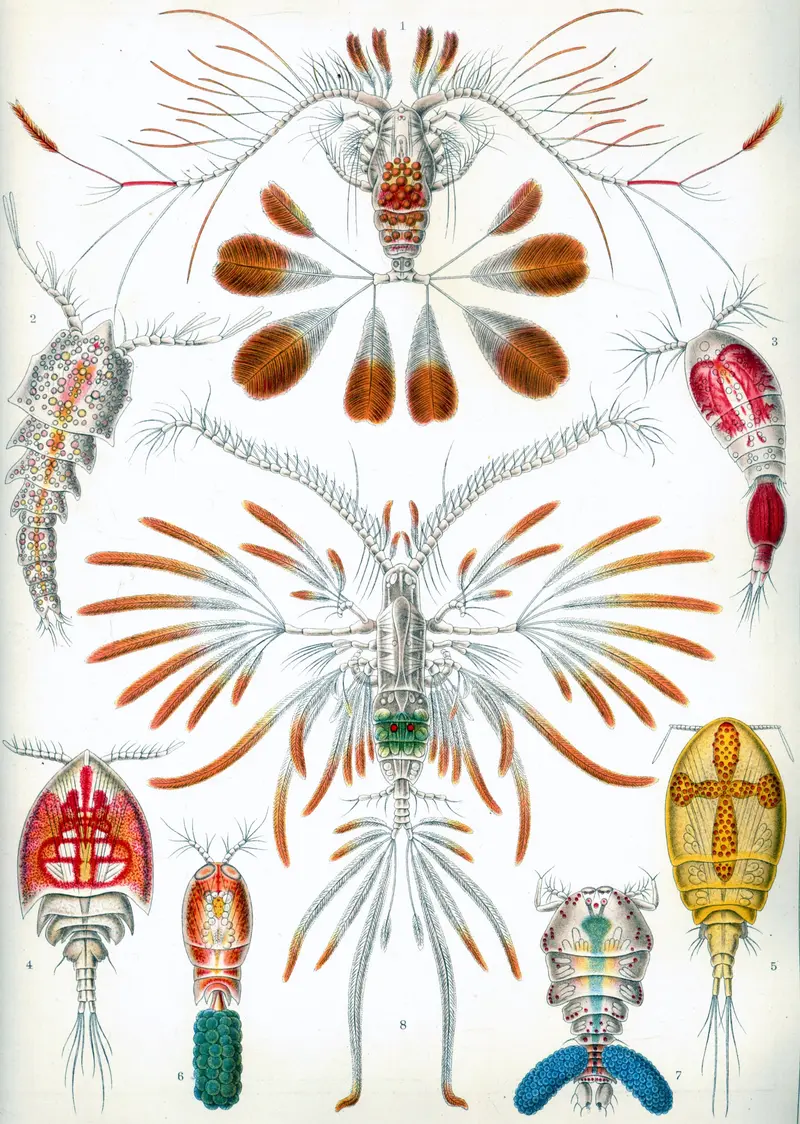
Copepoda (Copepods)
Ernst Haeckel





