
Peromedusae (Jellyfish) — History & Facts
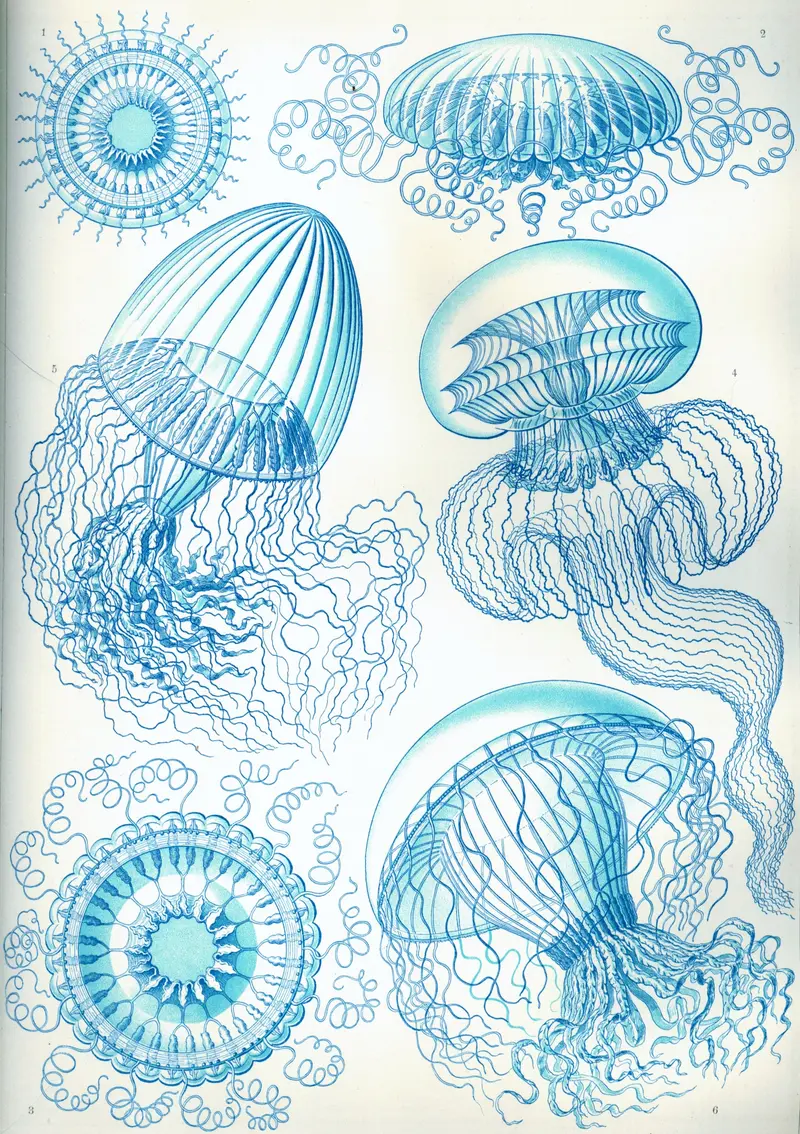
What first seizes the eye is the riot of symmetry and flourish in the heart of the jellyfish, as if nature itself were showing off its most intricate lacework. The central creature, rendered in crisp detail, bursts outward with curling tentacles and a crown of petal-like lobes, each segment meticulously shaded in pinks and yellows. This is not simply a portrait but a map of wonder: every twist of a tentacle, every fold in the bell, is an invitation to trace the logic and beauty of living form.
The surrounding studies—cross-sections, side views, and mouth tubes—turn the page into both a gallery and a laboratory, as if the artist wants you to see not just the surface, but the hidden architecture beneath. Light falls evenly, flattening the forms onto the page and sharpening the scientific intent, yet the palette and composition lend the whole a sense of movement and vitality. Created in 1904 for Kunstformen der Natur, this work belongs to a world where art and science were partners in revelation. The late nineteenth and early twentieth centuries saw naturalists and illustrators like Ernst Haeckel transform the way people saw the living world, driven by a hunger to classify, understand, and marvel.
Such images were commissioned for books, teaching, and public display—tools for spreading the new gospel of evolution and biodiversity. The precise labeling of each form and view, with names and synonyms, reflects the era’s obsession with order and taxonomy, even as the exuberant designs hint at the chaos and creativity of life itself. Few records remain of the individual journeys of these plates, but their influence endures: look closely, and you may see the roots of modern design, or the echo of a jellyfish pulsing quietly in the deep.
More Artworks by Ernst Haeckel
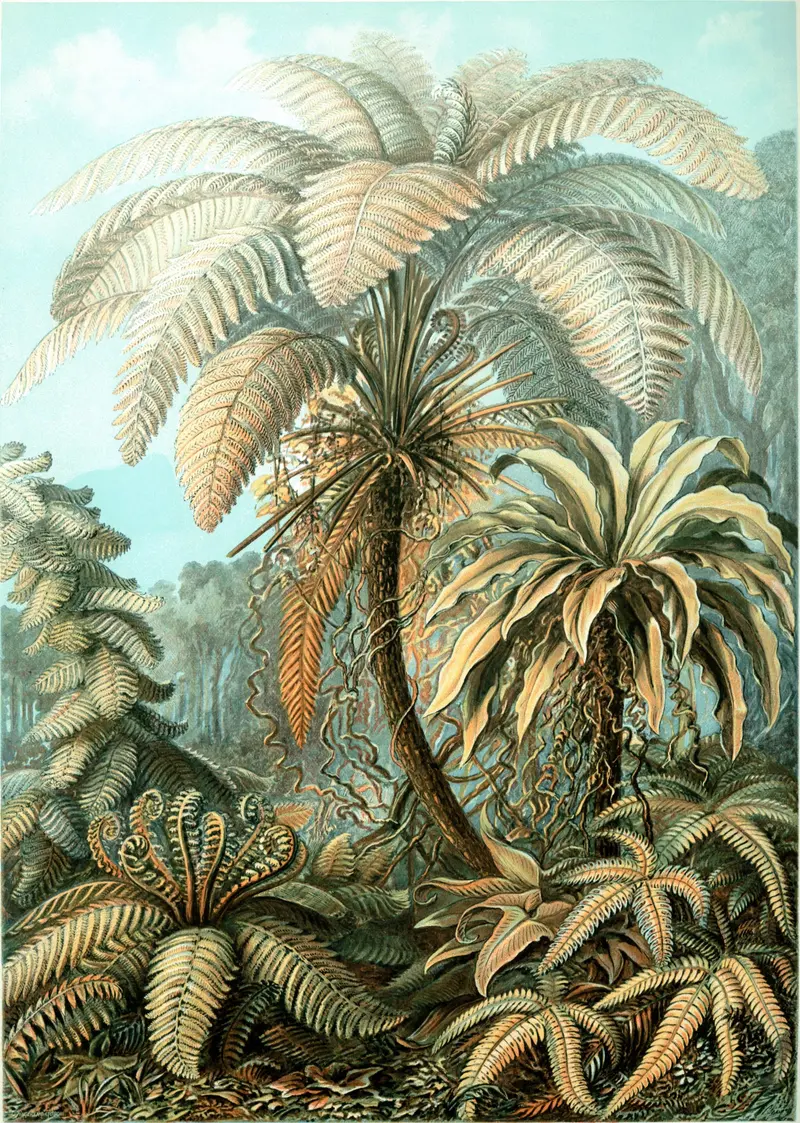
Filicinae (Ferns)
Ernst Haeckel
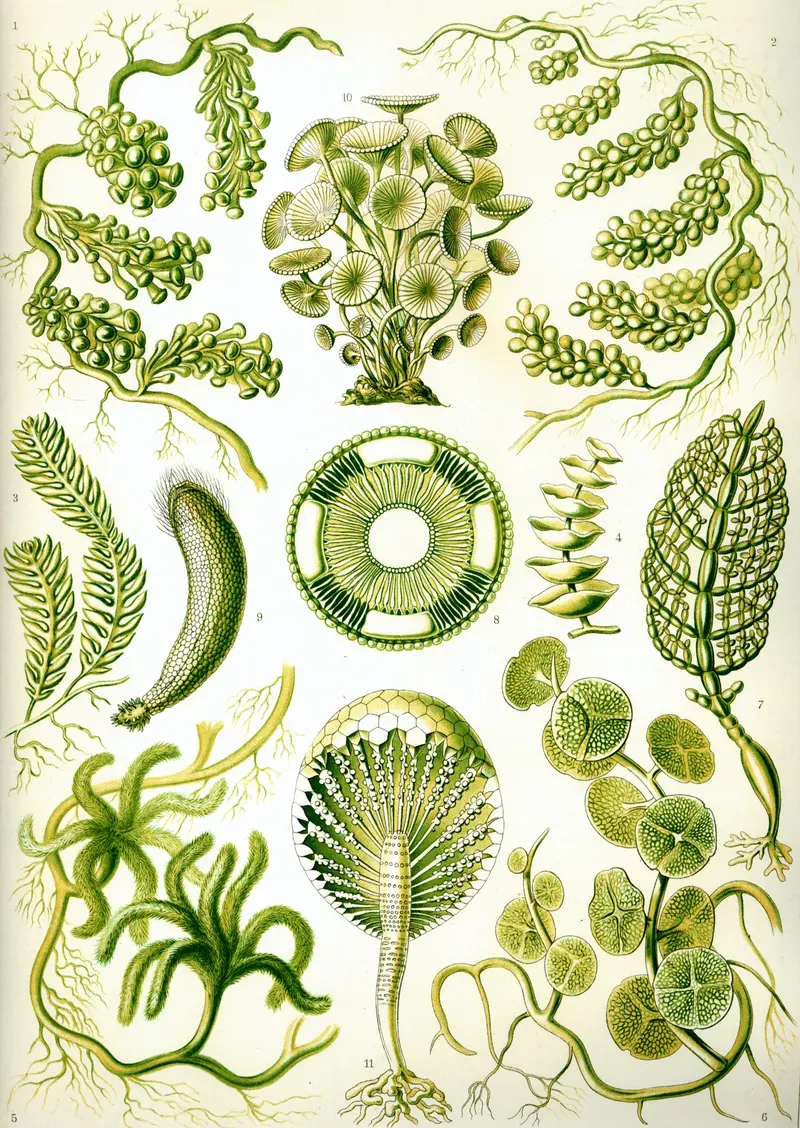
Siphoneae (Green Algae)
Ernst Haeckel

Cirripedia (Barnacles)
Ernst Haeckel

Actiniae (Sea Anemones)
Ernst Haeckel
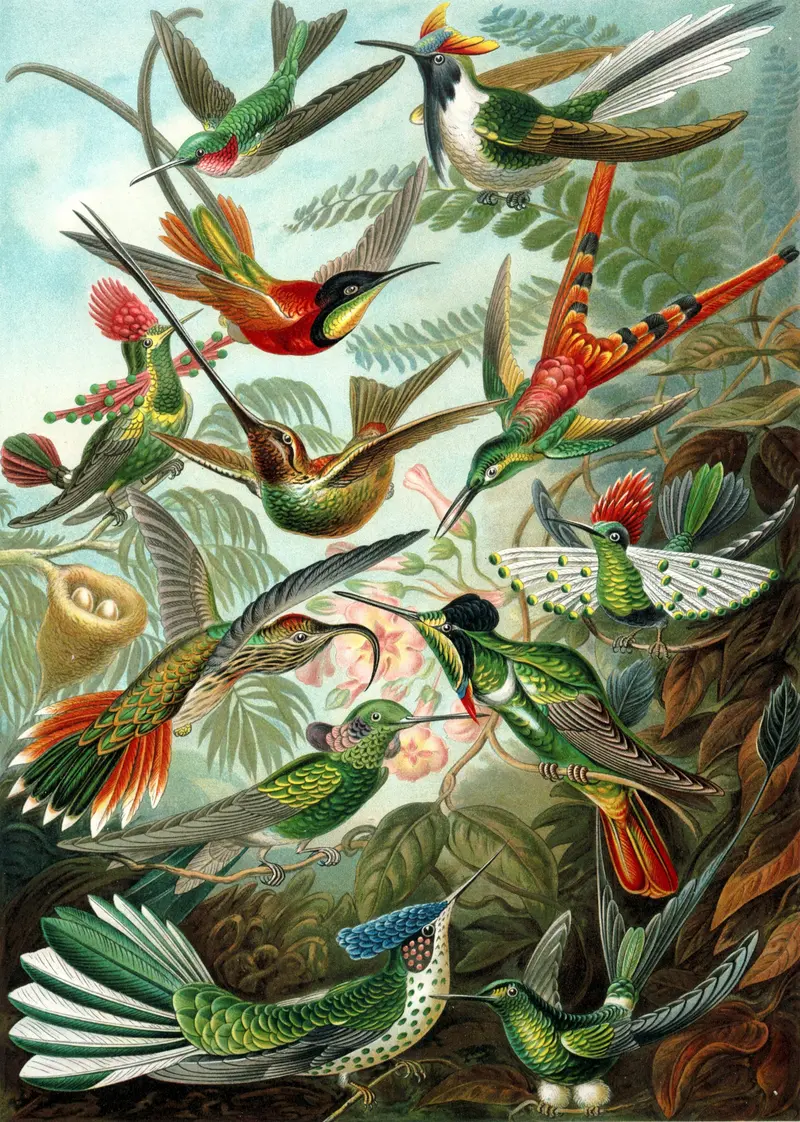
Trochilidae (Hummingbirds)
Ernst Haeckel
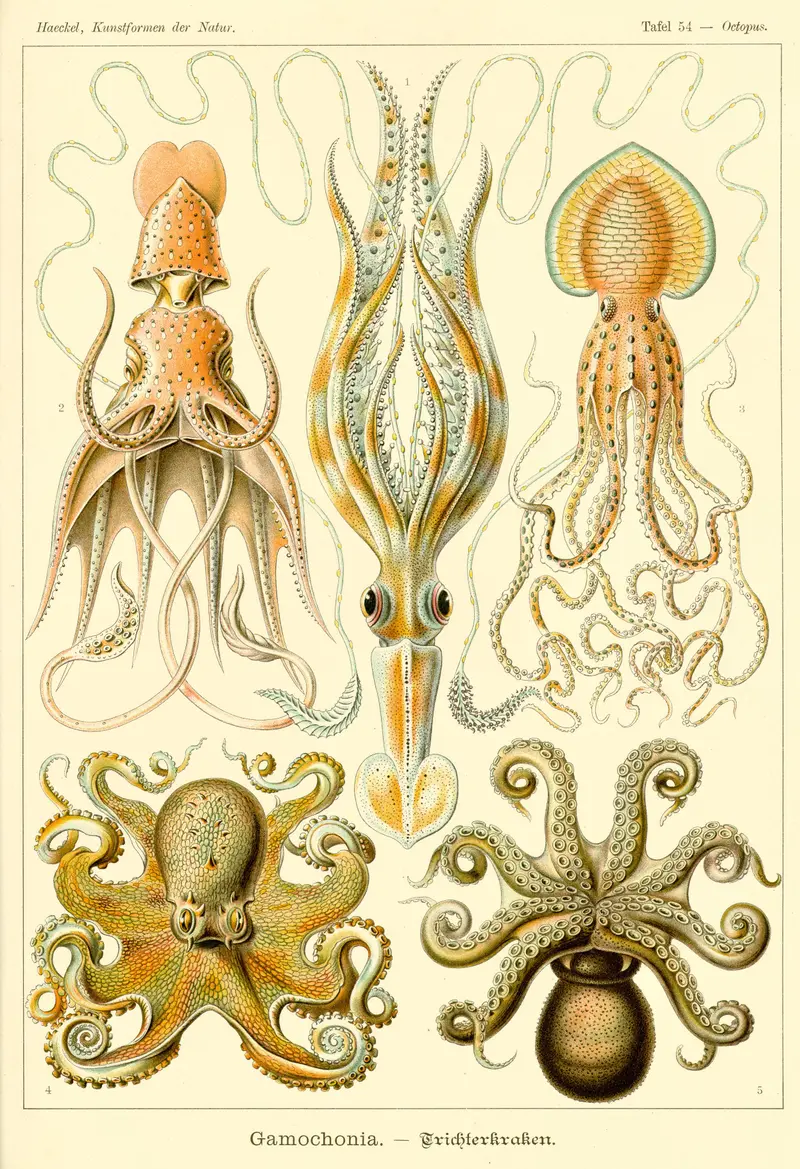
Gamochonia (Cephalopods)
Ernst Haeckel
Leptomedusae (Jellyfish)
Ernst Haeckel
Chaetopoda (Bristle Worms)
Ernst Haeckel
Copepoda (Copepods)
Ernst Haeckel
Arachnida (Spiders)
Ernst Haeckel





