
Copepoda (Copepods) — History & Facts
The first thing that seizes the eye in Copepoda (Copepods) by Ernst Haeckel is the sheer exuberance of form—nature’s own fireworks, radiating from the bodies of these minute sea creatures. Each copepod, rendered with almost architectural precision, seems to float in a luminous void, their feathery appendages and jewel-toned segments fanned out like the wings of some fantastical insect. The artist’s hand guides your gaze from the intricate red and orange filaments that pulse outward, to the clusters of eggs and the armored, segmented bodies, each detail a clue to their hidden lives in the ocean’s depths.
The subtle play of color—rust, emerald, gold—serves not just to delight, but to distinguish one species from another, inviting the viewer to linger over the differences that matter in the microscopic world. Created in 1904 for the celebrated Kunstformen der Natur, this plate stands at the intersection of science and art in a period when the boundaries between the two were being joyfully tested. Haeckel’s work was not merely a tool for biologists, but a manifesto for seeing the natural world as a source of endless design and inspiration. Such illustrations were commissioned to educate, to astonish, and to persuade—a visual argument for the unity and diversity of life, at a time when Darwin’s ideas were reshaping how people understood their place in the world.
Though history has kept few traces of the individual journeys of these plates, their legacy endures in the way they invite us to look closer, to marvel at the unseen architectures that sustain the living sea.
More Artworks by Ernst Haeckel
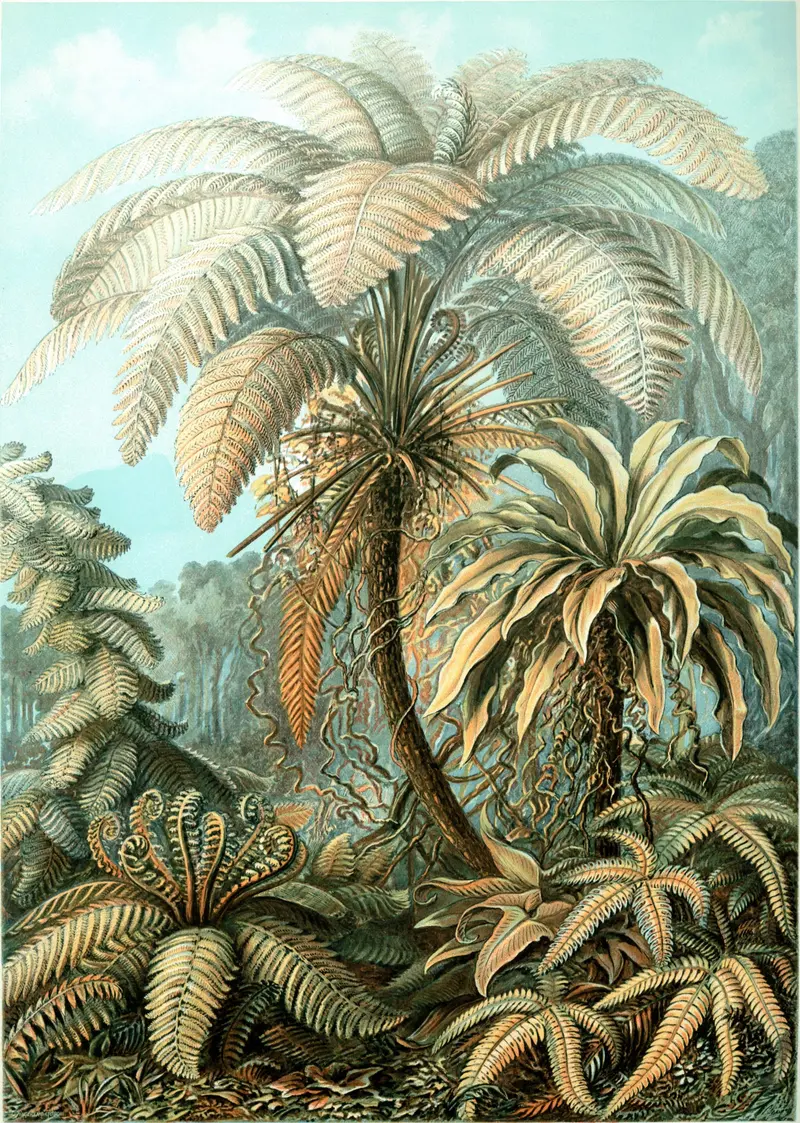
Filicinae (Ferns)
Ernst Haeckel
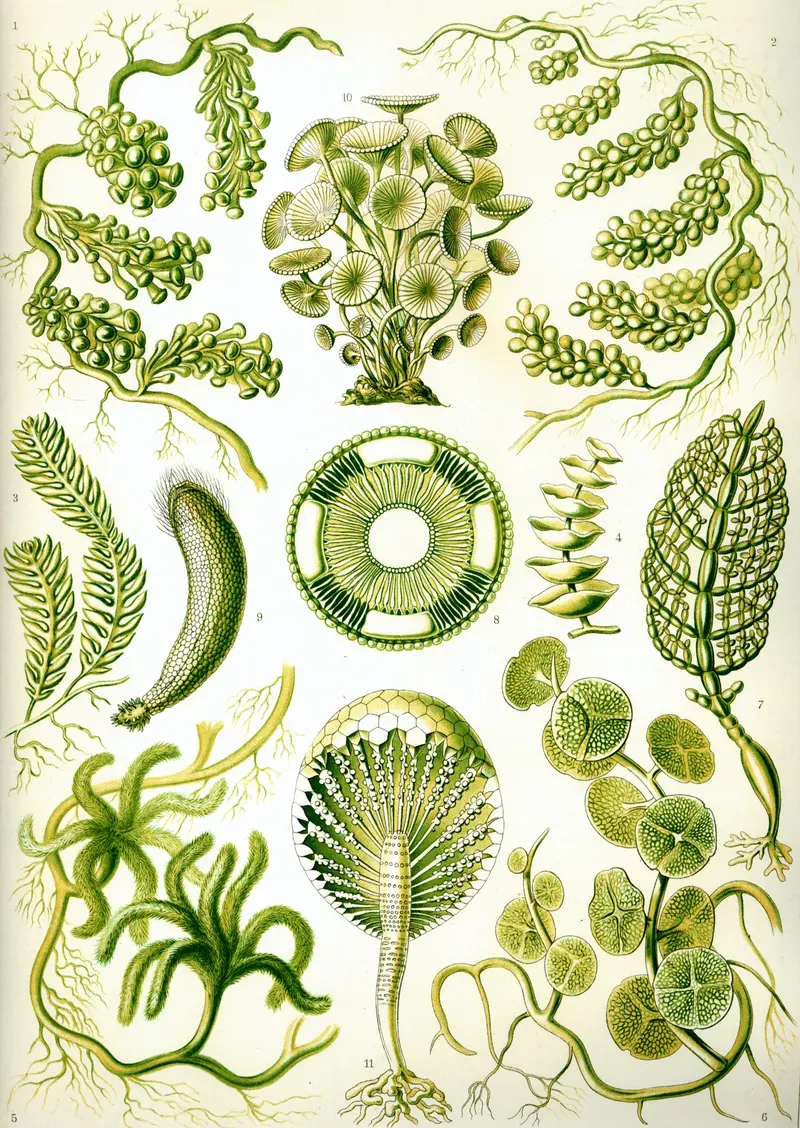
Siphoneae (Green Algae)
Ernst Haeckel

Cirripedia (Barnacles)
Ernst Haeckel

Actiniae (Sea Anemones)
Ernst Haeckel
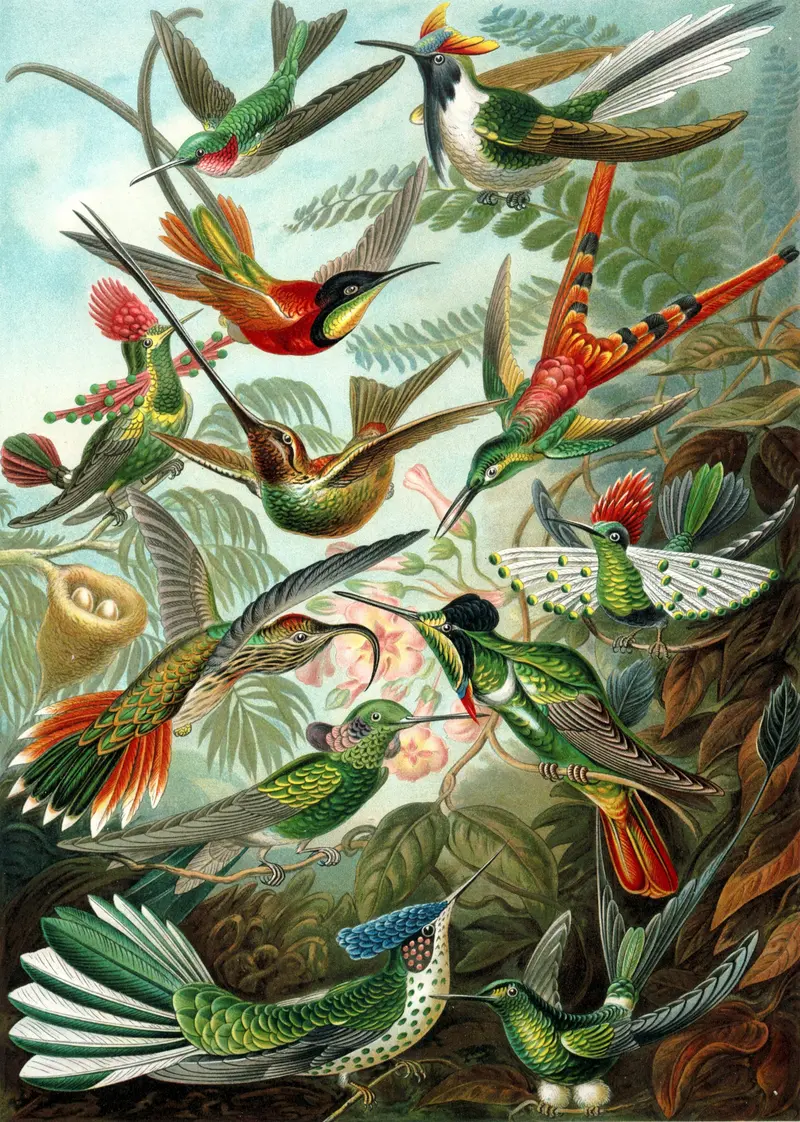
Trochilidae (Hummingbirds)
Ernst Haeckel
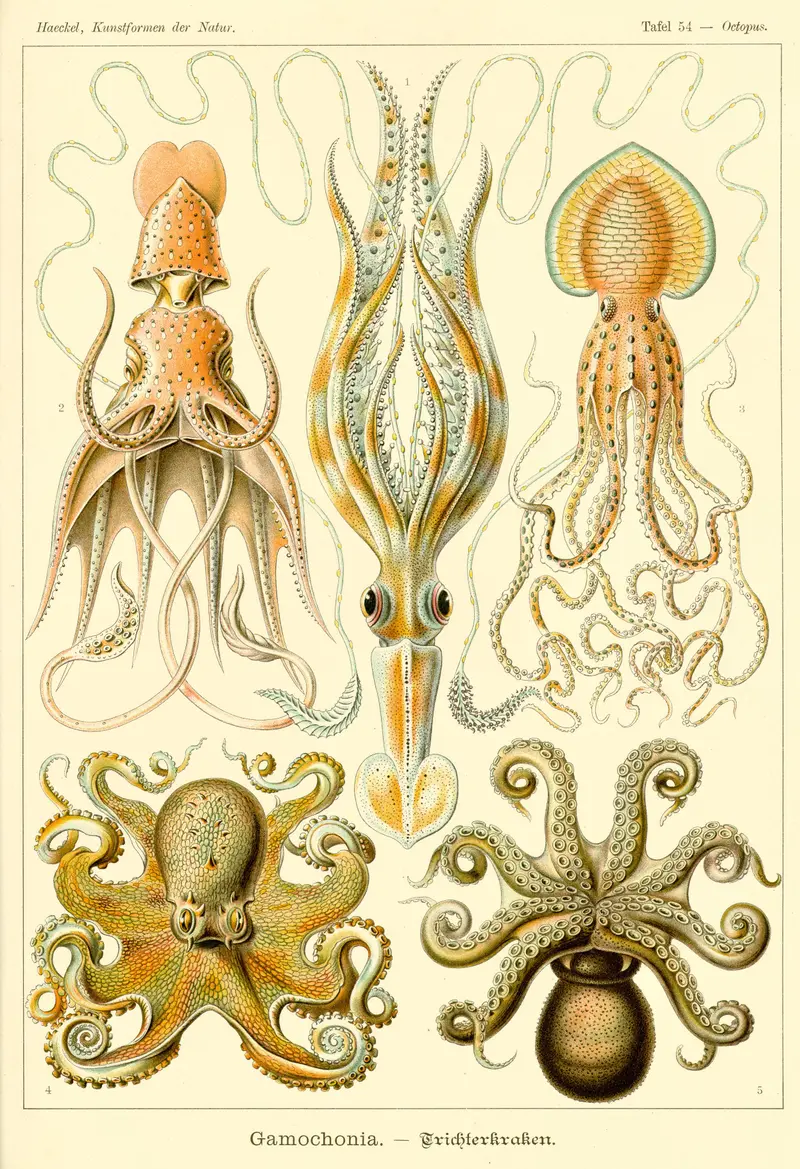
Gamochonia (Cephalopods)
Ernst Haeckel
Leptomedusae (Jellyfish)
Ernst Haeckel
Peromedusae (Jellyfish)
Ernst Haeckel
Chaetopoda (Bristle Worms)
Ernst Haeckel
Arachnida (Spiders)
Ernst Haeckel





