
Arjuna and the River Nymph — History & Facts
The eye is first caught by the lush, dreamlike tangle of lotus leaves and blossoms, where a jeweled nymph rises from the water to meet the gaze of a princely archer. Arjuna and the River Nymph by Warwick Goble draws us into a moment of suspended possibility: the nymph’s languid pose and upward glance suggest both invitation and mystery, while Arjuna’s poised stance—bow in hand, one arm braced against the rock—signals alertness and resolve. The artist’s palette is dense with greens and dusky browns, punctuated by the pale shimmer of skin and the bright ornamentation of pearls and gems, guiding the viewer’s attention from the riverbed to the figures’ entwined exchange.
Every detail, from the nymph’s peacock-feathered headdress to the hero’s angular limbs, is designed to heighten the sense of encounter: a meeting of worlds, mortal and divine, in the hush of an enchanted dusk. Created in 1913 for a volume on Hindu mythology, this work belongs to a flourishing era of illustrated books that brought distant legends to Western readers through sumptuous image and text. Warwick Goble was among the foremost illustrators of his generation, celebrated for his ability to conjure the atmosphere of far-off lands with delicate line and jewel-toned washes. Such pictures were often commissioned by publishers eager to satisfy the Edwardian appetite for the exotic, and Goble’s style reflects both the period’s fascination with “Oriental” stories and its taste for intricate, decorative detail.
Though the individual histories of these book illustrations are seldom recorded, their impact endures in the way they shaped early twentieth-century visions of myth and wonder. Let your gaze linger on the water’s surface, and imagine the world of stories that once unfolded in readers’ hands.
More Artworks by Warwick Goble
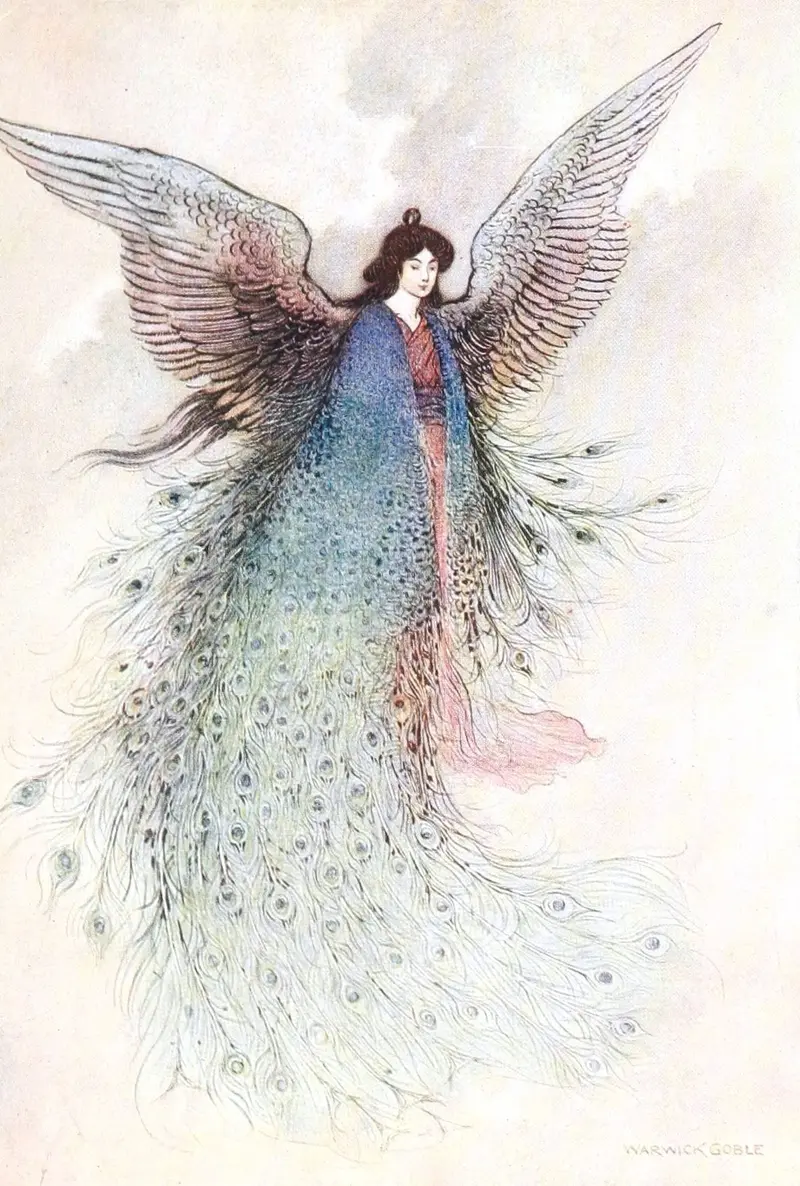
The Moon Maiden (Green Willow)
Warwick Goble
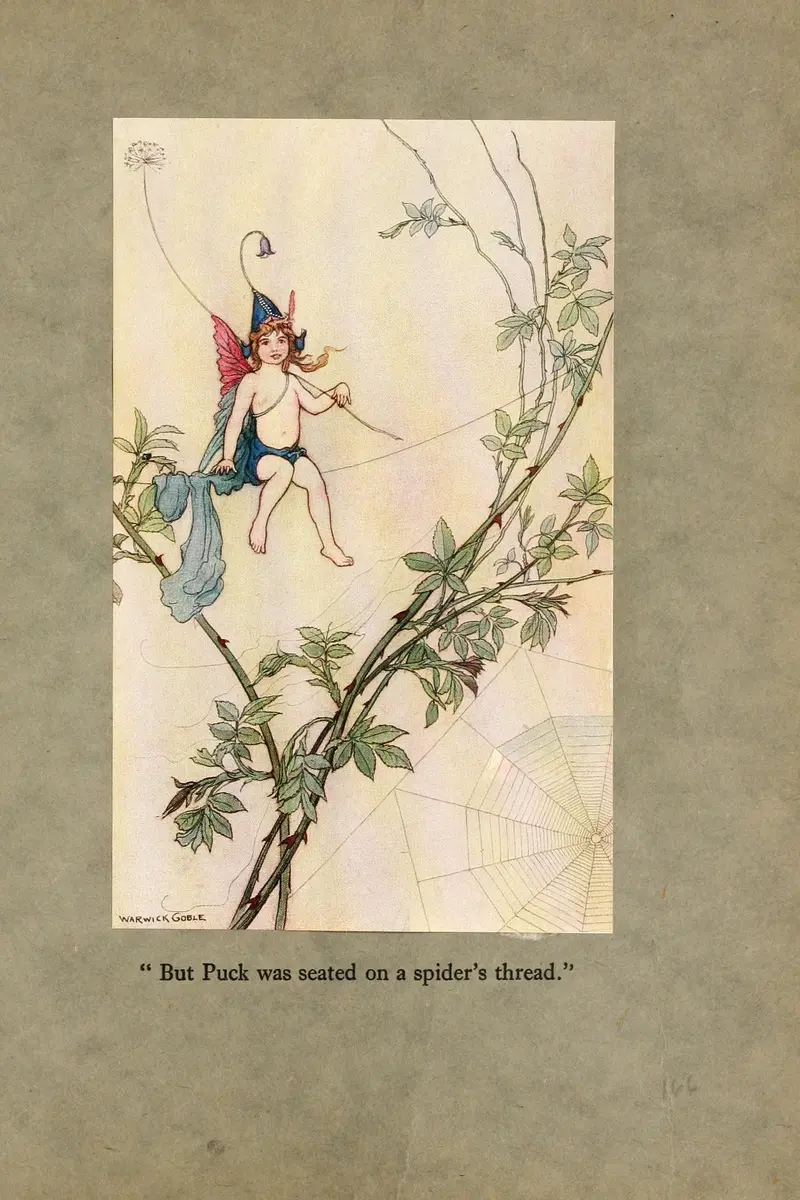
Puck
Warwick Goble

The Ordeal of Queen Draupadi
Warwick Goble

Momotaro
Warwick Goble
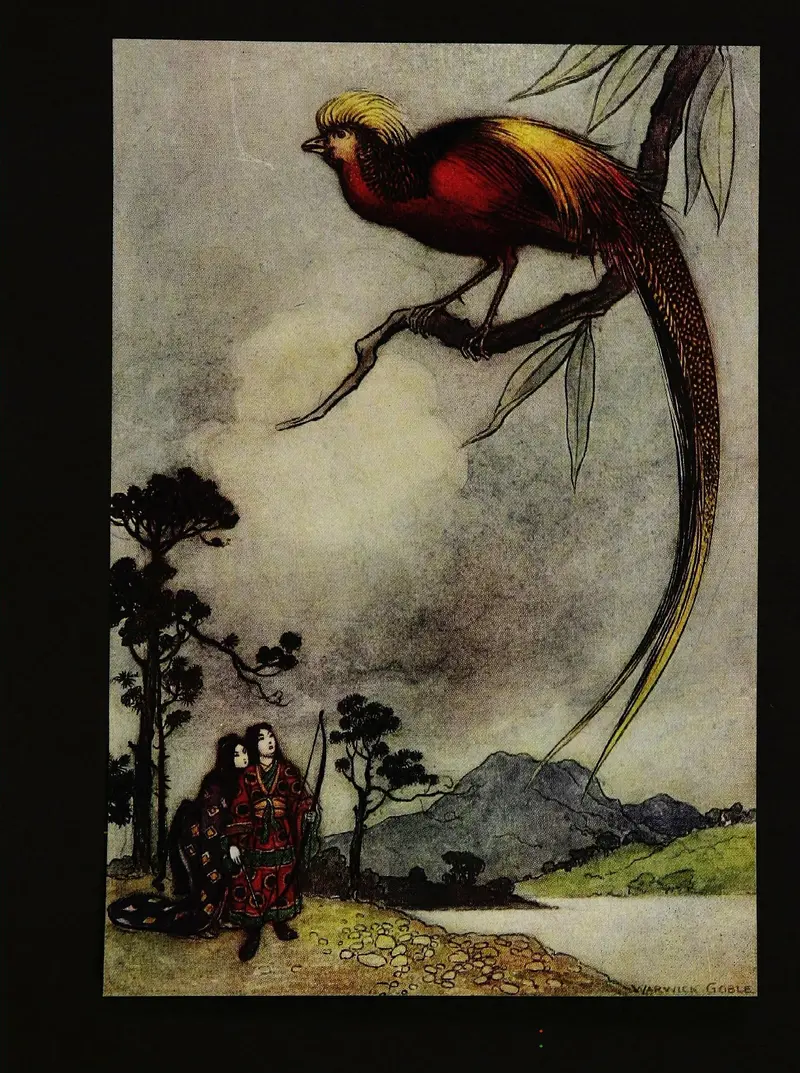
The Singing Bird of Heaven
Warwick Goble
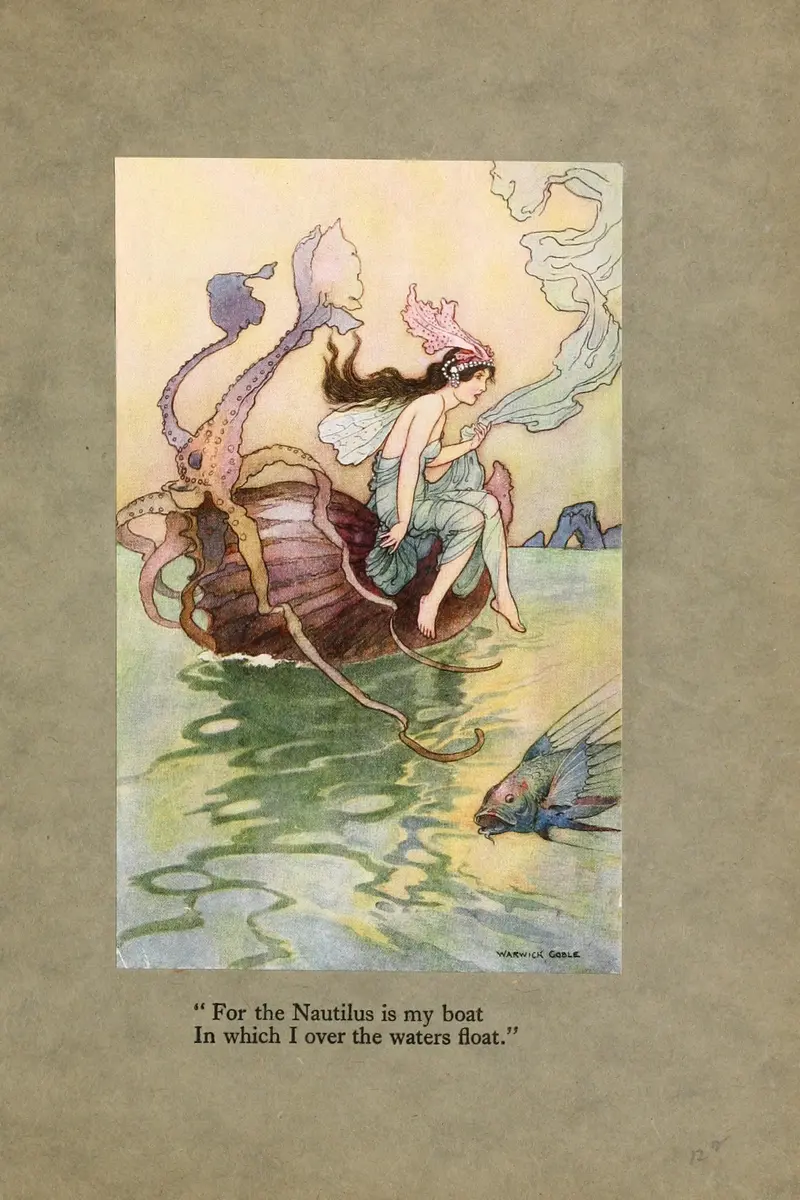
Fairies on the Seashore
Warwick Goble
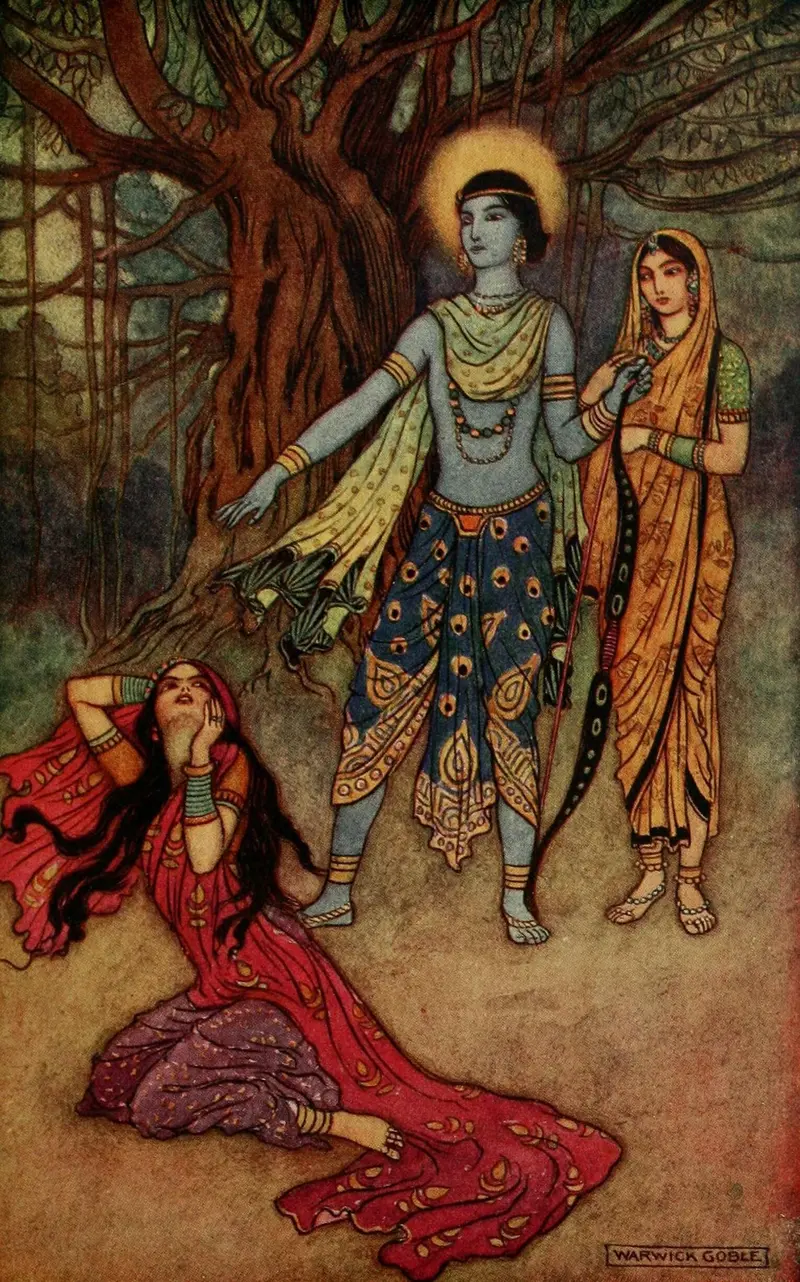
Rama Spurns the Demon Lover
Warwick Goble
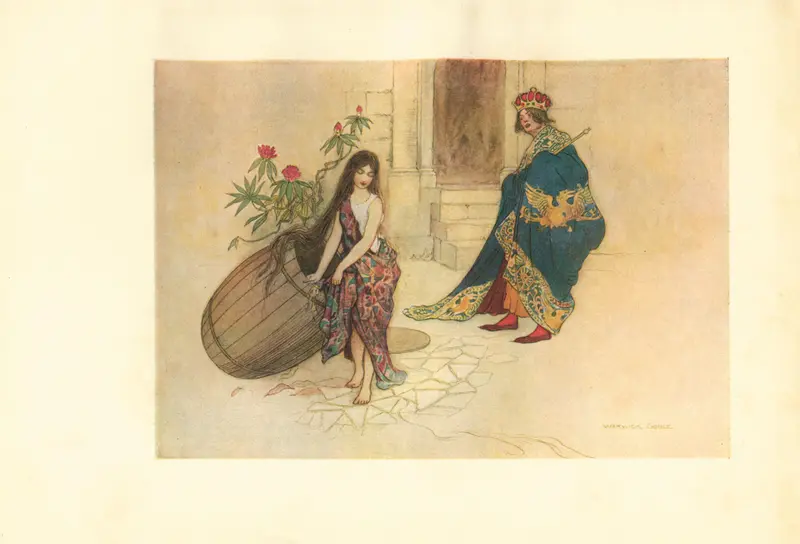
Cannetella Released from the Cask
Warwick Goble
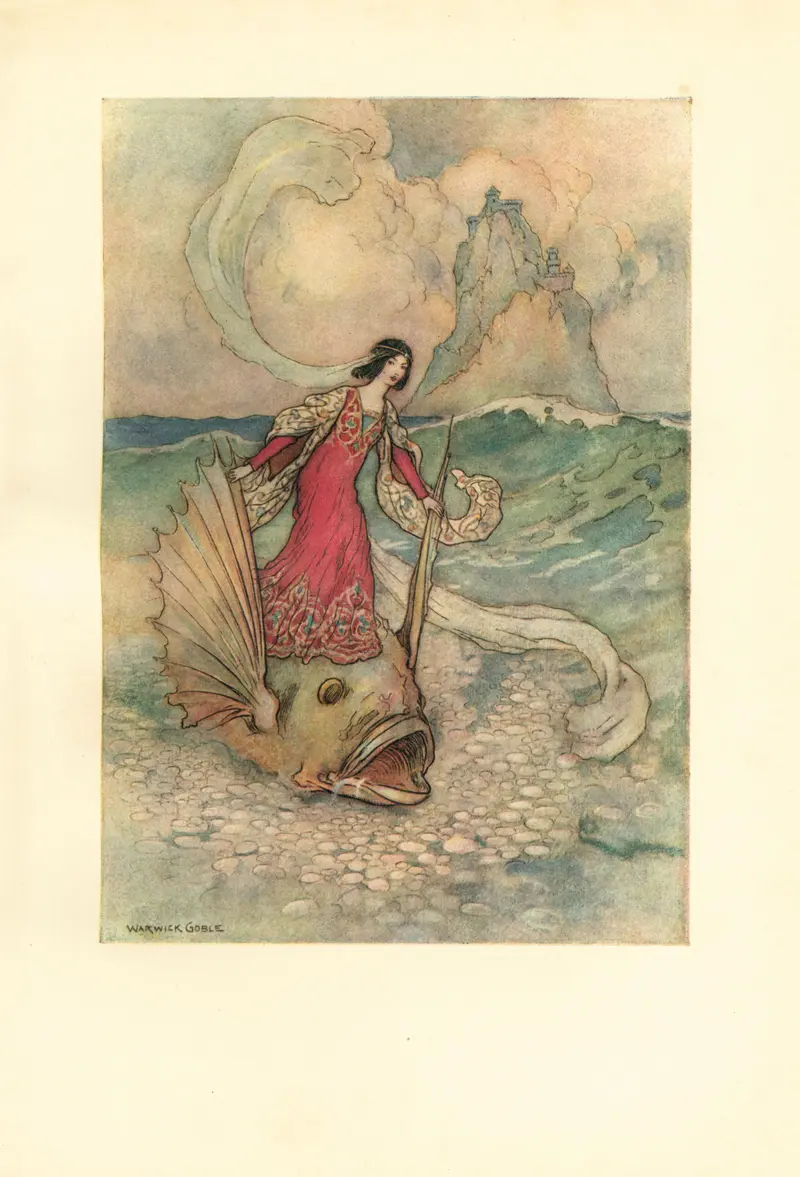
Rita Riding on the Dolphin
Warwick Goble
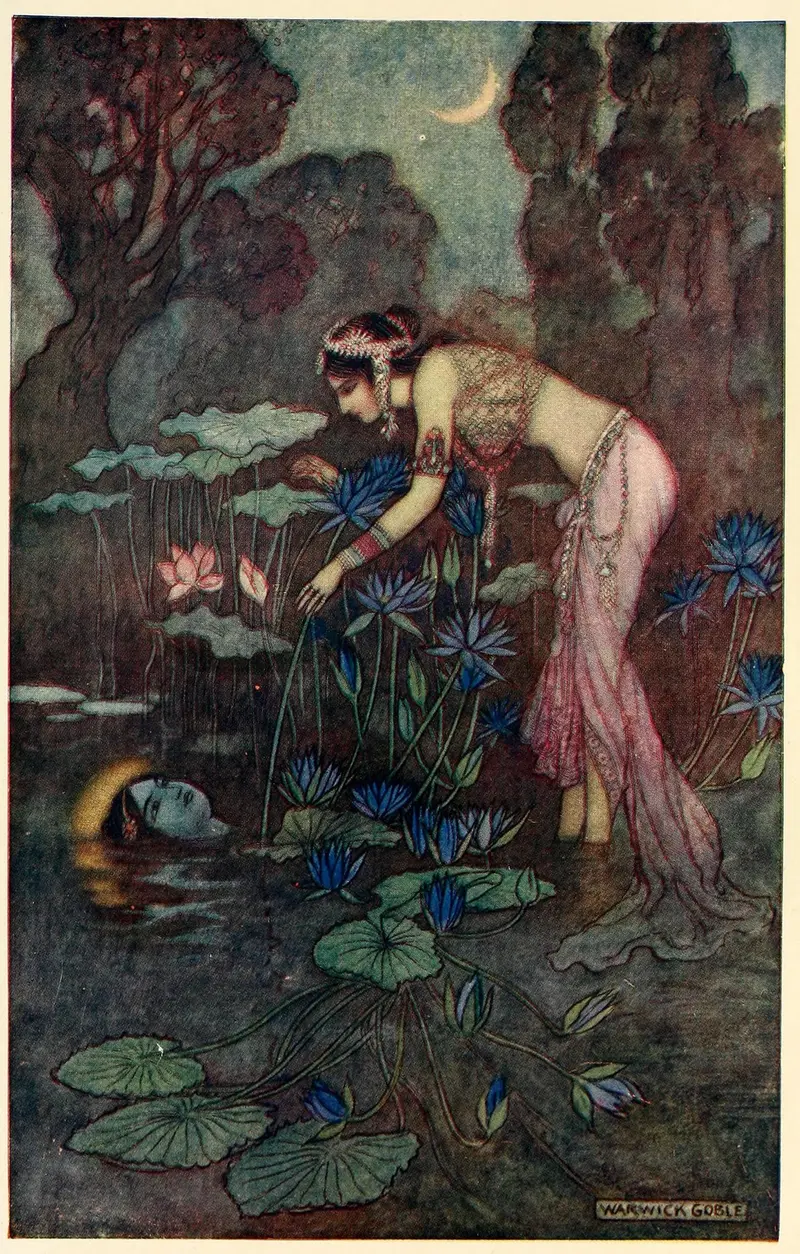
Sita Finds Rama Among Lotus Blooms
Warwick Goble





