
Arlésiennes (Mistral) — History & Facts
In the delicate interplay of hues, Arlésiennes (Mistral) captures the essence of illusion, where reality bends beneath the weight of color and emotion. Look to the center of the canvas, where two women stand with their backs turned, cloaked in intricate garments that flow like whispers in the air. Notice how the fabric’s rich reds and deep blues contrast against the muted backdrop, drawing the eye to the intricate patterns and textures. The light dances softly across their silhouettes, creating an ethereal quality that blurs the lines of the real and the imagined.
Every brushstroke feels deliberate, every color choice a reflection of hidden narratives. Beneath the surface, tension brews between stillness and movement, isolation and connection. The women's posture suggests a moment of contemplation, yet their absence of expression leaves us guessing at their thoughts—are they bound by tradition, or yearning for freedom? The background elements, rendered in soft, earthy tones, provide a stark contrast to the vibrant figures, hinting at the weight of expectations that tether them. This duality allows for an exploration of identity, culture, and the often unseen struggles that shape our existence. In 1888, Paul Gauguin created this work while living in Arles, France, amidst a vibrant artistic community that included Vincent van Gogh.
At this time, he was grappling with his own artistic identity, seeking to transcend Impressionism and explore the emotional resonance of color and form. This painting stands as a bridge between his past influences and his evolving style, showcasing the profound impact of place and cultural heritage on his artistic journey.
More Artworks by Paul Gauguin
Browse all →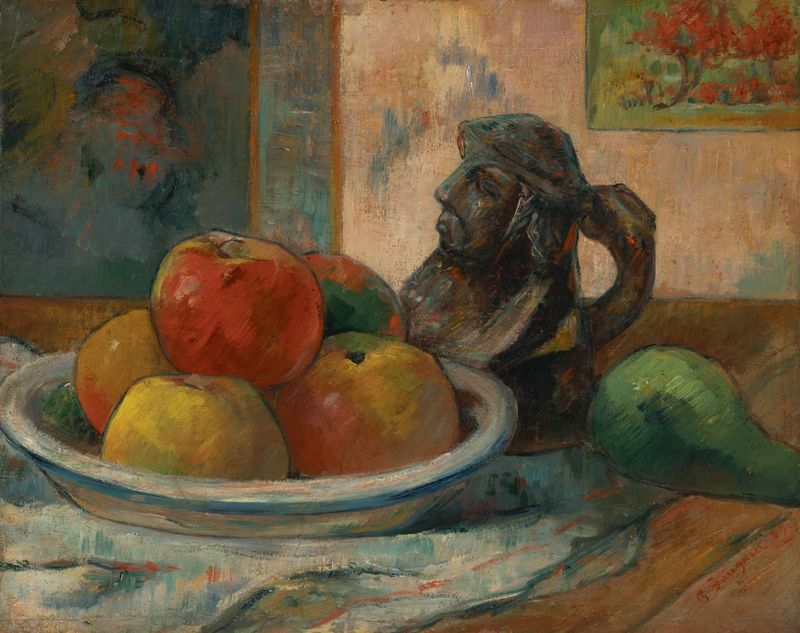
Still Life with Apples, a Pear, and a Ceramic Portrait Jug
Paul Gauguin
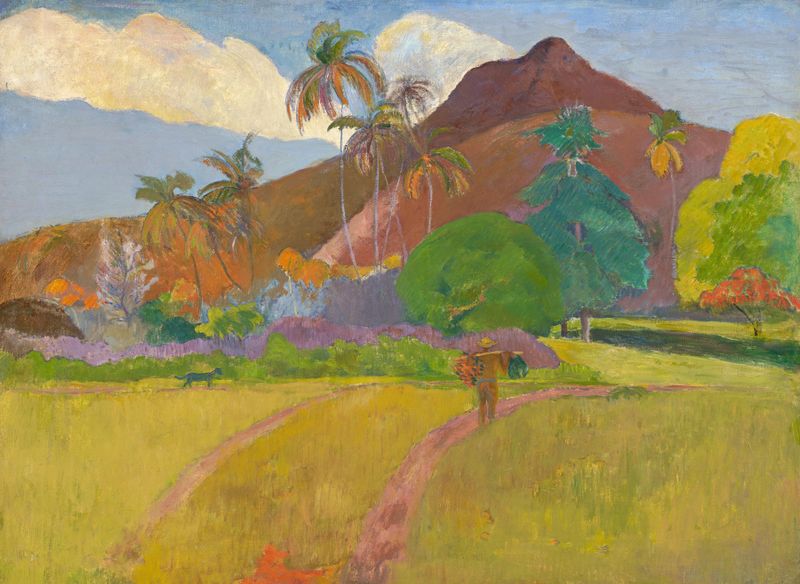
Tahitian Landscape
Paul Gauguin

Landscape near Pont-Aven
Paul Gauguin

No te aha oe riri (Why Are You Angry?)
Paul Gauguin
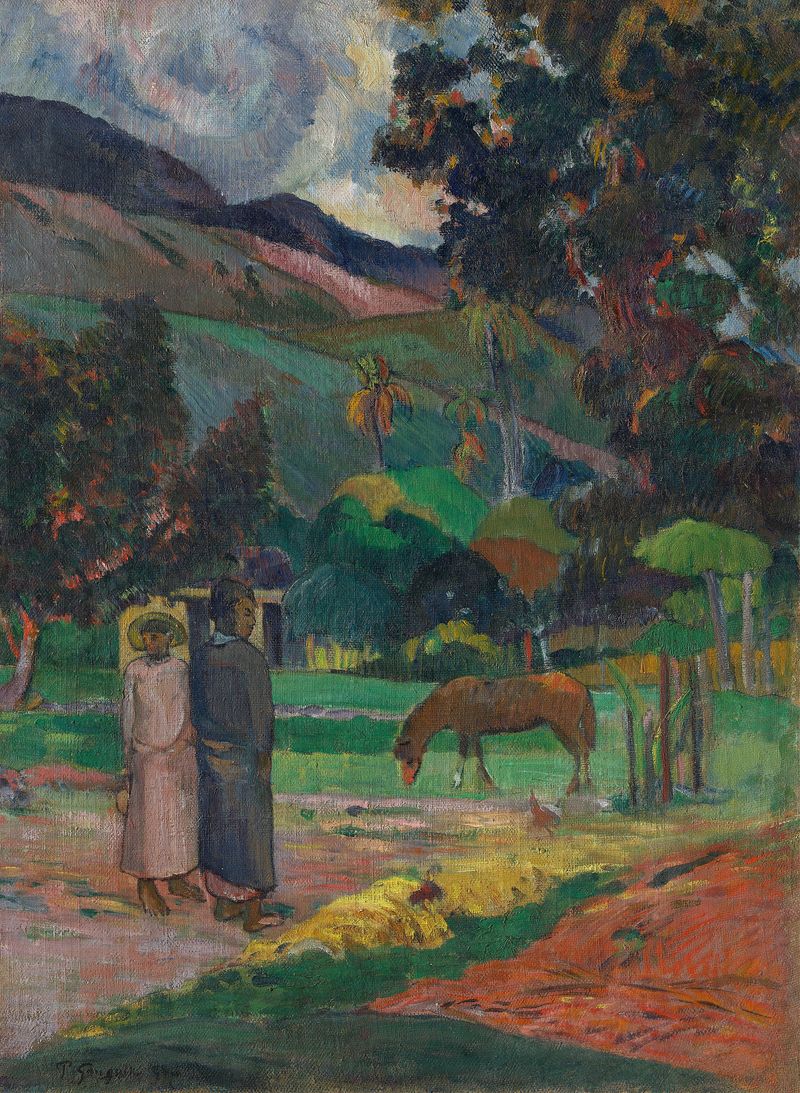
Tahitian Landscape
Paul Gauguin
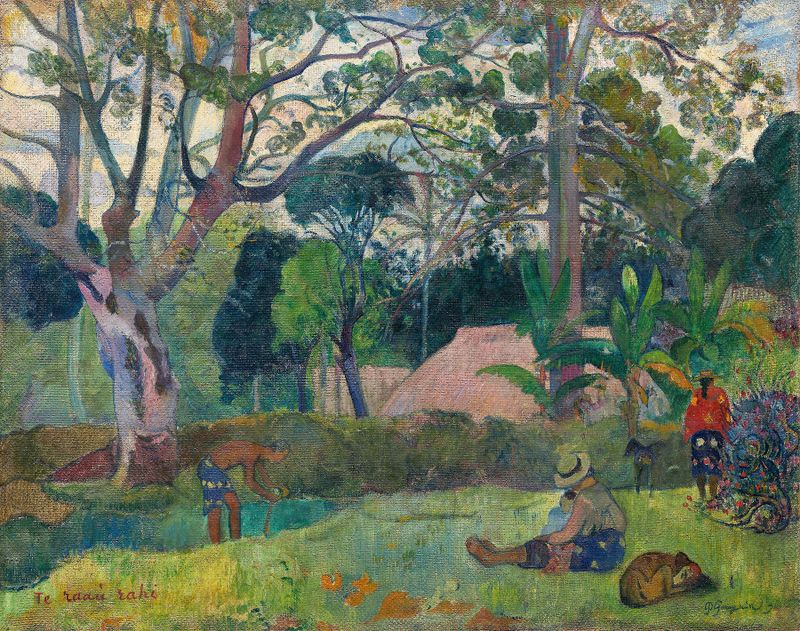
Te raau rahi (The Big Tree)
Paul Gauguin

Landscape at Le Pouldu
Paul Gauguin

Landscape of Brittany
Paul Gauguin

Poèmes Barbares
Paul Gauguin
Mahana no atua (Day of the God)
Paul Gauguin





