
Auf römischer Landstraße — History & Facts
In a world filled with fleeting moments, art stands still, capturing the essence of profound emotions like grief. Here, the landscape becomes a canvas of remembrance and loss, evoking a weight that lingers in the air, palpable yet intangible. Look to the left at the winding Roman road, where ancient stones merge with the vibrant greens of the surrounding countryside. Notice how the light bathes the scene in a golden hue, casting long shadows that stretch like memories across the ground.
The composition leads the eye towards distant hills, inviting exploration while simultaneously hinting at the isolation of the figures in the foreground. Each brushstroke is deliberate, harmonizing the earth tones with softer pastels, creating a melancholy but beautiful vista. Upon deeper reflection, explore the juxtaposition of the vibrant landscape against the solitary traveler, who seems to carry the weight of the world on their shoulders. The path they walk is both a literal and symbolic journey, suggesting a passage through sorrow and uncertainty.
The quietude of the scene reveals a tension between nature’s beauty and the human experience of loss, compelling the viewer to confront their own feelings of grief and longing. Jacob Philipp Hackert painted this piece during a transformative period in the late 18th century when he was living in Italy, immersed in the classical ideals of beauty and nature. His works often reflect the interplay between human emotion and the natural world, and Auf römischer Landstraße exemplifies this balance. At a time when Romanticism was emerging, Hackert found himself as part of an artistic dialogue that sought to convey deeper human experiences through the lens of landscape.
More Artworks by Jacob Philipp Hackert
Browse all →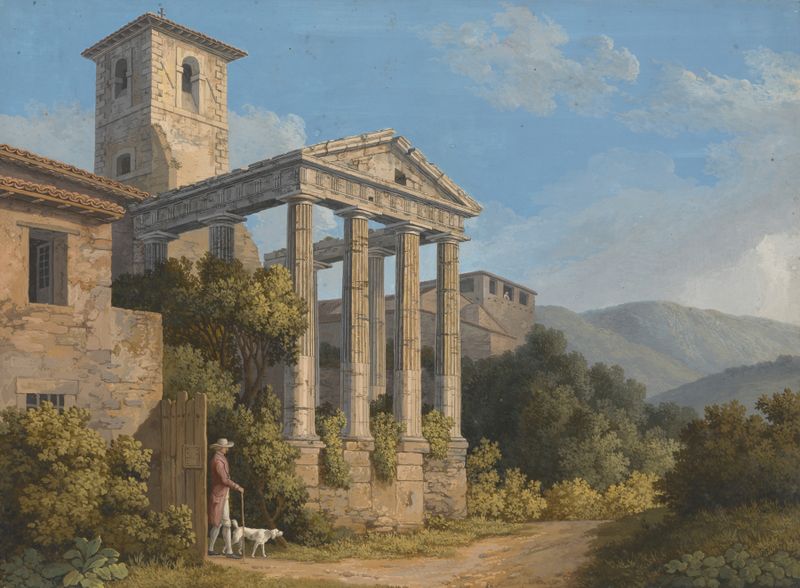
The Temple of Hercules in Cori near Velletri
Jacob Philipp Hackert
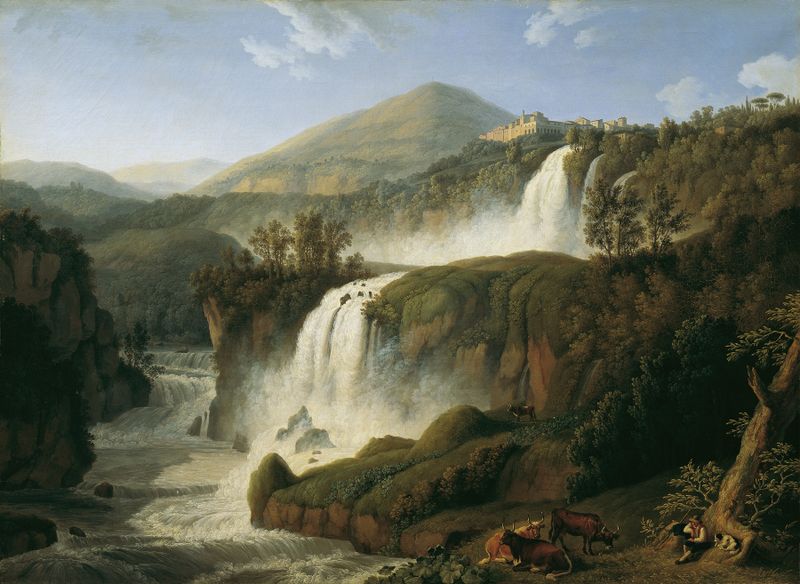
Der große Wasserfall von Tivoli bei Rom
Jacob Philipp Hackert
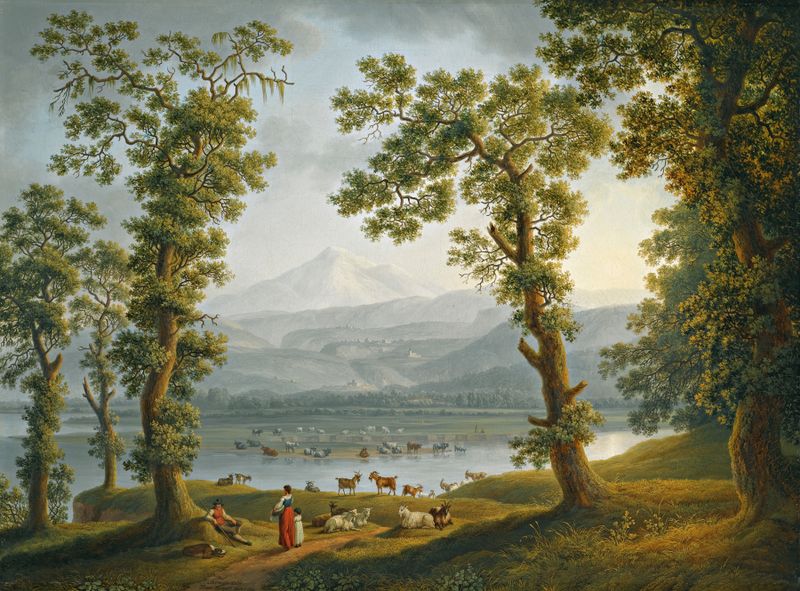
A View Across The Volturno River Towards Alife, Piedimonte Matese, And The Matese Mountains Rising Beyond
Jacob Philipp Hackert
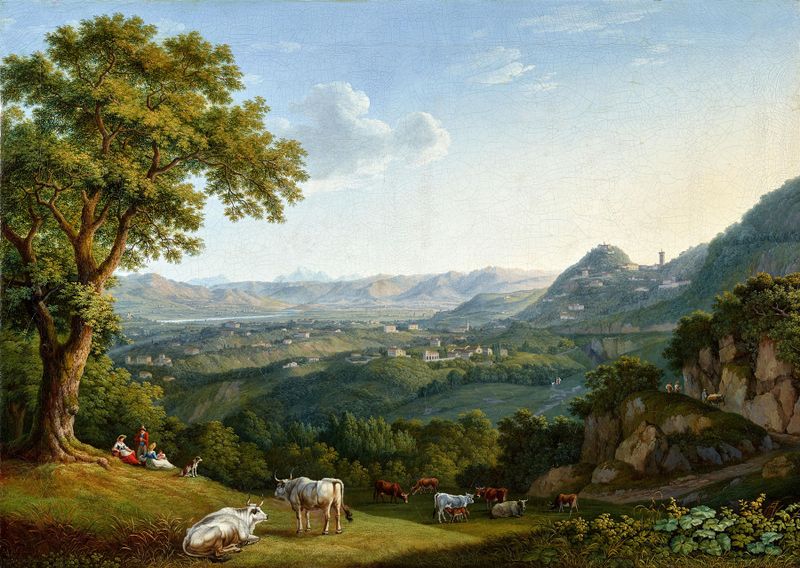
Blick auf das Arnotal und Fiesole
Jacob Philipp Hackert

A View Along The Valley Of The River Tiber Towards Poggio Mirteto, And Beyond The Sabine Mountains Lit Up By The Evening Sun
Jacob Philipp Hackert
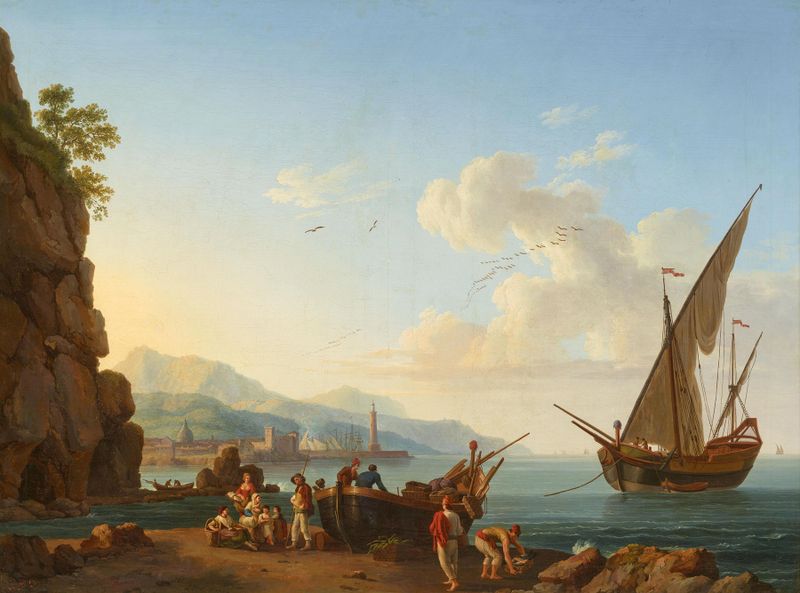
Fischer mit Boot am Strand
Jacob Philipp Hackert

Paysage
Jacob Philipp Hackert
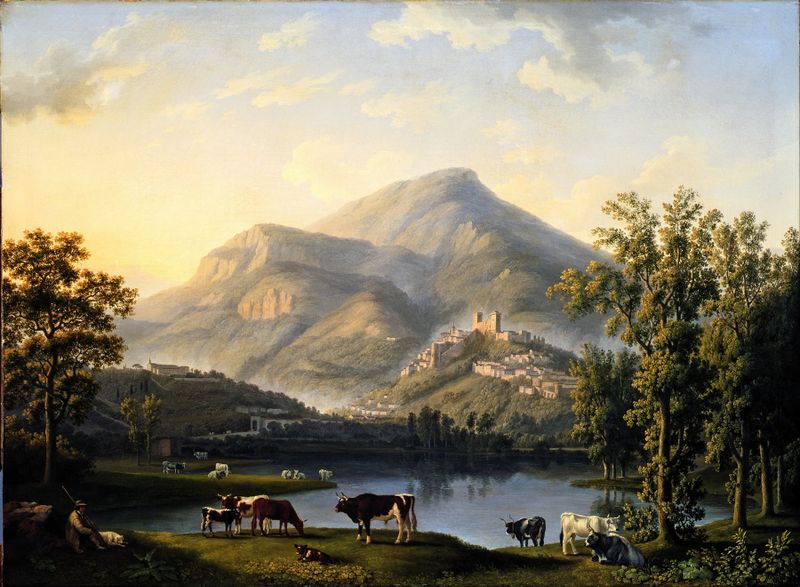
Veduta d’Itri (Landscape with a View of Itri)
Jacob Philipp Hackert
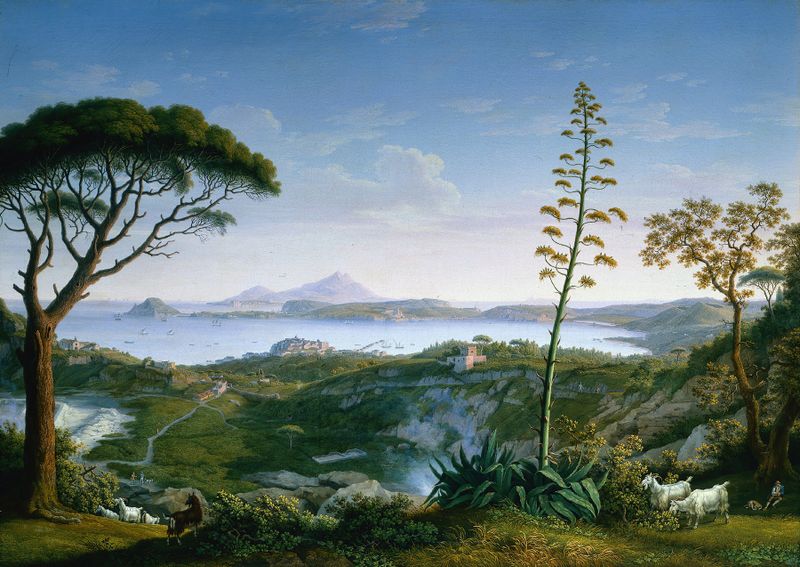
View of the Gulf of Pozzuoli from Solfatara
Jacob Philipp Hackert

View of Saint Peter’s in Rome
Jacob Philipp Hackert





